
The Battle for Children’s Rights in U.S. Citizenship Policy
How legal advocates challenge policies to protect youth citizenship rights.
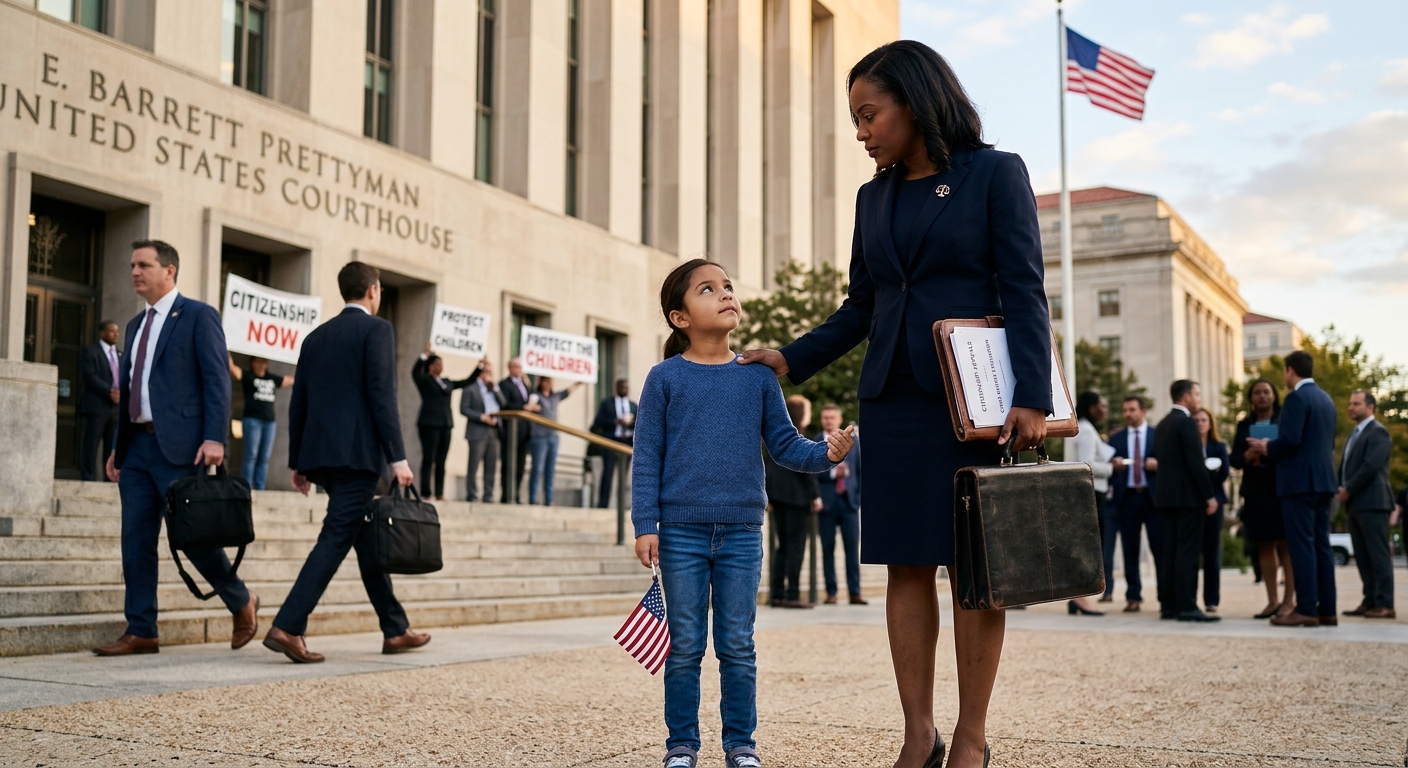
Citizenship is often viewed as an absolute guarantee—a definitive legal status that confers rights, protections, and a sense of belonging. However, for many children, the path to recognized citizenship is fraught with bureaucratic hurdles, outdated legal definitions, and shifting political landscapes. Over the years, children’s rights advocates and civil liberties organizations have increasingly turned to the courts to challenge restrictive interpretations of citizenship policy. By filing lawsuits, submitting amicus curiae briefs, and holding government agencies accountable, these advocates work to ensure that vulnerable youth are not stripped of their fundamental rights.
The intersection of family law, immigration policy, and constitutional rights creates a complex web that often leaves marginalized children in a state of legal limbo. Whether dealing with children born abroad to same-sex parents, undocumented youth languishing in state foster care systems, or infants facing the threat of losing birthright citizenship, the stakes are exceptionally high. This article delves into the various ways advocacy groups are fighting back against exclusionary citizenship policies, reshaping the legal landscape to protect the most vulnerable members of society.
The Foundation: How Citizenship is Determined for Children
To understand the current legal battles, one must first examine how United States citizenship is legally conferred upon children. The framework rests on two foundational principles: jus soli (right of the soil) and jus sanguinis (right of blood).
Under the Fourteenth Amendment to the U.S. Constitution, jus soli guarantees that anyone born on United States soil is automatically a citizen, regardless of their parents’ immigration status. Conversely, jus sanguinis allows children born abroad to U.S. citizen parents to acquire citizenship at birth, provided certain statutory requirements are met. These requirements are primarily governed by the Immigration and Nationality Act (INA) of 1952, specifically Sections 301 and 309.
While these statutes were designed to provide clear pathways to citizenship, their rigid language and historical context have frequently clashed with the realities of modern society. For decades, the U.S. State Department interpreted the INA to require a strict biological relationship between a child born abroad and the U.S. citizen parent. If a child lacked this genetic or gestational tie, they were considered “born out of wedlock” for immigration purposes, even if their parents were legally married. This interpretation set the stage for major legal showdowns as the definition of the modern family evolved.
Modern Families Meet Antiquated Laws: The ART and Surrogacy Lawsuits
One of the most high-profile areas of litigation regarding children’s citizenship has involved families utilizing Assisted Reproductive Technology (ART) and surrogacy. For married same-sex couples, having children often requires biological material from a third-party donor or the use of a gestational surrogate. When these children were born overseas, the State Department’s antiquated policies historically triggered devastating consequences.
Because the State Department required a biological connection to the U.S. citizen parent transmitting the citizenship, children born to married same-sex couples were frequently denied U.S. passports. The government treated these children as if their parents were unmarried, subjecting them to the far more stringent requirements of INA Section 309 rather than the standard requirements of Section 301. Families found themselves stranded abroad, forced to navigate complex immigration channels simply to bring their legally recognized children home.
Children’s rights organizations and civil rights groups swiftly intervened, supporting a series of federal lawsuits aimed at dismantling this discriminatory policy. Advocates argued that the State Department’s interpretation violated the constitutional guarantee of equal protection and undermined the Supreme Court’s mandate recognizing same-sex marriage. The core argument was simple: children of married same-sex couples deserve the exact same presumption of legitimacy and citizenship rights as children of opposite-sex couples.
A Turning Point in State Department Policy
The relentless legal pressure eventually yielded a monumental victory for children’s rights. After suffering multiple defeats in federal court, the U.S. State Department announced a sweeping policy update in May 2021. The updated guidance stated that children born abroad to parents—at least one of whom is a U.S. citizen and who are married to each other at the time of birth—would acquire U.S. citizenship at birth if they have a genetic or gestational tie to at least one of their parents.
This critical shift effectively ended the practice of stripping citizenship from the children of same-sex couples utilizing ART abroad. It demonstrated the power of strategic litigation in forcing administrative agencies to harmonize mid-20th-century statutes with 21st-century family dynamics, ensuring that children are no longer penalized for how they were brought into the world.
Protecting the Most Vulnerable: Special Immigrant Juvenile Status (SIJS)
While the ART lawsuits focused on the rights of children born to U.S. citizens, another massive legal battleground revolves around immigrant youth who have suffered abuse, abandonment, or neglect. Congress established the Special Immigrant Juvenile Status (SIJS) program to provide a humanitarian pathway to lawful permanent residency for these vulnerable children.
To qualify for SIJS, a state juvenile court must determine that a child cannot safely reunify with one or both parents due to abuse, neglect, or abandonment, and that it is not in the child’s best interest to return to their home country. However, the theoretical protections of SIJS are frequently undermined by systemic failures at the state and federal levels.
Advocacy groups have repeatedly filed class-action lawsuits against state child welfare agencies for failing to identify eligible youth and assist them in applying for SIJS before they “age out” of the system. In many jurisdictions, eligibility for SIJS ends at age 21. If child welfare departments fail to properly screen immigrant youth in their custody, provide competent legal counsel, or monitor immigration proceedings, these children risk deportation to countries where they face severe harm.
Advocacy in Action: Holding Systems Accountable
Children’s rights lawyers argue that state welfare agencies have a statutory and constitutional obligation to protect the youth in their care. When an agency neglects a child’s immigration status, it effectively guarantees future harm, contradicting the very mission of the foster care system.
By bringing lawsuits against departments of children and family services, advocates seek court orders mandating sweeping institutional reforms. These reforms typically include mandatory immigration screenings for all youth entering state custody, the provision of specialized legal representation, and strict timelines to ensure court dependency orders are obtained long before the youth’s 21st birthday. These legal interventions are quite literally life-saving, pulling children out of the shadows and placing them on a secure path to permanent residency and eventual citizenship.
The 14th Amendment and Birthright Citizenship Under Threat
Beyond administrative interpretations and foster care failures, children’s rights advocates are also defending the most basic tenet of U.S. citizenship: the 14th Amendment’s Citizenship Clause. In recent years, political movements and executive orders have attempted to unilaterally end birthright citizenship for the children of undocumented immigrants, arguing that these children are not “subject to the jurisdiction” of the United States.
In response, broad coalitions of children’s rights organizations have authored extensive amicus curiae briefs for the federal courts. Their legal arguments rigorously emphasize that the 14th Amendment’s text focuses entirely on the child, not the parent. Historical jurisprudence, most notably the landmark 1898 Supreme Court decision in United States v. Wong Kim Ark, affirmed that the Citizenship Clause was designed to be sweeping and inclusive, preventing the creation of a permanent underclass of stateless residents.
Advocates argue that stripping birthright citizenship would instantly disenfranchise millions of infants and children, cutting them off from vital social safety nets, educational opportunities, and basic healthcare. Legal organizations consistently position children’s constitutional rights as the paramount consideration, demanding that the judiciary protect infants from being weaponized in adult-driven immigration debates.
The Psychological and Human Toll on Children
While lawsuits are fought in courtrooms using complex statutory interpretations, the actual consequences are borne by children navigating immense psychological stress. Developmental psychologists and pediatric experts frequently collaborate with legal advocates to demonstrate to courts the tangible harm caused by exclusionary citizenship policies.
Children living in legal limbo often suffer from chronic anxiety, toxic stress, and night terrors, driven by the constant fear that they or their parents could be deported at any moment. For a child born abroad to a same-sex couple, being denied a passport means forced separation from a parent who must return to the U.S. for work. For an unaccompanied minor in foster care, aging out of SIJS eligibility without legal status can trigger a devastating mental health crisis.
By highlighting these psychological impacts, advocates force the legal system to see beyond the paperwork and recognize the human lives at stake. Ensuring robust citizenship rights is not merely an administrative exercise; it is a fundamental requirement for a child’s healthy physical, emotional, and cognitive development.
Summary of Key Citizenship Pathways and Legal Challenges
| Pathway / Law | Target Demographic | Key Legal Challenge | Advocacy Outcome / Status |
|---|---|---|---|
| INA Sections 301 & 309 (Birth Abroad) | Children born abroad to U.S. citizens via ART/Surrogacy. | State Dept required biological ties, discriminating against married same-sex couples. | Policy updated in 2021 to recognize gestational/genetic ties to either married parent. |
| Special Immigrant Juvenile Status (SIJS) | Abused, abandoned, or neglected immigrant youth in state care. | Youth “aging out” due to state welfare agency negligence and federal processing delays. | Ongoing litigation mandating state agencies to provide timely legal counsel and screenings. |
| 14th Amendment (Birthright) | Infants born in the U.S. to undocumented parents. | Executive attempts to reinterpret the Constitution to deny automatic citizenship. | Defended via federal injunctions and extensive amicus briefs focusing on child protections. |
Frequently Asked Questions (FAQ)
What is the child’s right to citizenship?
A child’s right to citizenship is generally determined by the laws of the country where they are born (jus soli) or the citizenship of their parents (jus sanguinis). In the U.S., the 14th Amendment protects birthright citizenship, while the Immigration and Nationality Act governs citizenship transmitted by parents to children born abroad.
Why did the U.S. State Department deny citizenship to some children of same-sex couples?
Historically, the State Department interpreted the INA to require a direct genetic or gestational link between the child and the specific U.S. citizen parent transmitting the citizenship. If a married same-sex couple used a sperm donor and a foreign surrogate, the child was often classified as “born out of wedlock,” making it vastly more difficult to acquire citizenship.
How did advocacy groups change the ART citizenship policy?
Civil liberties and children’s rights organizations supported families in filing federal lawsuits, arguing the policy was discriminatory and unconstitutional. In May 2021, the State Department abandoned this strict interpretation, allowing a genetic or gestational tie to either parent in a married couple to satisfy the law’s requirements.
What is Special Immigrant Juvenile Status (SIJS)?
SIJS is a humanitarian immigration classification for children in the U.S. who require protection because they have been abused, abandoned, or neglected by one or both parents. It provides a pathway to lawful permanent residency, provided the youth secures the necessary state court orders before turning 21.
Why are advocates suing state welfare departments over SIJS?
Many immigrant children in state foster care systems are eligible for SIJS but are never informed of their rights. Advocates sue child welfare agencies to force them to conduct mandatory immigration screenings and provide legal representation so these vulnerable children do not “age out” and lose their chance at legal protection.
References
- U.S. Citizenship Transmission and Assisted Reproductive Technology — U.S. Department of State. 2021-05-18. https://www.state.gov/u-s-citizenship-transmission-and-assisted-reproductive-technology/
- Immigration and Nationality Act (INA) Section 301 — U.S. Department of State Foreign Affairs Manual (8 FAM 301). 2024-09-06. https://fam.state.gov/fam/08fam/08fam030107.html
- Special Immigrant Juvenile Status: Information for Child Welfare Workers — U.S. Citizenship and Immigration Services (USCIS). 2022-03-07. https://www.uscis.gov/sites/default/files/document/brochures/SIJ_Information_for_Child_Welfare_Workers.pdf
- United States v. Wong Kim Ark, 169 U.S. 649 — U.S. Supreme Court. 1898-03-28. https://supreme.justia.com/cases/federal/us/169/649/
Similar Articles








Read full bio of Sneha Tete


