Introduction
In every corner of the country, state-run child protective services are tasked with one of the most solemn duties a government can undertake: the protection and nurturing of vulnerable children removed from their homes due to abuse or neglect. Yet, a silent crisis pervades many of these institutions. From chronic underfunding to catastrophic staff turnover, these systems frequently fail the very populations they are mandated to protect. When internal efforts stall and legislative gridlock prevents meaningful change, a drastic but necessary mechanism often emerges as the only viable path forward: institutional reform litigation.
Class-action civil rights lawsuits, brought against state child welfare agencies, act as a massive external lever. For decades, advocates have used the federal courts to force states into compliance with basic constitutional and statutory standards of care. Surprisingly, it is not just external watchdog groups driving this push. Increasingly, dedicated frontline social workers and agency supervisors find themselves quietly—and sometimes vocally—rooting for the plaintiffs. They recognize that without the binding pressure of a federal court mandate, their agencies will never receive the resources required to do the job safely. This dynamic highlights a profound institutional paradox: when the state fails, it sometimes takes a lawsuit to save the system from itself.
The Architecture of a Crisis: Why Child Welfare Systems Break Down
To understand why federal litigation becomes necessary, one must first examine the foundational cracks within standard child welfare operations. The collapse of a state’s child protective services does not happen overnight. It is typically the result of years of deferred maintenance, budget cuts, and legislative apathy.
At the core of this breakdown is the issue of unmanageable caseloads. The Child Welfare League of America (CWLA), a leading national standard-setting organization, has historically recommended that child welfare caseworkers handle no more than 12 to 15 active cases at any given time . This standard is not arbitrary; it is meticulously calculated to allow workers enough time to conduct thorough home visits, coordinate with medical and educational professionals, and provide the intense case management required to keep children safe and move them toward permanency.
However, in many jurisdictions, the reality is starkly different. It is not uncommon for investigators and ongoing caseworkers to carry double or even triple the CWLA recommended limit. When a single worker is responsible for 30 or 40 vulnerable children, the mathematical reality dictates that corners will be cut. Workers are forced into a state of perpetual triage, responding only to the most immediate, life-threatening emergencies while “banking” other cases—a dangerous practice where children in seemingly stable, yet unverified, placements fall off the radar.
This relentless pressure breeds a toxic cycle of burnout and turnover. The emotional toll of secondary trauma, combined with the impossible logistical demands of the job, drives experienced social workers out of the profession. When veteran staff leave, their massive caseloads are redistributed to the remaining, already-overburdened workers, further accelerating the exodus. The resulting vacuum is often filled by inexperienced, newly hired staff who lack the institutional knowledge to navigate complex family dynamics and court proceedings, putting children at even greater risk.
The Real Cost: How Vulnerable Children Suffer in Custody
The operational failures of a child welfare agency are measured not just in budget deficits or staffing spreadsheets, but in the immediate, ongoing trauma inflicted on children. When the state takes custody of a child, it assumes a legal and moral obligation to provide a safe, stable environment. For far too many youth, the state fails to uphold its end of the bargain.
Data from the Adoption and Foster Care Analysis and Reporting System (AFCARS), managed by the Administration for Children and Families, consistently reveals alarming trends regarding placement instability and the over-utilization of congregate care . When agencies lack the resources to recruit, train, and support an adequate pool of high-quality family foster homes, children are inevitably subjected to a merry-go-round of temporary placements.
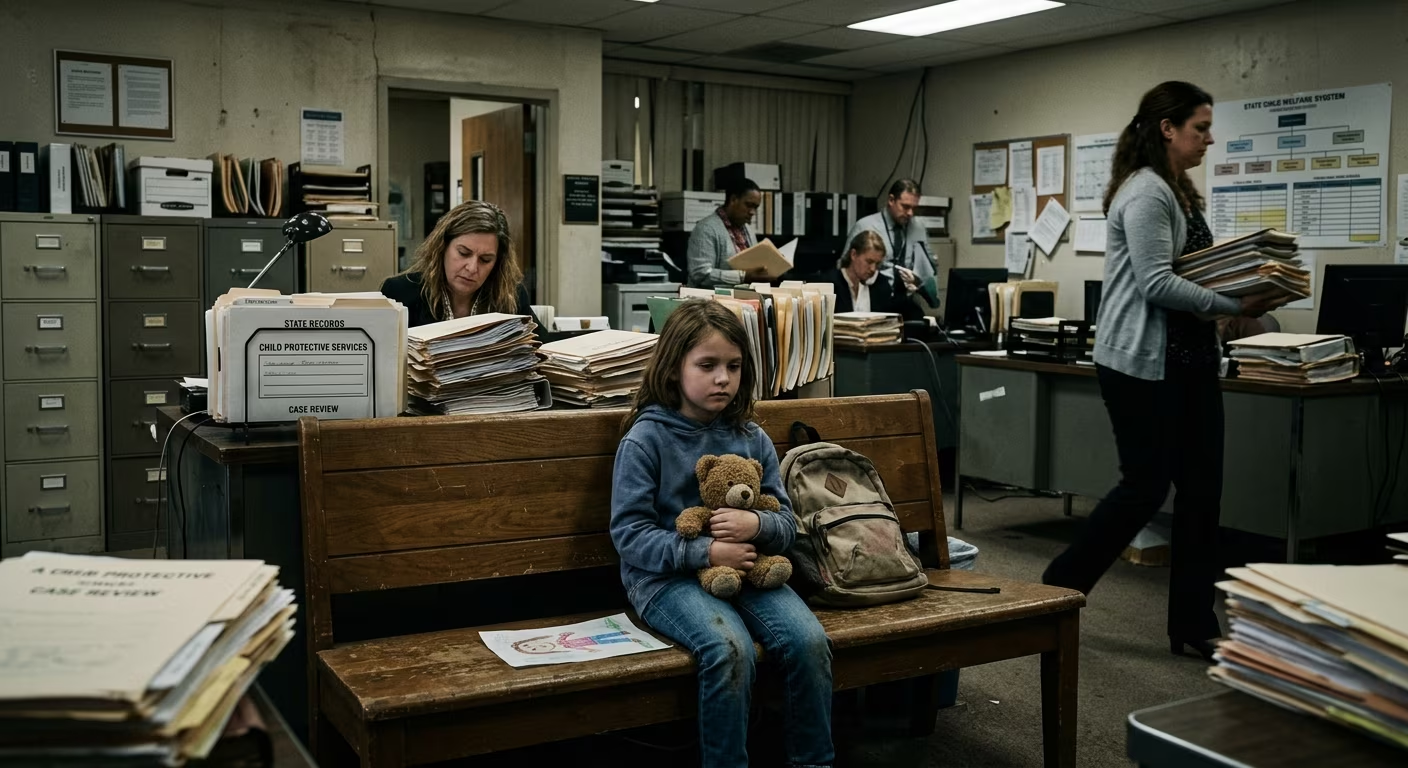
A child might sleep in a state office building, move to an emergency shelter, transition to a short-term foster home, and then be bounced to a group home—all within a matter of weeks. This placement instability compounds the initial trauma of removal. It disrupts their education, severs community ties, and makes it nearly impossible to access consistent medical or psychiatric care. Furthermore, children who experience high placement instability are significantly more likely to age out of the system without finding a permanent family, drastically increasing their risks of homelessness, incarceration, and chronic poverty in adulthood.
Congregate care facilities, such as large group homes and institutions, are often heavily relied upon by failing systems as a repository for children when no family placements are available. Research heavily indicates that youth fare significantly worse in these restrictive, institutional settings compared to family-based care, suffering higher rates of behavioral regression and, tragically, institutional maltreatment.
Institutional Reform Litigation: The Mechanics of Court-Ordered Change
When state agencies become paralyzed by these systemic failures, standard political processes rarely offer a solution. State legislatures are often reluctant to appropriate the massive influx of funding needed to overhaul a broken child welfare system unless forced to do so. This is where institutional reform litigation—specifically, class-action lawsuits filed on behalf of children in state custody—becomes a critical catalyst for change.
Legal experts and social researchers recognize that these lawsuits are designed to address widespread constitutional and statutory violations. They are built on the premise that children in foster care have a substantive due process right to be free from harm while in state custody . When an advocacy group files a class-action lawsuit, they meticulously document the agency’s failures: the staggering caseloads, the lack of medical care, the abuse occurring in unregulated shelters, and the systemic failure to move children toward adoption or reunification.
Instead of going to trial, these complex, multi-year legal battles are most frequently resolved through a negotiated settlement agreement or a federal consent decree. A consent decree is a binding, court-enforced plan that outlines specific, measurable benchmarks the state must achieve. These benchmarks typically include hard caps on worker caseloads, mandatory timelines for investigating abuse reports, quotas for recruiting new foster families, and strict limitations on the use of emergency shelters.
Crucially, a consent decree shifts the power dynamic. It installs independent, court-appointed monitors who are granted unfettered access to agency data, personnel, and facilities. These monitors produce public reports detailing the state’s progress—or lack thereof. If a state legislature refuses to fund the mandated improvements, a federal judge has the authority to hold the state in contempt, levying heavy fines or even taking the system into federal receivership. As noted by researchers examining systemic accountability, litigation operates as one of the most powerful mechanisms available to ensure that states spend funds appropriately and adhere to child welfare statutes .
Inside the Agency: The Unlikely Alliance of Frontline Workers and External Advocates
One of the most fascinating dynamics of systemic child welfare litigation is the internal response from the agency’s own workforce. In typical corporate or government lawsuits, employees instinctively align with their employer to defend the institution’s reputation. In child welfare reform litigation, however, the opposite is frequently true.
Frontline social workers, supervisors, and middle managers often harbor a deep, silent support for the plaintiffs suing their agency. They are the ones living the crisis daily. They are the ones forced to look a traumatized child in the eye and explain why they have to sleep in a cubicle because there are no available foster homes. They are the ones begging for basic resources—like gas cards to transport kids to therapy or funding for emergency housing—only to be denied by upper management citing budgetary constraints.
For these dedicated professionals, a federal lawsuit represents hope. They understand that their internal memos, grievances, and pleas for help have fallen on deaf ears for years. An external lawsuit, backed by the threat of federal judicial sanctions, is often the only mechanism capable of bypassing the bureaucracy and forcing the state legislature’s hand. When an agency supervisor acknowledges that a system needs a lawsuit to win, they are acknowledging a grim reality: the system is fundamentally incapable of healing itself from the inside. They rely on the coercive power of the courts to secure the funding, staffing, and structural overhauls that allow them to actually do the job they signed up for—protecting children.
A Blueprint for Sustainable Child Welfare Reform
While a lawsuit can force the state to the negotiating table, true reform requires a comprehensive, sustained blueprint for operational change. Successful turnaround efforts, often born from the fires of litigation, share several core characteristics:
- Enforceable Caseload Limits: Implementing strict, unyielding caps on the number of cases assigned to a single worker, ensuring compliance with standards like those proposed by the CWLA. This requires aggressive hiring and robust retention strategies, such as hazard pay, student loan forgiveness, and comprehensive mental health support for staff.
- Expanding the Foster Parent Pool: Investing heavily in targeted recruitment campaigns and, more importantly, providing specialized, ongoing support for foster parents to prevent them from burning out and closing their homes.
- Prioritizing Kinship Care: Shifting the agency’s culture to exhaust all possible avenues for placing children with relatives (kinship care) before resorting to strangers or institutional settings, thereby preserving familial and cultural ties.
- Upstream Prevention: Reallocating funds from expensive, reactive interventions (like institutional care) toward preventative, community-based services that address the root causes of neglect—such as poverty, substance abuse, and untreated mental illness—before a removal becomes necessary.
The Long Road to Justice
The intersection of child welfare and federal litigation is fraught with political tension and immense logistical challenges. Lawsuits of this magnitude can take a decade or more to fully resolve, and true cultural change within a sprawling state agency is agonizingly slow. However, the alternative—allowing a broken system to continue cycling children through a pipeline of trauma and neglect—is morally unacceptable.
By holding state governments legally accountable for the welfare of the children in their custody, class-action litigation ensures that the rights of the vulnerable are not ignored in the halls of power. It empowers dedicated social workers, shines a glaring light on administrative failures, and forces society to reckon with its most profound responsibilities. Until every child in state care is guaranteed a safe, stable, and nurturing environment, the courtroom will remain a necessary battleground for child welfare reform.
Frequently Asked Questions (FAQs)
What is a federal consent decree in the context of child welfare?
A consent decree is a legally binding agreement between a state child welfare agency and plaintiffs (usually child advocates) that is approved and enforced by a federal judge. It mandates specific reforms, such as lowering worker caseloads and improving foster care conditions, and is overseen by independent monitors to ensure compliance.
Why do child welfare workers sometimes support lawsuits against their own agencies?
Many frontline workers and supervisors support these lawsuits because they are acutely aware of the systemic lack of resources, dangerous caseloads, and poor conditions for children. They recognize that internal requests for change are often ignored, and an external federal mandate is the only way to force state legislatures to properly fund and fix the agency.
What are the recommended caseload limits for child welfare workers?
The Child Welfare League of America (CWLA) historically recommends that caseworkers handle no more than 12 to 15 cases at one time. This allows the worker sufficient time to properly investigate, support, and monitor the children and families under their care.
How does placement instability harm children in foster care?
Bouncing between multiple foster homes, emergency shelters, or group homes disrupts a child’s education, severs critical community and familial ties, and prevents consistent medical or psychological treatment. This instability severely compounds the trauma of their initial removal from their home.
What is the alternative to relying on large group homes for foster youth?
The primary alternative is a robust system of family-based care, particularly kinship care (placement with relatives) and well-supported, highly trained foster families. When children are placed in family environments, they generally experience better behavioral, emotional, and educational outcomes compared to congregate institutional care.
References
- CWLA Caseload & Workload Standards — Child Welfare League of America. 2018. https://www.cwla.org/
- The AFCARS Report: Foster Care Data Release — Administration for Children and Families (U.S. Department of Health & Human Services). 2024-09-30. https://www.acf.hhs.gov/cb/data-research/adoption-foster-care
- Reforming a System That Cannot Reform Itself: Child Welfare Reform by Class Action Lawsuits — Social Work, Volume 64, Issue 4 (PubMed). 2019-10-31. https://pubmed.ncbi.nlm.nih.gov/31566228/
- Accountability in the Courtroom: Review of Child Welfare Litigation and Required Reforms — Bipartisan Policy Center. 2025-12-11. https://bipartisanpolicy.org/