
Bypass Probate In Vermont: 5 Effective Strategies
Discover effective Vermont-specific methods to transfer assets outside probate, saving time, costs, and family stress.
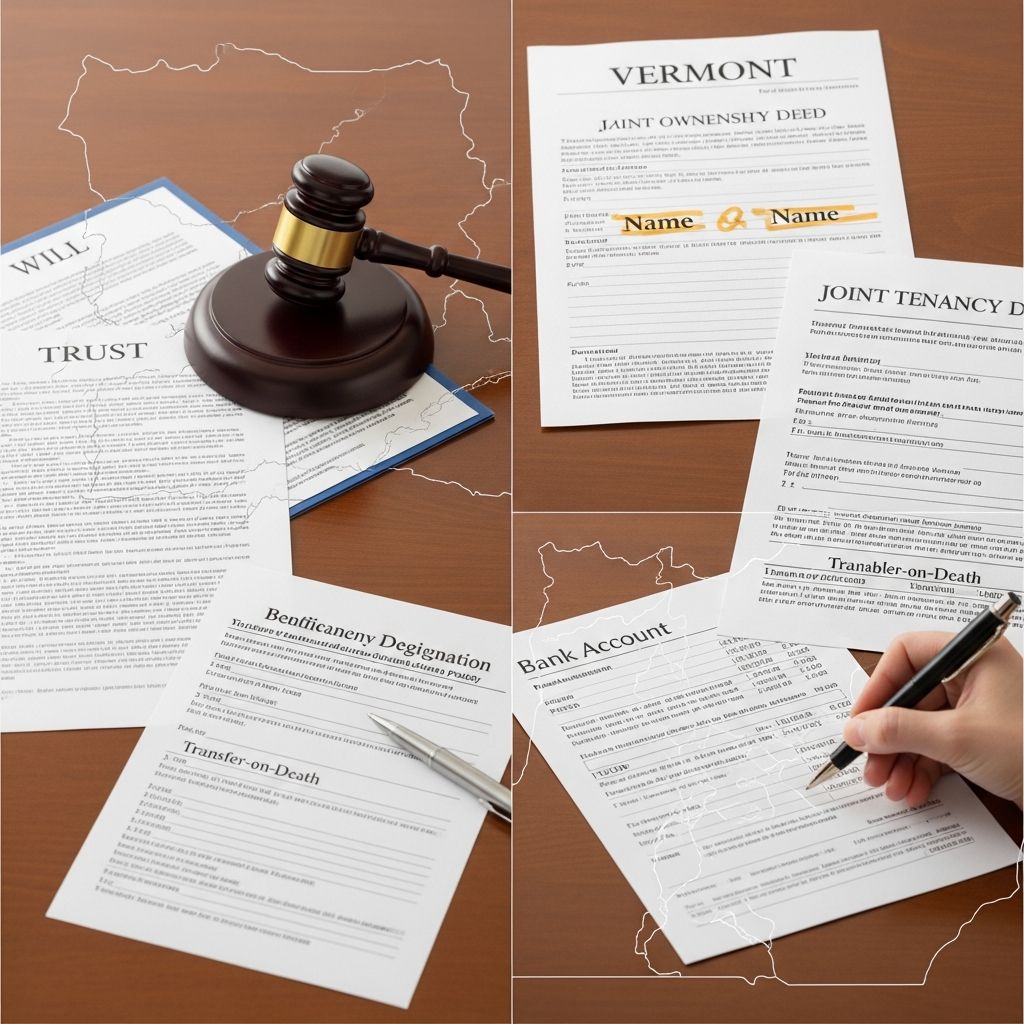
Probate serves as the legal mechanism for validating wills, settling debts, and distributing a deceased person’s assets in Vermont. However, this court-supervised process can introduce delays, public scrutiny, and substantial fees, often lasting six months to over a year depending on estate complexity. For those seeking efficiency, numerous strategies exist to transfer property directly to heirs, sidestepping probate entirely. This guide outlines Vermont’s probate landscape and practical alternatives, empowering individuals to safeguard their legacies seamlessly.
Understanding Vermont’s Probate Framework
Vermont’s probate proceedings occur within the Probate Division of the Superior Court, where 14 elected judges oversee cases in districts aligned with a decedent’s residence. The process commences when a will custodian files the document within 30 days of death or upon petition for intestate estates. Courts then validate the will, appoint an executor or administrator, inventory assets, address creditor claims within four months, pay taxes—potentially including state estate taxes over $5 million—and finally distribute remnants per the will or intestacy statutes.
Estates under $45,000 without real estate qualify for simplified procedures, requiring proof of paid funeral costs and debts before closure, drastically shortening timelines. Larger or disputed estates demand formal probate, involving asset appraisals, court auctions for realty sales, and executor compensation deemed reasonable by judges, often around 2% of estate value. Federal estate taxes apply beyond exemption thresholds, adding layers. These elements underscore probate’s potential burdens, motivating proactive avoidance.
Core Benefits of Probate Avoidance
Opting out of probate yields multifaceted advantages. Primarily, it accelerates asset transfer—often immediate upon death versus months of litigation. Privacy remains intact, as probate filings become public records exposing financial details. Cost savings materialize through evasion of court fees, attorney bills, and executor commissions, which can erode 3-7% of estate value. Families experience reduced emotional strain, free from court battles over wills or heir disputes. Finally, these methods offer flexibility, allowing updates without rigid probate constraints.
Revocable Living Trusts: A Cornerstone Approach
Central to Vermont estate planning, revocable living trusts enable asset placement into a legal entity controlled by the grantor during life. Upon death, assets pass directly to named successors outside probate, maintaining control and revocability. Funding the trust—transferring titles for real estate, accounts, and investments—is essential; unfunded trusts necessitate probate for those holdings.
Establishment involves drafting by an attorney, naming trustees (often oneself initially), and successors, plus beneficiaries. Vermont recognizes these trusts fully, with no probate required for properly titled assets. Advantages include incapacity management via successor trustees and multi-state property handling without ancillary probate. Drawbacks encompass setup costs ($1,500-$3,000) and diligent funding. Ideal for complex estates or privacy-focused individuals, living trusts streamline transitions comprehensively.
Joint Ownership with Survivorship Rights
Co-owning assets as joint tenants with right of survivorship (JTWROS) prompts automatic transfer to survivors upon death, bypassing probate. Common for spouses on homes, bank accounts, or vehicles, this method suits ongoing shared ownership. In Vermont, surviving owners gain full title instantly, simplifying access.
Caveats abound: unequal contributions risk disputes, and non-spousal joints may trigger gift taxes or creditor exposure. Upon the first owner’s death, the asset fully vests in survivors, potentially complicating later planning. Best for marital assets or trusted family, this remains a straightforward, no-cost tactic.
Beneficiary Designations and Transfer Instruments
Vermont endorses payable-on-death (POD) for bank accounts and transfer-on-death (TOD) for securities and vehicles, directing assets straight to designees upon death. These non-probate transfers require simple forms from institutions, revocable anytime. Life insurance, retirement accounts (IRAs, 401(k)s), and annuities similarly bypass probate via named beneficiaries, overriding wills unless coordinated.
Key is alignment—mismatched designations can frustrate intentions. Vermont law upholds these for eligible assets, ensuring swift liquidity for heirs. No court involvement means privacy and speed, though designees should update post-life events like divorce.
Simplified Procedures for Modest Estates
For estates valued below $45,000 excluding realty, Vermont’s small estate affidavit streamlines closure without full probate. Executors affirm debt payments and funeral costs, then distribute assets directly. No court petition needed if assets avoid administration, per statutes. This suits minimal holdings, closing in weeks versus months.
| Estate Type | Value Limit | Process | Timeline |
|---|---|---|---|
| Small Estate | <$45,000 (no real estate) | Affidavit, debt proof | Weeks |
| Formal Probate | >$45,000 | Court-supervised | 6+ months |
| No Probate Needed | All non-probate assets | Direct transfer | Immediate |
Incorporating Real Property Exclusions
Real estate poses probate challenges, but Vermont offers lady bird deeds (enhanced life estates) allowing retained control with death-time transfer to grantees. Transfer-on-death deeds, though limited, apply to vehicles. For out-of-state holdings, ancillary probate fragments efficiency—trusts mitigate this. Joint tenancy deeds for homes with spouses effectively avoid probate here.
Potential Pitfalls and Best Practices
Avoidance demands vigilance: incomplete titling defeats purposes, and creditor claims may pierce certain transfers. Vermont imposes no inheritance tax, but federal rules and state estate taxes over $5 million persist. Coordinate with wills via pour-over clauses capturing strays into trusts. Regular reviews post-life changes ensure currency.
Consult Vermont-licensed attorneys for customized plans, as DIY errors invite litigation. Digital assets—online accounts, crypto—require specific directives, increasingly vital.
Comparative Overview of Avoidance Methods
- Living Trusts: Comprehensive, private; suits large estates.
- Joint Ownership: Simple, immediate; risk exposure.
- POD/TOD: Easy for financial assets; limited scope.
- Small Estate Affidavit: Quick for modest values; realty excludes.
- Beneficiary Forms: Essential for insurances/retirement; update frequently.
Frequently Asked Questions
Can all Vermont estates avoid probate?
No, only properly designated assets bypass it; others require administration unless under small estate rules.
How long does Vermont probate typically last?
Simple cases resolve in six months; complex ones exceed a year.
Does Vermont charge estate taxes?
No inheritance tax; estate tax applies over $5 million.
Who handles probate if no will exists?
Court appoints an administrator per intestacy priority.
Are digital assets probate-exempt?
Often via terms of service or trusts; plan explicitly.
Implementing these strategies fortifies estates against probate’s rigors, preserving wealth and harmony for Vermont families.
References
- Understanding Vermont’s Probate Process — Deppman Law. 2024. https://www.middlaw.com/understanding-vermont-s-probate-process
- How Does a Probate Sale Work in Vermont? (2026 Guide) — ListWithClever. 2026. https://listwithclever.com/probate-sale/vermont/
- The Vermont Statutes Online – Vermont Laws (Title 14, Chapter 3) — Vermont Legislature. Accessed 2026. https://legislature.vermont.gov/statutes/fullchapter/14/003
- How Probate Laws Work in Vermont — ProbateAdvance. 2024. https://probateadvance.com/vermont-probate-laws/
- Going Through Probate After Someone Died — VT Law Help. Accessed 2026. https://vtlawhelp.org/going-through-probate
- Probate Court — Estates, Wills, Guardianships and More — VT Law Help. Accessed 2026. https://www.vtlawhelp.org/probate-division-information
Similar Articles








Read full bio of Sneha Tete


