
Strategies to Bypass Probate in Nebraska
Discover proven methods for Nebraska residents to transfer assets efficiently without the delays and costs of probate court.
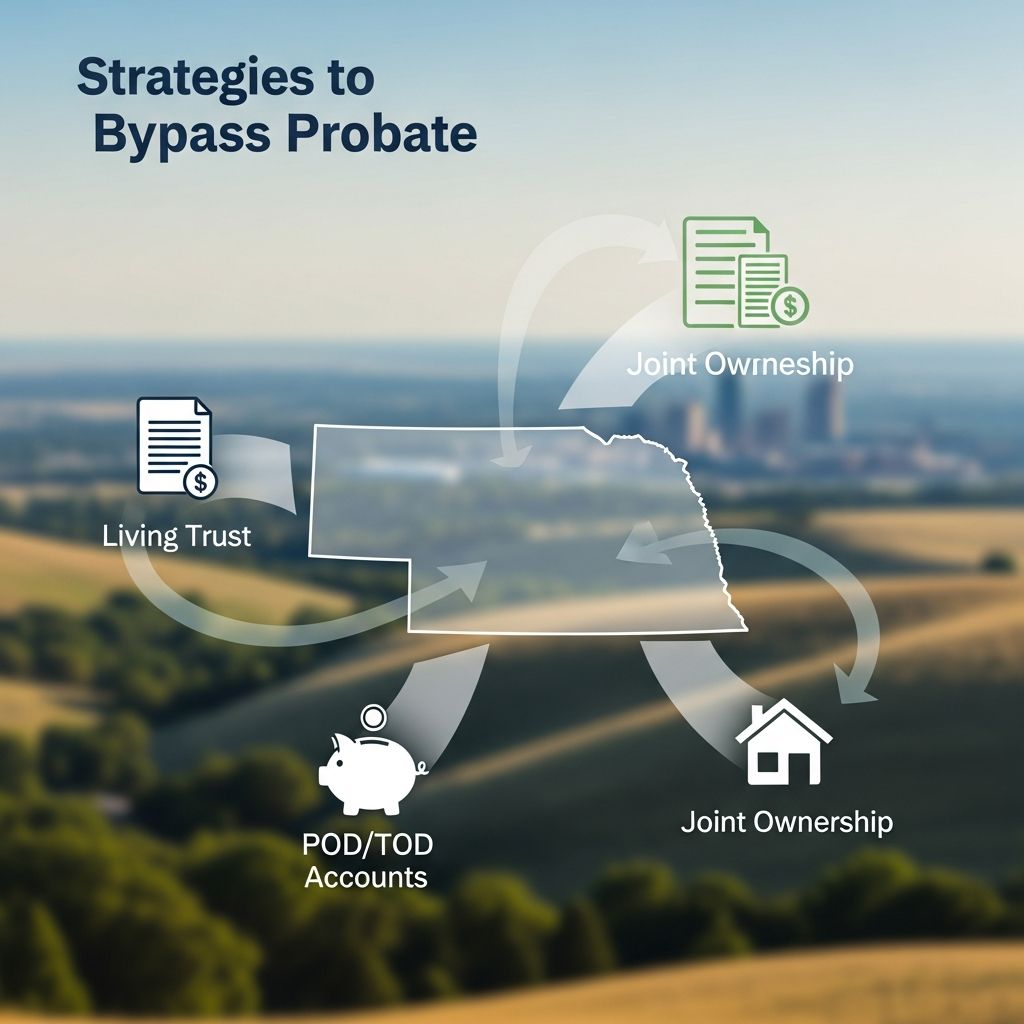
Probate serves as the legal mechanism for validating wills, settling debts, and distributing a deceased person’s assets under court supervision. In Nebraska, this process unfolds in county courts where petitions initiate formal validation of documents like wills, appointment of representatives, asset inventories, creditor notifications, debt resolutions, and final distributions. While essential for contested estates, probate often spans months to over a year, incurs fees equivalent to 3-7% of estate value, and exposes details publicly. Proactive planning empowers individuals to sidestep these hurdles, ensuring faster, private, and cost-effective transfers to beneficiaries.
Understanding Nebraska’s Probate Landscape
The probate journey in Nebraska commences with a petition filed in the county court of the decedent’s residence, accompanied by a death certificate. Courts validate wills if present, appointing a personal representative—typically the named executor or a close kin—to oversee operations. This role encompasses compiling asset inventories, alerting creditors, validating claims within roughly four months, disbursing obligations including taxes, and concluding with a detailed report for judicial approval before asset releases. Estates lacking wills follow intestacy statutes prioritizing spouses and descendants. Average durations range from six to twelve months for uncomplicated cases, escalating with disputes or complexities, alongside attorney fees, court costs, and executor compensations eroding inheritances.
Public records render probate transparent, potentially inviting disputes or creditor pursuits post-distribution. Nebraska streamlines modest holdings via abbreviated protocols, yet larger portfolios benefit immensely from evasion tactics. Early implementation of bypass mechanisms preserves control during life while streamlining post-mortem transitions, minimizing administrative burdens on survivors.
Powerful Tools for Probate Avoidance
Numerous vehicles exist for Nebraska residents to direct assets extracourtierly. These encompass trusts, designations, ownership structures, and affidavits, each suited to specific holdings and family dynamics.
Revocable Living Trusts: Comprehensive Control
A cornerstone strategy involves revocable living trusts, legal entities holding titled assets during the grantor’s lifetime with retained management authority as initial trustee. Upon incapacity or death, successor trustees execute instructions sans judicial oversight, distributing per outlined directives. This vehicle accommodates diverse properties: homesteads, vehicles, investments, even business stakes.
Establishment requires drafting via attorney, naming trustees and beneficiaries, then retitling assets—crucial for efficacy, as untitled holdings default to probate. Benefits span privacy (no public filings), incapacity management, flexibility for amendments, and incapacity provisions. Drawbacks include upfront costs ($1,500-$3,000 typically) and diligent funding maintenance. Ideal for estates surpassing $100,000 or families valuing discretion and speed.
Beneficiary Designations: Instant Transfers
Financial instruments like IRAs, 401(k)s, life insurance, and annuities bypass probate via named payees receiving proceeds directly. Banks offer payable-on-death (POD) for checking/savings/CDs, permitting full access until death when beneficiaries claim seamlessly (Neb. Rev. Stat. § 30-2723). Brokerages support transfer-on-death (TOD) for securities, automating inheritance sans court (Neb. Rev. Stat. § 30-2740).
- Update Regularly: Life events like marriages, births, or divorces necessitate beneficiary reviews to align with intents.
- Primary/Contingent Layers: Designate backups preventing lapsed designations reverting to estates.
- Tax Nuances: Retirement payouts trigger income taxes for non-spouse heirs; consult advisors.
These designations demand no paperwork post-death beyond death certificate submission, rendering them profoundly efficient for liquid assets.
Joint Tenancy with Survivorship Rights
Co-owning property as joint tenants with right of survivorship (JTWROS) prompts automatic vesting in survivors upon a co-owner’s passing, severing probate. Prevalent for marital homes, spousal accounts, or familial vehicles, title transfers instantaneously via existing deeds or registrations.
| Asset Type | Pros | Cons |
|---|---|---|
| Real Estate | Seamless spousal transfer | Potential capital gains tax basis step-up loss |
| Bank Accounts | Immediate access | Creditor exposure to all owners |
| Investment Accounts | Simplified liquidity | Loss of individual control |
Exercise caution with non-spouses to avert unintended disinheritances or disputes; tenancy in common lacks survivorship, necessitating alternative planning.
Transfer-on-Death Deeds for Real Estate
Nebraska authorizes transfer-on-death (TOD) deeds for homesteads and land parcels, retaining full dominion until death when title vests beneficiary-directly post-notarized, recorded filings. Unlike lifetime gifts forfeiting control/tax benefits, TOD deeds preserve step-up basis and revocability via resale or new deeds. Recording in county registers activates upon affidavit submission with death certificate, evading formal probate.
Beneficiaries gain clear title sans debts (paid from other sources), ideal for vacation homes or rental properties earmarked for specific heirs.
Simplified Procedures for Modest Estates
Nebraska accommodates smaller legacies through affidavits circumventing full probate. Estates valuing under $50,000 in personalty qualify for small estate affidavits, enabling heirs—spouses, descendants, or creditors—to collect via sworn statements post-30-day creditor windows. Real estate under statutory thresholds utilizes dedicated affidavits for title transfers sans administration.
- Personal Property Limit: $50,000 excluding joint/non-probate assets.
- Real Property: Specific affidavit processes for homestead transfers.
- Timeline: 30 days post-death before filing; swift resolutions often weeks.
These suit uncomplicated scenarios absent wills or disputes, preserving modest inheritances from disproportionate fees.
Potential Pitfalls and Best Practices
While potent, bypass methods harbor oversights. Mismatched designations conflicting with wills/pour-over provisions spawn litigation; unfunded trusts or outdated beneficiaries revert assets probately. Joint ownerships risk premature transfers via co-owner creditors or spendthrift behaviors. TOD deeds exclude multi-owner properties unless all consent.
Mitigate via holistic reviews: inventory assets, align directives, fund trusts diligently. Professionals—attorneys, financial planners—craft tailored portfolios, especially for blended families, special needs heirs, or substantial holdings. Annual audits post-life changes maintain alignment.
Financial and Tax Implications
Evasion trims 3-7% costs, accelerates liquidity (weeks vs. months), shields privacy. Tax-wise, proper titling secures step-up basis minimizing capital gains; beneficiary IRAs enable stretched distributions. Medicaid planning or creditor protections may necessitate trusts over designations. Consult tax experts for optimized structures.
Frequently Asked Questions
What distinguishes probate from non-probate assets?
Probate assets lack beneficiary designations, trusts, or survivorship; non-probate transfer automatically.
Can I alter a living trust anytime?
Yes, revocable trusts permit amendments or revocations during competency.
Do POD accounts affect my bank access?
No, full control persists; beneficiaries access only post-death.
Is joint ownership safe for non-spouses?
Often not, due to creditor risks and control loss; alternatives preferable.
When suits small estate affidavit?
For personal property under $50,000, uncontested, simple heirships.
Does avoiding probate save taxes?
Indirectly via costs; estate taxes apply federally over $13.61 million (2025), Nebraska none.
In summary, Nebraska offers versatile probate-avoidance arsenal empowering legacies’ swift, private fulfillment. Integrating trusts, designations, ownerships, and affidavits per portfolio constructs resilient plans. Engage experts for personalization, securing families’ futures efficiently.
References
- Nebraska Revised Statutes § 30-2723 — Nebraska Legislature. 2024. https://nebraskalegislature.gov/laws/statutes.php?statute=30-2723
- Nebraska Revised Statutes § 30-2740 — Nebraska Legislature. 2024. https://nebraskalegislature.gov/laws/statutes.php?statute=30-2740
- Affidavit for Transfer of Real Property without Probate — Nebraska Judicial Branch. Accessed 2026. https://nebraskajudicial.gov/self-help/estates/affidavit-transfer-real-property-without-probate
- How to Avoid Probate in Nebraska — Nasdaq. 2023. https://www.nasdaq.com/articles/how-avoid-probate-nebraska
- Understanding the Basics of Nebraska Probate: Will vs. Trust — Spencer Fane LLP. 2023. https://www.spencerfane.com/insight/understanding-the-basics-of-nebraska-probate-will-vs-trust/
Similar Articles








Read full bio of medha deb


