
Strategies to Bypass Probate in Michigan
Discover effective methods to transfer assets to heirs in Michigan without the delays, costs, and publicity of probate court proceedings.
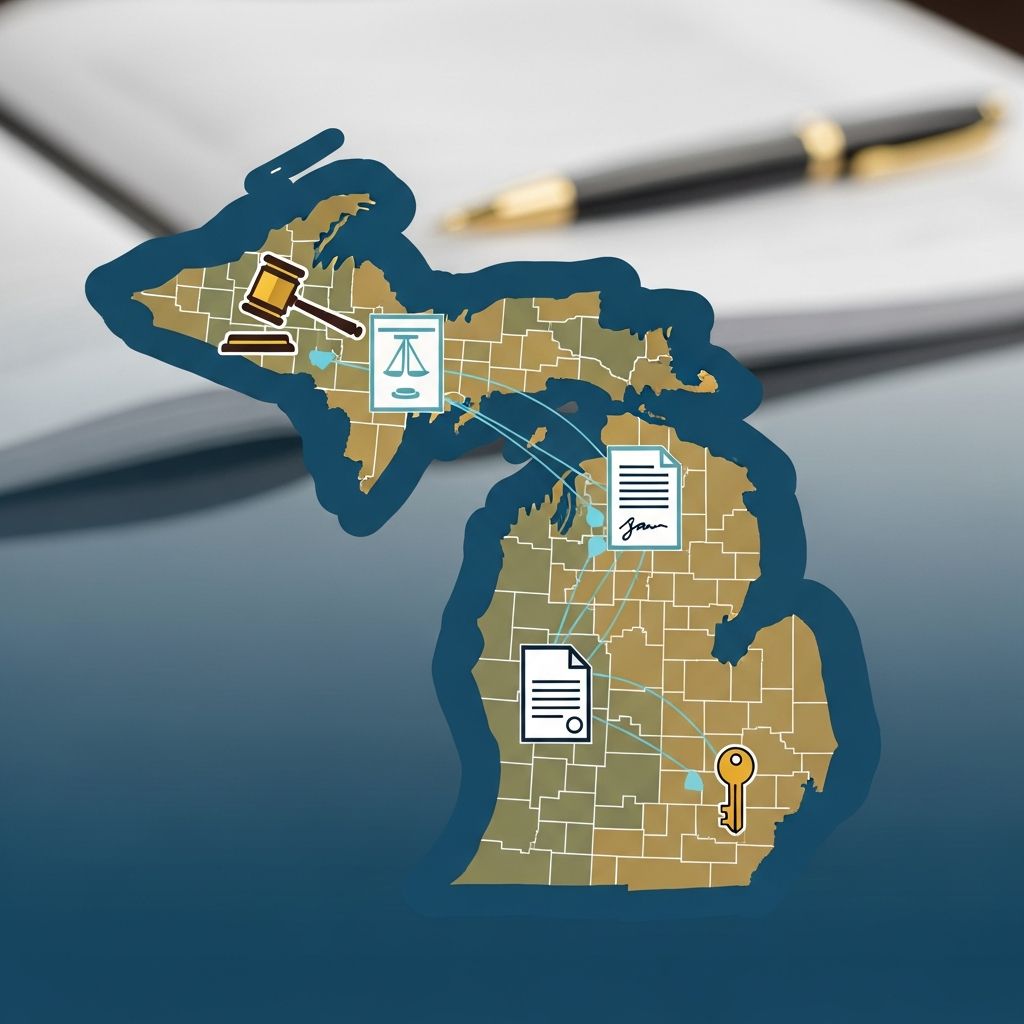
Probate serves as the court-supervised validation of a will and distribution of a deceased person’s assets in Michigan. While necessary for many estates, it often involves significant time delays, legal fees, and public disclosure that many wish to circumvent. This guide outlines practical, legally sound approaches to transfer property directly to beneficiaries, minimizing court involvement and preserving family resources.
Understanding Probate and Its Drawbacks in Michigan
The probate process in Michigan typically spans 6 to 18 months for unsupervised administrations, longer for contested cases, with costs averaging 3-7% of the estate value including attorney fees, court filings, and executor compensation. Public records expose asset details, potentially inviting creditor claims or family disputes. Assets like real estate, bank accounts, and personal property held solely in the decedent’s name trigger this process unless proactive steps are taken.
- Time Consumption: Court approvals for every distribution step prolong access to funds needed for living expenses or debts.
- Financial Burden: Fees erode inheritance; for a $500,000 estate, expenses could exceed $25,000.
- Lack of Privacy: Anyone can access probate files, revealing family finances.
- Stress on Heirs: Executors face administrative burdens amid grief.
By contrast, non-probate transfers enable immediate access, confidentiality, and cost savings, making them ideal for most Michigan residents planning ahead.
Core Methods for Non-Probate Asset Transfer
Several tools allow assets to pass outside probate by design. These methods ensure seamless handover while retaining control during life.
Revocable Living Trusts: Comprehensive Control and Efficiency
A revocable living trust involves transferring ownership of assets to a trust entity you create and manage as trustee. You retain full use and can amend or revoke it anytime. Upon death, a successor trustee distributes assets per your instructions without court oversight.
Ideal for Michigan families with real estate, investments, or businesses, trusts avoid probate entirely for included property. Funding the trust—retitling deeds, accounts, and titles—is crucial; unfunded trusts offer no benefit.
| Pros | Cons |
|---|---|
| Privacy, speed, incapacity planning | Setup costs ($1,500-$3,000), ongoing maintenance |
| Handles all asset types | Requires proper funding |
Beneficiary Designations and TOD/POD Accounts
Financial institutions permit naming beneficiaries on IRAs, 401(k)s, life insurance, and bank accounts via Payable on Death (POD) or Transfer on Death (TOD) forms. These override wills, directing funds straight to recipients.
In Michigan, TOD deeds extend this to securities and vehicles. Update designations after life events like divorce to prevent ex-spouses inheriting unexpectedly.
- Bank/CDs: POD
- Investments: TOD
- Retirement: Primary/contingent beneficiaries
Joint Ownership with Survivorship Rights
Holding property as joint tenants with right of survivorship (JTWROS) or tenancy by the entirety (for spouses) automatically vests full title in survivors upon death, bypassing probate. Common for homes and accounts between spouses.
Caveat: Adds owners to title during life, risking creditor access or disputes with non-spouse joints.
Lady Bird Deeds for Real Property
Michigan recognizes enhanced life estate deeds (Lady Bird deeds), granting you lifelong control—including selling or mortgaging—while naming remaindermen who inherit at death without probate. Perfect for homesteads, avoiding refinancing hassles of joint tenancy.
Simplified Procedures for Smaller Estates
Not all estates need full avoidance; Michigan streamlines low-value ones. Estates under $27,000 (personal property, adjusted periodically) qualify for affidavit transfers 28 days post-death.
For totals up to $51,000 post-funeral costs, small estate affidavits or orders for assignment expedite closure, often in weeks versus months. Real estate may still require separate handling unless TOD-deeded.
Lifetime Gifting to Reduce Estate Size
Transferring assets while alive shrinks the probate estate. Federal rules allow $18,000 annual gifts per recipient (2024) tax-free; larger sums report on Form 709 without immediate tax.
Benefits include seeing heirs enjoy gifts; drawbacks: potential Medicaid look-back penalties (5 years) and gift taxes on estates over $13.61 million lifetime exemption.
Potential Pitfalls and Best Practices
Even solid plans falter without review. Common errors include outdated beneficiaries, unfunded trusts, or mismatched asset divisions causing disputes.
- Review documents every 3-5 years or after major changes.
- Coordinate with wills as ‘pour-over’ catch-alls for forgotten assets.
- Consult attorneys; DIY forms risk invalidity.
Joint ownership exposes assets to co-owner creditors; beneficiary designations may conflict with estate tax plans or unequally benefit heirs if investments fluctuate.
When Probate Might Be Advantageous
Rarely, probate protects: It bars creditor claims after notice (unlike 3-year window for non-probate assets) and validates title for unique property. Disputed wills benefit from court authority.
Step-by-Step Guide to Implementing a Plan
- Inventory Assets: List values, titles, and beneficiaries.
- Prioritize Methods: Trusts for complexity; designations for simplicity.
- Execute Documents: Use Michigan-compliant forms; record deeds.
- Fund Trusts: Retitle everything.
- Inform Successors: Share locations/passwords securely.
Frequently Asked Questions
Does a will prevent probate in Michigan?
No, wills require probate validation; use non-probate transfers instead.
How much does avoiding probate save?
Potentially thousands in fees and months in time, varying by estate size.
Can I add TOD to my home?
Yes, via TOD deed or Lady Bird deed for seamless transfer.
What if I have no will?
Intestate laws apply via probate; plan ahead to control outcomes.
Are trusts only for the wealthy?
No, beneficial for any estate over $27,000 seeking privacy/speed.
Professional Guidance for Michigan Residents
Tailor strategies to your situation—family dynamics, asset types, health. Michigan estate attorneys ensure compliance, especially with 2026 updates to thresholds or tax laws. Start planning today for peace tomorrow.
References
- Avoiding Probate – Collens Estate Law — Collens Estate Law. 2024. https://collensestatelaw.com/probate-law/avoiding-probate/
- Avoiding Probate in Michigan: Strategies to Protect Your Estate — Michigan Estate Planning. 2024. https://michiganestateplanning.com/avoiding-probate-in-michigan-strategies-to-protect-your-estate/
- How to Avoid Probate in Michigan — Suzanne Fanning, Ann Arbor Probate. 2024-01-11. https://www.annarborprobate.com/estate-administration/2024/01/11/how-to-avoid-probate-in-michigan/
- Probate in Michigan: What It Is, How It Works, and How to Avoid It — BBA Law MI. 2024. https://bbalawmi.com/probate-in-michigan-what-it-is-how-it-works-and-how-to-avoid-it/
- Ten Assets that Avoid Probate — The Probate Pro. 2023. https://theprobatepro.com/blog/ten-assets-that-avoid-probate/
Similar Articles








Read full bio of Sneha Tete


