
Strategies to Bypass Arizona Probate in 2026
Discover proven methods to transfer assets in Arizona without probate delays, costs, and court oversight in 2026 and beyond.
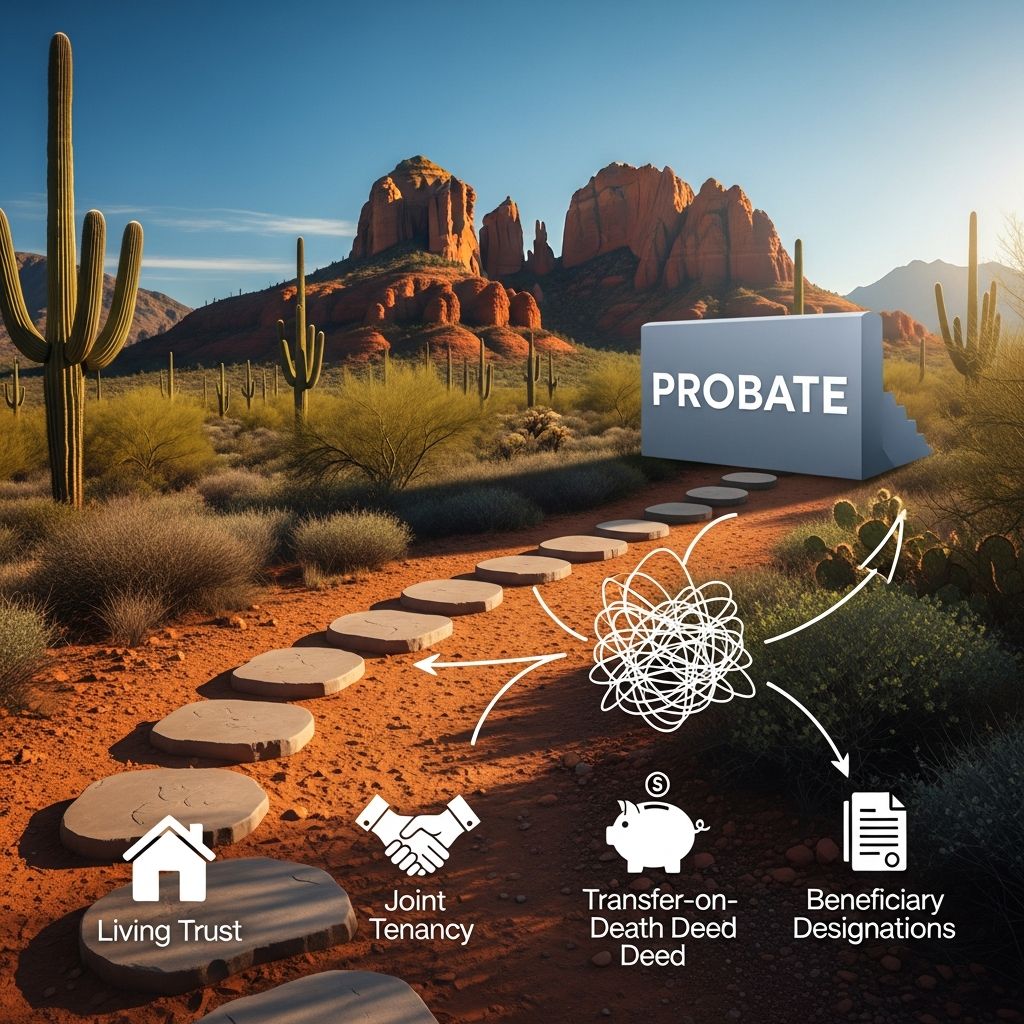
Arizona residents seeking to protect their legacies often face the daunting prospect of probate—a court-supervised process to validate wills and distribute assets. While necessary for certain estates, probate can extend for months or years, incur high fees, and expose private family matters to public scrutiny. Fortunately, 2026 brings updated laws and time-tested techniques to minimize or eliminate this process entirely.
Understanding Probate Necessities in Arizona
Probate becomes mandatory only for assets held solely in the deceased’s name without transfer mechanisms like beneficiaries or co-ownership. Common probate-bound items include solo-titled homes, undesignated bank accounts, individual investment holdings, vehicles without survivors, personal belongings, and sole business ownerships. Even a will triggers probate rather than avoiding it, as it merely instructs the court on distribution.
In contrast, assets with built-in transfer provisions—such as joint tenancy with survivorship or payable-on-death accounts—pass directly to recipients, evading court involvement. Arizona’s probate code, outlined in Title 14 of the Arizona Revised Statutes, emphasizes efficiency through informal proceedings when possible, yet full avoidance remains preferable for most.
2026 Small Estate Threshold Updates: A Game-Changer
One of the most significant developments for Arizona estate handling arrives in 2026 via House Bill 2116, signed by Governor Katie Hobbs. This legislation dramatically raises small estate affidavit limits, enabling faster, court-free transfers for larger portfolios.
| Asset Type | Pre-2026 Limit | 2026+ Limit |
|---|---|---|
| Personal Property | $75,000 | $200,000 |
| Real Property | $100,000 | $300,000 |
These affidavits, governed by A.R.S. §§ 14-3971 and 14-3973, allow heirs to claim assets after a waiting period without formal probate, provided no disputes arise and procedures are followed meticulously. This expansion accounts for inflation and rising property values, benefiting more families by reducing administrative burdens.
Power of Revocable Living Trusts
A revocable living trust stands as a cornerstone for probate avoidance in Arizona. Created during your lifetime, this flexible tool lets you serve as both trustee and beneficiary, maintaining full control over assets like real estate, accounts, and investments transferred into the trust.
Upon death, trust assets distribute privately and swiftly to named beneficiaries per your instructions, bypassing probate entirely if properly funded—a crucial step often overlooked. Arizona’s Trust Code (A.R.S. §§14-10101-14-11102) mandates clear settlor intent, trustee designation, beneficiary identification, and fiduciary duties, ensuring robust legal standing.
- Key Advantages: Privacy (no public filings), speed (no court delays), incapacity planning (successor trustee steps in seamlessly), and cost savings (attorney fees for setup versus probate expenses).
- Setup Essentials: Draft via attorney, fund by retitling assets, name successor trustee and beneficiaries.
Trusts adapt easily: amend or revoke as life changes, such as marriages or births, occur. For business owners, they safeguard operations by preventing probate interruptions.
Beneficiary Deeds for Seamless Real Estate Transfers
Arizona’s beneficiary deeds (A.R.S. § 33-405) offer a straightforward path for real property. Record this document naming beneficiaries during your life; upon death, title automatically vests in them without probate.
Requirements include proper notarization, recording before death, and revocation capability if plans change. Ideal for homes or land, these deeds integrate well with broader plans but demand precision to avoid invalidation.
- Pros: Simple, low-cost, direct transfer.
- Cons: Limited to real estate; minors as beneficiaries trigger conservatorship needs unless paired with trusts.
Joint Ownership and Transfer-on-Death Designations
Co-owning assets as “community property with right of survivorship” or joint tenancy ensures automatic passage to the survivor, dodging probate. Beware tenants-in-common arrangements, where shares enter probate.
Financial institutions support payable-on-death (POD) for banks and transfer-on-death (TOD) for securities/vehicles. Add designated beneficiaries to accounts, and funds transfer instantly post-death verification—no court required.
| Method | Applicable Assets | Probate Impact |
|---|---|---|
| JTROS/JTWROS | Real estate, accounts | Fully avoids |
| POD/TOD | Banks, investments, vehicles | Fully avoids |
| Tenants in Common | Any | Triggers probate |
Navigating Types of Arizona Probate When Avoidance Fails
Should assets necessitate probate, Arizona offers tiers: informal (most common, no hearings if uncontested), formal (court-supervised for disputes), and supervised (intense oversight for conflicts). Updated rules and resources from the Arizona Supreme Court streamline these.
Personal representatives, even if will-named, require court appointment to act. Myths persist—like wills skipping probate (false) or universal lengthy processes (not for simple cases)—but knowledge empowers better planning.
Comprehensive Estate Planning Checklist for 2026
Build a probate-proof plan with these steps:
- Draft a revocable living trust and fund it fully.
- Execute beneficiary deeds for realty.
- Add POD/TOD to all financial and vehicle titles.
- Review joint ownership structures.
- Prepare powers of attorney for health/finance and a pour-over will.
- Assess for small estate eligibility post-2026.
- Consult professionals for tax/business complexities.
Regular reviews ensure alignment with life events. Arizona probate law evolves, so stay informed via official channels.
Special Considerations: Minors, Taxes, and Disputes
Naming minors directly risks court-appointed conservatorships, pulling assets into probate. Use trusts or UTMA/UGMA custodianships instead. While Arizona imposes no state estate tax, federal thresholds apply for large estates.
Disputes amplify costs; clear planning and communication mitigate risks. For businesses, trusts or operating agreements preserve continuity.
Frequently Asked Questions
Can a will prevent probate in Arizona?
No, wills require probate validation. Use trusts or designations for avoidance.
What are the 2026 small estate limits?
Personal property up to $200,000; real property to $300,000 via affidavit.
Is a revocable trust public in Arizona?
No, it remains private unlike probate filings.
Do joint accounts always avoid probate?
Only with survivorship rights; tenants-in-common do not.
How long after death for small estate affidavits?
After statutory waiting periods, typically 6 months, with proper filings.
Why Professional Guidance Matters
While DIY forms exist, Arizona’s nuances—like funding trusts or deed formalities—demand expertise. Attorneys navigate updates, customize plans, and resolve issues, safeguarding your intentions.
Proactive planning in 2026 positions Arizona families for efficient, private asset transitions amid rising thresholds and robust tools.
References
- Probate Thresholds in Arizona Are Changing: What Families Need to Know — Brown & Jensen Law. 2024. https://www.bncjlaw.com/posts/probate-thresholds-in-arizona-are-changing
- What Assets Go Through Probate in Arizona? — Tyler Allen Law Firm. 2024. https://www.allenlawaz.com/blog/what-assets-go-through-probate-in-arizona
- Arizona Estate Planning Checklist [2026 Updated] — CDM Law Firm. 2026. https://cdmlawfirm.com/blog/arizona-estate-planning-checklist/
- 2026 Arizona Trust Laws FAQ: Revocable Living Trust Explained — Hagestad Law. 2026. https://hagestadlaw.com/blog/arizona-revocable-living-trust-basics
- Arizona Probate Forms and Resources — Arizona Courts. 2026. https://www.azcourts.gov/probate
- Title 14 – Trusts, Estates and Protective Proceedings — Arizona Legislature. Accessed 2026. https://www.azleg.gov/arsDetail/?title=14
- Probate & Trust Section — State Bar of Arizona. 2026. https://azbar.org/for-legal-professionals/communities/sections/probate-trust/
Similar Articles








Read full bio of medha deb


