Parents who are rethinking homeschooling often discover a wide landscape of other lawful education options. From specialized public programs to private and online schools, families have multiple ways to provide a compliant, high-quality education that fits their child’s needs and their own capacity as caregivers.
This guide explains major homeschooling alternatives, how they typically work, and practical factors to weigh before you make a change.
Why Some Families Look for Homeschooling Alternatives
Homeschooling can be rewarding, but it is not the right long-term solution for every household. Common reasons parents explore other options include:
- Time pressure: One or both parents return to full-time work and cannot continue daily instruction.
- Academic concerns: Caregivers feel unprepared to teach advanced subjects or support special learning needs.
- Social development: Families want more peer interaction, extracurriculars, or group learning experiences.
- Need for structure: A child thrives with predictable routines, external deadlines, and formal grading.
- Legal clarity: Parents prefer clearly regulated school environments over managing compliance as home educators.
In most states, compulsory education laws can be satisfied through several forms of schooling, not only traditional neighborhood public schools. The right choice depends on your child, local availability, and state regulations.
Public School Pathways: More Than One Model
Public education in the United States is not a single uniform experience. Families leaving homeschooling may find that different public models offer varying levels of specialization, flexibility, and support.
Neighborhood Public Schools
Neighborhood public schools are the default option in most districts. They are funded with tax dollars, free to attend, and must comply with state curriculum standards and civil rights laws.
Key features include:
- Certified teachers and standardized curricula tied to state learning standards.
- Special education services for eligible students under the Individuals with Disabilities Education Act (IDEA).
- Access to athletics, arts, counseling, clubs, and transportation where available.
For some former homeschoolers, the predictability and full-service nature of neighborhood schools is a relief. Others may seek more customization than the local campus can provide.
Magnet Schools
Magnet schools are public schools with a specific academic or thematic focus, such as STEM, performing arts, world languages, or career and technical education.
- They remain tuition-free but may require an application, audition, or lottery.
- Curriculum is aligned with state standards but enriched in the magnet area.
- Students often attend from across district boundaries, increasing diversity and choice.
Magnet programs work well for homeschooled students who developed strong interests—such as robotics or music—and now want formal, advanced instruction in that field.
Charter Schools
Charter schools are publicly funded but operate under an independent charter that gives them more autonomy over curriculum, staffing, and school culture.
- They do not charge tuition and must follow civil rights and accountability laws.
- Many emphasize particular teaching methods (such as project-based or Montessori-inspired models) or focus areas (e.g., science or college prep).
- Enrollment is usually through lottery if applications exceed available seats.
Families leaving homeschooling often appreciate charter schools that offer smaller communities or alternative pedagogies while still relieving parents of direct teaching duties.
Private School Alternatives: Faith-Based and Independent Options
Private schools operate outside direct district control and are financed primarily through tuition, donations, and sometimes religious organizations. Regulations vary by state, but these schools typically have more control over curriculum and admissions than public schools.
Religious Schools
Many faith-based schools weave religious instruction and values into academic subjects and daily routines. For some families, this provides continuity with beliefs that informed their decision to homeschool.
Common characteristics include:
- Integration of religious teachings with core subjects.
- Expectations related to behavior, dress codes, and community life linked to faith traditions.
- Potential for reduced tuition through church support, scholarships, or multi-child discounts.
Independent and Specialty Private Schools
Independent schools and specialty programs may emphasize academic rigor, arts, international curricula, or alternative philosophies:
- College-preparatory schools with intensive coursework and advanced placement options.
- Waldorf or other alternative-method schools that prioritize creativity, storytelling, and limited early screen time.
- Special-needs schools with tailored supports for particular learning differences.
Because private schools are not bound by all of the same regulations as public schools, families should carefully review accreditation, graduation requirements, and credit transfer policies before enrolling.
Online and Virtual Schooling: Structured Learning from Home
For families accustomed to learning at home but ready to hand over curriculum and assessment to professionals, online schools can be a compelling alternative. Technology and high-speed internet have greatly expanded these options.
Public Online Schools
Some states and districts operate full-time virtual public schools. Students remain enrolled in a public system but attend classes and complete assignments primarily online.
- Tuition-free for in-state residents, funded as part of the public system.
- State-certified teachers deliver instruction and grade work.
- Students must meet attendance and assessment requirements, though daily scheduling can be more flexible than in traditional schools.
These programs appeal to families who want legal and financial simplicity, but also prefer their children to learn from home due to health, mobility, or lifestyle considerations.
Private Online Schools
Private virtual schools provide full curricula and instruction over the internet in exchange for tuition. Many market small class sizes, individualized pacing, and global enrollment.
- They may offer multiple diploma tracks or international programs.
- Teacher support, office hours, and synchronous sessions vary by school.
- Cost ranges widely; some also offer part-time or course-only enrollment.
When evaluating private online schools, look closely at accreditation, graduation outcomes, and how credits transfer to in-person institutions or colleges.
Blended and Hybrid Models
Blended or hybrid learning combines face-to-face instruction with significant online work. A student may attend campus several days a week and complete the rest of their coursework remotely.
- Useful for students who need flexibility for health, travel, or extracurricular commitments.
- Can ease the transition from homeschooling to traditional schooling by retaining some at-home learning.
- Implemented by both public and private schools, sometimes under special academy programs.
Alternative Educational Philosophies and Specialized Schools
Some families are drawn to alternatives not only because of logistics, but also because they value different approaches to teaching and learning than those used in conventional classrooms.
Montessori-Inspired Programs
The Montessori approach emphasizes self-directed activity, hands-on materials, and mixed-age classrooms.
- Children choose from prepared activities within a structured environment.
- Teachers act as guides, encouraging independence rather than leading whole-class lectures.
- Assessment often relies on observation, portfolios, and developmental progress instead of frequent graded tests.
Montessori-based public, charter, and private schools exist in many communities, offering an option that preserves some of the autonomy of homeschooling while providing professional educators and peer groups.
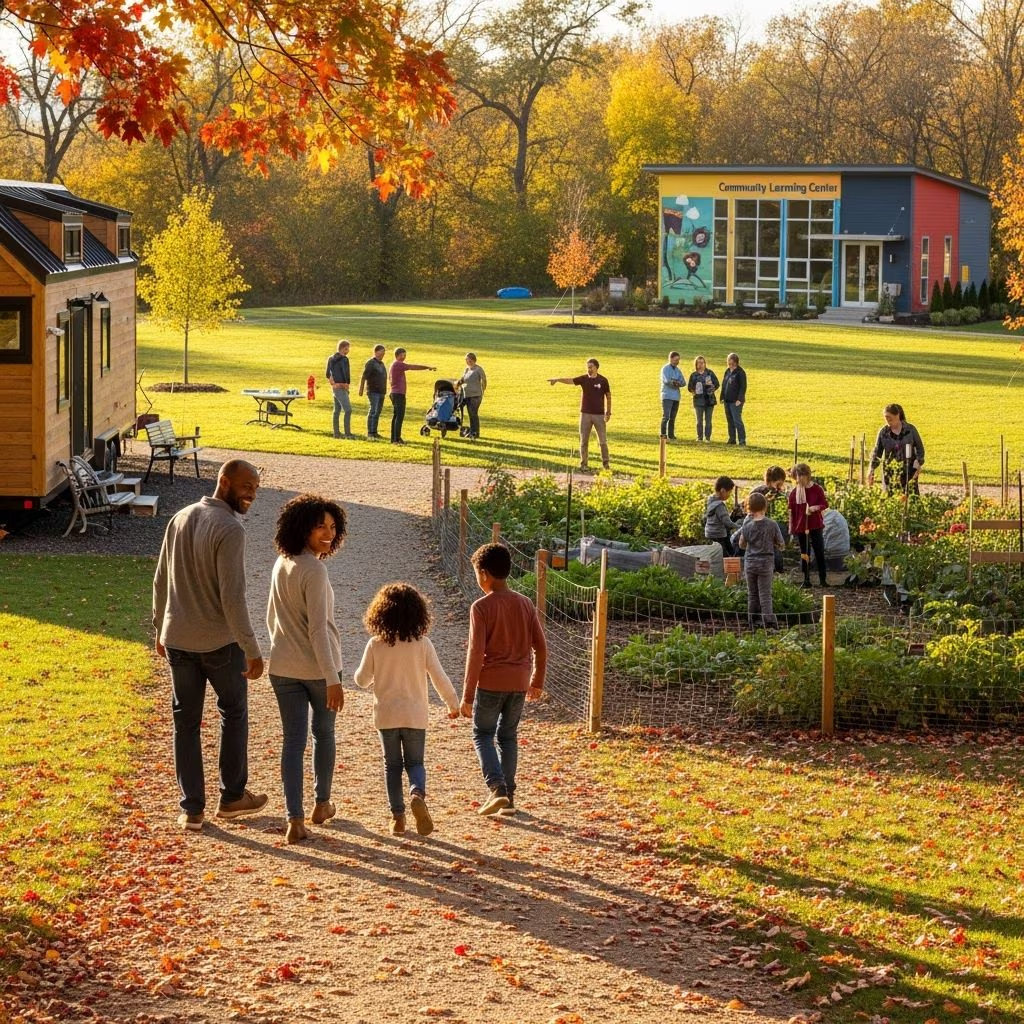
Microschools and Learning Pods
Microschools are very small learning communities—often 5 to 15 students—with a focus on individualized instruction and project-based learning.
- Some are run by certified teachers; others operate more informally and partner with curriculum providers.
- Schedules may be part-time or full-time and can resemble a cross between homeschooling and private schooling.
- Costs vary; some programs are privately funded, while others receive charter or scholarship support.
Microschools can give former homeschoolers a gradual step toward group learning in a small, supportive environment.
Military and Boarding Schools
For older students, military schools and boarding schools offer highly structured environments with round-the-clock supervision. Many now emphasize leadership, college preparation, and character education rather than serving only as last-resort placements.
- Students often live on campus, follow rigorous daily schedules, and participate in athletics or service programs.
- These schools may suit teens seeking independence, discipline, or a fresh start.
- They can be costly, but scholarships and financial aid may be available.
Comparing Key Homeschooling Alternatives
The table below summarizes how several alternatives differ on a few critical dimensions for families transitioning away from homeschooling.
| Option | Cost | Location | Schedule Flexibility | Teacher Involvement |
|---|---|---|---|---|
| Neighborhood Public School | Tuition-free | On-campus | Low | High (certified teachers) |
| Charter or Magnet School | Tuition-free | On-campus | Low–Medium | High |
| Private School | Tuition required | On-campus | Low–Medium | High |
| Public Online School | Generally tuition-free in-state | Home-based | Medium–High | High, via virtual instruction |
| Private Online School | Tuition required | Home-based | Medium–High | Medium–High (varies by program) |
| Microschool | Varies (often lower than traditional private) | Small, local site | Medium | High, with small groups |
Legal and Practical Considerations When Changing Paths
Switching from homeschooling to another option involves more than choosing a brochure. Families must ensure they remain in compliance with compulsory education laws and protect their child’s academic progress.
Understanding State Requirements
Education laws are primarily governed by states. Requirements may cover school attendance age, documentation of enrollment, and procedures for switching from home instruction to school-based programs.
- Check your state department of education website for official guidance and timelines.
- If you previously filed homeschool notices or evaluations, confirm whether additional filings are needed when enrolling in a school.
- For students with disabilities, consider how services will transition under IDEA if moving into public programs.
Transcripts, Credits, and Placement
When a formerly homeschooled student enrolls in a new school, the administration may need to determine grade level and course placement. Policies differ by district and institution.
- Prepare a clear record of courses, textbooks, online programs, projects, and assessments your child has completed.
- Some schools accept parent-created transcripts; others may require placement tests or portfolio reviews.
- High school students should ask how credits will be recognized for graduation requirements.
Social and Emotional Transitions
The move from learning primarily at home to joining a school community can be exciting and stressful for children. Practical steps can ease the change:
- Visit campuses or participate in orientation days before finalizing enrollment.
- Discuss classroom expectations, schedules, and rules ahead of time.
- Encourage involvement in clubs or groups to build friendships quickly.
Frequently Asked Questions (FAQs)
Q: Is online public school considered homeschooling?
A: In most states, full-time public online schools are treated as a form of public education, not homeschooling. The student is enrolled in a public program with certified teachers and must meet attendance and testing requirements, even though learning occurs at home.
Q: Can my child re-enter public school after being homeschooled?
A: Yes. Districts generally allow homeschooled students to enroll, but may use placement tests, transcripts, or age-based guidelines to assign grade levels and recognize credits. Families should contact the local school or district office for specific procedures.
Q: Are charter schools free like regular public schools?
A: Charter schools are publicly funded and normally do not charge tuition for in-state students. However, they may have limited seats and use lotteries when applications exceed capacity.
Q: How do I know if a private or online school is legitimate?
A: Look for accreditation from recognized regional or national accrediting bodies, review graduation and college acceptance data, and verify that credits are accepted by local districts or colleges. You can also cross-check information with your state education department.
Q: What if I still want some involvement in my child’s learning?
A: Options such as online schools, hybrid programs, charter schools, and microschools often welcome strong family engagement. You can support homework, monitor progress through online portals, and coordinate with teachers while no longer being the primary instructor.
References
- Alternative Schooling Options for Modern Families — Bina School Blog. 2023-10-02. https://www.thebinaschool.com/blog/the-best-alternative-schooling-options
- Alternatives to Public Schools: Know Your Options 2025 — Prenda. 2025-01-05. https://www.prenda.com/post/what-are-the-alternatives-to-public-school
- Building Blocks of Success: Parents and Early Childhood Education — U.S. Department of Education. 2021-09-15. https://www.ed.gov/parents
- Opting out of Public School: Non-Traditional K-12 Education Options — Peterson’s. 2020-08-19. https://www.petersons.com/blog/opting-out-of-public-school-non-traditional-k-12-education-options/
- Fed Up With Homeschooling? Here Are Some Great Homeschool Alternatives — Healing Roots Education. 2022-04-11. https://www.healingrootsedu.org/blog/great-homeschool-alternatives
- A Homeschool Mom’s Guide to Alternative Education — Healing Roots Education / El Paso Mom. 2022-06-10. https://elpasomom.com/ages-stages/school-years/a-homeschool-moms-guide-to-alternative-education/