
Assessing the True Cost of Family Separation
A deep dive into the systemic failures and trauma caused by family separation.
Introduction to a Humanitarian Crisis
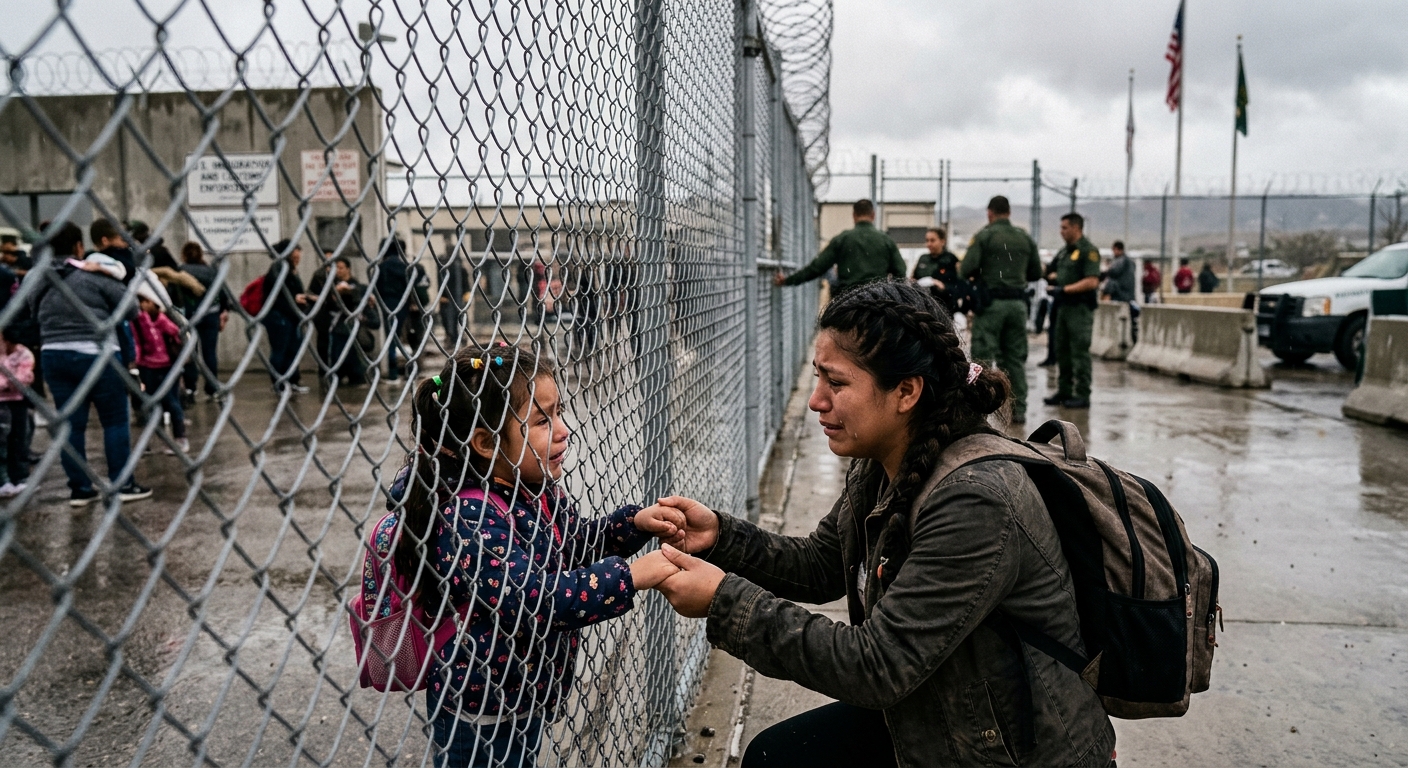
Between 2017 and 2018, the United States witnessed a profound shift in its immigration enforcement strategy that precipitated a severe and highly documented humanitarian crisis. The implementation of the “zero tolerance” policy systematically severed the fundamental bonds between migrant parents and their children at the southern border. While the political ramifications and public outcry dominated national headlines, the truest, most sobering measure of the policy’s impact was captured in the methodical evaluations conducted by government watchdogs. Foremost among these investigations were the comprehensive reports published by the Department of Health and Human Services (HHS) Office of Inspector General (OIG).
For advocates of children’s rights, legal scholars, and human rights defenders, these oversight documents serve as critical evidence. They meticulously outline how a government system catastrophically failed its most vulnerable wards. By stripping away the political rhetoric, the OIG findings reveal a stark narrative of administrative chaos, profound psychological distress, and an alarming disregard for fundamental child welfare standards. This article unpacks the cascading failures documented in these reports and explores the profound implications for children’s rights and future policy reforms.
Administrative Chaos and Interagency Disconnect
The sheer scale of the family separation crisis was significantly exacerbated by a profound lack of interagency coordination and foresight. When the Department of Justice (DOJ) and the Department of Homeland Security (DHS) initiated the zero-tolerance directive, they did so with virtually no advanced warning or strategic alignment with HHS. Under federal law, HHS, specifically its Office of Refugee Resettlement (ORR), is tasked with the care, custody, and placement of unaccompanied alien children. By forcibly removing children from their parents and treating them as “unaccompanied,” the government flooded the ORR system with thousands of newly classified minors, creating an immediate and unmanageable bottleneck.
A devastating finding of the OIG reports was the technological and administrative incompetence surrounding the tracking of these fractured families. DHS and HHS utilized disparate, non-integrated databases that effectively operated in silos. When border agents apprehended a family unit, children were removed and reclassified, often with no reliable digital tether linking their file to their parent’s detention or deportation record. This administrative chaos meant that when federal courts ultimately mandated the rapid reunification of families, the government lacked the basic data architecture necessary to efficiently locate and match parents with their children.
| Federal Agency | Primary Role in Immigration Processing | Systemic Failure Highlighted in Oversight Reports |
|---|---|---|
| DHS (Customs & Border Protection) | Apprehension and border enforcement operations | Failed to accurately document family linkages and reasons for separation. |
| DOJ (Department of Justice) | Prosecution of unauthorized entry offenses | Proceeded with mass prosecutions without planning for the custodial impact on children. |
| HHS (Office of Refugee Resettlement) | Custodial care and welfare of unaccompanied minors | Lacked preparedness, unified tracking capabilities, and adequate mental health resources for traumatized youth. |
The Unseen Scars: Psychological and Emotional Trauma
Perhaps the most distressing revelations stemming from the HHS OIG investigations involve the severe and acute psychological trauma inflicted on separated children. Unlike typical unaccompanied minors, who often travel with the knowledge, preparation, and blessing of their families back home, separated children were abruptly taken from their primary caregivers, frequently without warning or explanation. The resulting emotional devastation was both profound and immediate.
According to exhaustive interviews with mental health clinicians detailed in the oversight reports, affected children exhibited acute symptoms of post-traumatic stress disorder (PTSD), severe anxiety, and clinical depression. Facility staff reported that many younger children were entirely inconsolable, suffering from frequent panic attacks, somatic symptoms, and chronic night terrors. In tragic instances, children genuinely believed their parents had willfully abandoned them or had been killed by authorities. The sudden, forceful severance of the parent-child bond—the most fundamental source of physical and emotional security for a developing mind—triggered toxic stress responses.
For children’s rights advocates and developmental psychologists, these findings confirm a grim reality: the government’s enforcement strategy effectively functioned as a form of state-sanctioned trauma. The psychological scars inflicted during these periods of institutionalization and isolation are not easily healed. Experts warn that such deep-seated trauma is expected to have lifelong developmental repercussions, impacting cognitive function, emotional regulation, and the ability to form trusting relationships in the future.
Overwhelmed Facilities and Severe Care Deficits
The sudden influx of forcibly separated children did not merely strain the administrative capacity of the ORR; it fundamentally compromised the safety, integrity, and quality of care within holding facilities across the country. The HHS OIG investigations illuminated a care system pushed well beyond the brink, where the sudden surge of deeply traumatized, unusually young children overwhelmed the existing infrastructure.
Historically, ORR facilities were primarily designed and staffed to temporarily house older adolescents (typically teenagers). Under the zero-tolerance policy, these same facilities were suddenly tasked with caring for toddlers, infants, and highly vulnerable young children. This dramatic demographic shift required a completely different paradigm of specialized care—one involving cribs, diapers, early childhood nutrition, and intensive emotional support. Predictably, facility operators were wholly unprepared for this mandate.
The OIG found that care providers struggled desperately to hire and maintain adequate staffing levels, leading to dangerous systemic compromises. In a frantic rush to meet surging staffing demands, some facilities bypassed critical, legally mandated background checks, tragically placing vulnerable children at risk of abuse and exploitation by improperly vetted personnel. Furthermore, the ratio of qualified mental health professionals to traumatized children was appallingly insufficient. While policies technically mandated therapeutic support, the on-the-ground reality was that overworked clinicians could barely conduct basic psychological triage, let alone provide the intensive, specialized therapy required to address the acute trauma of forced separation.
Analyzing the Crisis Through a Human Rights Lens
The voluminous findings of the HHS Inspector General represent significantly more than just a bureaucratic or logistical failure; they underscore a severe and calculated violation of foundational children’s rights. At the core of international child welfare standards, including the United Nations Convention on the Rights of the Child, is the universally recognized principle that children should never be separated from their parents against their will, except when competent legal authorities determine it is strictly necessary for the protection and best interests of the child (e.g., in cases of domestic abuse).
The U.S. zero-tolerance border policy explicitly inverted this protective principle. Family separation was not utilized as a protective measure to shield the child from harm, but rather deliberately weaponized as a punitive deterrent aimed at discouraging adults from seeking asylum. Children’s rights organizations have vehemently condemned this strategy, arguing that children were essentially used as pawns in a broader geopolitical enforcement strategy. When a state agency assumes custody of a child, it assumes an overarching, non-negotiable duty of care to ensure that child’s safety, well-being, and emotional health. The deliberate infliction of profound psychological pain through forced separation constitutes a profound breach of this duty. Advocacy groups emphasize that acknowledging the human rights violations inherent in these policies is essential not only for achieving retroactive justice for the affected families but also for establishing unshakeable legal norms that permanently prevent such policies from being resurrected.
The Arduous and Incomplete Journey to Reunification
The immediate aftermath of the zero-tolerance policy has been defined by a chaotic, painful, and protracted reunification process. Driven largely by public outrage and the landmark class-action lawsuit, Ms. L v. ICE, a federal judge ordered the U.S. government to rapidly identify and reunify separated families. However, executing this seemingly straightforward judicial order exposed the catastrophic data failures previously highlighted by the OIG.
Because parents and children were tracked in completely siloed systems with mismatched identification numbers, government task forces had to resort to painstaking, manual reviews of thousands of individual case files, cross-referencing names, dates of apprehension, and facility intake logs. The tragedy was exponentially compounded for parents who were swiftly deported while their children remained detained in U.S. custody. Locating deported parents in remote, often dangerous regions of Central America proved to be an agonizingly slow process, heavily reliant on the tireless, on-the-ground work of non-governmental organizations and human rights attorneys rather than government resources.
Even when physical reunification was miraculously achieved, the emotional reunions were often intensely fraught. Many children, struggling with deep feelings of abandonment and the lingering effects of institutionalization, exhibited severe behavioral regressions or a tragic inability to emotionally reconnect with their parents. The government’s failure to provide comprehensive, long-term mental health services post-reunification remains a significant point of contention among children’s rights advocates and public health experts.
Forging a Path Forward: Accountability and Prevention
The detailed, unflinching accounting provided by the HHS Office of Inspector General must serve as a powerful catalyst for permanent systemic reform. To ensure that the machinery of government is never again utilized to systematically traumatize children, several critical, non-negotiable safeguards must be firmly established in law and practice.
- Legislative Prohibitions: Congress must enact absolute legislative prohibitions against separating families at the border for the purposes of deterrence or the prosecution of minor immigration infractions. Separation should be strictly limited to instances where a qualified, independent child welfare expert determines the child is in imminent danger.
- Child Welfare Integration: There is an urgent need for the integration of licensed child welfare professionals at the very earliest stages of border encounters. Standard law enforcement personnel are fundamentally untrained to assess or manage the complex emotional and developmental needs of migrant children.
- Resource Allocation and Vetting: Sweeping administrative reforms are required within the ORR to ensure that all childcare facilities are adequately funded, strictly vetted, and equipped with comprehensive mental health resources specifically tailored to childhood trauma.
- Independent Oversight: True accountability requires continued, aggressive oversight. The OIG reports demonstrated the indispensable role of independent government watchdogs in penetrating bureaucratic secrecy and safeguarding human rights.
Frequently Asked Questions (FAQ)
What was the “zero-tolerance” policy?
The “zero-tolerance” policy was an aggressive immigration enforcement directive implemented by the U.S. government in the spring of 2018. It mandated the immediate criminal prosecution of all adults crossing the border unlawfully. Because children could not be kept in federal criminal detention with their parents, this policy resulted in the systematic, widespread separation of thousands of migrant children from their families.
What role did the HHS Office of Inspector General play in this crisis?
The HHS OIG serves as an independent government watchdog tasked with evaluating the efficiency, safety, and legality of departmental programs. In the wake of the family separation crisis, the OIG conducted extensive site visits, interviews, and internal data reviews. They subsequently published a series of highly critical reports detailing the severe trauma suffered by children, the alarming unpreparedness of holding facilities, and the systemic communication failures between federal agencies.
Why was reuniting separated families so difficult for the government?
Reunification was severely hindered by a catastrophic lack of interagency coordination and data management. The federal departments responsible for detaining adults (DHS and DOJ) and the department responsible for housing unaccompanied children (HHS) utilized entirely different, non-communicating tracking systems. This resulted in thousands of lost connections, making it incredibly difficult to match a child in a shelter with a parent in a detention center or a parent who had already been deported.
What are the long-term effects of forced separation on children?
According to mental health professionals and government oversight reports, forced separation causes acute and potentially lasting psychological trauma. Children frequently exhibited symptoms of PTSD, severe anxiety, depression, behavioral regressions, and deep-seated fears of abandonment. Without intensive, long-term therapeutic intervention, these trauma responses can severely negatively impact their long-term cognitive development and emotional well-being.
Conclusion
The meticulous documentation of the family separation crisis by the HHS Office of Inspector General provides an unflinching, vital look at the catastrophic human consequences of policies divorced from foundational humanitarian considerations. By exposing the severe psychological trauma, sweeping administrative failures, and severely compromised facility safety, the OIG reports permanently underscore the critical necessity of prioritizing children’s rights in all governmental actions. As the nation continues to grapple with the complexities of border security and immigration reform, the agonizing lessons learned from this dark chapter must dictate a future where the fundamental rights and emotional well-being of the most vulnerable are fiercely protected. Ensuring that family unity remains an inviolable legal and moral standard is not just an immigration imperative; it is a basic requirement of human decency.
References
- Communication and Management Challenges Impeded HHS’s Response to the Zero-Tolerance Policy — Office of Inspector General, U.S. Department of Health and Human Services. 2020-03-05. https://oig.hhs.gov/oei/reports/oei-bl-18-00510.asp
- Care and Safety of Children in the UC Program: Key Events and OIG Review — Office of Inspector General, U.S. Department of Health and Human Services. 2021-09-01. https://oig.hhs.gov/reports-and-publications/featured-topics/uac/
- Separated migrant children suffered trauma, watchdog report finds — PBS News / Associated Press. 2019-09-04. https://www.pbs.org/newshour/health/separated-migrant-children-suffered-trauma-watchdog-report-finds
- The psychological effects of forced family separation on asylum-seeking children and parents at the US-Mexico border: A qualitative analysis of medico-legal documents — National Center for Biotechnology Information (PMC). 2021-11-24. https://www.ncbi.nlm.nih.gov/pmc/articles/PMC8612501/
Similar Articles








Read full bio of Sneha Tete


