
Arkansas Probate Alternatives: Expert Guide To Avoid Probate
Discover efficient ways to bypass or simplify probate in Arkansas, saving time, money, and stress for your loved ones.
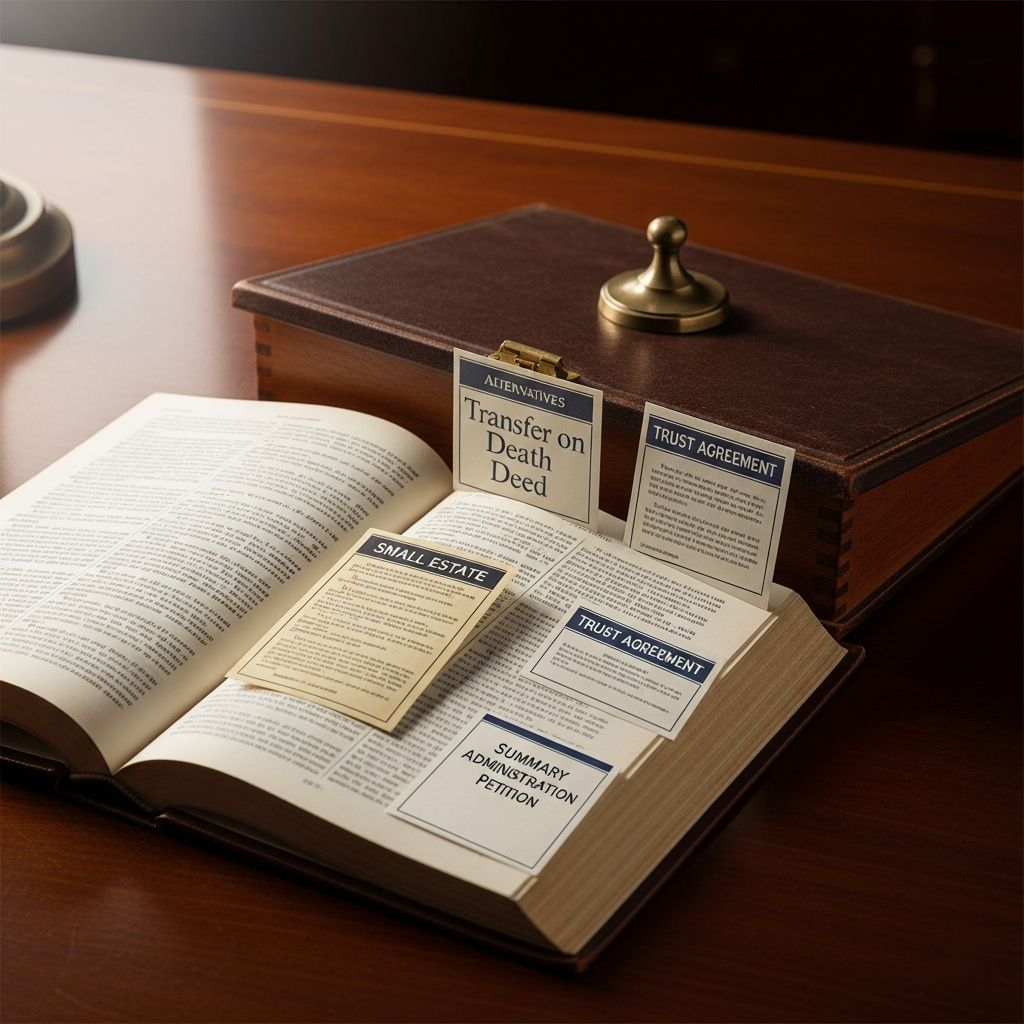
Navigating the death of a loved one involves many challenges, but managing their estate doesn’t have to mean months or years in court. In Arkansas, several legal mechanisms allow families to skip or shorten the traditional probate process, which can otherwise tie up assets, incur high fees, and invite disputes. These alternatives are particularly valuable for modest estates or when assets are structured wisely during lifetime planning.
Understanding Traditional Probate in Arkansas
Probate is the court-overseen procedure to validate a will, pay debts, and distribute a deceased person’s assets. It begins with filing a petition in the circuit court of the county where the decedent resided, accompanied by the death certificate and will if one exists. The court appoints an executor or administrator, who then notifies heirs, publishes creditor notices, inventories assets, settles claims, and finally distributes property after court approval. This process typically lasts at least six months due to a mandatory creditor claim period, but complex cases can extend to years.
While necessary for solely owned assets without beneficiary designations, probate involves attorney fees, court costs, and public scrutiny. Recognizing this burden, Arkansas law provides shortcuts for eligible estates, enabling faster resolutions.
Small Estate Affidavit: The Fastest Path for Modest Assets
For estates valued under $100,000 excluding non-probate assets like joint property or those with payable-on-death (POD) designations, Arkansas offers the small estate affidavit. This tool allows heirs to claim assets without formal probate after a 45-day waiting period from death.
To use it:
- Confirm the total probate estate value is below $100,000.
- Wait 45 days to ensure no creditor claims emerge.
- Prepare an affidavit listing assets, heirs, and confirming debts are paid.
- Attach a certified death certificate and any will.
- Present to banks, brokers, or title holders for direct transfer.
This method avoids court filings entirely, often resolving in weeks. It’s ideal for personal property, bank accounts, or vehicles without liens. Note exclusions apply to certain real estate or disputed claims.
Transfer-on-Death Deeds for Real Property
Arkansas permits transfer-on-death (TOD) deeds for real estate, allowing owners to name beneficiaries who automatically inherit upon death without probate. Recorded during the owner’s life like any deed, the TOD deed transfers title directly, bypassing court involvement.
Key benefits include:
- Immediate transfer: Beneficiary files the death certificate with the county recorder.
- No executor needed: Property skips probate queues.
- Revocable: Owner can change or revoke anytime before death.
Limitations: Only for real property, not personal assets. Creditors can still claim against the estate, but the transfer itself is probate-free. This is a cornerstone of proactive estate planning in Arkansas.
Payable-on-Death and Joint Ownership Strategies
Financial accounts can dodge probate via POD or transfer-on-death (TOD) designations. Banks and investment firms allow adding these, directing funds straight to named beneficiaries upon account holder’s death.
| Method | Applies To | Probate Avoidance | Revocability |
|---|---|---|---|
| POD/TOD Designation | Bank accounts, CDs, brokerage | Full | Yes, by owner |
| Joint Tenancy with Right of Survivorship | Real estate, accounts | Full for survivor | No, requires new deed |
| Tenancy by the Entirety | Marital property | Full for spouse | Limited |
Joint ownership automatically vests full title in the survivor, effective immediately upon death. For spouses, tenancy by the entirety offers creditor protection alongside probate avoidance. Caution: These expose assets to co-owner creditors or divorce risks.
Avoiding Probate Through Trusts
Revocable living trusts hold assets outside probate. The grantor transfers property into the trust during life, naming themselves trustee and beneficiaries as successors. Upon death, the successor trustee distributes without court oversight.
Advantages in Arkansas:
- Private distribution, no public records.
- Handles all asset types, including real estate and businesses.
- Manages incapacity alongside death.
Setup requires retitling assets into the trust’s name, an upfront task but worthwhile for larger estates. Irrevocable trusts offer tax benefits but less flexibility.
Intestate Estates and Simplified Procedures
Without a will, Arkansas intestate laws prioritize spouse, children, parents, then siblings. Probate is still required for solely held assets, but small estates qualify for affidavits regardless. Executors or administrators follow similar steps: petition, notice, inventory, pay debts, distribute.
For intestate small estates under $100,000, the affidavit streamlines heir determination via sworn statements.
Costs and Timelines: Comparing Options
Traditional probate costs 3-7% of estate value in fees, lasting 6-18+ months. Shortcuts slash this dramatically.
| Option | Timeline | Cost Estimate | Estate Size |
|---|---|---|---|
| Full Probate | 6-24 months | 3-7% of value | Any |
| Small Estate Affidavit | 45+ days | Under $1,000 | <$100k |
| TOD Deed/POD | Days | Recording fees | N/A |
| Living Trust | Weeks | $1,500-$3,000 setup | Any |
These estimates exclude disputes or taxes; consult professionals for specifics.
Step-by-Step Guide to Implementing Shortcuts
Proactive planning maximizes these tools:
- Inventory assets: Identify probate vs. non-probate items.
- Add designations: POD/TOD to accounts, TOD deeds to property.
- Create trust: For comprehensive coverage.
- Update beneficiaries: On life insurance, retirement accounts.
- Execute will: As backup for residue.
For post-death, assess estate size quickly for affidavit eligibility.
Frequently Asked Questions
What is the $100,000 threshold for small estates in Arkansas?
It applies to total probate assets after excluding joint property, POD accounts, and trusts. Debts must be settled first.
Can real estate use small estate affidavits?
No, affidavits work for personal property; use TOD deeds for land.
How long after death can I file a small estate affidavit?
At least 45 days, allowing creditor period to pass.
Do joint accounts always avoid probate?
Yes, with right of survivorship, title passes automatically to survivor.
Is a lawyer required for these shortcuts?
Not always, but recommended for deeds, trusts, and affidavits to ensure validity.
Planning for 2026 and Beyond
As of 2026, Arkansas probate laws emphasize efficiency, with no major changes to thresholds but ongoing pushes for digital filings. Families benefit most by combining tools: POD accounts, TOD deeds, trusts, and a pour-over will. This holistic approach minimizes court involvement, preserves privacy, and honors the decedent’s wishes swiftly.
While shortcuts save resources, they don’t eliminate taxes or creditor rights. Heirs should file final returns and resolve claims promptly. Professional guidance from estate attorneys ensures compliance and peace of mind.
References
- 7 Steps in the Arkansas Probate Process — Wilcox Attorneys, PA. Accessed 2026. https://www.arkansas-estateplanning.com/7-steps-in-the-arkansas-probate-process/
- Guide to Arkansas Estate Administration — LJennings Law. 2023-06. https://ljenningslaw.com/wp-content/uploads/2023/06/Guide-to-Arkansas-Estate-Administration-1.pdf
- Probate in Arkansas — Arkansas National Guard. 2025-07-30. https://arkansas.nationalguard.mil/Portals/29/Probate%20in%20Arkansas_1.pdf
- Understanding the Probate Process in Arkansas — Bond Law Office. Accessed 2026. https://stanbondlaw.com/blog/understanding-probate-process-arkansas/
- Arkansas Probate Process Guide — Natural State Law, PLLC. Accessed 2026. https://natstatelaw.com/how-to-handle-probate-in-the-state-of-arkansas/
- The Probate Process Explained — Protecting Wealth. Accessed 2026. https://protectingwealth.com/the-probate-process-explained-complete-timeline-and-steps-for-2026/
- Probate Benchbook 2022 — Arkansas Judiciary. 2022. https://www.arcourts.gov/sites/default/files/Probate%20Benchbook%202022.pdf
Similar Articles








Read full bio of Sneha Tete


