
Amplifying Youth Voices: How Personal Narratives Drive Systemic Reform
Personal stories are reshaping child welfare and justice policies.
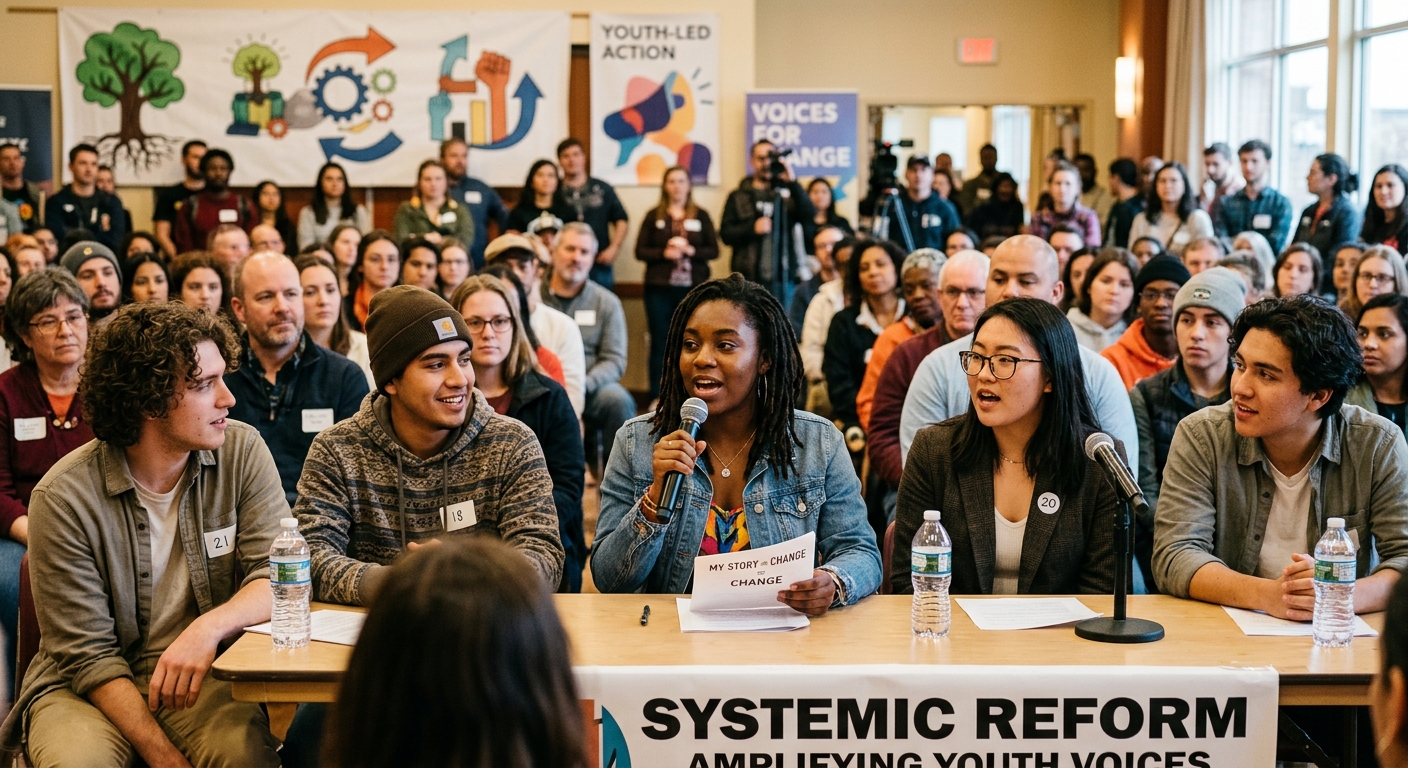
The Imperative of Listening to Lived Experiences
The labyrinth of government agencies meant to protect vulnerable children20 94ranging from child welfare systems to juvenile justice departments and immigration bureaus20 94often operates as a rigid, impenetrable bureaucracy. These systems, while established with the foundational goal of providing care and rehabilitation, frequently fall short of their mandates. For decades, policymakers have relied on overarching statistics, budget constraints, and administrative efficiency to dictate systemic reforms. However, a crucial element has historically been sidelined in these boardrooms and legislative chambers: the voices of the youth who actually experience these systems.
Amplifying the narratives of young people who have navigated foster care, juvenile detention, and immigration holding centers is no longer just a supplemental advocacy strategy; it is a critical prerequisite for genuine systemic reform. When children and young adults are empowered to share their lived experiences in safe, supportive environments, they transform sterile data points into urgent, human crises. Storytelling exposes the hidden cracks in the foundation of these institutions, revealing the profound emotional, psychological, and developmental toll of institutionalization. This shift in perspective is actively reshaping public perception, informing trauma-centered practices, and driving vital legislative change across the United States.
Navigating the Complexities of Child Welfare
The child welfare system is primarily designed to step in when a childs safety is compromised in their family home. Yet, for many youths, entry into state custody marks the beginning of a highly unstable and traumatizing chapter. According to the Adoption and Foster Care Analysis and Reporting System (AFCARS), hundreds of thousands of children reside in the U.S. foster care system on any given day. While the ultimate goal for most of these children is safe reunification with their parents or permanent adoption, the reality is that many languish in the system for years, bouncing between temporary foster homes and restrictive institutional group placements.
When youth from the child welfare system share their stories, they frequently highlight systemic failures that standard administrative audits cannot fully capture. They speak eloquently of the emotional whiplash of sudden, unannounced placements, the persistent disruption of their education due to frequent school changes, and the profound lack of agency over their own basic life choices. Common themes in these personal narratives include:
- Placement Instability: Youth often describe moving multiple times in a single calendar year, effectively preventing them from forming secure attachments with caregivers, teachers, or peers.
- The Aging-Out Crisis: Thousands of young adults emancipate from the foster care system each year without a permanent family structure, significantly increasing their statistical risk of homelessness, chronic unemployment, and early parenthood.
- Severed Sibling Bonds: Bureaucratic constraints and a persistent shortage of available foster homes frequently result in biological siblings being separated, adding an additional layer of profound grief to an already traumatic situation.
By listening intimately to these narratives, child welfare professionals and lawmakers are increasingly recognizing that mere physical safety is only a baseline requirement. True child welfare must aggressively encompass emotional security, relational permanence, and long-term psychological well-being.
The Intersection of Juvenile Justice and Youth Development
Closely intertwined with the child welfare system is the juvenile justice apparatus. Research and lived experiences consistently demonstrate a deeply troubling overlap between the two, often referred to by advocates as the “foster-care-to-prison pipeline.” Children who experience severe abuse, chronic neglect, and the subsequent instability of the foster care system are at a statistically heightened risk of coming into contact with law enforcement during their adolescence.
Data from the Office of Juvenile Justice and Delinquency Prevention (OJJDP) indicates that while overall youth detention rates have seen a notable decline over the past two decades, hundreds of thousands of delinquency cases are still processed annually. Moreover, the justice system remains plagued by severe racial and ethnic disparities. Black, Hispanic, and Native American youth remain vastly overrepresented in juvenile court referrals, pretrial detentions, and out-of-home placements compared to their white peers.
The stories of formerly incarcerated youth are essential for dismantling the punitive culture that still permeates much of the juvenile justice framework. These young advocates describe environments that prioritize compliance, strict control, and punishment over meaningful rehabilitation, mental health treatment, and education. They detail the profound isolation of secure confinement, including the psychological damage inflicted by solitary confinement, and the long-term, debilitating stigma of carrying a juvenile record into early adulthood. Through dedicated storytelling campaigns, these youth emphasize that adolescent misbehaviorwhich is frequently a direct manifestation of unaddressed, deep-seated traumacannot be effectively corrected through punitive incarceration. Their testimonies are successfully pushing states to invest heavily in community-based diversion programs, restorative justice models, and targeted educational support.
The Hidden Costs of Institutional Placements
Both the child welfare and juvenile justice systems heavily rely on congregate caregroup homes, residential treatment centers, and secure detention facilities. While institutions are sometimes deemed necessary for immediate behavioral stabilization, prolonged stays are overwhelmingly detrimental to a child’s neurological and social development.
The hidden costs of institutionalization are brought to light not just by academic sociological studies, but by the vivid, painful recollections of those who survived them. Youth narratives frequently expose dehumanizing environments where the strict, regimented nature of congregate care strips children of their individuality and typical childhood experiences. Stories often reveal the alarming overuse of psychotropic medications as a method of chemical behavioral control, rather than genuine psychiatric treatment. Furthermore, young people exiting institutional care frequently report being completely unprepared for independent adulthood, severely lacking basic life skills such as cooking, financial budgeting, or navigating public transportation.
The Substance Abuse and Mental Health Services Administration (SAMHSA) explicitly warns against the use of punitive measures like seclusion and physical restraints in residential settings, noting that these practices result in severe psychological harm, re-traumatization, physical injury, and occasionally death. It is the persistent, courageous storytelling of survivors that forces regulatory agencies to crack down on these abusive practices and shut down chronically negligent facilities.
Unaccompanied Minors and the Immigration Labyrinth
A third, highly vulnerable population of youth exists within the complex United States immigration system. Unaccompanied minors who cross the border seeking asylum or refuge from extreme violence are immediately thrust into a dizzying network of federal agencies, border patrol holding facilities, and government-contracted shelters. The sheer scale of the bureaucratic machinery processing these children is staggering, and the individual humanity of each child is easily lost in the administrative shuffle.
The journey to the border is inherently traumatic, often involving extreme physical peril, extortion, and exploitation. However, the systemic response upon arrival frequently compounds this initial trauma. Migrant youth are routinely placed in large-scale institutional shelters where they are separated from familiar cultural contexts and family members. They are subsequently forced to navigate complex immigration court proceedingsoften without the guarantee of state-appointed legal representationwhere the stakes are quite literally a matter of life and death.
When migrant youth are provided a safe, supportive platform to share their experiences, the entire political rhetoric surrounding immigration is humanized. Their stories cut through divisive partisan debates, revealing terrified children who are simply seeking basic safety and human rights. Hearing firsthand accounts of living in overcrowded holding cells, facing steep language barriers, and enduring the agonizing uncertainty of prolonged deportation hearings underscores the urgent need for a humanitarian approach. Advocates utilizing these powerful stories are effectively pushing for policies that ensure every unaccompanied minor is provided with dedicated legal counsel, swift family reunification, and robust post-release support services.
Implementing Trauma-Informed Approaches to Care
If storytelling successfully diagnoses the systemic illnesses within child welfare, juvenile justice, and immigration, then trauma-informed care serves as the prescribed cure. As youth continuously highlight the specific ways in which state interventions have harmed them, these systems are slowly beginning to pivot toward operational models that prioritize holistic healing.
According to SAMHSA, a trauma-informed approach is guided by a fundamental shift in perspective. Instead of asking a child, “What is wrong with you?” the system must fundamentally ask, “What has happened to you?” A fully trauma-informed system relies on several core pillars:
- Realization: Acknowledging the widespread impact of trauma and understanding potential paths for comprehensive recovery.
- Recognition: Actively identifying the signs and symptoms of trauma in clients, biological families, and agency staff.
- Response: Fully integrating knowledge about trauma into all internal policies, operational procedures, and daily practices.
- Resistance of Re-traumatization: Aggressively eliminating harmful practices like seclusion, physical restraint, and abrupt, unannounced placement transitions.
To transition successfully from punitive or purely administrative frameworks to genuinely trauma-informed environments, government agencies must actively engage the very youth they serve in the design of their programs. Youth advisory boards and formal peer mentorship programs are becoming increasingly common, allowing those with lived experience to critically review policies, train new staff members, and provide vital direct support to children currently navigating the system.
Storytelling as a Catalyst for Legislative Change
The transition from individual storytelling to broad, sweeping legislative change is a deliberate and highly strategic process. Modern advocacy organizations are increasingly focusing on empowering young people to become the primary public face of policy campaigns. This strategy is remarkably effective because policymakers, regardless of their political affiliation or ideology, are fundamentally human; they are moved by raw human experiences in a way that abstract data cannot replicate.
When a former foster youth stands before a state legislative committee to testify about the lasting trauma of living in a chaotic group home, or when a formerly incarcerated teenager writes a compelling op-ed about the devastating impacts of solitary confinement, they provide undeniable evidence of systemic failure. Their testimonies put a face and a beating heart to the statistics.
This narrative-driven advocacy has led to significant legislative victories in recent years across the country. States have passed progressive laws restricting the use of physical restraints in juvenile facilities, extended vital foster care support stipends up to age 21, and vastly increased funding for community-based family preservation services. Furthermore, storytelling campaigns have been instrumental in pushing for the fundamental legal right to counsel for youth in both local dependency courts and federal immigration proceedings.
Building a Future Centered on Child Well-Being
Redesigning massive government systems that serve children is a monumental task that requires ongoing public vigilance, sustained funding, and unwavering political will. However, the exact blueprint for this necessary redesign already exists within the minds, memories, and ideas of the youth who have survived these systems.
A future truly centered on child well-being demands that policymakers completely stop viewing children merely as passive wards of the state or administrative caseload numbers. Instead, they must be viewed as active, vital stakeholders in their own lives. By establishing permanent, institutionalized mechanisms for youth feedbacksuch as mandatory youth advisory councils in all child welfare agencies and juvenile justice departmentsgovernments can ensure that policy remains firmly rooted in reality.
The narrative of state intervention does not have to inevitably end in trauma, incarceration, or lifelong instability. By honoring the stories of youth, holding sprawling institutions strictly accountable, and aggressively pursuing trauma-informed practices, society can build systems that truly protect, nurture, and empower the next generation.
Frequently Asked Questions (FAQs)
What exactly is the “foster-care-to-prison pipeline”?
The foster-care-to-prison pipeline refers to the alarming statistical trend where children who have been involved in the child welfare system are disproportionately funneled into the juvenile and adult criminal justice systems. This phenomenon is often driven by unaddressed childhood trauma, extreme placement instability, and an over-reliance on local law enforcement to manage minor behavioral issues within institutional group homes.
How does trauma-informed care differ from traditional care models?
Traditional care models often focus on strict compliance and correcting “bad” behavior through punitive, exclusionary measures. Trauma-informed care recognizes that oppositional or disruptive behavioral issues are very often direct trauma responses. It focuses entirely on establishing physical and psychological safety, building trusting relationships, and empowering the individual to heal without triggering re-traumatization.
Why is personal storytelling so effective in changing public policy?
Quantitative statistics alone rarely inspire immediate, passionate political action. Personal storytelling vividly humanizes highly complex, bureaucratic issues, allowing lawmakers and the general public to understand the direct, emotional impact of state policies on actual human lives. It creates deep empathy and a sense of urgent moral responsibility, which are critical drivers for major legislative reform.
What are the primary dangers of congregate care for vulnerable youth?
Congregate care, such as large group homes or residential treatment facilities, inherently struggles to provide the individualized attention, emotional permanence, and familial bonds that children desperately need to thrive. Prolonged institutionalization can lead to institutionalization syndrome, a severe lack of essential life skills upon emancipation, and heightened systemic risks of abuse or the improper use of physical and chemical restraints.
References
- The AFCARS Report The Administration for Children and Families (ACF). 2018-08-10. https://www.acf.hhs.gov/cb
- Facts About Youth Crime | Fast Facts on Youth Justice Office of Juvenile Justice and Delinquency Prevention (OJJDP). 2024-09-12. https://ojjdp.ojp.gov
- Trauma-Informed Approaches and Programs Substance Abuse and Mental Health Services Administration (SAMHSA). 2026-02-08. https://www.samhsa.gov
Similar Articles








Read full bio of medha deb


