
Alimony vs Child Support: Key Distinctions
Unravel the essential differences between alimony and child support in divorce proceedings to better navigate financial obligations.
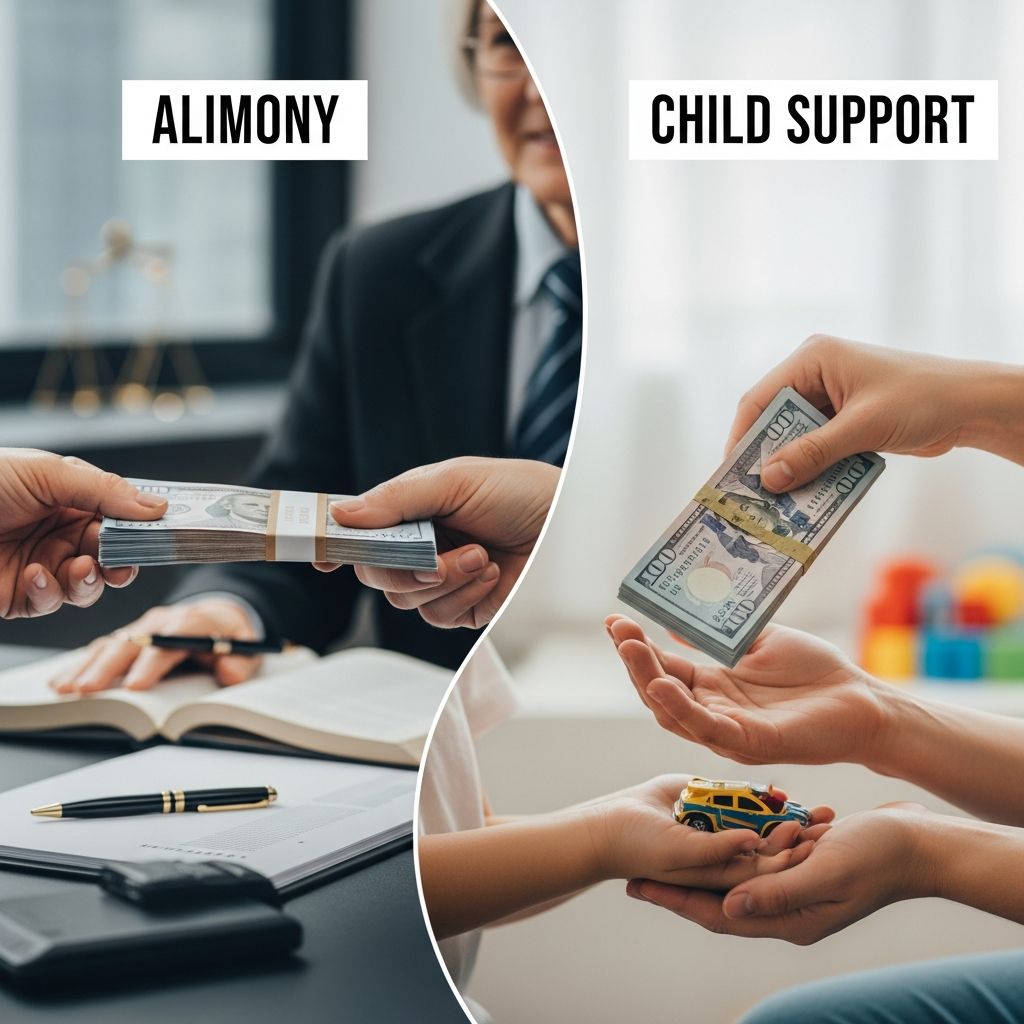
Financial responsibilities in divorce often center on two primary obligations: payments to a former spouse and contributions for children’s upbringing. These differ fundamentally in intent, recipients, and enforcement, shaping post-marriage economic realities.
Defining Financial Obligations After Divorce
When couples dissolve their marriage, courts address ongoing support needs through structured payments. One form aids the ex-partner in adjusting to independent living, while the other ensures minor children’s welfare remains stable despite parental separation. Understanding these mechanisms prevents common misconceptions and supports equitable settlements.
Alimony, also termed spousal maintenance or support, bridges income disparities between divorcing partners. It recognizes contributions to the household, such as homemaking or career sacrifices, allowing the recipient to sustain a comparable lifestyle temporarily or longer. In contrast, child support directly funds a minor’s essentials, irrespective of parental disputes, prioritizing the child’s right to adequate care.
Core Purposes and Beneficiaries
The recipients define each payment’s trajectory. Spousal payments benefit the lower-income ex-spouse exclusively, fostering financial autonomy or compensating for marital sacrifices. Courts assess marital duration, earning capacities, and health to determine necessity, ensuring no automatic entitlement exists.
Child-related payments, however, flow to the primary caregiver for the child’s sole use. They cover housing, nutrition, education, and healthcare, maintaining the pre-divorce living standard for offspring. Legal parents bear this duty regardless of marital fault, with non-custodial parties typically remitting funds monthly.
| Aspect | Alimony | Child Support |
|---|---|---|
| Primary Beneficiary | Former spouse | Minor child(ren) |
| Purpose | Maintain lifestyle, aid self-sufficiency | Fund child’s basic and special needs |
| Mandatory? | Not always; case-specific | Yes, if children involved |
Forms of Spousal Financial Assistance
Courts tailor alimony to circumstances, offering varied structures. Temporary aid sustains the recipient through proceedings, covering interim bills until final orders. Rehabilitative versions fund skill-building, like vocational training, with defined endpoints upon employment achievement.
- Lump-Sum Payments: A single, upfront sum resolves all duties, ideal for clean separations without ongoing ties.
- Reimbursement Support: Repays one partner’s investments in the other’s education or career during marriage.
- Indefinite Awards: Rare now, these persist until remarriage, death, or significant change, suited to long unions with dependency.
Permanent forms have declined, reflecting policies favoring self-reliance, though available in cases of advanced age or disability.
Structuring Child Support Payments
Child contributions follow state formulas, factoring parental incomes, custody splits, and child requirements. Basic computations allocate proportional shares based on overnight stays and earnings, often limited to shelter, meals, and attire.
Adjustments incorporate extras like tuition, therapies, or extracurriculars. Payments cease at majority age—typically 18 or high school completion—though extensions apply for disabilities. Non-compliance triggers enforcement via wage garnishment or license suspensions.
- Daily shelter and utilities portion.
- Nutritional and wardrobe essentials.
- School fees and daycare costs.
- Healthcare, including uninsured portions.
Economic Factors Influencing Awards
Judges weigh multiple elements for spousal aid. Marital length heavily influences: short unions rarely qualify, while decades-long ones may yield substantial sums. Income gaps, employability, and fault (in non-no-fault states) factor in, alongside accustomed luxuries.
Child calculations prioritize objectivity. Both parents’ gross incomes form the base, adjusted for custody time. Special needs elevate amounts, ensuring holistic development. Unlike spousal support, post-divorce lifestyle desires hold no sway; focus remains child-centric.
Duration and Termination Rules
Spousal payments vary widely. Short-term marriages prompt brief aid; longer ones extend rehabilitative phases. Indefinite awards end on cohabitation, remarriage, or payor retirement. Recipients must demonstrate ongoing need periodically.
Child duties conclude predictably: emancipation, graduation, or majority. College mandates are state-specific; most end pre-higher education. Both types allow early cessation if children relocate abroad or spouses reconcile financially.
Modifying Existing Orders
Circumstances evolve, necessitating adjustments. Substantial income shifts—job loss, promotion, inheritance—warrant reviews for either obligation. Child support tweaks demand proof of changed custody or needs; spousal requires similar thresholds plus self-sufficiency progress.
Courts mandate formal petitions, evidence, and hearings. Prenups can stipulate alimony terms but never child support, deemed non-negotiable public policy. Voluntary overpayments rarely recoup; underpayments accrue arrears with interest.
Tax Implications and Reporting
Post-2018 reforms, neither payment offers payor deductions nor recipient taxable income. This levels fields, simplifying filings. Recipients budget accordingly, as funds arrive tax-free. Track via 1099 forms for compliance.
Co-Occurring Obligations
Couples often owe both simultaneously. A high-earner might remit child funds to the custodial ex and separate spousal aid, totaling significant outflows. Courts segregate to protect child interests from marital disputes. Budgeting tools aid payers in managing dual loads.
Negotiation Tactics and Legal Prenups
Mediation fosters flexible alimony pacts, waiving or capping via agreements. Child support adheres to guidelines, barring minor deviations with justification. Prenups outline spousal scenarios—amounts, durations—but courts scrutinize for equity at enforcement.
Consult attorneys early; uncontested divorces streamline via written stipulations, court-approved for enforceability.
Frequently Asked Questions
Can both alimony and child support be ordered together?
Yes, they serve distinct needs and often coincide when children and income disparities exist.
Does remarriage end all alimony types?
Typically yes for ongoing awards, but lump-sum payments remain unaffected.
What if a child support payer loses their job?
File for modification promptly; courts impute income if voluntary unemployment suspected.
Are prenups binding for child support?
No, public policy prohibits waiving child rights via private contracts.
How do states calculate child support basics?
Income shares model prorates combined parental earnings by custody percentages.
Strategic Planning for Divorce Finances
Anticipate obligations via financial disclosures. Higher earners prepare for dual payments; dependents document sacrifices. Collaborative law minimizes litigation costs, preserving assets. Post-decree, maintain records for audits or modifications.
Long-term, spousal aid empowers reinvention—education, relocation. Child funds secure stability, mitigating divorce’s emotional toll. Professional guidance ensures compliance, averting penalties.
References
- Understanding the Difference Between Alimony and Child Support — Jacobson Family Law. 2023. https://jacobsonfamilylaw.com/understanding-the-difference-between-alimony-and-child-support/
- Alimony vs. Child Support: The Legal Difference — LegalZoom. 2024. https://www.legalzoom.com/articles/alimony-vs-child-support
- Alimony vs. Child Support | Overview, Laws & Differences — Study.com. 2023. https://study.com/academy/lesson/what-is-the-difference-between-alimony-child-support.html
- The Difference Between Alimony, Spousal Support, and Child Support — Tom Bush Law. 2024. https://www.tombushlaw.com/blog/the-difference-between-alimony-spousal-support-and-child-support
- Understand the differences between alimony and child support — Protective. 2023. https://www.protective.com/learn/alimony-and-child-support
- Child And/Or Spousal Support — New York Courts. 2025-02-01. https://ww2.nycourts.gov/COURTS/nyc/family/faqs_support.shtml
Similar Articles








Read full bio of medha deb


