
Youth, Privacy, and the Surveillance State
Debunking myths about youth privacy and mass surveillance.
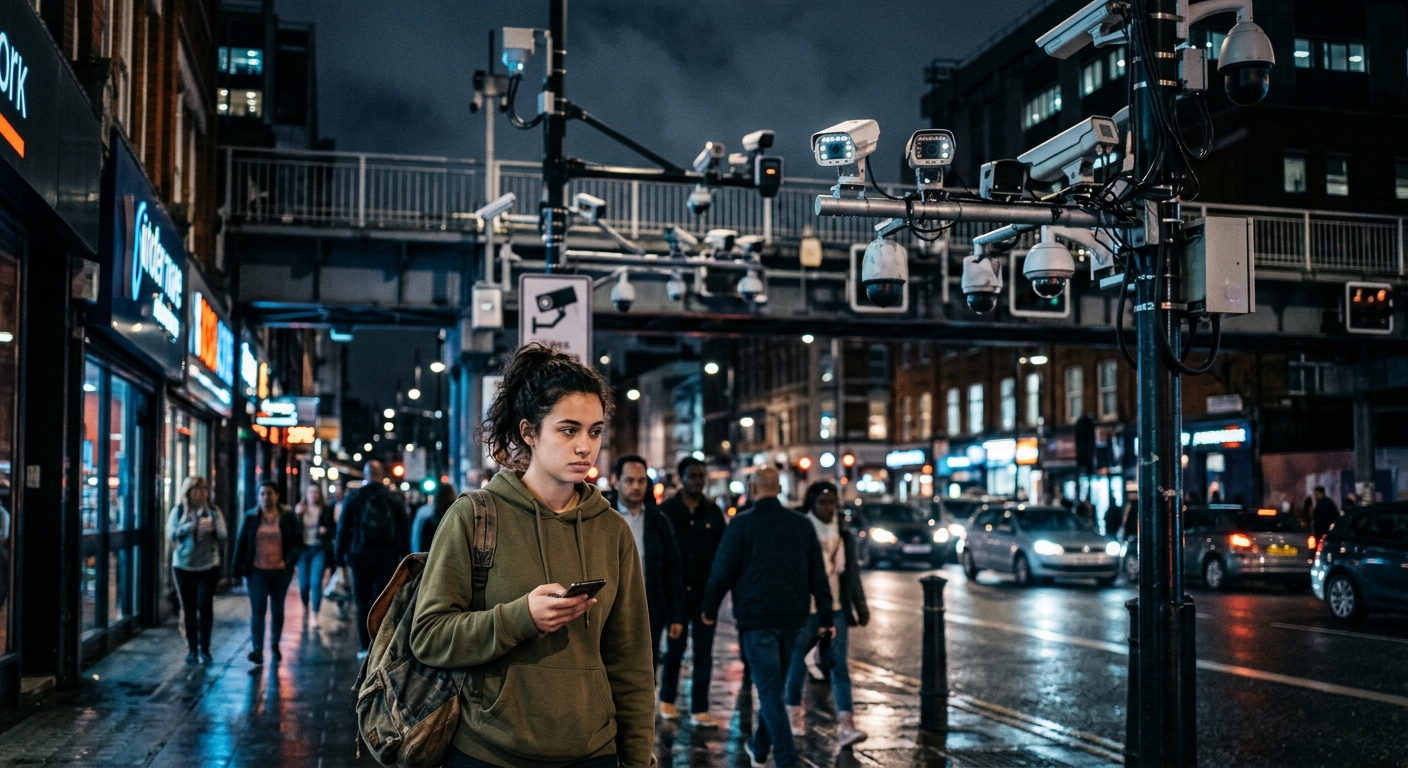
A persistent narrative exists within public discourse regarding the younger generation’s relationship with the digital world: that teenagers and young adults simply do not care about privacy. The argument usually hinges on the observation that youth share an unprecedented amount of personal information online. From location-tagged stories to hyper-personal video diaries, the widespread assumption is that the fundamental concept of digital privacy has eroded entirely.
However, this critique misses a crucial truth. The kids are, in fact, alright when it comes to understanding and valuing their privacy. What is profoundly broken is the ecosystem they are forced to navigate—an internet landscape dominated by relentless commercial data harvesting and expansive national security surveillance. To genuinely address civil liberties in the modern era, the conversation must shift from blaming the user to scrutinizing the architecture of the modern web and the governmental policies that exploit it.
Debunking the Apathy Myth: How Youth Actively Curate Their Digital Footprint
It is undeniably true that the modern youth experience is deeply intertwined with connectivity. According to a 2024 report by the Pew Research Center, roughly 46% of American teenagers report being online ‘almost constantly,’ and 95% have access to a smartphone. But constant connectivity should not be mistaken for a willingness to forfeit civil liberties or personal boundaries.
Young people exhibit highly sophisticated behaviors when it comes to managing their online identities. They are the pioneers of the ‘finsta’ (a secondary, private social media account meant only for close friends), the avid users of ephemeral messaging apps where data disappears after being read, and the quickest demographic to adapt to new privacy settings as platforms update their terms of service. They possess a deep understanding of contextual privacy—the idea that sharing information with a specific, curated group of peers is vastly different from having that information logged by a multinational tech conglomerate or a government intelligence agency.
Rather than abandoning privacy, young people have redefined it. They view privacy not as total secrecy or isolation, but as the ability to control who sees what, and when. Their primary concern is often immediate, interpersonal surveillance, such as avoiding the watchful eyes of parents, teachers, or malicious peers, which they navigate expertly. However, the structural, invisible surveillance embedded within the applications they use daily is vastly harder for anyone to evade, regardless of age or tech-savviness.
The Invisible Observers: Commercial Data Brokering and National Security
The true threat to civil liberties today does not stem from a teenager posting a dancing video; it stems from the hidden machinery that tracks the IP address, device identifier, geolocation, and behavioral patterns associated with that upload.
The current business model of the internet relies heavily on enterprise omniscience. Corporations offer ostensibly free services in exchange for the right to harvest, analyze, and monetize vast troves of personal data. This dynamic creates a severe vulnerability for everyday citizens. Once data is collected by a private company, the legal barriers preventing the government from accessing it are significantly lowered, creating a backdoor for state surveillance.
The Intersection of Corporate Tracking and Government Surveillance
National security policies and intelligence agencies frequently leverage the commercial data ecosystem to bypass traditional legal constraints. Why go through the rigorous process of obtaining a court-ordered warrant to physically track a suspect when a private data broker will gladly sell bulk geolocation data harvested from weather apps, mobile games, and digital coupons?
This backdoor into the private lives of citizens undermines the core protections of the Constitution. The Fourth Amendment was designed to protect individuals against unreasonable searches and seizures, ensuring that the state could not intrude on private life without probable cause. Yet, in the digital era, the third-party doctrine—a legal theory suggesting that individuals lose privacy rights in information voluntarily shared with third parties—has allowed intelligence bodies to aggregate massive profiles on innocent individuals without ever stepping foot inside a courtroom.
The National Security Agency (NSA), in its 2024 Civil Liberties and Privacy Report, documented the extensive framework required to review the privacy impacts of its activities, acknowledging the delicate balance between advancing national security interests and protecting the privacy of the American people. Yet, despite internal compliance efforts, the sheer volume of data ingested through global telecommunications networks and private-public partnerships remains a massive point of contention for privacy advocates.
Federal Attempts at Regulation: A Double Standard
Recognizing the inherent danger of bulk data collection—particularly the threat of foreign adversaries acquiring sensitive data—the federal government has begun implementing new regulatory frameworks. Between late 2024 and early 2025, the Department of Justice (DOJ) finalized rules creating a new national security program aimed at preventing the transfer of Americans’ bulk sensitive personal data, including geolocation, biometric, and personal financial data, to ‘countries of concern.’
While these national security-focused regulations are a step toward recognizing the sheer power and danger of bulk data, they highlight a glaring hypocrisy. The United States government readily acknowledges that mass data aggregation is a severe national security threat when foreign adversaries do it, yet domestic intelligence gathering and largely unregulated commercial data brokering remain deeply entrenched and legally permissible within our own borders.
Comparing User-Level vs. Structural Privacy Challenges
To fully grasp the unfair burden placed on digital consumers, it is helpful to look at the disparity between the privacy elements users can realistically control versus the elements that require massive structural intervention.
| Feature | User-Level Privacy (What We Control) | Structural Privacy (What We Cannot Control) |
|---|---|---|
| Location Data | Turning off GPS for specific apps, refusing check-ins. | Apps capturing background Wi-Fi triangulation and selling it to brokers. |
| Communications | Using end-to-end encrypted messaging platforms. | Metadata logging (who you messaged, when, and from where) retained by ISPs. |
| Content Sharing | Setting profiles to private, hiding tagged photos from public view. | Algorithmic profiling, hidden facial recognition scanning on uploaded media. |
| Web Browsing | Clearing cookies, using private or incognito browsing modes. | Advanced browser fingerprinting, hidden pixel trackers across web infrastructure. |
What About the Rest of Us? A Call for Comprehensive Reform
The narrative that ‘kids just don’t care’ serves as a highly convenient distraction. It shifts the responsibility of protecting civil liberties from the government and massive tech monopolies squarely onto the shoulders of the individual consumer. If society assumes the younger generation is willingly giving up their rights, lawmakers can easily excuse themselves from the hard, necessary work of legislating better protections.
But what about the rest of us? The reality is that adults are just as susceptible to the hidden surveillance economy. Professionals use connected workplace devices, drive smart cars that report telematics back to the manufacturer, and rely on essential digital infrastructure that monetizes their every action.
The chilling effect of this omnipresent surveillance is profound and widespread. When people know they are being watched—or even suspect they might be—they inevitably alter their behavior. This stifles free expression, discourages necessary political activism, and inhibits the free exchange of ideas that is absolutely vital to a functioning, healthy democracy.
Meaningful Steps to Reclaim Our Civil Liberties
To protect our collective digital rights, we must move beyond the concept of individual ‘digital hygiene’ and demand systemic, legislative change. The solution is not to tell teenagers to simply log off, but to reconstruct the digital world so that logging on doesn’t require surrendering essential civil rights.
- Update the Fourth Amendment for the Digital Age: Legal precedents must be updated to explicitly state that digital data stored by third-party services still warrants robust constitutional protection against warrantless searches.
- Pass Comprehensive Federal Data Privacy Legislation: The United States desperately needs a unified, robust privacy law that focuses on data minimization—mandating that companies can only collect what is strictly necessary to provide a specific service, rather than hoarding data indefinitely.
- End the Data Broker Loophole: Law enforcement and national security agencies should be prohibited by law from purchasing consumer data from private brokers as a convenient means to circumvent the judicial warrant process.
- Demand Transparency in Intelligence Practices: While agencies like the NSA have improved reporting metrics, there must be greater declassification and continuous public scrutiny of how domestic data is inadvertently collected, stored, and queried.
- Support Algorithmic Transparency: Consumers have a fundamental right to know how their personal data is being used to build psychological profiles and dictate the information they are fed online.
Conclusion: A Shared Digital Future
The next generation has essentially grown up in a digital panopticon, yet they continue to fight for their rights, organize powerful digital protests, and champion vital social causes. They understand the immense value of their voice and their data. The pervasive myth of their apathy is merely an excuse for legislative inaction.
It is past time for lawmakers, tech executives, and older generations to stop criticizing how the youth use the internet and start critically examining the predatory internet we have built for them. Protecting civil liberties in the 21st century requires acknowledging that digital privacy is a fundamental human right, not a currency to be traded for basic access to the modern world. By demanding strict accountability from both commercial tech giants and the national security apparatus, we can ensure that the constitutional rights of all citizens are preserved in the digital era.
Frequently Asked Questions (FAQs)
1. Why do people mistakenly think teenagers don’t care about digital privacy?
Many assume teenagers don’t care about privacy because they frequently share personal updates and videos on social media. However, research proves young people care deeply about contextual privacy. They actively utilize complex privacy settings, secondary accounts, and encrypted messaging to control exactly who sees their content, even if they cannot control the platform’s backend data collection.
2. How do national security agencies access private citizen data without warrants?
Beyond traditional warrants, intelligence and law enforcement agencies increasingly rely on the multi-billion-dollar commercial data market. Because private apps collect vast amounts of user data, agencies can often purchase this information legally from third-party data brokers, effectively bypassing the need to obtain a probable-cause warrant from a judge.
3. What is the Third-Party Doctrine?
The third-party doctrine is a legal theory holding that people who voluntarily give information to third parties (like banks, internet service providers, or social media companies) have ‘no reasonable expectation of privacy’ regarding that specific information. Privacy advocates strongly argue this doctrine is fundamentally outdated in the modern digital age.
4. Are there any laws stopping foreign entities from accessing American data?
Yes, recent federal actions have been taken to address this specific threat. In 2024 and 2025, the U.S. Department of Justice implemented a new regulatory framework aimed at preventing the bulk transfer of Americans’ sensitive personal data to ‘countries of concern’ due to severe national security risks.
5. What is the most effective way to protect our digital rights?
While utilizing individual tools like VPNs, encrypted messaging, and tracker blockers is helpful, individual action alone is insufficient. The most impactful way to protect digital rights is to advocate for comprehensive federal privacy legislation that restricts data collection and strictly regulates how government agencies can access it.
References
- Teens, Social Media and Technology 2024 — Pew Research Center. 2024-12-12. https://www.pewresearch.org/internet/2024/12/12/teens-social-media-and-technology-2024/
- ANNUAL CIVIL LIBERTIES AND PRIVACY REPORT — National Security Agency. 2025-09-15. https://www.nsa.gov/About-Us/Civil-Liberties-Privacy-and-Transparency/
- National Security Division | Data Security — Department of Justice. 2025-04-18. https://www.justice.gov/nsd/data-security
Similar Articles








Read full bio of Sneha Tete


