
Worst Supreme Court Decisions: Key Lessons Explained
A critical look at infamous Supreme Court rulings that expanded injustice, weakened rights, and reshaped American law for the worse.
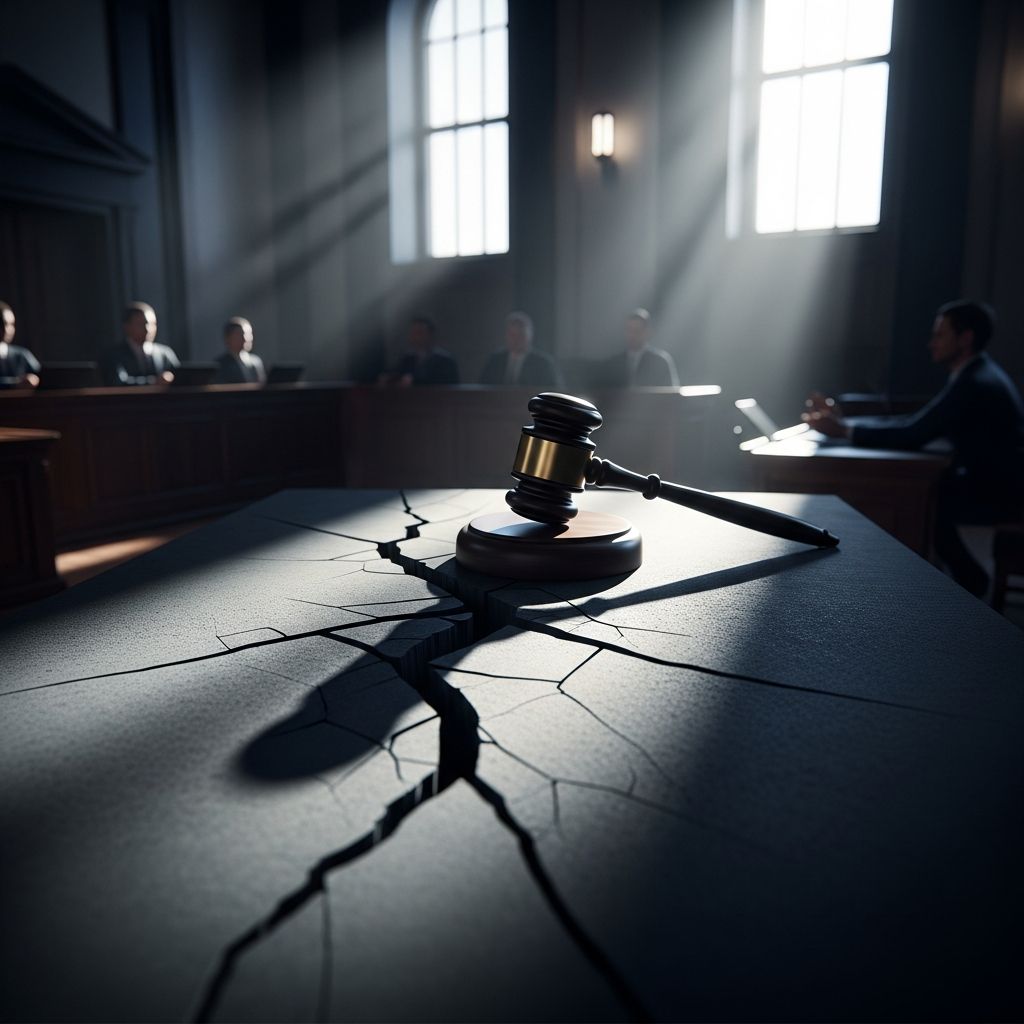
The Supreme Court of the United States is often described as the final guardian of the Constitution. Yet across its history, the Court has issued decisions that entrenched injustice, narrowed rights, and distorted democratic governance. This article explores several widely condemned rulings, why legal scholars and historians view them as failures, and what they reveal about the risks of concentrated judicial power.
Why Talk About Bad Supreme Court Decisions?
Supreme Court rulings are not mere academic disputes. They can determine who counts as a person under the Constitution, who may vote, who may marry, whether people can unionize, and even whether corporations enjoy the same rights as human beings. By examining the Court’s low points, we better understand how constitutional interpretation can both advance and undermine justice.
- They set binding national rules that can last for generations until overturned by later courts or constitutional amendments.
- They reflect the values and biases of particular historical moments, including racism, sexism, and class privilege.
- They shape trust in the judiciary and influence whether people view the Court as legitimate.
Even the most notorious rulings often relied on careful legal reasoning. The problem is not always a lack of logic, but the values, assumptions, and power structures the justices chose to elevate.
Hallmarks of a Historically “Bad” Decision
There is no official list of the worst Supreme Court decisions, but patterns emerge when scholars evaluate them. Common warning signs include:
- Clear conflict with constitutional amendments, later recognized and reversed.
- Open embrace of racial or gender hierarchy, often justified as neutral or inevitable.
- Disregard for democratic participation, entrenching power in narrow elites or specific interests.
- Weak factual or historical foundations, where historical claims are incomplete or slanted.
- Severe practical harms—from human bondage to voter suppression to the crushing of labor or civil rights.
| Feature | Why It Matters |
|---|---|
| Moral and social harm | Shows the distance between legal formalism and basic justice. |
| Later reversal or repudiation | Signals that later generations see the ruling as incompatible with the Constitution. |
| Reliance on bias | Reveals how prejudice can be dressed up as constitutional law. |
| Impact on democracy | Measures whether the Court strengthened or weakened public power and accountability. |
Slavery, Race, and Citizenship: Dred Scott and Plessy
Dred Scott v. Sandford (1857): Citizenship Denied
In Dred Scott v. Sandford, the Court held that people of African descent, whether enslaved or free, could not be citizens of the United States and that Congress lacked authority to ban slavery in federal territories. The decision announced that enslaved men, women, and children were a form of property shielded by the Constitution.
- Historical backdrop: The case emerged from escalating conflict over slavery’s expansion into federal territories in the years leading up to the Civil War.
- Core holding: The Court struck down the Missouri Compromise, claiming it violated slaveholders’ property rights.
- Consequences: Far from settling the issue, the decision inflamed sectional tensions and pushed the nation closer to war.
The ruling was effectively erased by the Thirteenth Amendment, which abolished slavery, and the Fourteenth Amendment, which guarantees birthright citizenship and equal protection of the laws. It is now almost universally cited as a symbol of the Court at its worst.
Plessy v. Ferguson (1896): Segregation Blessed as “Separate but Equal”
In Plessy v. Ferguson, the Court upheld a Louisiana law that required racially segregated railroad cars, endorsing the doctrine of “separate but equal.” The Court treated racial caste as consistent with the Equal Protection Clause of the Fourteenth Amendment.
- Key logic: So long as separate facilities for Black and white passengers were nominally equal, segregation was constitutional.
- Real-world effect: This ruling provided constitutional cover for the Jim Crow system—segregated schools, transportation, housing, and public facilities.
- Overturning: Brown v. Board of Education in 1954 finally rejected “separate but equal” in public education, and later cases dismantled segregation more broadly.
Together, Dred Scott and Plessy illustrate how the Court can enshrine racial hierarchy even while using the language of constitutional interpretation.
Economic Power and the Lochner Era
When Liberty of Contract Trumped Worker Protection
In the late nineteenth and early twentieth centuries, the Court frequently invoked a “liberty of contract” under the Fourteenth Amendment’s Due Process Clause to strike down labor regulations. This pattern—often called the “Lochner era”—reached its most famous expression in Lochner v. New York.
New York had limited the hours bakers could work in an effort to protect health and safety. The Court invalidated the law, framing it as an unconstitutional intrusion on the freedom of employers and employees to set their own terms. In practice, however, most workers had little bargaining power and were compelled to accept harsh conditions.
- Who benefited: Large employers and industrial interests, which faced fewer constraints on exploiting labor.
- Who suffered: Workers in hazardous industries, many of whom were immigrants or from marginalized communities.
- Judicial activism debate: Critics accused the Court of reading its own economic preferences into the Constitution rather than deferring to elected legislatures.
The Court eventually retreated from this approach in the 1930s, upholding New Deal legislation that regulated wages and hours. That shift underscored how judicial philosophy can swing from protecting business autonomy to recognizing the need for robust regulation.
Speech, War, and the Limits of Dissent
Schenck v. United States (1919): “Clear and Present Danger”
During World War I, the federal government prosecuted individuals for speaking and distributing leaflets against the draft. In Schenck v. United States, the Court upheld a conviction for anti-draft pamphlets and articulated the “clear and present danger” test: speech may be punished if it poses a real and immediate threat that Congress has power to prevent.
- Core principle: First Amendment rights are not absolute; government may restrict speech that is closely tied to serious harms.
- Concern: The ruling gave wide latitude to suppress dissent in times labeled as national emergencies.
- Evolution: Later cases, such as Brandenburg v. Ohio, adopted stronger protections, limiting penalties to advocacy intended and likely to produce imminent lawless action.
While Schenck is not always listed among the “worst” rulings, it remains an important example of how fear and wartime pressures can constrict constitutional liberties.
Rights of the Accused and the Expansion of Liberty
Brown v. Board of Education and the Reversal of Segregation
Although this article focuses on harmful decisions, understanding Brown v. Board of Education is essential because it marks a dramatic reversal of the Court’s earlier stance in Plessy. In Brown, the Court unanimously held that racially segregated public schools are inherently unequal and violate the Equal Protection Clause.
- Effect on Plessy: Underlined the moral and constitutional bankruptcy of “separate but equal.”
- Civil rights movement: Helped catalyze broader struggles for racial equality, culminating in landmark legislation such as the Civil Rights Act of 1964.
- Resistance: Many states defied or delayed compliance, revealing that even a correct decision on paper must overcome deep political resistance.
Brown is widely celebrated as one of the Court’s finest hours, highlighting how the same institution responsible for Plessy can later contribute to dismantling structural racism.
Reproductive Rights and Their Reversal
Roe v. Wade (1973): Privacy and Abortion Rights
In Roe v. Wade, the Court held that a constitutional right to privacy includes a woman’s decision to terminate a pregnancy prior to fetal viability, subject to certain state interests in maternal health and potential life. The ruling relied on the Due Process Clause of the Fourteenth Amendment as a source of substantive liberty.
- Framework: A trimester structure that limited states’ ability to ban abortion in early pregnancy.
- Controversy: Critics argued that the Constitution does not mention abortion and that the issue should remain with state legislatures.
- Legacy: For nearly 50 years, Roe was a central pillar of reproductive rights jurisprudence.
Dobbs v. Jackson Women’s Health Organization (2022): Roe Overruled
In 2022, the Court’s decision in Dobbs v. Jackson Women’s Health Organization overturned Roe and eliminated the federal constitutional right to abortion. The majority held that abortion is not a right “deeply rooted” in the nation’s history and traditions and therefore not protected by the Fourteenth Amendment’s concept of liberty.
- Immediate impact: Trigger laws and preexisting bans in multiple states went into effect, sharply reducing access to abortion for millions of people.
- Democratic shift: Abortion regulation was returned to state political processes, leading to intense legal and electoral battles.
- Criticism: Opponents view Dobbs as a dramatic rollback of established rights and a threat to other privacy-based liberties.
The clash between Roe and Dobbs illustrates how the Court can both expand and contract individual freedoms across different eras, depending on its interpretation of history and precedent.
Democracy, Equal Representation, and the Modern Court
Recent terms have produced major rulings affecting voting rights, campaign finance, and the structure of American democracy. Critics argue that some modern cases, while less notorious than Dred Scott, erode core democratic principles.
- Voting rights: Decisions that narrow protections against racial discrimination in voting have drawn intense scrutiny from civil rights advocates.
- Campaign finance: Expansive interpretations of political spending as protected speech have shifted power toward wealthy donors.
- Separation of powers: Cases involving executive authority and regulatory agencies raise questions about accountability and expertise.
Unlike clearly repudiated cases such as Plessy, the long-term reputations of these contemporary decisions remain unsettled. Future generations will decide whether they belong in the canon of the Court’s worst mistakes or are defended as appropriate exercises of judicial review.
What These Decisions Teach About Judicial Power
The Court’s most damaging rulings share deeper structural themes that go beyond particular political outcomes:
- Courts reflect their times: Justices are shaped by prevailing social norms and power structures; they do not interpret the Constitution in a vacuum.
- Precedent is powerful but not absolute: Longstanding decisions can be overturned, for better or worse, when the Court revisits constitutional meaning.
- Amendments and politics matter: Constitutional amendments, such as the Thirteenth and Fourteenth, can repudiate earlier case law. So can sustained public movements and legislative change.
- Legal reasoning is only part of the story: The choice of which history to emphasize, whose interests to prioritize, and how to balance liberty and equality often determines outcomes as much as doctrine.
Recognizing these dynamics makes it easier to see why the same institution can author both Dred Scott and Brown, both Lochner and the New Deal cases, both Roe and Dobbs.
Frequently Asked Questions (FAQs)
Q: Who decides that a Supreme Court decision is “one of the worst”?
A: There is no official ranking. Historians, constitutional scholars, civil rights advocates, and sometimes the justices themselves evaluate decisions based on their reasoning, consistency with constitutional text and amendments, and real-world effects.
Q: Can a bad Supreme Court decision be overturned?
A: Yes. The Court can overturn its own precedents, as when Brown rejected Plessy, or the people can respond through constitutional amendments, as happened after Dred Scott with the Thirteenth and Fourteenth Amendments.
Q: Are controversial decisions always considered bad?
A: No. Many rulings are controversial yet widely defended in legal scholarship. Disagreement alone does not make a case historically “bad”; long-term consensus about injustice and doctrinal error is usually what shapes that judgment.
Q: How do landmark cases differ from the worst cases?
A: Landmark cases can be either celebrated or condemned. The term “landmark” simply means a decision had major legal or social impact—like Brown for school desegregation or Dred Scott for slavery and citizenship.
Q: Why study these cases today?
A: Understanding the Court’s failures helps modern readers recognize the warning signs of judicial overreach, appreciate the importance of constitutional amendments and democratic engagement, and remain critical of the idea that any court is infallible.
References
- Twenty-Five Landmark Cases in Supreme Court History — ConstitutionFacts.com. 2023-01-01 (approx. last updated). https://www.constitutionfacts.com/us-supreme-court/landmark-cases/
- Landmark Supreme Court Cases — Brennan Center for Justice. 2022-06-15 (approx. last updated). https://www.brennancenter.org/our-work/research-reports/landmark-supreme-court-cases
- The Major SCOTUS Cases: Threats to the Rule of Law Posed by the Supreme Court’s 2023 Term — Center for American Progress. 2023-06-30. https://www.americanprogress.org/article/the-major-scotus-cases-threats-to-the-rule-of-law-posed-by-the-supreme-courts-2023-term/
- Supreme Court Landmarks — Administrative Office of the U.S. Courts. 2021-09-01 (approx. last updated). https://www.uscourts.gov/about-federal-courts/educational-resources/supreme-court-landmarks
Similar Articles








Read full bio of medha deb


