
USPS Text Message Scams: How to Spot and Stop Them
Learn how fake USPS texts trick you into clicking links, sharing data, and paying bogus fees — and the simple steps that keep you safe.
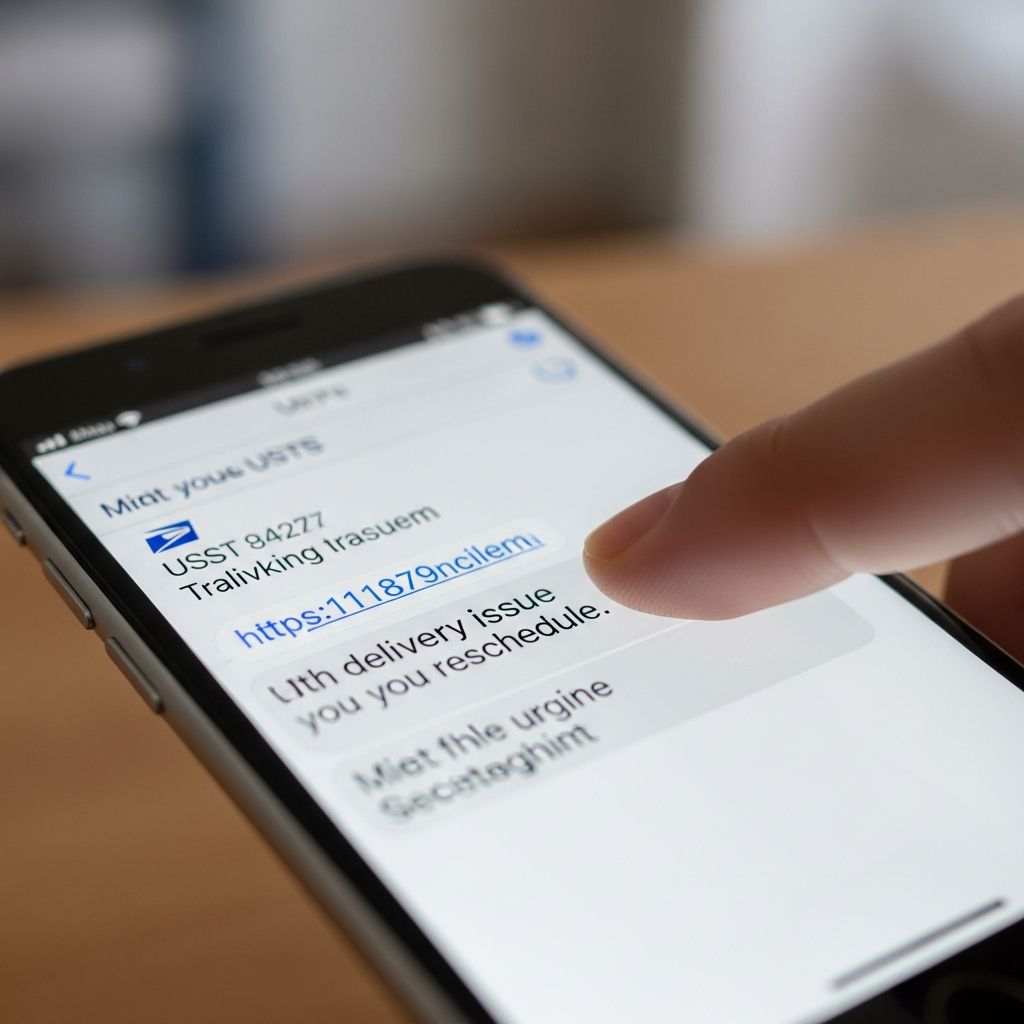
Text messages that claim to be from the United States Postal Service (USPS) about missed deliveries, unpaid fees, or shipping problems are a favorite tool for scammers. These messages often look convincing, arrive when you are genuinely expecting a package, and push you to click a link right away. Understanding how these scams work is the best way to avoid losing money or handing over your personal information.
What Are USPS Text Message (Smishing) Scams?
USPS text scams are a type of smishing — phishing that happens through SMS or messaging apps. Scammers send messages that pretend to be official USPS notifications about a delivery, then direct you to click a link to fix a problem, pay a fee, or update your address information.
Once you click, you are typically taken to a website that imitates the real USPS site or a retailer. That fake site then asks for personal or financial information, such as your name, address, login credentials, or credit card details.
Common Goals of These Scams
- Steal payment information (credit or debit card numbers, CVV, expiration dates).
- Collect personal data such as address, date of birth, or Social Security number to enable identity theft.
- Capture login credentials for email, bank accounts, or retailer accounts.
- Install malware or spyware on your device via malicious links or downloads.
How Fake USPS Texts Usually Look
Although scammers constantly change the exact wording, fake USPS texts tend to follow a few predictable patterns.
Typical Messages You Might See
- Claims that a package could not be delivered due to an unpaid fee or customs charge.
- Alerts about an incomplete or incorrect address that must be updated.
- Notifications saying a package is “on hold” or “suspended” until you confirm details.
- Warnings that a package will be returned to the sender if you do not act within a short deadline.
- Messages inviting you to update delivery preferences or schedule redelivery via a link.
Nearly all of these messages contain a link that the sender urges you to tap immediately, sometimes using alarming language or strict time limits to create panic and rush your decision.
Red-Flag Features in Scam Texts
| Red Flag | Why It Matters |
|---|---|
| Unexpected message about a package you never ordered | USPS will not contact you about deliveries you did not initiate or track. |
| Text includes a clickable link | USPS states that official tracking texts it sends will not include a link. |
| Urgent language and short deadlines | Pressure tactics are designed to make you act without thinking. |
| Requests for payment, personal data, or passwords | Legitimate USPS notifications will not ask for sensitive financial information via text. |
| Odd web address or shortened URL | Fake links often use unfamiliar domains or URL shorteners to hide their true destination. |
What USPS Really Does (and Does Not) Do by Text
Knowing how USPS actually communicates helps you quickly judge whether a message is real or fake.
Legitimate USPS Text Practices
- USPS offers optional text updates for specific packages when you sign up using a tracking number.
- You must initiate tracking alerts through USPS.com, the USPS app, or at a post office; they are not sent randomly.
- USPS does not charge fees for basic tracking or text notifications.
Key Limits and Protections
- USPS says it will not send you unsolicited text messages about deliveries you did not request.
- USPS states that customer text alerts it sends will not contain clickable links requesting payment or personal information.
- USPS and the U.S. Postal Inspection Service (USPIS) repeatedly warn consumers not to click links in unexpected delivery texts, even if they appear to come from USPS.
Why These Scams Are So Effective
USPS and other delivery-related text scams are effective because they exploit everyday behavior and common emotions.
- People expect packages: Online shopping and home delivery are routine, so many of us are waiting for something almost all the time.
- Messages arrive at convenient times: Scammers send waves of texts during busy seasons, like holidays, when shipping volume and people’s stress levels are high.
- Impressive realism: Fake sites closely mimic the layout, colors, and logos of USPS or major retailers, making them look legitimate at a quick glance.
- Fear of losing a package: The threat of a package being returned or destroyed pushes people to act fast, turning off their usual skepticism.
What Can Happen If You Take the Bait
The exact damage depends on what information you share and whether any malware is installed, but the consequences can be serious.
Financial Loss
- Unauthorized charges on your credit or debit card if you pay bogus fees.
- Recurring or subscription charges you never agreed to.
- Loss of funds if scammers use your credentials to access your bank or payment accounts.
Identity Theft Risks
- With enough personal details, criminals can attempt to open new credit lines, apply for loans, or file fraudulent tax returns.
- They may combine information from multiple breaches to build a more complete profile of you over time.
Device and Account Compromise
- Clicking malicious links can expose your device to malware that steals passwords or monitors activity.
- If you reuse passwords, one stolen login can give criminals access to several of your accounts.
How to Check If a USPS Text Is Real
Instead of reacting to the message itself, rely on trusted sources of information.
Step-by-Step Verification Checklist
- Do not click the link. Treat all unexpected links in texts as suspicious by default.
- Check your existing orders by going directly to the retailer’s website or app and viewing your order history and tracking information.
- Visit USPS.com manually in your browser or use the official USPS mobile app, then enter any tracking number you have.
- Compare tracking formats: Real USPS tracking numbers follow specific patterns; random strings or very short codes are suspicious.
- Contact USPS or the retailer using publicly listed phone numbers or help channels — never numbers provided in the suspicious text.
Practical Ways to Protect Yourself
You cannot stop scammers from sending messages, but you can significantly reduce your risk of falling for them.
Smart Habits for Everyday Protection
- Ignore and delete unexpected messages about deliveries, especially when they include links or request payment.
- Avoid replying to suspicious texts, even with words like “STOP,” as this can confirm your number is active.
- Use device tools to filter or block spam texts and calls from unknown numbers when possible.
- Keep software updated on your phone and apps to reduce vulnerabilities.
- Use unique, strong passwords and consider a password manager so one compromised password does not unlock multiple accounts.
Settings to Review on Your Phone
- Enable spam or junk message filtering in your messaging app, if available.
- Turn on two-factor authentication (2FA) for important accounts so that a stolen password alone is not enough to break in.
- Regularly review app permissions and remove apps you do not recognize or no longer use.
What to Do If You Already Clicked the Link
If you interacted with a suspicious USPS text, quick action can help limit the damage.
Immediate Steps
- Close the site right away and do not download anything.
- Run a security scan on your device using reputable security software, if you have it installed.
- Change your passwords, starting with email, banking, and other high-value accounts, especially if you entered any login details on the fake site.
If You Entered Financial Information
- Contact your bank or card issuer immediately to report potential fraud and ask about canceling or replacing the card.
- Review recent account activity and set up alerts for new transactions.
- Consider placing a fraud alert or credit freeze with major credit bureaus if you shared extensive personal information; this can help reduce the risk of new accounts being opened in your name.
If You Provided Other Personal Data
- Monitor your credit reports and account statements for unfamiliar accounts or charges.
- Be alert for additional phishing attempts that use the same or related information.
How and Where to Report USPS Text Scams
Reporting scams helps enforcement agencies see patterns and take action against criminals. It can also help protect other consumers.
Report to USPS and the Postal Inspection Service
- Without clicking the link, you can forward suspicious text messages to 7726 (SPAM), a number many carriers use to collect spam reports.
- You can also report suspicious USPS-related texts and emails to the U.S. Postal Inspection Service using the contact information provided on their official website.
Report to Consumer Protection Agencies
- Report fraud attempts, including smishing, to the Federal Trade Commission (FTC) using its online complaint system; these reports support law enforcement actions and consumer education.
- In cases of financial loss or identity theft, consider also filing a report with your local law enforcement, especially if requested by your bank or insurer.
Frequently Asked Questions (FAQs)
Q: I received a text saying I owe a small redelivery fee. Could that ever be real?
Legitimate USPS tracking notifications do not charge extra fees just to complete delivery, and USPS states it does not send unsolicited texts with payment links. If you see a message asking you to pay a fee through a link, treat it as a scam and verify any real shipments directly through USPS.com or the retailer.
Q: What if I really am expecting a package when the text arrives?
Coincidence is exactly what scammers count on. Do not rely on the message itself. Instead, ignore the link and check your order by going directly to the retailer’s site or manually entering the tracking number at USPS.com or in the official app.
Q: Can a scam text infect my phone just by opening it?
Simply viewing a text is usually not enough to compromise your device. The main risk comes from tapping links, downloading files, or entering data on malicious pages. Still, delete suspicious messages and avoid interacting with them.
Q: Is it safe to reply “STOP” to unsubscribe from suspicious USPS texts?
Replying to a scam text can confirm that your number is active, potentially leading to more spam. If you did not sign up for the messages, it is safer to delete them, block the sender, and report the text through your carrier or the Postal Inspection Service.
Q: How can I help family members who are not tech-savvy avoid these scams?
Share simple rules: never click unexpected links, never pay delivery fees via text, always go directly to USPS.com or the store’s website, and ask a trusted person for help before acting on a strange message. You can also help them set up spam filters and show them how to block unwanted numbers.
References
- Think that text message is from USPS? It could be a scam. — Federal Trade Commission (FTC). 2025-04-xx. https://consumer.ftc.gov/consumer-alerts/2025/04/think-text-message-usps-it-could-be-scam
- USPS and USPIS Highlight Successful Campaign to Combat Mail-Related Crime in Grand Rapids. — U.S. Postal Service. 2025-10-29. https://about.usps.com/newsroom/local-releases/mi/2025/1029-usps-and-uspis-highlight-successful-campaign-to-combat-mail-related-crime-in-grand-rapids.htm
- Smishing: Package Tracking Text Scams. — U.S. Postal Inspection Service. 2023-11-xx. https://www.uspis.gov/news/scam-article/smishing-package-tracking-text-scams
- Scams & Scheme Alerts. — U.S. Postal Service. 2024-xx-xx. https://faq.usps.com/s/article/Scams-Scheme-Alerts
- Cut Out Crime: The 2025 U.S. Postal Inspection Service Holiday Campaign. — U.S. Postal Service Postal Bulletin. 2025-xx-xx. https://about.usps.com/postal-bulletin/2025/pb22689/html/info-1_005.htm
- Don’t Fall For This Smishing Scam. — U.S. Postal Service Postal Bulletin. 2025-xx-xx. https://about.usps.com/postal-bulletin/2025/pb22686/html/info_004.htm
- What Is the USPS Scam? — Security.org. 2024-xx-xx. https://www.security.org/digital-safety/scams/usps/
Similar Articles








Read full bio of Sneha Tete


