
Unpaid Toll Text Messages: How to Spot and Stop the Scam
Learn how fake unpaid toll text messages work, how to verify real notices, and what to do if you clicked or paid.
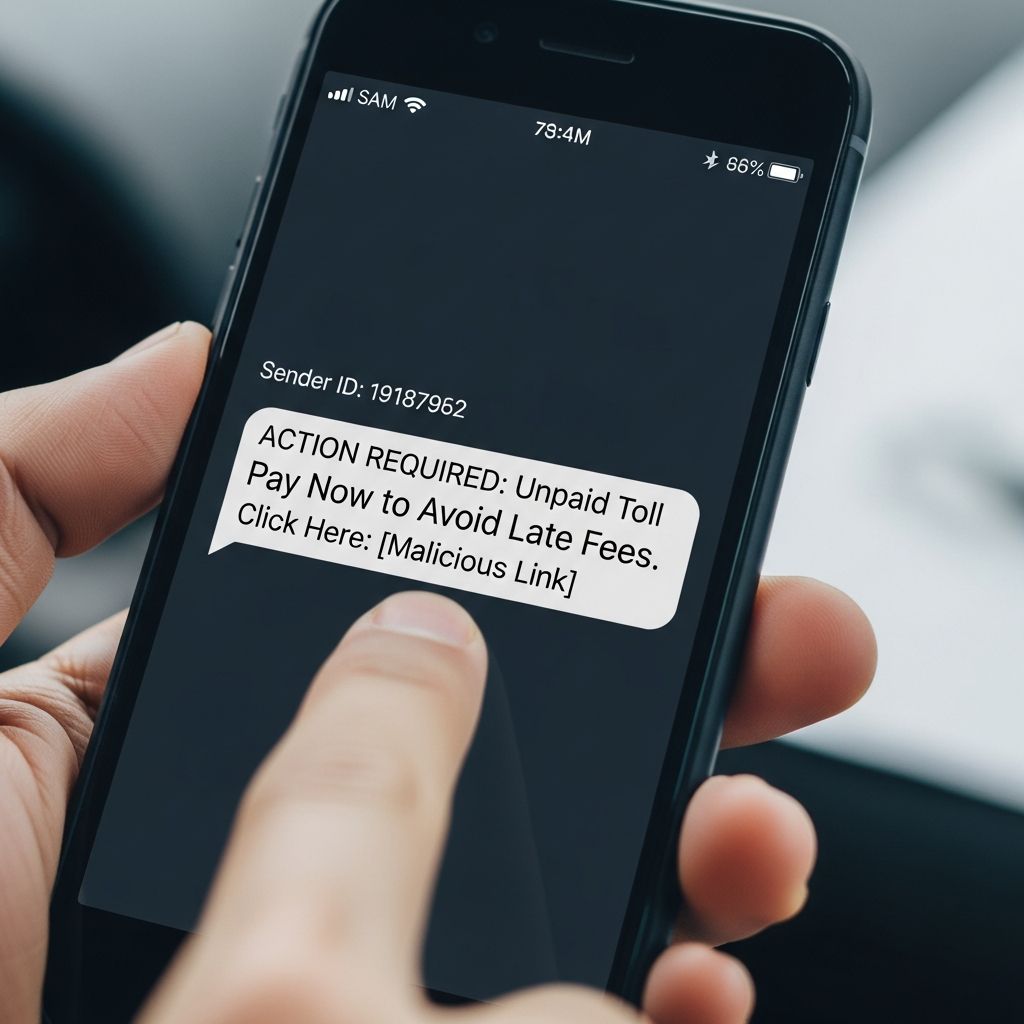
Across the country, people are getting alarming text messages claiming they owe money for unpaid tolls or traffic violations. In many cases, these messages are smishing scams (phishing by SMS) designed to steal your money and personal information, not collect real tolls. Understanding how this scheme works is the first step to avoiding it.
Why Unpaid Toll Text Scams Are Spreading
Scammers thrive on situations where quick decisions and confusion are common. Electronic tolling, license plate cameras, and mail-based billing have made legitimate toll collection less visible and more complex, which scammers exploit by mimicking how genuine toll systems look and sound.
Recent alerts from federal and state agencies show that fake toll texts are being reported in multiple states and under many different toll brand names, including generic references to “DMV” or “tolling authorities.”
- Messages may pretend to come from a state transportation department, a toll system, or even your local DMV.
- The goal is to push you into clicking a link or calling a number before you have time to think.
- Once you engage, scammers try to capture payment card details, passwords, or documents like your driver’s license number.
How the Fake Unpaid Toll Text Scam Typically Works
While messages vary, most unpaid toll scams follow a similar pattern.
- You receive an unexpected text claiming you owe money for unpaid tolls, a past-due toll bill, or a traffic violation.
- The text uses pressure tactics such as saying it is a “final notice,” threatening extra fees, legal action, or account suspension if you do not pay immediately.
- The message includes a link that looks like a payment portal or toll agency site. In reality, it leads to a fake site controlled by scammers.
- You are asked to enter information such as bank card number, CVV, login credentials, Social Security number, or driver’s license details.
- Scammers use what you provide to make unauthorized charges, open accounts, or attempt identity theft.
Some variants skip the link and tell you to call a phone number where a fraudster impersonates a representative and walks you through a “payment” over the phone.
Typical Warning Signs of a Fake Toll Text
Recognizing red flags can help you avoid engaging with a scam in the first place. Agencies across several states point to common warning signs:
- Unsolicited or out-of-the-blue message about a toll you do not recognize or from a toll system you have never used.
- Suspicious sender number, such as a long or random-looking number, rather than a short code or known toll provider number.
- Unfamiliar link, sometimes shortened or with misspellings that closely mimic an official website (for example, extra characters in the domain name).
- Urgent or threatening language warning of “final notice,” legal action, license suspension, or large penalties unless you act immediately.
- Spelling or grammar errors that would be unlikely in an official government or toll agency communication.
- Requests for sensitive data such as Social Security number, full birth date, bank login credentials, or driver’s license number.
How Real Toll Agencies and DOTs Usually Contact You
Understanding genuine practices makes it easier to spot fakes. Official transportation departments and tolling agencies have published clear statements about how they communicate with customers.
| Organization Type | Typical Communication Methods | What They Do Not Do |
|---|---|---|
| State Department of Transportation / DMV |
|
|
| Tolling agencies / toll road operators |
|
|
Some toll systems may send limited informational texts, but credible agencies specify which short code or number they use and do not send final payment demands with unfamiliar links.
Immediate Steps If You Get a Toll Text
If a message about unpaid tolls arrives on your phone, you can stay safer by following these steps before doing anything else.
1. Do not click, tap, or call from the message
- Ignore any links or phone numbers provided in the text.
- Do not reply, even to say “STOP” — replying confirms your number is active.
2. Verify independently using trusted contact details
- Type the address of your state tolling agency or toll road directly into your browser, or use a bookmark you already trust.
- Check any existing toll account you have (for example, a transponder account) by logging in through the official website or app.
- Use a phone number printed on your toll bill, from your state DOT website, or on your transponder, not the one in the text.
3. Report and delete the text
- Use the “report junk” or similar option in your messaging app to flag the message as spam.
- Forward the text to 7726 (SPAM), which many mobile carriers use to investigate spam texts.
- Once reported, delete the text to avoid clicking it by accident later.
What to Do If You Already Clicked or Paid
If you realized too late that the message was a scam, quick action can reduce the damage.
1. If you entered card or bank details
- Contact your bank or card issuer immediately and explain that you may have given details to a scam site.
- Ask them to monitor for fraudulent charges, reverse any suspicious transactions, and consider issuing a new card.
- Review your recent statements carefully and set up alerts where possible.
2. If you shared account passwords
- Change the password for the affected account right away.
- If you reused that password on other sites, change those too.
- Enable multi-factor authentication (MFA) wherever available to add an extra layer of security.
3. If you provided personal identity information
- Information such as your driver’s license number or Social Security number can be used for identity theft.
- Consider placing a fraud alert or credit freeze with major credit bureaus to limit new accounts being opened in your name. Guidance is available from federal consumer protection agencies.
- Regularly check your credit reports for accounts you do not recognize.
4. File an official fraud report
- Report the scam to the Federal Trade Commission (FTC) at its official fraud reporting site so law enforcement can track patterns and target major operations.
- You can also report internet-based scams, including smishing, to the FBI’s Internet Crime Complaint Center (IC3).
- Include screenshots, phone numbers, and website addresses used in the scam, if you have them.
How to Confirm Whether You Actually Owe a Toll
Sometimes, people do owe legitimate tolls and receive real notices. The challenge is separating real obligations from scams.
- Look for past mail: If you really missed a toll, you will usually receive a mailed notice or invoice to the address on your vehicle registration.
- Check official toll accounts: Log in to any official toll system account (such as a transponder program) using its known web address or mobile app.
- Use license plate lookup tools: Some toll agencies offer online tools where you can check toll balances by plate number through their official sites.
- Call official customer service: Use a confirmed number from a government or toll authority website and ask if there is a balance linked to your plate or account.
Remember that in several states, the transportation department or DOT does not operate toll roads at all, so any text claiming they are collecting tolls is inherently suspect.
Why These Scams Are So Effective
Even cautious people can be caught off guard because unpaid toll scams use several psychological tactics:
- Urgency and fear: Threats of extra fees, license suspension, or legal action push people to act quickly.
- Authority: Scammers misuse the names and logos of government agencies and well-known toll systems to appear official.
- Plausibility: With electronic tolling, it is easy to believe you drove through a toll point without noticing.
- Convenience: A one-click payment link feels like an easy way to solve the problem, which is exactly what scammers rely on.
Long-Term Habits to Protect Yourself from Text Scams
The same habits that protect you from unpaid toll scams will also help with other smishing attempts, such as fake delivery notifications or bank alerts.
- Treat unexpected texts like unverified strangers: Until you confirm a message using independent contact details, assume it could be fraudulent.
- Bookmark official sites for tolls, your bank, and government agencies so you never rely on links sent by text or email.
- Use strong, unique passwords and a trusted password manager to limit how much damage a stolen password can cause.
- Turn on multi-factor authentication (MFA) for important accounts, especially banking, email, and mobile carrier accounts.
- Keep your phone’s operating system and apps updated to reduce the risk of malware if you accidentally click a bad link.
FAQs About Unpaid Toll Text Scams
Q1: I got a text about unpaid tolls but I never drive on toll roads. Is it automatically a scam?
If you do not use toll roads or live in a state where the transportation department does not operate toll facilities, an unsolicited text demanding toll payment is a strong indicator of a scam. You can still contact your state tolling agency or DOT using their official website to confirm.
Q2: Can a legitimate toll agency ever text me?
Some toll systems may send informational or account-related texts, but official statements show that they do not send generic payment-demand texts with unknown links or threats of legal action. Always verify the sending number and log in through the official site instead of using a link in the message.
Q3: The text includes my license plate number. Does that mean it must be real?
Not necessarily. Scammers can guess or obtain license plate formats, or reuse data stolen from other breaches. A plate number in a text is not proof of legitimacy; you still need to verify through official channels.
Q4: Who should I report these messages to?
Report suspicious toll texts to the FTC’s fraud reporting site and, if the scam involves internet or online payment components, to the FBI’s Internet Crime Complaint Center (IC3). You can also forward the text to 7726 (SPAM) to alert your mobile carrier.
Q5: I clicked the link but didn’t type any information. Am I still at risk?
If you only opened the link and closed it immediately, the main risk is lower, but you should still watch for unusual pop-ups or requests to install apps. Run security checks on your device, keep your operating system updated, and avoid revisiting the link. If you entered any information, follow the response steps for financial and identity protection above.
References
- Got a text about unpaid tolls? It’s probably a scam. — Federal Trade Commission (FTC). 2025-01-XX. https://consumer.ftc.gov/consumer-alerts/2025/01/got-text-about-unpaid-tolls-its-probably-scam
- DMV warns of fraudulent text scam asking for toll payments. — California Department of Motor Vehicles. 2025-04-29. https://www.dmv.ca.gov/portal/news-and-media/dmv-warns-of-fraudulent-text-scam-asking-for-toll-payments/
- Fraudulent text messages target recipients with false claims of unpaid tolls or traffic violations. — Iowa Department of Transportation. 2025-06-03. https://iowadot.gov/news/2025-06-03/fraudulent-text-messages-target-recipients-false-claims-unpaid-tolls-or-traffic-violations
- TxDOT warning drivers of spike in texting scams targeting TxTag customers. — Texas Department of Transportation. 2025-02-25. https://www.txdot.gov/about/newsroom/statewide/2024/txdot-warning-drivers-of-spike-in-texting-scams-targeting-txtag-customers.html
- Good To Go! warns of scam texts. — Washington State Department of Transportation. 2025-XX-XX. https://wsdot.wa.gov/about/news/2025/good-go-warns-scam-texts
- Fraudulent Electronic Communication. — Illinois Tollway. 2024-XX-XX. https://agency.illinoistollway.com/fraudulent-electronic-communication
- AG Nessel, MDOT Director Wieferich Warn Consumers About Toll Text Scam. — Michigan Attorney General & Michigan Department of Transportation. 2025-04-16. https://www.michigan.gov/ag/news/press-releases/2025/04/16/ag-nessel-mdot-director-wieferich
Similar Articles








Read full bio of medha deb


