
Invasion Of Privacy: Practical Legal Guide
Learn how invasion of privacy laws protect individuals from wrongful intrusions, disclosures, and misuse of personal information.
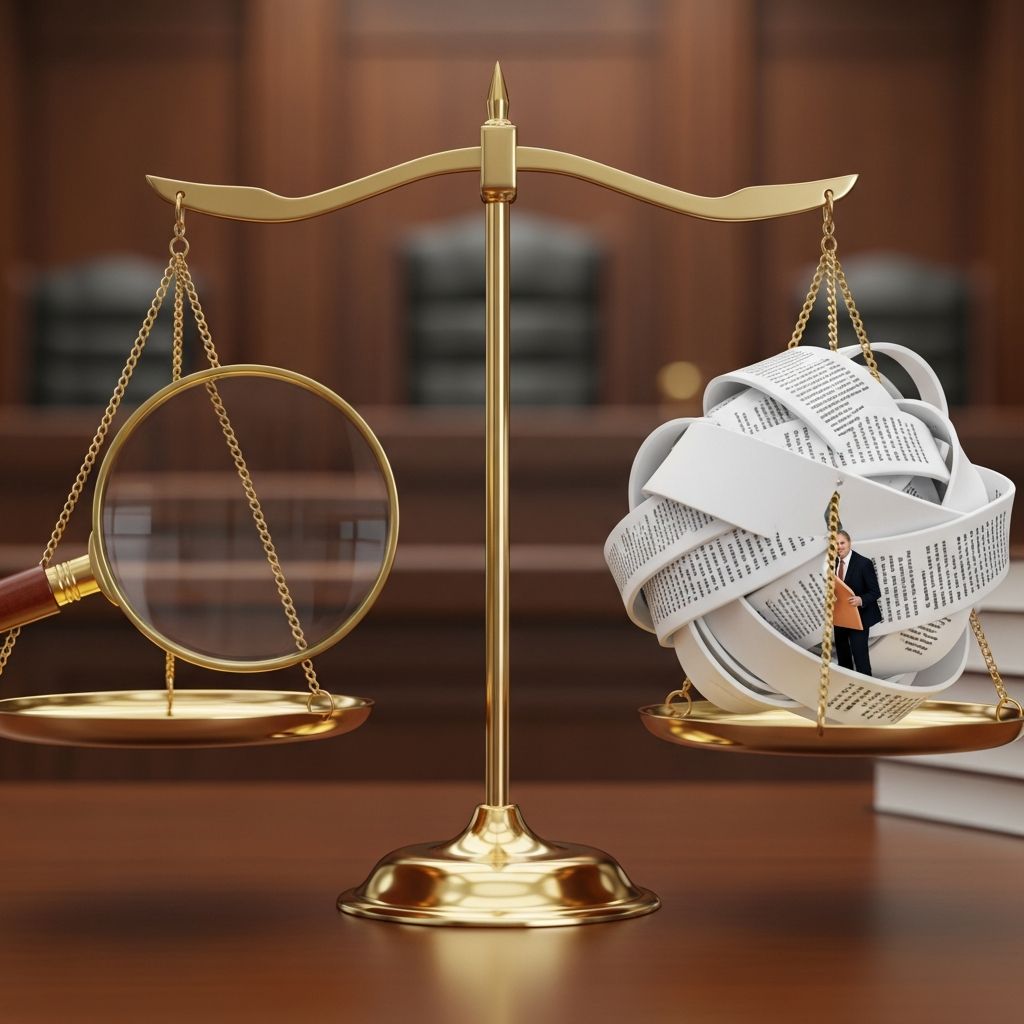
In modern life, personal information is constantly collected, shared, and stored. Yet the law still recognizes that every person has a core interest in being left alone and in controlling certain private facts about themselves. Invasion of privacy is the name for a group of civil wrongs (torts) that protect those interests by allowing people to sue when others cross the line.
This guide explains the major types of invasion of privacy, the elements a claimant typically must prove, common defenses, and how these claims interact with free speech and rapidly changing technology.
What Does “Invasion of Privacy” Mean in Law?
In U.S. law, invasion of privacy usually refers to one of four distinct torts recognized by courts and legal commentators:
- Intrusion upon seclusion – intrusive prying into someone’s private space or affairs.
- Public disclosure of private facts – widespread revelation of highly private, non-newsworthy information.
- False light – publicizing information that creates a misleading impression about someone.
- Appropriation of name or likeness – using someone’s identity, usually for commercial or promotional purposes, without consent.
Not every unpleasant exposure or embarrassment will qualify. Most courts require that the challenged conduct be highly offensive to a reasonable person and affect matters that are genuinely private, rather than trivial or already public.
The Four Core Privacy Torts at a Glance
| Type of Claim | Primary Interest Protected | Key Legal Focus |
|---|---|---|
| Intrusion upon seclusion | Freedom from unwanted observation or prying | How the information was obtained (methods of intrusion) |
| Public disclosure of private facts | Control over deeply personal information | Publicity of true but private facts |
| False light | Protection against misleading portrayals | Publicity that creates a deceptive impression |
| Appropriation of name or likeness | Control over commercial use of identity | Unauthorized exploitation of name, image, or persona |
Intrusion Upon Seclusion
Intrusion upon seclusion focuses on the method used to gather information rather than on what is ultimately revealed. A classic formulation is intentional interference with another’s solitude or private affairs that would be highly offensive to a reasonable person.
Typical Elements of Intrusion Claims
While specific wording varies by state, courts and pattern jury instructions commonly require proof of:
- Intentional intrusion – the defendant deliberately engaged in the intrusive conduct (not accidental).
- Into private affairs or a private place – the plaintiff had a reasonable expectation of privacy in the situation.
- Highly offensive conduct – the intrusion would outrage or seriously offend an ordinary person, considering social norms.
Examples of Potential Intrusion
- Secretly installing hidden cameras or microphones in a private home, dressing room, or restroom.
- Using long-range lenses or electronic tools to monitor activities in an area where privacy is expected.
- Accessing private emails or messages without authorization.
Many states also criminalize specific invasive acts such as voyeuristic video recording, often under “invasion of privacy” or similar statutes. For example, California’s Penal Code treats certain hidden camera and peeping activities as misdemeanors, illustrating how civil and criminal rules can overlap in this area.
Public Disclosure of Private Facts
This tort addresses situations where true but highly personal information about someone is publicized without consent. Unlike intrusion, the focus is on the act of making information broadly known, not on how the information was obtained.
Core Requirements
Pattern instructions and case law often describe these elements:
- Publicity – communication to the public at large, or to enough people that the information is sure to become widely known.
- Private facts – information that is not already public and relates to highly personal matters (e.g., health details, intimate relationships, financial hardship).
- Highly offensive disclosure – a reasonable person would find such exposure very objectionable.
- Lack of legitimate public concern – the information is not newsworthy or of significant public interest.
Limits Imposed by Free Speech
Courts must balance privacy against First Amendment protections for speech and press. Reporting on matters of legitimate public concern, especially involving public officials or public figures, may be protected even if embarrassing. Student press and news organizations, for example, are often shielded when they accurately report on newsworthy events, though they can still face liability if they publish purely private, non-newsworthy revelations.
False Light
False light is closely related to defamation but targets misleading implications rather than strictly false statements. The key is that the defendant’s publicity creates a distorted impression of the plaintiff that would be highly offensive to a reasonable person.
Distinguishing False Light from Defamation
- Defamation focuses on harm to reputation through false statements.
- False light focuses on the injury of being portrayed in a misleading, objectionable way, even if individual facts are technically accurate.
Some states treat false light as a distinct cause of action, while others either merge it with defamation or do not recognize it at all, often citing free speech concerns and potential overlap.
Common Elements
- Publicity about the plaintiff.
- Meaningful falsity or misleading impression created by the publication.
- Highly offensive portrayal to a reasonable person.
- Frequently, a requirement of actual malice (knowledge of falsity or reckless disregard) when the plaintiff is a public figure or the matter is of public concern, similar to defamation standards.
Appropriation of Name or Likeness
Appropriation (sometimes called misappropriation) protects a person’s right to control commercial and promotional exploitation of their identity. It is violated when someone’s name, photograph, voice, or other identifiable trait is used for advantage without permission, often in advertising or marketing.
Key Features of Appropriation Claims
- Use of identity – name, image, signature, voice, or a distinctive persona that clearly points to the plaintiff.
- For benefit – typically commercial gain, such as advertisements, merchandise, or endorsements.
- Without consent – no valid permission, license, or release.
Unlike other privacy torts, the Restatement and many courts note that appropriation does not always require that the conduct be highly offensive; wrongful taking of the commercial value of someone’s identity may be enough.
Factors Courts Consider in Privacy Cases
Because social norms and technology evolve, privacy is a context-dependent concept. Courts often consider:
- Reasonable expectations of privacy in the location or situation (e.g., home versus public street).
- Community customs and practices for the time and place.
- The plaintiff’s role in public life (private individual vs. public figure).
- How widely information was shared and by what means.
- The seriousness of emotional harm, humiliation, or distress caused.
Pattern jury instructions in several states highlight that the interference generally must be very offensive to a reasonable person, recognizing that minimal or trivial intrusions are not actionable.
Common Defenses and Limitations
Even when someone feels violated, defendants have several potential defenses to invasion of privacy claims.
Consent
- Express consent – written or clearly stated permission (such as a signed photo release) can defeat most privacy claims.
- Implied consent – a person’s conduct may sometimes suggest consent, for example voluntarily posing for widely publicized promotional material, though courts examine the scope carefully.
Newsworthiness and Public Concern
- Truthful reporting on matters of public concern is often protected, limiting liability for public disclosure and false light, especially for journalists and media outlets.
- Public figures generally have reduced privacy expectations regarding their public roles, though they still retain rights over purely private matters.
Privileges and Immunities
- Certain statements made in court filings, legislative hearings, or other official proceedings may be protected by absolute or qualified privileges, depending on the jurisdiction.
- Government officials performing duties within the scope of their authority may also have statutory or constitutional protections, though separate constitutional privacy claims sometimes arise when government conduct is particularly intrusive.
Remedies: What Can a Successful Plaintiff Recover?
Invasion of privacy is a civil wrong, so the primary remedy is damages. Depending on the jurisdiction and facts, a successful claimant may seek:
- Compensatory damages – for emotional distress, mental suffering, humiliation, and in some cases, financial loss.
- Restitution or disgorgement – recovery of profits or benefits the defendant gained from misusing a person’s identity.
- Punitive damages – when the defendant’s conduct is malicious or egregious, to punish and deter similar behavior.
- Injunctive relief – court orders requiring the defendant to stop the intrusive conduct or remove offending material where allowed by law.
Some invasions of privacy, such as unauthorized surveillance or clandestine recording, may also expose the wrongdoer to criminal penalties under state statutes, independent of any civil lawsuit.
Privacy in the Digital Age
Digital technologies have expanded both opportunities for connection and risks of privacy invasion. Courts and legislatures are actively adapting traditional privacy principles to online environments.
Modern Sources of Risk
- Hidden cameras, drones, and sophisticated microphones.
- Unauthorized access to cloud accounts, messaging platforms, or social media profiles.
- Non-consensual sharing of intimate images and recordings.
- Misuse of photographs, usernames, or likenesses in online advertisements and fake profiles.
Many states have enacted targeted criminal and civil statutes to address specific behaviors, such as “revenge pornography” and electronic voyeurism, which often operate alongside traditional tort theories.
Frequently Asked Questions (FAQs)
Q1: Is being photographed in public an invasion of privacy?
Generally, no. Courts usually hold that people have a much lower expectation of privacy in truly public places, such as parks or streets. However, using a person’s image in advertising without consent, or recording in locations where privacy is expected (like restrooms or changing rooms), can still give rise to liability.
Q2: Do I have a claim if someone shared embarrassing but true information about me online?
Possibly, under public disclosure of private facts, if the information is highly personal, widely shared, not already public, and lacks legitimate newsworthiness. Courts also weigh free speech interests, especially if the topic involves public concern or public figures.
Q3: What if the media portrayed me in a misleading way without stating anything literally false?
In some states, you may bring a false light claim if the overall portrayal creates a highly offensive, misleading impression and was publicized broadly. Other states do not recognize false light, so available remedies may depend on local law.
Q4: Can I sue if a company used my photo in an advertisement without asking?
Unauthorized commercial use of your name or likeness often supports an appropriation claim, especially if the image clearly identifies you and is used to promote products or services. Many jurisdictions also have specific “right of publicity” statutes that provide additional remedies.
Q5: What should I do if I believe my privacy has been invaded?
Preserve all evidence (screenshots, messages, recordings, or physical items), avoid confronting the other party in ways that could escalate risk, and consult a qualified attorney in your state. A lawyer can explain applicable state law, potential claims, relevant defenses, and deadlines for filing suit.
References
- Invasion of Privacy — Colorado Judicial Branch, Civil Jury Instructions, Chapter 28. 2023-01-01. https://www.coloradojudicial.gov/media/13687
- What Constitutes a Violation – Privacy — USLegal. 2022-01-01. https://privacy.uslegal.com/what-constitutes-a-violation/
- The Legal Right to Privacy — Stimmel Law. 2021-06-01. https://www.stimmel-law.com/en/articles/legal-right-privacy
- The Torts of Invasion of Privacy — LawShelf Educational Media. 2020-01-01. https://www.lawshelf.com/shortvideoscontentview/the-torts-of-invasion-of-privacy
- California Penal Code Section 647(j) – Invasion of Privacy — State of California (via secondary explanation). 2019-01-01. https://www.losangelescriminallawyer.pro/california-penal-code-section-647-j-pc-invasion-of-privacy.html
- Invasion of Privacy Law, in Brief — Student Press Law Center. 2011-06-01. https://splc.org/2011/06/invasion-of-privacy-law/
- Title 18, Section 7507.1 – Invasion of Privacy — Pennsylvania General Assembly. 2005-01-01. https://www.palegis.us/statutes/consolidated/view-statute?txtType=HTM&ttl=18&div=0&chpt=75&sctn=7&subsctn=1
Similar Articles








Read full bio of medha deb


