
Unchecked Surveillance: A Bipartisan Threat
How expansive national security powers threaten American civil liberties.
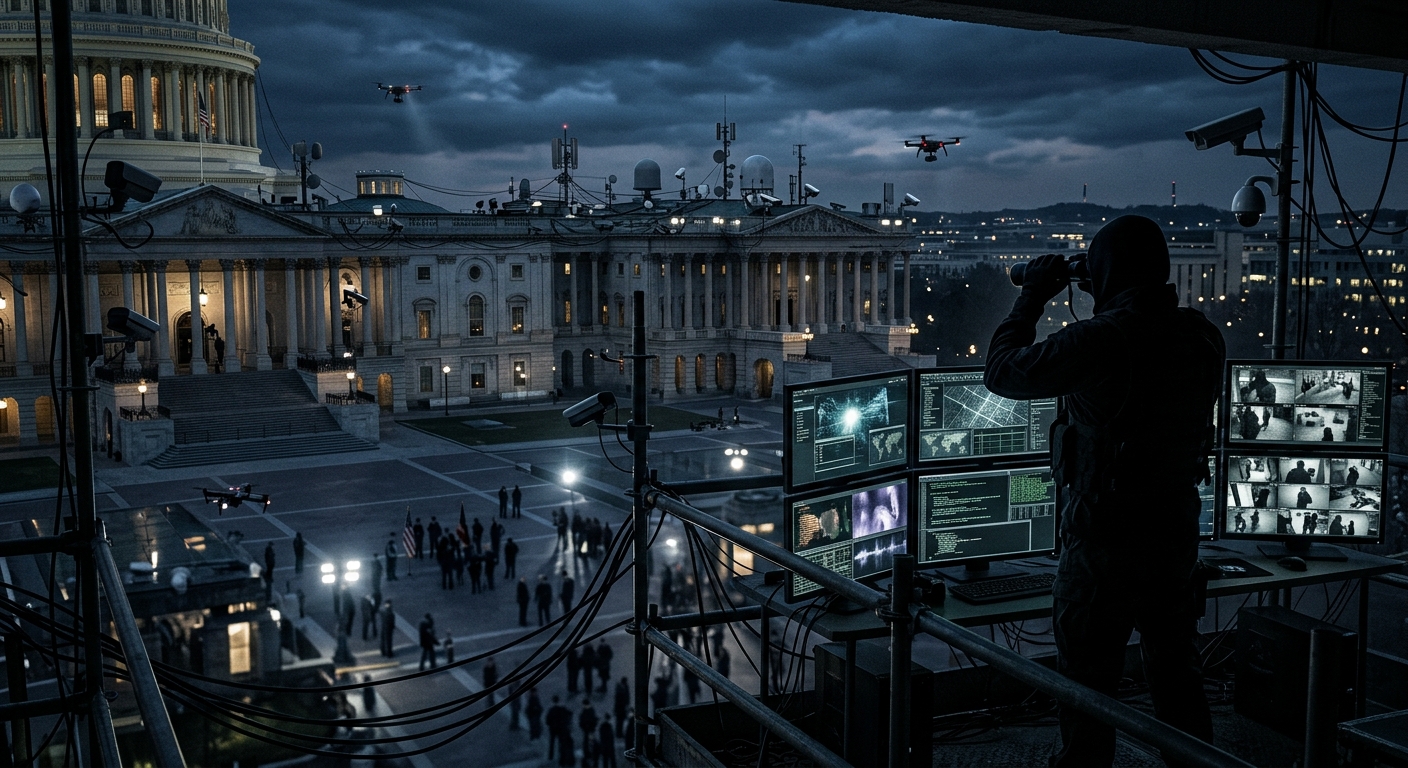
The Bipartisan Consensus on Mass Surveillance
The architecture of the modern American surveillance state was not constructed overnight, nor is it the exclusive project of a single political administration. Instead, it is the product of decades of creeping executive authority, repeatedly ratified by both Democratic and Republican lawmakers under the broad, unassailable banner of national security. While the rhetoric on the campaign trail often emphasizes the sacred nature of civil liberties and the paramount importance of constitutional boundaries, the legislative record paints a starkly different picture. Lawmakers from across the ideological spectrum have consistently yielded to the demands of the intelligence community, allowing the apparatus of domestic spying to grow to an unprecedented scale.
Democracy, by its very nature, relies on transparency, accountability, and the robust protection of individual liberties. Clandestine intelligence gathering fundamentally strains these democratic structures. When the state is granted the power to peer into the private lives of its citizens without individualized suspicion or judicial oversight, the basic tenets of the Fourth Amendment are severely compromised. The steady erosion of privacy rights is not merely a theoretical legal issue; it has profound, chilling effects on free speech, political association, and the everyday lives of ordinary Americans.
The core problem lies in the normalization of exceptional powers. When a crisis occurs, intelligence agencies demand sweeping new authorities, promising that these tools will be strictly targeted and temporary. Yet, history has shown that once granted, these surveillance powers are rarely relinquished. They become entrenched fixtures of the federal government, defended by succeeding administrations regardless of their political affiliation.
From Emergency Measures to Permanent Fixtures
To understand the current crisis in American surveillance, one must look back at the immediate aftermath of the September 11 attacks. The rapid passage of the Patriot Act fundamentally altered the relationship between the government and the governed. It lowered the threshold for domestic wiretaps, expanded the use of secret National Security Letters, and blurred the lines between foreign intelligence gathering and domestic law enforcement. At the time, these measures were sold to the public as necessary, temporary tools to prevent another catastrophic attack.
However, the concept of a “temporary” national security power is largely a political myth. Over the subsequent two decades, through multiple reauthorizations, many of these emergency provisions were quietly made permanent. Even when minor reforms were introduced—such as the USA FREEDOM Act of 2015, which aimed to curb the bulk collection of telephone metadata—the underlying legal framework enabling mass surveillance remained largely intact. The intelligence community simply adapted, finding new legal theories and technological methods to maintain their omniscient view of global and domestic communications.
Perhaps the most concerning aspect of this trajectory is the complicity of lawmakers who historically championed civil rights. Time and again, politicians who publicly criticize unchecked executive power while in the minority suddenly become fierce defenders of the surveillance state once their party controls the White House. This bipartisan capitulation creates an environment where meaningful oversight is sidelined in favor of deference to the intelligence establishment.
The FISA Section 702 Dilemma
At the center of the modern surveillance debate is Section 702 of the Foreign Intelligence Surveillance Act (FISA). Enacted in 2008, Section 702 allows the government to compel American telecommunications and internet companies to hand over the communications of foreign targets located outside the United States. Crucially, the government does not need to obtain an individualized warrant from a judge to initiate this collection.
The primary issue with Section 702 is the staggering amount of “incidental” data it sweeps up. Because foreign targets routinely communicate with people inside the United States, millions of emails, text messages, and phone calls belonging to ordinary, law-abiding Americans are swallowed by the National Security Agency’s massive databases. Once this domestic data is collected, it sits in government servers, creating a massive vulnerability for civil liberties.
This leads to what privacy advocates call the “backdoor search” loophole. Without ever approaching a judge or demonstrating probable cause, domestic law enforcement agencies, including the FBI, can search these vast intelligence databases using the names, phone numbers, and email addresses of American citizens. This practice allows the government to bypass the Fourth Amendment entirely, utilizing a tool designed for foreign intelligence to conduct routine domestic criminal investigations.
The Reality of Backdoor Searches
The intelligence community has frequently argued that stringent internal guidelines are sufficient to prevent the abuse of Section 702 databases. However, internal watchdogs and judicial reviews have repeatedly proven these assurances false. Declassified documents from the Foreign Intelligence Surveillance Court (FISC) have laid bare the astonishing scope of the problem, revealing systemic noncompliance within federal agencies.
In a heavily scrutinized period between 2020 and early 2021, a declassified FISC opinion revealed that the FBI misused its Section 702 access more than 278,000 times. These were not harmless administrative errors or slight deviations from protocol. Analysts weaponized the database to conduct warrantless searches on individuals who were nowhere near the threshold of being national security threats.
The queries included searches on individuals arrested during the racial justice protests following the murder of George Floyd, suspects involved in the January 6 Capitol riot, and even a batch query targeting 19,000 donors to a single congressional candidate. This revelation underscored the precise danger privacy advocates have long warned against: without a strict, statutory warrant requirement, intelligence databases inevitably devolve into unregulated domestic spying tools, ripe for political and ideological weaponization.
Disproportionate Impacts on Marginalized Communities
When the surveillance state expands, the burden does not fall equally upon all citizens. Historically, the immense power of federal intelligence agencies has been disproportionately trained on marginalized groups, activists, immigrants, and political dissidents. The legacy of programs like COINTELPRO in the 1960s, which targeted civil rights leaders including Dr. Martin Luther King Jr., serves as a dark reminder of how national security justifications can be manipulated to crush domestic dissent.
Today, the digital dragnet poses a similar threat to vulnerable communities. Muslim-American communities have faced decades of unwarranted scrutiny and surveillance under the guise of counterterrorism. Similarly, immigration enforcement agencies have increasingly tapped into vast data repositories to track and deport undocumented individuals. When law enforcement operates without the check and balance of a judicial warrant, inherent biases and systemic prejudices are amplified, leading to the over-policing and intimidation of minority populations.
The chilling effect on free speech is palpable. When citizens know that their digital footprint—every search query, location ping, and private message—could be retroactively analyzed by federal agents without a warrant, they alter their behavior. This self-censorship strikes at the very heart of the First Amendment, suppressing legitimate political discourse and journalistic inquiry.
Understanding Surveillance Mechanisms
To fully grasp the scope of executive overreach, it is vital to differentiate between the stated intent of surveillance laws and their practical application.
| Surveillance Authority | Stated National Security Purpose | Real-World Civil Liberties Impact |
|---|---|---|
| FISA Section 702 | Targeting foreign actors abroad to prevent terrorism and espionage. | Warrantless “backdoor searches” on millions of Americans’ incidental communications. |
| Data Broker Purchases | Tracking illicit financial flows and international criminal networks. | Bypassing the Fourth Amendment by buying citizens’ location and browsing data. |
| Executive Order 12333 | Regulating intelligence collection conducted entirely outside the U.S. | Unregulated bulk collection of global data traffic, catching massive amounts of domestic data. |
The “Gang of Eight” and the Illusion of Oversight
A functioning democracy requires that the legislative branch maintain robust oversight over the executive’s intelligence activities. In the 1970s, the Church Committee explicitly recommended that special congressional committees be established to keep the intelligence community within the confines of the law. Today, however, that system of oversight is deeply compromised by practices that prioritize executive secrecy over democratic accountability.
One of the most glaring examples of this is the reliance on the “Gang of Eight.” This group consists of the leaders of the House and Senate, along with the chairmen and ranking members of the intelligence committees. Under certain extraordinary circumstances, the executive branch is legally permitted to brief only these eight individuals on highly sensitive covert operations, bypassing the full intelligence committees.
While originally intended for incredibly narrow, fast-moving military or espionage scenarios, the executive branch frequently abuses this provision to hide controversial programs. By limiting the flow of information to just eight members—who are sworn to strict secrecy and cannot even discuss the briefings with their own staff or fellow committee members—the administration effectively neutralizes Congress as an oversight body. The Gang of Eight becomes an illusion of transparency, providing a veneer of legislative approval while keeping the broader Congress and the American public completely in the dark.
The Data Broker Loophole: Outsourcing the Fourth Amendment
As the debate over statutory authorities like FISA rages on, the intelligence community has increasingly turned to another, highly lucrative avenue to monitor Americans: the commercial data broker market. Every day, data brokers harvest unfathomable amounts of personal information from smartphone apps, web browsing habits, and digital subscriptions. This data includes highly sensitive geolocation records, financial histories, and medical inferences.
Under a strict interpretation of the Fourth Amendment, federal agencies would need a warrant to compel a company to hand over a specific user’s location history. However, a massive legal loophole exists: the government simply uses taxpayer money to purchase this bulk data on the open commercial market. By treating citizens’ private lives as a commercial commodity, federal agencies completely circumvent judicial review.
This practice essentially outsources domestic surveillance to the private sector. Despite growing bipartisan concern regarding the privacy implications of data brokers, legislative efforts to ban law enforcement from purchasing citizen data without a warrant have faced steep resistance from the intelligence lobby. Until this loophole is closed, any reform of statutory surveillance laws remains incomplete.
A Meaningful Path Forward: Real Safeguards Over Superficial Fixes
The cycle of unchecked surveillance will not end voluntarily; it requires forceful, unambiguous legislative action. Superficial fixes, such as requiring agencies to write down their justifications for a database search or relying on internal compliance audits, have been tested and have unequivocally failed. Meaningful reform must strike at the core of the constitutional violation.
First and foremost, Congress must institute a strict warrant requirement for all U.S. person queries under FISA Section 702. If the FBI or the NSA wishes to sift through intelligence databases looking for the communications of an American citizen, they must present probable cause to a judge, just as they would in any standard criminal investigation. The Fourth Amendment must not be suspended simply because the data is stored on a government server.
Furthermore, lawmakers must pass comprehensive privacy legislation that legally prohibits federal agencies from purchasing commercially available data that would otherwise require a warrant to obtain. Finally, strict criminal liabilities must be imposed on intelligence officials who intentionally violate these targeting parameters, ensuring that the culture of impunity within the intelligence community is dismantled. Until lawmakers from both parties are willing to prioritize the Constitution over the demands of the national security state, the fundamental rights of the American people will remain in jeopardy.
Frequently Asked Questions
What is FISA Section 702?
Section 702 is a provision of the Foreign Intelligence Surveillance Act that allows the U.S. government to collect the communications of non-U.S. citizens located abroad without a warrant. However, it routinely sweeps up the communications of Americans who interact with those foreign targets.
What is a “backdoor search”?
A backdoor search occurs when domestic law enforcement agencies, like the FBI, search through the massive databases of data collected under Section 702 using the names, emails, or phone numbers of American citizens, effectively accessing their private communications without a warrant.
Who makes up the “Gang of Eight”?
The Gang of Eight includes the leaders of the House and Senate (both majority and minority), as well as the chairs and ranking members of the House and Senate Intelligence Committees. The executive branch sometimes briefs only these eight members on covert actions to tightly restrict information.
Why do lawmakers continue to reauthorize these surveillance powers?
Reauthorizations often pass due to a combination of intense lobbying from the intelligence community, the fear of being labeled “weak on national security,” and the practice of attaching these surveillance provisions to “must-pass” defense spending bills.
How do data brokers bypass the Fourth Amendment?
Instead of obtaining a judicial warrant to force a company to turn over a user’s data (like location history), federal agencies bypass the legal requirement by simply purchasing bulk data sets from commercial data brokers on the open market.
References
- Report on the Surveillance Program Operated Pursuant to Section 702 — Privacy and Civil Liberties Oversight Board (PCLOB). 2023-09-28. https://pclob.gov/reports
- FBI misused surveillance tool on Jan. 6 suspects, BLM arrestees and others — The Washington Post / Devlin Barrett. 2023-05-19. https://www.washingtonpost.com/national-security/2023/05/19/fbi-fisa-702-surveillance/
- Congressional Black Caucus Statement on Foreign Intelligence Surveillance Act Reauthorization — Congressional Black Caucus. 2024-04-16. https://cbc.house.gov/news/
- National security officials make case for keeping surveillance powers — The Washington Post / Tim Starks. 2023-06-13. https://www.washingtonpost.com/national-security/2023/06/13/section-702-surveillance-fisa-reauthorization/
Similar Articles








Read full bio of medha deb


