
Systemic Failures in U.S. Immigration Detention: A Crisis of Oversight
Examining the severe understaffing, unsanitary conditions, and critical lack of accountability within privatized immigration confinement facilities.
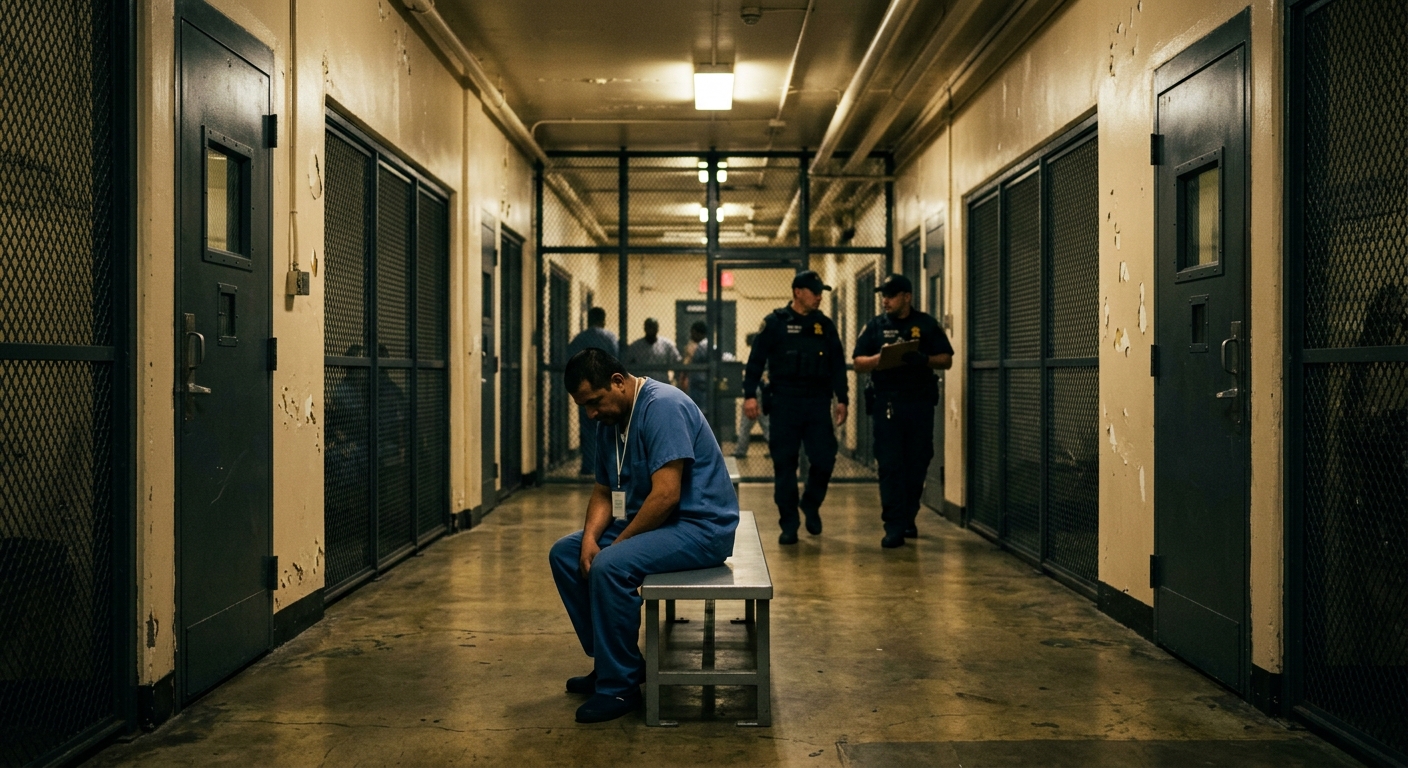
The Persistent Crisis of Oversight in Immigration Confinement
The landscape of civil immigration confinement in the United States has long been a subject of intense public scrutiny, with ongoing debates surrounding the human rights, safety, and basic dignity afforded to those held in federal custody. While U.S. Immigration and Customs Enforcement (ICE) utilizes a vast network of facilities to detain noncitizens pending the resolution of their immigration proceedings, the operational realities within these walls frequently fall short of established federal standards. A particularly stark illustration of this systemic breakdown can be seen in facilities like the Torrance County Detention Facility in New Mexico. Despite being subject to routine evaluations and strict contractual obligations, the facility has emerged as a glaring symbol of administrative failure, characterized by unsanitary living conditions, severe staffing shortages, and a fundamental inability to provide a safe housing environment.
This situation is not merely an isolated administrative anomaly; it reflects broader vulnerabilities inherent in the privatization of immigration detention and the persistent gaps in federal oversight. Individuals in ICE custody are held under civil, non-punitive authority, meaning the conditions of their confinement should reflect administrative processing rather than criminal punishment. However, when private operators fail to uphold basic humanitarian standards, the reality of detention transforms into a punitive and degrading experience.
Anatomy of an Inspection Failure: Documenting Substandard Conditions
When analyzing the operational collapse of a detention center, the physical environment serves as the most immediate indicator of systemic neglect. At various privately operated facilities, independent government watchdogs have documented conditions that starkly violate ICE’s Performance-Based National Detention Standards (PBNDS). During unannounced inspections, investigators from the Department of Homeland Security’s Office of Inspector General (DHS OIG) have frequently discovered environments fundamentally unfit for human habitation.
In the case of the Torrance County facility, a highly publicized March 2022 management alert from the DHS OIG detailed severe plumbing failures, pervasive mold growth, and widespread sanitation deficiencies that posed immediate biohazard risks. Investigators found holding areas with broken toilets, standing water, and an alarming lack of basic hygiene supplies. Such squalor is not simply a matter of deferred maintenance; it represents a direct violation of the civil rights of detainees. The severity of these conditions prompted the DHS OIG to take the exceptionally rare step of issuing an urgent recommendation for the immediate relocation of all individuals held at the facility until the living environment could be fundamentally remediated.
Severe Understaffing: The Root Cause of Operational Collapse
At the core of these environmental and operational failures is a critical, persistent lack of personnel. The safe and humane management of any secure facility requires a robust, well-trained workforce capable of handling daily operations, emergency response, and the logistical needs of the detained population. When staffing levels plummet to critically low thresholds—often exceeding 50 percent vacancy rates—the facility’s ability to function safely collapses.
When a detention center lacks the necessary guard staff, a cascading series of failures inevitably follows. Facility administrators are forced to restrict the movement of detained individuals, resulting in prolonged administrative lockdowns. These restrictions mean that individuals are denied their mandated outdoor recreational time, access to legal libraries, and the ability to make necessary phone calls to their attorneys or families. Furthermore, without adequate personnel to supervise and execute basic operational protocols, routine sanitation schedules are abandoned, and the overall security of the environment deteriorates rapidly, leaving both the detainees and the remaining staff in an inherently dangerous predicament.
Medical Care Deficits: Ignoring Vulnerable Populations
The repercussions of extreme understaffing extend far beyond sanitation and physical security, dealing a devastating blow to the provision of medical and mental health care. In a custodial setting, individuals are entirely dependent on the facility’s infrastructure to access any form of medical attention. A lack of available correctional officers means that there is no one to escort individuals from their housing units to the medical clinic, rendering the presence of on-site healthcare professionals effectively useless.
Consequently, routine medical requests are severely delayed or ignored entirely, chronic illnesses are left unmanaged, and psychiatric distress is overlooked. For a population that frequently includes individuals who have endured severe trauma during their migration journey, the denial of prompt and effective health care can have fatal consequences. Advocacy investigations and internal whistleblower reports have continuously highlighted how systemic neglect in such understaffed facilities creates an environment where preventable medical emergencies and tragedies are vastly more likely to occur, fundamentally breaching the government’s duty of care toward civil detainees.
The Privatization Factor: Profit Margins vs. Human Rights
The persistent crises at facilities across the nation underscore the inherent complexities and potential conflicts of interest within the privatized detention industry. The federal government heavily relies on for-profit corporations, such as CoreCivic, to construct and operate a significant portion of its immigration detention infrastructure. While privatization is often pitched to taxpayers as a cost-effective operational strategy, critics argue that the corporate profit motive inherently incentivizes the minimization of operating expenditures.
These cost-cutting measures frequently manifest at the direct expense of facility maintenance, competitive staffing wages, and comprehensive detainee services. When a private corporation is compensated via lucrative federal contracts—often containing guaranteed minimum bed payments regardless of occupancy—but fails to maintain adequate staffing levels or hygienic conditions, it raises profound questions regarding financial accountability. Taxpayers are essentially funding multi-million dollar contracts that are not being fulfilled to standard, while the burden of this financial optimization is directly borne by the vulnerable individuals held inside.
Ineffective Oversight: The Disconnect Between Reports and Reality
A critical element of the ongoing crisis in immigration detention is the apparent disconnect between internal compliance mechanisms and the grim realities uncovered by independent auditors. A comprehensive May 2025 report by the Government Accountability Office (GAO) emphasized the urgent necessity for the Department of Homeland Security to establish clearer goals and robust measures to accurately assess its facility inspection programs.
The GAO analysis highlighted a troubling trend: while routine, often announced inspections conducted by internal ICE oversight bodies frequently result in passing grades for detention centers, more rigorous, unannounced reviews by the DHS OIG consistently reveal deep-seated, systemic deficiencies. This glaring discrepancy suggests that routine annual inspections may be overly predictable or fundamentally flawed in their methodology, allowing facility operators to temporarily mask chronic issues rather than implementing sustainable, long-term operational improvements. Without aggressive and unannounced oversight, the cycle of failure and temporary remediation is destined to repeat indefinitely.
Federal Standards vs. Facility Realities
To fully understand the depth of the oversight failure, it is crucial to compare the mandated federal guidelines against the documented realities within failing detention centers.
| Operational Area | Federal Detention Standard Requirement | Observed Reality in Failing Facilities |
|---|---|---|
| Sanitation & Hygiene | Facilities must be clean, well-maintained, and provide functional plumbing and sufficient personal hygiene items. | Pervasive mold, broken and overflowing toilets, lack of safe drinking water, and biohazardous living conditions. |
| Staffing Levels | Operators must maintain adequate personnel to ensure safety, security, and access to all facility services. | Vacancy rates often exceeding 50%, resulting in an inability to manage daily operations or respond to emergencies. |
| Medical Access | Detainees must have prompt access to medical and mental health professionals, including necessary escorts. | Critical delays in care due to lack of transport staff, leading to unmanaged chronic conditions and severe medical neglect. |
| Recreation & Legal Access | Mandatory daily outdoor recreation and unhindered access to legal libraries and counsel communication. | Prolonged administrative lockdowns, denial of outdoor time, and restricted access to legal resources due to staff shortages. |
The Legal Battle and Calls for Immediate Closure
In response to these pervasive and well-documented failures, a broad coalition of civil rights organizations, legal advocates, and progressive lawmakers have mounted intense pressure campaigns to hold both the operating corporations and ICE accountable. The demands from these groups are unequivocal: the immediate termination of federal contracts for facilities that consistently fail to meet baseline humanitarian standards, and the safe release or transfer of the individuals detained within them.
Advocates argue that allowing a chronically failing facility to remain operational not only violates domestic legal and administrative standards but also runs afoul of international human rights obligations. To pierce the veil of secrecy often maintained by private contractors, legal teams have heavily utilized Freedom of Information Act (FOIA) litigation to force the disclosure of internal agency communications, inspection methodologies, and operational data that federal agencies have historically kept obscured from public view.
Looking Ahead: Reforming the Detention Landscape
The persistent operational failures documented in New Mexico and similar facilities nationwide serve as a microcosm of a much broader, systemic issue within the U.S. immigration enforcement apparatus. Addressing these failures requires significantly more than temporary administrative fixes, bureaucratic reshuffling, or issuing corrective action plans that are subsequently ignored. It necessitates a fundamental reevaluation of how the nation manages civil immigration custody.
True, lasting reform hinges on aggressive, independent oversight, stringent financial penalties for private contractors who violate their service agreements, and a political willingness to permanently shutter facilities that prove consistently incapable of operating humanely. Furthermore, immigration experts strongly advocate for the widespread expansion of community-based alternatives to detention (ATD). These programs, which utilize comprehensive case management rather than physical confinement, offer a more humane, highly cost-effective, and transparent approach to ensuring compliance with immigration proceedings without sacrificing human dignity.
Frequently Asked Questions (FAQs)
What is the primary purpose of civil immigration detention?
Civil immigration detention is intended solely to secure the presence of noncitizens for their immigration hearings or for their removal from the United States. It is an administrative hold, not a punitive measure, meaning the conditions of confinement should prioritize safety, health, and dignity rather than punishment.
Who is responsible for operating these detention facilities?
While U.S. Immigration and Customs Enforcement (ICE) is the federal agency responsible for custody determinations, a vast majority of the detention facilities are actually owned and operated by private, for-profit prison corporations or through intergovernmental service agreements with local county jails.
What happens when an ICE facility fails an official inspection?
When a facility fails an inspection, ICE may issue a contract discrepancy report, demand a corrective action plan, or impose financial penalties. In extreme cases of health and safety violations, the DHS Office of Inspector General can issue a management alert recommending the immediate removal of detainees. However, advocates frequently point out that consequences are rarely severe enough to force long-term operational changes, and non-compliant facilities often remain open.
How does severe understaffing impact the daily lives of detainees?
Understaffing creates a dangerous domino effect. Without enough guards, facilities cannot safely move people around. This leads to extended lockdowns where individuals are confined to their cells, stripped of their rights to outdoor recreation, denied access to the law library to work on their immigration cases, and unable to be escorted to the medical clinic for necessary healthcare.
Are there viable alternatives to physical immigration detention?
Yes. Alternatives to Detention (ATD) programs rely on case management, community support services, and sometimes electronic monitoring to ensure individuals attend their immigration court hearings. Data consistently shows that community-based ATDs are vastly cheaper for taxpayers and highly effective at ensuring compliance with immigration requirements, all while avoiding the human rights abuses prevalent in physical detention centers.
References
- Violations of ICE Detention Standards at Torrance County Detention Facility — Office of Inspector General, Department of Homeland Security. 2022-09-28. https://www.oig.dhs.gov
- Management Alert – Immediate Removal of All Detainees from the Torrance County Detention Facility — Office of Inspector General, Department of Homeland Security. 2022-03-16. https://www.oig.dhs.gov
- Immigration Detention: DHS Should Define Goals and Measures to Assess Facility Inspection Programs (GAO-25-107580) — U.S. Government Accountability Office (GAO). 2025-05-21. https://www.gao.gov/products/gao-25-107580
- Detention Management: Detention Standards — U.S. Immigration and Customs Enforcement (ICE). 2026-04-09. https://www.ice.gov/detain/detention-management
Similar Articles








Read full bio of Sneha Tete




