
How to Collect a Small Claims Court Judgment
Winning in small claims court is only half the battle; learn practical, lawful strategies to turn your judgment into real money.
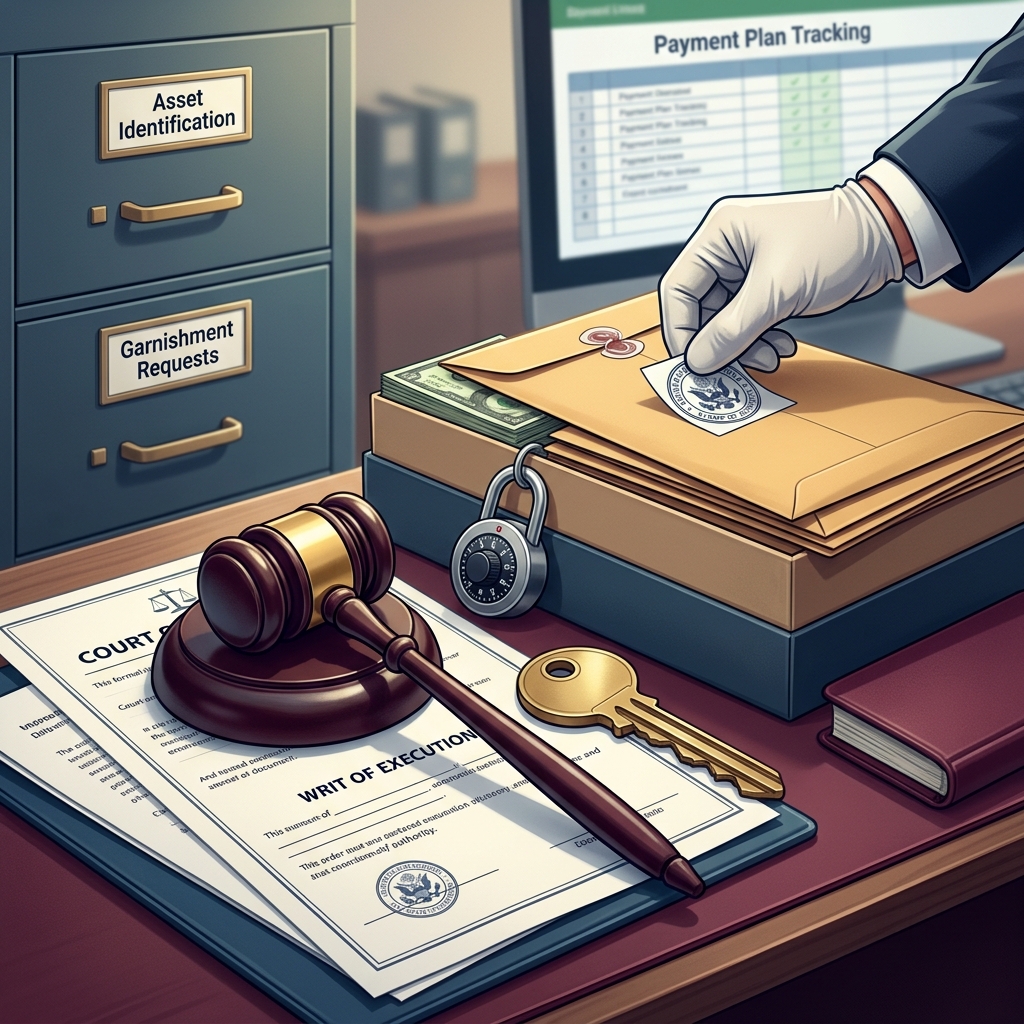
Winning your case in small claims court is an important milestone, but it does not guarantee that you will be paid. In most jurisdictions, the court does not automatically collect money for you; instead, you become a judgment creditor and must take additional steps to enforce the judgment against the judgment debtor.
This guide explains what happens after you win, how to encourage voluntary payment, and the main legal tools available when the debtor refuses to pay, including payment plans, wage garnishments, bank levies, judgment liens, and property seizure.
Understanding What Your Judgment Actually Means
A small claims judgment is a formal court order stating that the debtor owes you a specific amount of money, plus any court costs and, in many states, post‑judgment interest. Even with this order, you are responsible for using lawful collection procedures; the judge or clerk will not act as your collection agency.
Key Terms You Should Know
- Judgment creditor: The person or business who won the case and is owed money.
- Judgment debtor: The person or business who lost and must pay.
- Post‑judgment interest: Interest that accrues on the unpaid balance from the date of the judgment, at a rate set by state law.
- Enforcement: The legal processes you use to collect, such as garnishment, liens, or execution on property.
Waiting Periods and Deadlines
Many states require a short waiting period before you can start enforcement. This allows time for appeals or motions to change the judgment.
- In some jurisdictions, you must wait 21 to 30 days after the judgment is entered before using enforcement tools such as garnishment or property seizure.
- During this time, the debtor may appeal, ask the court to set aside the judgment, or pay voluntarily.
Step 1: Get Official Documentation of Your Judgment
Before you can collect using legal procedures, you usually need an official record of your judgment. This documentation proves the amount owed and is attached to most enforcement forms.
Obtaining a Certified Copy
- Visit or contact the clerk of the court where your small claims case was heard.
- Request a certified copy of the judgment. Courts charge a modest fee per page.
- Keep the certified copy in a safe place; you may need multiple copies for different enforcement actions.
Review the Judgment Carefully
Check the judgment to confirm:
- The exact dollar amount awarded, including court costs.
- Whether interest is allowed and at what rate.
- The names of the parties and case number.
- The date the judgment was signed, which affects waiting periods and interest calculation.
Step 2: Try to Obtain Voluntary Payment
Most court systems encourage you to seek voluntary payment before using enforcement tools. This approach is often faster, cheaper, and less stressful for both sides.
Contacting the Debtor
- Send a polite written demand summarizing the judgment amount and requesting payment by a specific date.
- Include your preferred payment method (check, money order, electronic transfer) and your mailing address.
- Keep copies of all letters, emails, or texts as part of your records.
Offering a Payment Plan
If the debtor cannot pay the full amount immediately, a structured payment plan may be a practical solution.
- Negotiate a schedule (for example, monthly payments) that realistically fits the debtor’s finances.
- Put the agreement in writing and have both parties sign it.
- Inform the court if the payment plan affects the case status or dismissal, following local rules.
Some states allow the debtor to request that the court approve a payment plan. If they do, you may have a chance to respond before a judge decides whether to grant it.
Step 3: Use Information Tools to Locate Assets
When voluntary payment fails, you need accurate information about the debtor’s income and property to collect effectively. Many states provide legal tools that require the debtor to disclose this information.
Debtor’s Statement of Assets
In some jurisdictions, the debtor must complete a standardized form listing their assets, employer, and bank accounts.
- The form typically identifies employment, real estate, vehicles, and bank accounts.
- If the debtor ignores this requirement, you may request a hearing or further sanctions.
Debtor Examination (Information Hearing)
A debtor examination is a court‑ordered hearing where the debtor must answer questions, under oath, about income and assets.
- You file a motion or request with the court asking for an examination date.
- The court issues an order to appear, which must be served on the debtor.
- At the hearing, you or the judge may question the debtor about wages, bank accounts, real estate, vehicles, and other property.
Step 4: Legal Enforcement Options When Debtor Won’t Pay
If attempts at voluntary payment fail, you can use formal enforcement remedies authorized by state law. The main options are wage garnishment, bank or asset garnishment, judgment liens, and seizure of non‑exempt property.
| Enforcement Method | What It Does | Typical Use Case |
|---|---|---|
| Wage garnishment | Takes a portion of the debtor’s paycheck to apply toward the judgment. | Debtor is regularly employed and not paying voluntarily. |
| Bank garnishment / levy | Freezes and withdraws funds from the debtor’s bank account. | Debtor has money in a known bank account. |
| Judgment lien | Places a claim on the debtor’s real property, often payable when the property is sold or refinanced. | Debtor owns real estate but is not paying. |
| Property seizure (execution) | Authorizes the sheriff to take and sell non‑exempt property to satisfy the judgment. | Debtor owns valuable non‑exempt assets. |
Wage Garnishment
Wage garnishment is a powerful tool because it directs money from the debtor’s employer to you until the judgment is paid, subject to legal limits.
- You file a garnishment request or similar form with the court, referencing your judgment.
- The court issues a writ of garnishment, which is sent to the employer.
- By law, only a portion of wages can be taken; federal and state rules protect a minimum income level.
Bank Garnishment and Other Asset Garnishments
Many states allow garnishment of bank accounts or other funds held by a third party (a “garnishee”).
- You submit a request for garnishment that identifies the bank, its address, and at least part of the account number.
- Once the writ is served, the bank must freeze funds up to the amount of the judgment and respond with a disclosure of what is held.
- Certain types of funds (for example, some government benefits) may be exempt from garnishment under federal or state law.
Judgment Liens on Real Property
A judgment lien is a claim recorded against the debtor’s real estate. It does not provide immediate cash but can secure your rights over the long term.
- You record your judgment or a lien document with the county recorder or similar office, according to local procedure.
- The lien may need to be renewed after a number of years depending on state law.
- When the debtor sells or refinances the property, your lien must usually be paid from the sale proceeds before the transaction can close.
Seizure of Property (Writ of Execution)
In some cases you may ask the court to authorize the seizure and sale of the debtor’s non‑exempt property.
- You file a request for a writ of execution or similar order with the court.
- The writ is delivered to the sheriff or other enforcement officer, who attempts to locate property and carry out the seizure.
- After sale of the property, proceeds are applied to the judgment, less enforcement costs and fees.
Step 5: Working With Lawyers or Collection Agencies
Collecting a judgment can be time‑consuming, especially if the debtor hides assets or moves frequently. You may hire a lawyer or a collection agency to assist.
- Lawyers can navigate complex procedures and ensure compliance with state and federal collection laws.
- Collection agencies may take over efforts to contact the debtor and negotiate payment.
- Both may charge fees or a percentage of the amount they successfully collect, which reduces your net recovery but may improve your chances of being paid.
Step 6: Closing the Case After You Are Paid
When the judgment is fully paid, you usually have a legal obligation to notify the court and, if applicable, release any liens. This protects the debtor’s credit and ensures public records are accurate.
Acknowledgment of Satisfaction of Judgment
Most court systems require you to file an acknowledgment that the judgment is satisfied once all money is paid.
- Use the form specified by your jurisdiction or a written statement including the case number, court name, judgment date, and a declaration that the judgment is paid.
- File this document with the same court that issued your judgment.
Releasing Liens and Stopping Garnishments
- If you recorded a judgment lien on real property, file a release with the county recording office so that the property’s title is cleared.
- Inform the court and any employer or bank involved in garnishment that the judgment has been satisfied, so further deductions or freezes stop.
Practical Tips to Improve Your Chances of Collection
Although every case is different, several general strategies can improve the likelihood and speed of collection.
- Act promptly: Do not wait months or years to begin collection if the debtor is not paying. Delays can make it harder to locate assets and may allow the debtor to move or dissipate funds.
- Keep thorough records: Maintain copies of the judgment, correspondence, payment receipts, and any forms filed with the court or enforcement officers.
- Know exemptions: Be aware that certain income and property may be legally protected from collection; targeting exempt assets wastes time and can cause legal problems.
- Consider the cost‑benefit: Evaluate whether the expense of legal fees, filing costs, and time is justified by the amount at stake.
- Stay within the law: If you contact the debtor directly, follow fair debt collection rules and avoid harassment, threats, or misleading statements.
Frequently Asked Questions (FAQs)
Do small claims courts collect the money for me?
Generally no. Small claims courts decide who owes what, but they do not act as collection agencies. You must take additional steps—such as garnishment, liens, or voluntary agreements—to actually receive payment.
How long do I have to wait before using enforcement tools?
Most states have a waiting period, commonly around 21 to 30 days, to allow for appeals or motions to change the judgment. Check your local court’s rules for exact timelines.
What if the debtor really cannot afford to pay?
When a debtor has limited income, courts may encourage or approve reasonable payment plans. You can agree on a schedule voluntarily or respond to a formal request for payments if your state provides that procedure.
Can I take everything the debtor owns to satisfy the judgment?
No. Federal and state law protect certain income and property from collection, such as portions of wages and some benefits. Only non‑exempt assets can be seized, and even those must be handled through proper legal procedures.
Do I need a lawyer to collect a small claims judgment?
You are not always required to have a lawyer, and many people collect small claims judgments on their own. However, if collection becomes complicated—especially with larger amounts or multiple assets—consulting a lawyer or self‑help resource can be helpful.
References
- DCI 84, Collecting Your Money From a Small Claims Judgment — Michigan Courts (State Court Administrative Office). 2013-01-01. https://www.courts.michigan.gov/4a4f10/siteassets/forms/scao-approved/dci84.pdf
- If you win your small claims case — Judicial Branch of California, Self-Help Guide. 2024-01-01 (last updated). https://selfhelp.courts.ca.gov/small-claims/after-trial/if-you-win
- Collecting A Small Claims Judgment — Civil Law Self-Help Center (Las Vegas Justice Court). 2019-06-01. https://www.civillawselfhelpcenter.org/self-help/small-claims/collecting-a-small-claims-judgment-or-contesting-collection/121-collecting-a-small-claims-judgment
- Collecting Money in a Civil Case — New Jersey Courts, Self-Help. 2023-05-01. https://www.njcourts.gov/self-help/collecting-money-civil
- How do I collect my money? — Washington Courts, Small Claims Court Brochure. 2018-01-01. https://www.courts.wa.gov/newsinfo/resources/?fa=newsinfo_jury.display&folderID=brochure_scc&altMenu=smal&fileID=collect
Similar Articles








Read full bio of Sneha Tete


