
Defective Firearms and Consumer Product Liability
How U.S. law treats guns as consumer products, the unique safety gap, and what injured users can do.
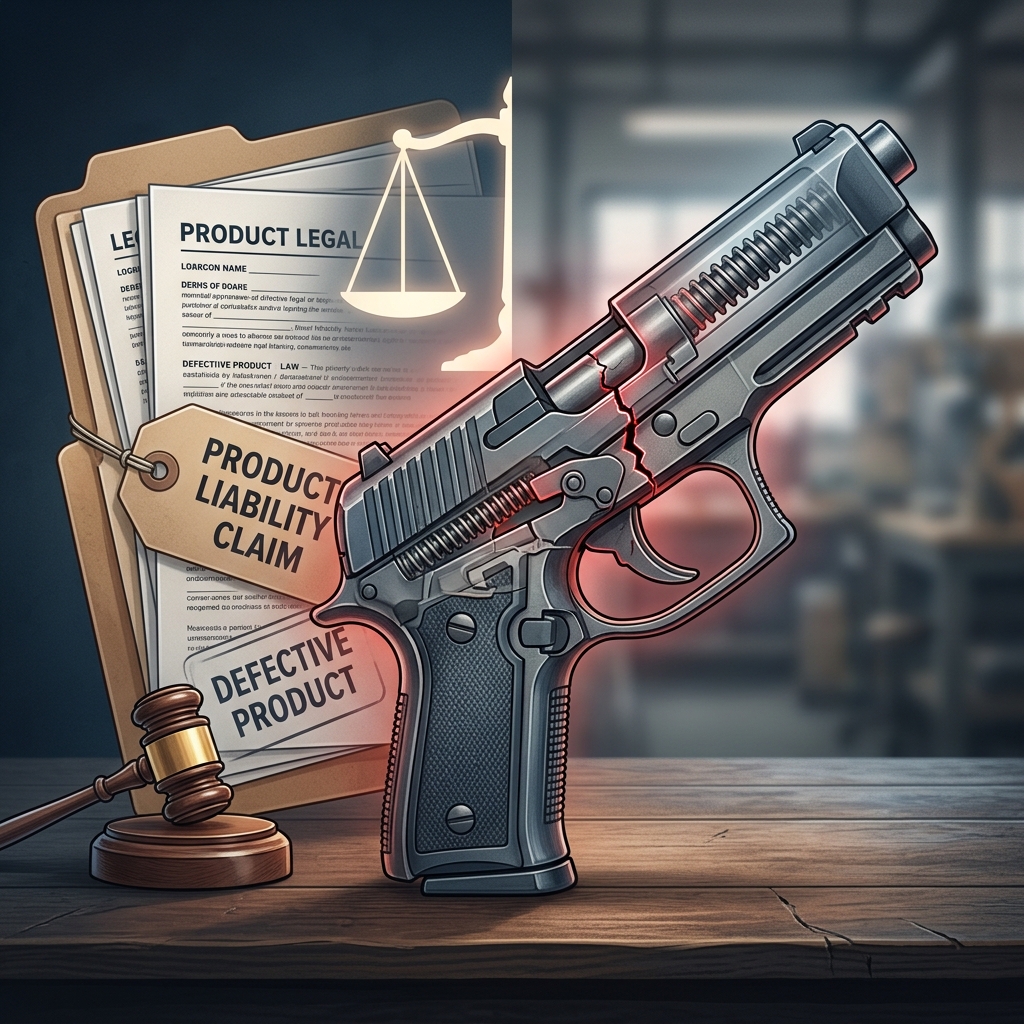
Firearms are sold in the United States as ordinary consumer goods, yet they occupy a unique and controversial place in product liability law. While cars, toys, and household appliances are subject to robust federal safety oversight, guns and ammunition largely are not, leaving injured users to rely on state tort law and narrow federal exceptions when a firearm is dangerously defective. This article explains how defective guns are treated as consumer products, how the current regulatory framework works, and what legal options may exist for people harmed by unsafe firearms.
Guns as Consumer Products: Why Defects Matter
From a legal perspective, a firearm sold for personal use is typically treated as a consumer product, much like any other manufactured item placed into the hands of the public. Product liability law focuses on whether the product is reasonably safe when used as intended or in a foreseeable way, not on the broader social debate about gun ownership.
Defects in firearms can be particularly serious because a single malfunction may cause permanent injury or death. Common types of gun-related malfunctions alleged in lawsuits include:
- Unintended discharge when a gun fires without the trigger being deliberately pulled.
- Failure of safety mechanisms, such as safeties that do not engage properly.
- Design flaws in triggers or firing systems that increase the risk of accidental shots.
- Material or manufacturing defects leading to barrel ruptures, misfires, or catastrophic breakage.
Because of these risks, the question of how the law treats guns as products is not theoretical. It determines whether injured people have meaningful recourse when something goes wrong with a firearm that should have worked safely.
The Regulatory Gap: Firearms and Federal Safety Oversight
In most industries, consumer safety is backed by federal regulation. The Consumer Product Safety Commission (CPSC) can set standards, demand recalls, and collect data on dangerous products. Firearms are an exception. When Congress created the CPSC in 1976, it specifically removed guns and ammunition from the agency’s jurisdiction. As a result, firearms are the only major category of consumer product in the United States that is exempt from federal health and safety regulation of this kind.
Key consequences of this exemption include:
- No federal agency is tasked with systematically collecting defect complaints about guns.
- No requirement for independent, pre-market safety testing of firearms designs.
- No federal authority to order recalls of even clearly defective firearms models.
- Manufacturers can choose to issue voluntary “warnings” or “safety notices” rather than formal recalls, often with less detail than would be required for other regulated products.
Studies of the gun industry indicate that millions of firearms with significant design or manufacturing defects have been sold without mandatory oversight or centralized federal tracking. This regulatory gap means the burden of addressing defective guns falls heavily on private litigation and voluntary manufacturer actions.
Why This Regulatory Structure Is Unusual
Most products that pose a risk of serious injury—such as cars or medical devices—are covered by federal safety regimes that combine technical standards, mandatory reporting, and recall authority. By contrast, gun safety oversight in the U.S. is fragmented:
| Product Type | Primary Federal Safety Agency | Mandatory Recall and Reporting? |
|---|---|---|
| Children’s toys | CPSC | Yes |
| Automobiles | NHTSA | Yes |
| Medical devices | FDA | Yes |
| Firearms & ammunition | None dedicated for product safety | No federal mandate |
Legal scholars have argued that Congress could close this gap by granting the CPSC or another agency explicit authority to regulate guns as products, including defect reporting and recalls, without changing broader rules about who may own firearms.
Types of Defects Recognized in Firearm Product Liability
Despite limited federal oversight, state product liability law generally recognizes several categories of defects that can apply to firearms. These categories mirror those used for other consumer goods.
Design Defects
A design defect occurs when the basic blueprint of a firearm makes it unreasonably dangerous, even if it is manufactured correctly. Examples include trigger systems prone to firing when lightly touched or when the gun is bumped. In such cases, the defect affects every gun produced according to the design.
Courts often ask whether a safer alternative design was feasible and whether the risks of the existing design outweigh its benefits. For firearms, this can involve technical evidence about sear geometry, firing pin block mechanisms, drop safeties, and other internal features.
Manufacturing Defects
A manufacturing defect arises when a particular firearm departs from its intended design due to errors in production or materials. Examples include:
- Improperly hardened steel leading to cracked or ruptured barrels.
- Misaligned components causing slides or cylinders to bind.
- Assembly mistakes that disable safeties or alter trigger pull weight.
With manufacturing defects, not every gun in the product line is affected; instead, a subset of units are more dangerous than the design itself would predict.
Failure to Warn and Inadequate Instructions
In product liability law, manufacturers can also be liable for failure to warn about non-obvious risks or for providing inadequate instructions. For firearms, this might include:
- Not warning users about known risks of unintended discharge under certain conditions.
- Providing incomplete or unclear guidance on safe handling, cleaning, or storage.
- Failing to update manuals or notices after discovering a recurring defect pattern.
Because federal agencies do not require standardized recall notices for guns, the adequacy of warnings is typically evaluated case by case in litigation rather than through administrative review.
The Protection of Lawful Commerce in Arms Act (PLCAA)
Any discussion of defective firearms as consumer products must account for the federal Protection of Lawful Commerce in Arms Act (PLCAA), enacted in 2005. PLCAA limits certain lawsuits against gun makers and sellers when their products are used in crimes, shielding manufacturers from many claims that focus on criminal misuse rather than defects.
However, PLCAA does not provide blanket immunity. It includes an important exception for traditional product liability claims based on defective guns. Under this exception, manufacturers can still be sued when their firearms contain defects in design or manufacture or when they fail to provide adequate warnings in marketing and instructions.
In practice, this means:
- Claims based on a gun being defectively designed or built are generally not barred by PLCAA.
- Claims focused solely on how a criminal misused a non-defective gun face stricter limitations.
- Legal strategy often involves carefully framing the case around defects and manufacturer conduct rather than broader arguments about gun violence policy.
Bringing a Claim for a Defective Firearm
Individuals injured by a malfunctioning gun may have potential claims under state product liability and negligence doctrines. The details vary by jurisdiction, but several core elements are common.
Elements Typically Required
A plaintiff in a defective firearm case generally must show:
- The firearm was defective in design, manufacture, or warnings at the time it left the manufacturer.
- The defect made the firearm unreasonably dangerous for its intended or foreseeable use.
- The defect was a proximate cause of the plaintiff’s injury.
- The plaintiff was using the gun in a reasonably foreseeable manner when the injury occurred.
Evidence can include expert testimony, internal manufacturer documents, recall or safety notices, and physical inspection of the firearm and ammunition involved.
Potential Defendants
Depending on the facts and the law of the state, potential defendants may include:
- The manufacturer that designed and built the firearm.
- Importers or distributors that placed the product into the U.S. market.
- Retail sellers, in some cases, if they played a role in providing a defective product.
Some states follow a strict liability approach for product defects, while others rely more heavily on negligence principles. Legal advice from a qualified attorney is crucial in navigating these differences.
Manufacturer Responses: Recalls, Notices, and Self-Policing
Because no federal agency can compel recalls of defective firearms, manufacturers largely police themselves when responding to reports of defects. Responses can range from informal communications to more formal safety campaigns.
Voluntary Recalls and Safety Notices
Manufacturers may choose to:
- Issue a voluntary recall asking customers to return or repair affected guns.
- Publish product safety notices or warnings on websites and in dealer communications.
- Quietly modify designs or manufacturing processes without publicly labeling changes as defect corrections.
Unlike recalls in other industries, these firearm-oriented initiatives are not structured by uniform federal standards. There is no central federal database where consumers can look up recall history for guns. This can make it harder for owners to determine whether their firearm has known problems.
Impact on Consumers and Litigation
The lack of mandated recall procedures and defect reporting has several effects:
- Consumers may remain unaware of serious hazards for years after purchase.
- Plaintiffs in lawsuits often need to rely on discovery and expert investigation to uncover patterns of defects.
- Manufacturers retain considerable control over what information is shared and how it is framed, which can become a point of contention in litigation.
From a consumer protection standpoint, many advocates argue that firearms should be treated similarly to other dangerous products, with clear reporting obligations and recall rules enforced by a federal agency.
Policy Debates: Should Guns Be Regulated Like Other Products?
Legal scholars and policymakers have proposed various reforms to better align firearm safety with general product regulation, while separating these efforts from broader “gun control” debates about ownership and carrying.
Prominent proposals include:
- Granting the CPSC or another federal agency explicit authority to regulate firearms and ammunition safety.
- Requiring mandatory reporting of defect-related complaints by manufacturers.
- Establishing a centralized database of firearm safety recalls and notices accessible to the public.
- Imposing technical safety standards for certain firearm design features, similar to other high-risk products.
Supporters argue these steps would enhance consumer protection without dictating who may own guns, focusing solely on product safety and defect accountability. Opponents often contend that such regulation could be used as a backdoor to restrict firearm availability or burden the industry, and some maintain that many lawsuits over “defects” are politically motivated rather than grounded in genuine safety issues.
Practical Safety Tips for Gun Owners
While systemic reforms are debated, individual gun owners can take steps to reduce risk and detect potential defects earlier.
- Register product information with the manufacturer when available, so you can receive recall or safety notices.
- Regularly inspect your firearm for unusual wear, cracks, loose parts, or changes in trigger behavior.
- Follow the manual closely for cleaning and maintenance, and store ammunition as recommended.
- Monitor reputable news and legal sources for information about known defect issues with specific models.
- If a firearm behaves unexpectedly—for example, if it fires without a deliberate trigger pull—stop using it immediately and seek professional evaluation, including legal advice if injuries occurred.
FAQs About Defective Guns as Consumer Products
Can I sue if a gun misfires and injures me?
Possibly. If the injury is linked to a defect in the gun’s design, manufacture, or warnings, you may have a product liability claim under state law. PLCAA does not bar traditional defect-based lawsuits, but the viability of any claim depends on facts and local statutes.
Does a gun manufacturer have to recall a defective firearm?
No federal agency currently has authority to force firearm recalls. Manufacturers may voluntarily recall or issue safety notices, but they are not subject to the same mandatory recall structure that applies to many other consumer products.
How do I know if my gun model has known safety problems?
Because there is no central federal recall database for guns, you may need to check the manufacturer’s website, review their safety notices, and consult trustworthy news or legal resources. In some cases, defect patterns only become widely known through litigation or investigative reports.
Are gun makers completely immune from lawsuits?
No. Although PLCAA restricts certain suits related to criminal misuse, it allows claims based on defective products and other specific exceptions. Courts regularly hear cases alleging design and manufacturing defects in firearms.
What should I do if I suspect my firearm is defective?
Stop using the gun, secure it safely, and document what occurred. Check for any recall or safety notices about your model, and consider consulting a qualified gunsmith for technical evaluation and an attorney familiar with product liability and firearms law for legal advice.
References
- Frequently Asked Questions About Firearm Safety for Consumers — Center for American Progress. 2020-07-28. https://www.americanprogress.org/article/frequently-asked-questions-about-firearm-safety-for-consumers/
- Many Newly Purchased Guns Have Design Flaws and Manufacturing Defects — Violence Policy Center. 2018-05-01. https://vpc.org/press/many-newly-purchased-guns-have-design-flaws-and-manufacturing-defects/
- Misfire: The Gun Industry’s Lack of Accountability for Defective Firearms — Violence Policy Center. 2018-05-01. https://vpc.org/misfire-the-gun-industry-s-lack-of-accountability-for-defective-firearms/
- Can I Sue for Gun Manufacturing Defects? — Super Lawyers. 2019-06-12. https://www.superlawyers.com/resources/products-liability/can-i-sue-for-gun-manufacturing-defects/
- Regulating Guns as Products — George Washington Law Review. 2014-03-01. https://www.gwlr.org/regulating-guns-as-products/
Similar Articles








Read full bio of Sneha Tete


