
How Police and Prosecutors Work Together in Criminal Cases
Understanding the distinct but closely connected roles of police officers and prosecutors in investigating crime, filing charges, and moving a criminal case through the justice system.
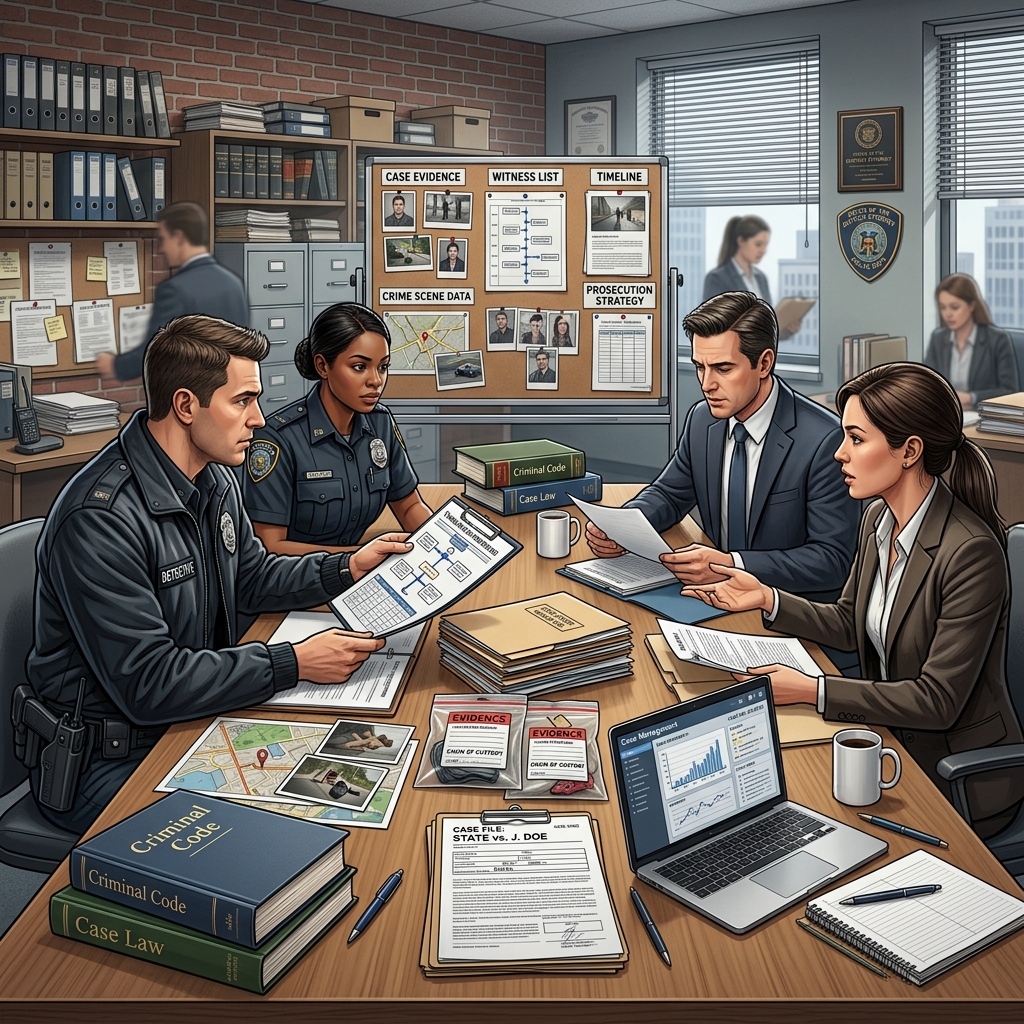
Police officers and prosecutors are central figures in the criminal justice system, each with a distinct mission but a shared responsibility: responding to alleged crimes and bringing cases fairly before the courts. Police focus on fact-gathering and public safety, while prosecutors evaluate the evidence, determine appropriate charges, and represent the government in court proceedings. Understanding how these roles connect helps explain what happens after a crime is reported and how a case moves from investigation to trial.
Overview of Police and Prosecutor Roles
Although both work on criminal matters, police and prosecutors perform different functions at different stages of a case. Their collaboration is guided by law, ethics, and institutional policies to protect public safety while respecting the rights of suspects and victims.
- Police primarily investigate reported crimes, secure scenes, collect evidence, and arrest suspects when legally justified.
- Prosecutors review investigative materials, decide whether to file charges, determine which charges are appropriate, and present the case in court on behalf of the state or government.
- Both are expected to act impartially, respect legal procedures, and uphold constitutional rights throughout the process.
In practice, this means the investigation does not end when police submit a report, and the prosecutor’s work may influence further investigative actions. In some legal systems, prosecutors even supervise or direct parts of the investigation.
The Police Role: Investigation and Public Safety
Police officers and other law enforcement agents are usually the first government representatives involved when a crime is suspected. Their responsibilities focus on immediate response and systematic investigation.
Initial Response to a Crime
When a crime is reported or detected, police must respond quickly to protect people and preserve evidence.
- Arriving at the scene to ensure safety for victims, bystanders, and officers.
- Providing emergency assistance or medical support as needed.
- Securing the crime scene to prevent contamination or loss of evidence.
This early stage is critical, because mistakes in securing the scene can affect the investigation and later court proceedings.
Evidence Collection and Documentation
After the situation is stabilized, police focus on gathering information and physical evidence that may later be used by prosecutors and defense attorneys.
- Interviewing victims, witnesses, and sometimes suspects.
- Collecting physical evidence such as photographs, video recordings, fingerprints, DNA samples, and objects related to the alleged crime.
- Writing detailed reports that describe observations, witness statements, timelines, and actions taken.
These reports form the foundation of many prosecutorial decisions. They must be thorough and accurate because they may be scrutinized in court and challenged by defense counsel.
Arrests and Referrals to Prosecutors
Depending on the jurisdiction and the nature of the offense, police may arrest a suspect when they have probable cause, or they may continue investigation without an arrest.
- Determining whether legal standards for arrest are met.
- Booking arrested individuals and documenting charges initially proposed by police.
- Forwarding reports, evidence, and recommendations to the prosecutor’s office for review.
Once the case file reaches a prosecutor, the focus shifts from front-line investigation to legal analysis and charging decisions.
The Prosecutor’s Role: Charging, Case Strategy, and Court Representation
A prosecutor is a government lawyer whose primary responsibility is to decide how the state will respond to alleged criminal conduct and to represent the public interest in court. Their authority is broad but constrained by law, ethical obligations, and constitutional protections.
Reviewing Police Reports and Evidence
Prosecutors rarely investigate crimes from scratch; instead, they evaluate the information sent by law enforcement and decide whether it is sufficient to support formal charges.
- Assessing whether the evidence meets legal thresholds, such as probable cause or reasonable likelihood of conviction.
- Identifying missing information or weaknesses in the case, such as unclear witness accounts or gaps in the timeline.
- Requesting follow-up investigation, additional interviews, or further evidence collection from the police.
In some systems, prosecutors may lead or supervise specific investigative steps, directing officers to perform targeted inquiries to strengthen or clarify the case.
Charging Decisions
One of a prosecutor’s most important powers is deciding whether to file charges, what charges to bring, and sometimes whether to decline prosecution altogether.
- Filing charges only when evidence supports a reasonable likelihood of proving the case in court.
- Selecting statutes that match the alleged conduct, considering elements of the offense and available evidence.
- Declining to prosecute when evidence is weak, unreliable, or when prosecution would not serve the public interest.
These decisions can have significant consequences for suspects, victims, and communities. International standards emphasize that prosecutors should act fairly, consistently, and with respect for human rights when exercising this discretion.
Preparing the Case and Appearing in Court
Once charges are filed, prosecutors become the government’s advocates in court proceedings. Their work continues throughout the case, from initial hearings to trial or plea agreements.
- Drafting charging documents and motions.
- Meeting with law enforcement and witnesses to prepare testimony.
- Participating in bail hearings, pretrial conferences, and evidentiary hearings.
- Presenting evidence at trial, examining witnesses, and making arguments to judges and juries.
Prosecutors are not only expected to seek convictions; they are also required to disclose evidence that may favor the accused and to remain objective throughout the proceedings.
Cooperation Between Police and Prosecutors
Effective criminal prosecution depends on close cooperation between police and prosecutors, but their relationship is not one of simple hierarchy. Each has independent responsibilities and must follow the law and ethical standards.
How Cooperation Typically Works
In many jurisdictions, police handle day-to-day investigation while prosecutors oversee the legal aspects and make formal decisions about charges and court strategies.
| Stage of Case | Police Responsibilities | Prosecutor Responsibilities |
|---|---|---|
| Initial Report | Respond to calls, secure scene, provide emergency assistance. | Usually no direct involvement; may advise on legal issues in complex or ongoing investigations. |
| Investigation | Collect evidence, interview witnesses, identify suspects. | Review interim findings, suggest additional inquiries, address legal questions such as warrants or subpoenas. |
| Charging | Submit reports and evidence; may recommend charges. | Decide whether to file charges, what charges to bring, or whether to decline prosecution. |
| Pretrial | Assist with witness contact and evidence preparation. | Handle bail hearings, motions, and plea negotiations. |
| Trial | Testify, provide background information, and support courtroom logistics. | Present the case, examine witnesses, argue the law and facts to judge or jury. |
International guidance stresses that prosecutors should cooperate with police while maintaining independence and objectivity, ensuring that investigations and prosecutions respect human rights and due process.
Maintaining Independence and Accountability
Although cooperation is essential, prosecutors must remain independent decision-makers and cannot simply follow police recommendations without scrutiny.
- Prosecutors make charging decisions based on legal criteria and evidence, not solely on police preferences.
- Police independently manage operational decisions, such as patrol strategies and arrest procedures, but must follow legal standards that prosecutors will later review.
- Guidelines on prosecutorial conduct emphasize freedom from improper interference and protection against harassment when carrying out their functions.
This balance helps prevent abuses of power and ensures that criminal cases move forward based on law and evidence rather than personal or political pressures.
Due Process, Rights, and Ethical Duties
Both police and prosecutors are bound by constitutional and international norms designed to protect individuals from unfair treatment and wrongful conviction.
Protecting the Rights of Suspects and Defendants
From the first contact with police through trial, suspects and defendants have fundamental rights, such as the right to counsel, the right to remain silent, and the right to a fair trial. Police and prosecutors must respect these protections at every stage.
- Police must conduct searches and arrests according to legal standards and avoid coercive or unlawful interrogation methods.
- Prosecutors must disclose exculpatory evidence, avoid filing charges without adequate proof, and refrain from discriminatory or retaliatory decisions.
- Both must treat suspects and accused persons with dignity, avoiding unnecessary exposure or prejudice.
The goal is not only to secure convictions for serious crimes but to ensure that those convictions are the result of fair and lawful processes.
Serving Victims and the Public Interest
While protecting defendants’ rights, police and prosecutors also have duties to victims and the broader community.
- Police work to protect victims from further harm and to document their experiences accurately.
- Prosecutors often coordinate with victim services, inform victims about case progress, and consider victim input when deciding how to proceed.
- Both aim to promote public safety and confidence in the justice system by handling cases transparently and responsibly.
International standards emphasize that prosecutors, in particular, should contribute to the smooth functioning of the criminal justice system and promote respect for human rights.
Common Questions About Police and Prosecutor Roles
Do police or prosecutors decide what charges a suspect faces?
Police may suggest or record preliminary charges at the time of arrest, but the formal charging decision is generally made by a prosecutor, who reviews the evidence and selects the legal provisions that apply. In many systems, a case cannot move forward without prosecutorial approval.
Can a prosecutor drop a case that police want to pursue?
Yes. Prosecutors have authority to decline prosecution or dismiss charges when evidence is insufficient, when legal requirements are not met, or when continuing the case would be inconsistent with the public interest. Police cannot compel a prosecutor to file or maintain charges if legal standards are not satisfied.
Do prosecutors direct police investigations?
Practices vary by jurisdiction. In some countries, prosecutors lead or supervise investigations, instructing police on specific inquiries and legal steps. In others, police conduct investigations independently but consult prosecutors for legal guidance or charging decisions. Regardless of structure, cooperation is expected, but prosecutorial independence must be preserved.
Who represents victims in criminal court?
In most criminal systems, prosecutors represent the state or government rather than individual victims. However, they often communicate with victims, present their experiences to the court, and may request restitution or protective orders. Victims’ rights offices and advocates may also assist, but they do not typically act as the state’s courtroom representative.
What happens if police or prosecutors violate legal or ethical rules?
Misconduct can lead to suppressed evidence, dismissed cases, disciplinary actions, or civil and criminal liability. International guidelines call for prosecutors to oppose violations of law and ethics and for states to ensure that they can perform their functions without improper interference. Similarly, police agencies are subject to internal discipline, oversight mechanisms, and judicial review.
References
- Roles in the Criminal Justice System — Anoka County, Minnesota. 2024-01-01. https://www.anokacountymn.gov/1434/Roles-in-the-Criminal-Justice-System
- The Role of a Prosecutor — Swedish Prosecution Authority. 2022-06-01. https://www.aklagare.se/en/the-role-of-a-prosecutor/
- Guidelines on the Role of Prosecutors — Office of the United Nations High Commissioner for Human Rights. 1990-09-07. https://www.ohchr.org/en/instruments-mechanisms/instruments/guidelines-role-prosecutors
- Prosecution — Office of the District Attorney, Atlantic Judicial Circuit (Liberty County, GA). 2023-03-01. https://da.libertycountyga.gov/prosecution
- The Role of the Prosecutor: For Community Members — Vera Institute of Justice. 2018-01-01. https://www.vera.org/unlocking-the-black-box-of-prosecution/for-community-members
- Prosecution Career Guide — Harvard Law School. 2015-09-01. https://hls.harvard.edu/bernard-koteen-office-of-public-interest-advising/opia-job-search-toolkit/career-and-application-guides/prosecution-career-guide/
Similar Articles








Read full bio of medha deb




