
Employment Tax Evasion: 4 Common Payroll Fraud Schemes To Watch
Learn how payroll tax schemes work, why they happen, and how workers can respond.
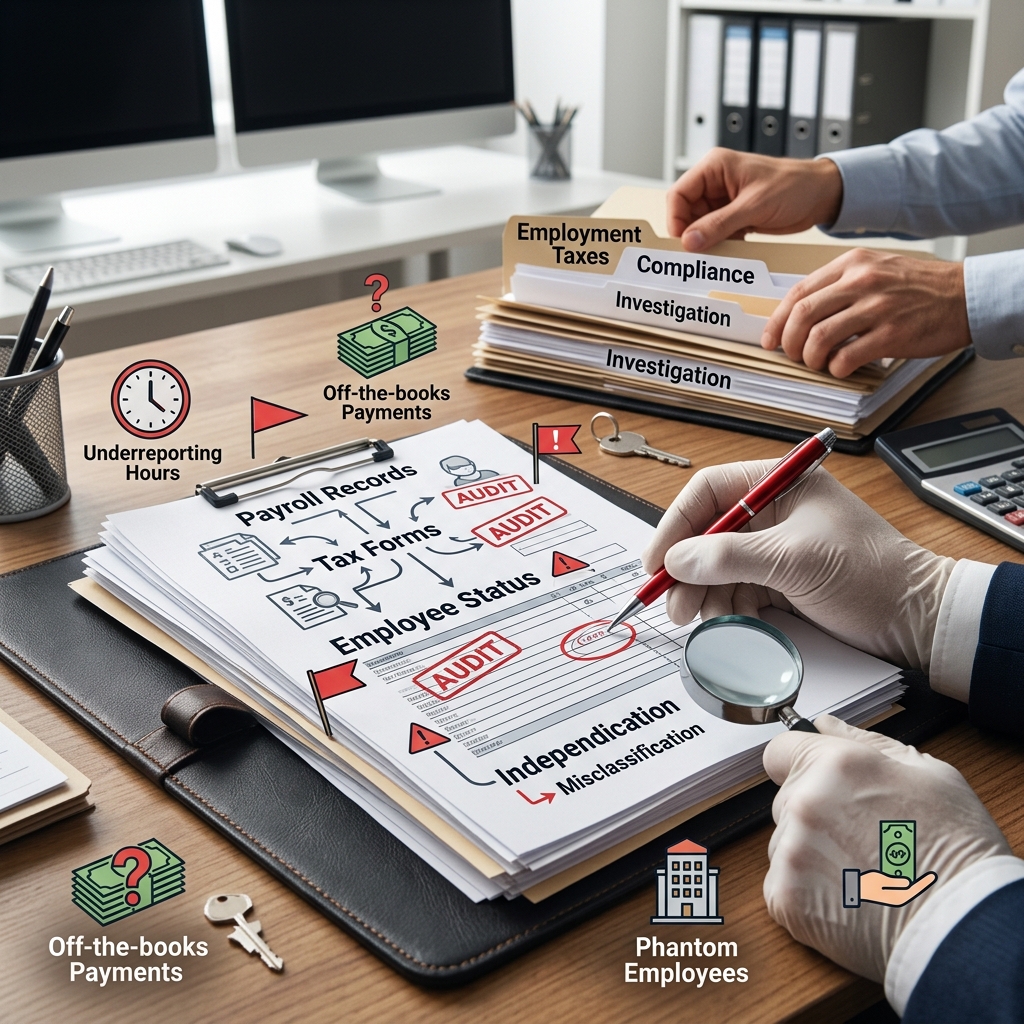
Employment tax evasion scams are schemes in which an employer or payroll operator avoids paying required taxes connected to wages, withholdings, or worker classification. These schemes can harm employees, create false records, and leave tax debts that grow with penalties and interest. The IRS states that tax scammers often pressure people for money or personal information, and the Department of Justice notes that employers who fail to collect and deposit employment taxes are effectively taking money from employees and the government.
These scams are not limited to one method. Some involve taking tax withholdings from paychecks and never sending them to the IRS, while others rely on misclassifying workers, paying in cash to hide payroll activity, or filing false returns. The result is often the same: the business avoids taxes for a time, but workers may be left with wage, benefit, and credit-record problems, while the employer faces civil penalties, criminal exposure, and collection action.
What Counts as Employment Tax Evasion
Employment taxes generally include amounts withheld from wages as well as the employer’s share of payroll tax obligations. In a legitimate payroll system, money is withheld from paychecks and remitted to the proper tax authority on schedule. When an employer keeps those funds, underreports payroll, or files nothing at all, the business may be engaging in tax evasion or related payroll fraud.
There is an important distinction between a bookkeeping error and a deliberate scheme. A clerical mistake may still create a tax liability, but evasion usually involves intent. That intent can be shown through repeated failures to file, hidden payroll accounts, cash payments designed to avoid records, or a pattern of opening and closing businesses to escape tax debts.
Common Schemes Used in Payroll Fraud
Several patterns appear repeatedly in employment tax cases. One of the most serious is pyramiding, which occurs when an employer withholds payroll taxes from employees, fails to pay them over, and then repeats the cycle while trying to avoid creditors or the IRS. Justia explains that some business owners use bankruptcy filings and new entities to keep the scheme going.
Another common tactic is worker misclassification. Employers may label employees as independent contractors to reduce or avoid payroll taxes, even when the worker functions as an employee under the law. Justia notes that this shift matters because employment taxes apply to employees, not independent contractors, and a misclassified worker can trigger back taxes and penalties.
A third method is false payroll reporting. A business may pay people in cash, understate wages, omit certain employees, or fail to file payroll returns altogether. The purpose is to keep the true labor cost off the books and reduce the tax bill.
Industry-specific schemes can also include paying cash wages, using employee-leasing arrangements improperly, or creating fake subcontractor payments. Klasing & Associates identifies cash wages, employee leasing companies, pyramiding, and payments to nonexistent subcontractors or entities as common forms of employment tax fraud.
Warning Signs Workers May Notice
Employees are often the first to see signs that something is wrong. A paycheck stub may show tax withholdings that do not appear in personal tax records later. A company may pay in cash, avoid giving clear payroll statements, or change workers from W-2 status to contractor status without changing the actual job duties.
- Pay stubs are missing or inconsistent.
- Withheld taxes seem too low compared with normal payroll expectations.
- The employer insists on cash payments without proper records.
- Workers are told to sign contractor forms even though the job looks like regular employment.
- The business frequently closes, reopens, or changes names while keeping the same management.
None of these signs alone proves fraud, but together they may indicate a payroll scheme. Workers should keep their own records of hours, pay, pay stubs, job duties, and any instructions from supervisors about how to be paid.
Why Employers Use These Schemes
Employment tax fraud is often driven by cash flow problems. A business under financial pressure may see withheld taxes as money temporarily available for operations. That choice is risky and unlawful, but it can look attractive to struggling owners who want to delay tax obligations while paying rent, vendors, or debt service.
Some employers also use fraud to gain an unfair competitive advantage. By reducing payroll tax costs, they can underbid honest competitors, inflate short-term profit margins, or grow quickly without meeting legal obligations. The short-term savings can be large, but the long-term costs may include audits, trust fund recovery penalties, injunctions, criminal charges, and personal liability for owners or responsible officers.
How the IRS and Other Authorities Respond
The IRS and the Department of Justice treat willful employment tax failure seriously because it affects both government revenue and employee records. The DOJ says employers who willfully fail to collect, account for, and deposit employment taxes are stealing from employees and the United States.
Enforcement can involve payroll audits, liens, levies, interviews with workers, and review of bank and business records. When fraud is more severe, criminal investigation may follow. The IRS also provides formal reporting tools for suspected tax fraud, abusive tax promotions, preparer misconduct, and identity theft.
According to CBPP’s discussion of TIGTA findings, unpaid employment taxes have been a major enforcement problem, with more than 1 million employers owing over $45 billion in unpaid employment taxes as of December 2015, including interest and penalties. That figure illustrates how widespread payroll noncompliance can become when enforcement resources are limited.
Consequences for Employers and Responsible Individuals
Employers who evade payroll taxes may face both civil and criminal consequences. Civil outcomes can include repayment of unpaid taxes, penalties, interest, and collection action against business assets. In some situations, the government may also pursue individuals who controlled payroll decisions, not just the business entity itself.
Misclassification can create additional liabilities. If a worker is later found to be an employee, the business may owe overdue employment taxes plus monetary penalties. This can also affect wage reporting, unemployment insurance contributions, and benefit eligibility, creating a chain of problems beyond federal tax obligations.
Business owners should also understand that repeated schemes may trigger personal exposure. The IRS and DOJ can look past the company structure when a responsible person knowingly handled trust fund taxes, ignored deposit obligations, or used business funds for other purposes.
Effects on Workers and Job Seekers
Workers may suffer immediate and long-term harm. Cash wages may reduce proof of income, which can complicate loan applications, unemployment claims, Social Security recordkeeping, and future tax filings. If an employer has not paid over withheld taxes, an employee may still need to resolve discrepancies later, even though the money was already taken from pay.
Misclassification can also strip workers of protections they would normally receive as employees, including wage-and-hour coverage, unemployment contributions, and certain benefits. In some cases, people do not realize they were misclassified until a tax problem, benefits dispute, or labor complaint exposes the issue.
| Common Scheme | What It Looks Like | Likely Impact |
|---|---|---|
| Payroll withholding theft | Taxes are taken from wages but not remitted | Tax debt, penalties, and possible criminal exposure |
| Worker misclassification | Employees are labeled as contractors | Back taxes and loss of worker protections |
| Cash payroll concealment | Employees are paid off the books | Weak records and hidden tax liability |
| Pyramiding | Businesses repeatedly fail and restart | Recurring unpaid taxes and enforcement actions |
What to Do If You Suspect a Scam
If you think an employer is hiding payroll taxes or misclassifying workers, preserve records first. Save pay stubs, time records, emails, schedules, and any documents showing how you were hired and paid. Documentation is often the most useful evidence when a worker reports suspected fraud.
Next, compare your records with what appears in your tax documents and wage statements. If you cannot verify whether taxes were withheld or remitted, you may need help from a tax professional or employment lawyer. In some cases, workers report the issue to state labor agencies, the IRS, or both.
- Keep copies of pay records and communications.
- Check whether your status as an employee or contractor is accurate.
- Do not destroy records, even if the employer asks you to.
- Use formal reporting channels when possible.
- Seek legal advice if retaliation is a concern.
How to Report Suspected Tax Fraud
The IRS provides different forms depending on the type of violation. Its reporting page says suspected tax fraud, scams, or law violations may be reported through Form 211 for awards based on original information, Form 14242 for abusive tax promotions or preparers, Form 13909 for exempt-organization complaints, and Form 14039 for identity theft concerns.
If the issue involves payroll fraud rather than a personal return problem, detailed evidence matters. The IRS and TIGTA are more likely to act when a report explains who was involved, what happened, when it happened, and how records support the allegation. Workers who fear retaliation may want to speak with counsel before making a report, especially if the employer controls their schedule, pay, or immigration-related documents.
Frequently Asked Questions
Is paying workers in cash illegal?
No, cash wages are not automatically illegal. The problem arises when cash payment is used to hide wages, avoid payroll reporting, or evade tax obligations.
What is the difference between a contractor and an employee?
The difference depends on the actual working relationship, not just the label on a form. If the business controls the work like a regular employer, calling the person a contractor may be improper and can trigger payroll tax liability.
Can an employer be punished for keeping withheld taxes?
Yes. The DOJ and IRS treat willful failure to collect, account for, and deposit employment taxes as serious misconduct, and the employer may face civil and criminal consequences.
What if I already received cash and no tax form?
You may still have tax reporting responsibilities, and the absence of a form does not erase the employer’s payroll obligations. Keep your own records and seek guidance if your income reporting is unclear.
How can I tell if my employer is pyramiding?
Repeated closures, new business names, unpaid payroll taxes, and a pattern of starting over after tax problems are common clues. A final determination usually requires records and agency review.
When Legal Help May Be Useful
Legal help can be useful when the facts are complicated, the company denies wrongdoing, or the worker fears retaliation. An attorney can help evaluate misclassification, unpaid wage issues, reporting strategy, and possible whistleblower concerns. For employers, legal advice may help correct payroll errors before they become allegations of deliberate fraud.
Employment tax evasion cases often combine tax, labor, and business issues. That means the most effective response is usually not just tax cleanup, but a coordinated review of payroll practices, worker classification, recordkeeping, and reporting obligations.
References
- 4 Business and Employment Tax Fraud — Klasing & Associates. 2024-01-01. https://klasing-associates.com/four-business-employment-tax-fraud/
- Employment Tax Evasion Law — Justia. 2025-01-01. https://www.justia.com/tax/tax-audits/employment-tax-evasion/
- “Egregious” Employment Tax Evasion Grows as IRS Enforcement Funding Shrinks — Center on Budget and Policy Priorities. 2017-01-18. https://www.cbpp.org/blog/egregious-employment-tax-evasion-grows-as-irs-enforcement-funding-shrinks
- Recognize tax scams and fraud — Internal Revenue Service. 2026-05-01. https://www.irs.gov/help/tax-scams/recognize-tax-scams-and-fraud
- Recognizing Payroll Tax Fraud — North Suburban Legal Services LLC. 2024-01-01. https://nslslaw.com/recognizing-payroll-tax-fraud/
- Employment Tax Enforcement — U.S. Department of Justice, Tax Division. 2024-01-01. https://www.justice.gov/archives/tax/employment-tax-enforcement-0
- Report tax fraud, a scam or law violation — Internal Revenue Service. 2026-05-01. https://www.irs.gov/help/report-fraud/report-tax-fraud-a-scam-or-law-violation
Similar Articles








Read full bio of Sneha Tete




