
Police Powers and Criminal Law: A Practical Guide
Explore how criminal law shapes police authority, protects constitutional rights, and structures investigations from street encounters to trial.
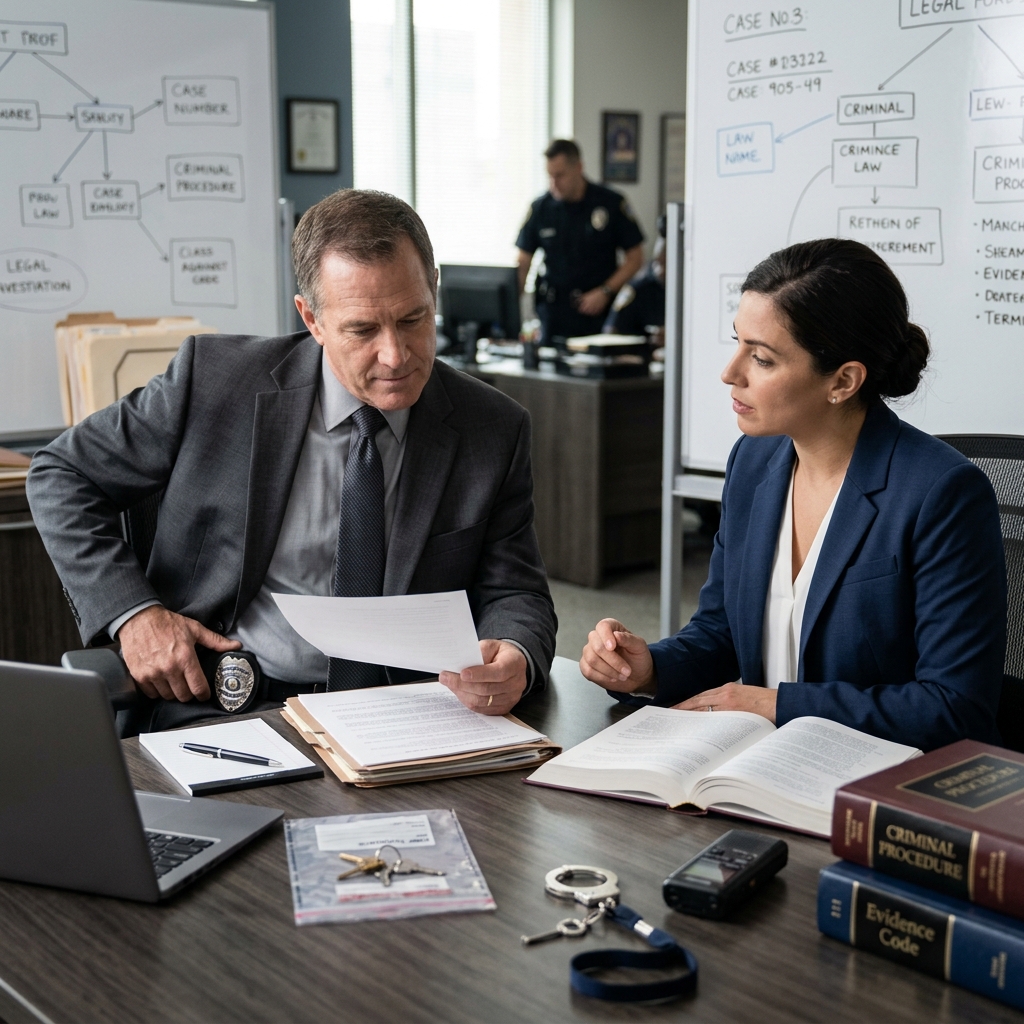
Criminal law does more than define crimes and punishments. It also sets the boundaries for how police may investigate suspected offenses, interact with the public, and bring cases into the court system. Understanding this relationship between criminal law and police powers is essential for anyone who wants to know their rights or navigate the justice system effectively.
This guide explains how criminal law and criminal procedure shape day-to-day policing, from street encounters and searches to arrests, charging decisions, trials, and appeals. It focuses on the typical framework used in the United States, where constitutional protections and procedural rules heavily influence what officers can and cannot do.
Criminal Law vs. Criminal Procedure: How They Work Together
To understand police authority, it helps to distinguish between substantive criminal law and criminal procedure.
- Criminal law (substantive law) defines prohibited conduct, such as theft, assault, or fraud, and specifies penalties like fines, probation, or imprisonment.
- Criminal procedure outlines the steps government officials must follow to investigate, prosecute, and adjudicate those offenses, including rules for searches, arrests, trials, and appeals.
In practice, criminal law gives police the legal basis to act (for example, stopping someone suspected of a robbery), while criminal procedure determines how that action must be carried out to respect individual rights and due process.
Key Goals of Criminal Procedure
Criminal procedure rules serve several important objectives.
- Protect constitutional rights, including protection from unreasonable searches, the right to counsel, and the right to a fair trial.
- Ensure fairness in the way evidence is collected and presented, and how defendants are treated from investigation through sentencing.
- Provide transparency and accountability for police and prosecutors, making it possible to challenge misconduct or procedural errors.
These rules help balance the government’s interest in enforcing the law with the individual’s interest in liberty and privacy.
Police Encounters and the Fourth Amendment
One of the most important areas where criminal law interacts with police conduct is the regulation of searches and seizures. In the United States, the Fourth Amendment prohibits unreasonable searches and seizures and usually requires police to obtain a warrant based on probable cause.
However, many everyday police encounters occur without warrants. Understanding the main types of encounters can clarify what rights you have in each situation.
1. Consensual Encounters
In a consensual encounter, an officer approaches an individual to ask questions or request identification. The person is generally free to walk away, and no level of suspicion is required.
- Police may ask: “Can I speak with you?” or “Do you mind answering a few questions?”
- You usually have the right to decline and leave, as long as the officer has not asserted custody or blocked your movement.
- No search or seizure occurs unless the officer restrains your liberty or physically inspects your person or property.
2. Investigatory Stops (Terry Stops)
When officers have an articulable reasonable suspicion that criminal activity is afoot, they may briefly detain a person to investigate further. This is often called a “Terry stop,” based on U.S. Supreme Court precedent.
- Reasonable suspicion is more than a hunch; it must be based on specific, observable facts, such as matching a suspect description or unusual behavior near a crime scene.
- The stop must be limited in duration and scope to confirm or dispel the officer’s suspicions.
- Officers may ask questions, request identification, and, in some cases, conduct a limited frisk for weapons if they reasonably believe the person is armed and dangerous.
3. Frisks for Weapons
A frisk is a limited pat-down of outer clothing for weapons, not a full search for evidence like drugs or stolen property.
- A frisk must be strictly tied to officer safety and justified by circumstances suggesting the person is armed and dangerous.
- The intrusion must be as minimal as possible, focusing on areas where weapons could be concealed.
- If officers feel an object that clearly seems to be a weapon, they may remove it for safety. Other items might require additional legal justification to seize.
4. Arrests and Probable Cause
A custodial arrest significantly restricts an individual’s liberty and therefore requires a stronger legal basis: probable cause that the person committed a crime.
- Probable cause exists when facts and circumstances would lead a reasonable person to believe that a crime has been committed and that the suspect is responsible.
- Arrests often occur after investigations, witness interviews, or observation of the crime itself.
- In many situations, officers obtain an arrest warrant from a judge; in others, they may arrest without a warrant if the crime occurs in their presence or local law allows it.
Once arrested, individuals enter the formal criminal process and gain additional protections under criminal procedure rules.
The Structure of a Criminal Case: From Investigation to Appeal
Police activity is only the first step in a broader criminal process governed by detailed procedural rules. While specifics vary by jurisdiction, most systems follow a similar sequence from investigation to final resolution.
| Stage | Main Actors | Key Purpose |
|---|---|---|
| Investigation | Police, sometimes prosecutors | Gather evidence, identify suspects, determine whether a crime occurred. |
| Arrest | Police | Take suspect into custody based on probable cause. |
| Charging | Prosecutor | Decide which offenses to file and how to proceed. |
| Arraignment | Court, defendant, prosecutor | Inform defendant of charges, advise of rights, and receive a plea. |
| Pretrial | Court, parties | Exchange evidence (discovery), file motions, consider plea negotiations. |
| Trial | Judge, jury (if applicable), parties | Determine guilt or innocence through evidence and legal argument. |
| Sentencing | Judge, parties | Decide punishment if the defendant is found guilty. |
| Appeal | Appellate court | Review for legal errors that may have affected the outcome. |
Investigation and Evidence Gathering
Investigations begin when police have reason to believe a crime has occurred. They may interview witnesses, collect physical evidence, analyze forensic data, and review digital information such as phone or financial records.
- Investigations must comply with constitutional limits on searches and seizures.
- Evidence obtained illegally may later be excluded from court, weakening or destroying the case.
- Prosecutors often guide complex investigations, especially in serious or organized crimes.
Arraignment and Plea Options
After charges are filed, the defendant usually appears for an arraignment, where a judge formally states the charges and explains the defendant’s rights.
- The defendant is asked to enter a plea, typically guilty, not guilty, or no contest (nolo contendere).
- The court may also address issues such as bail or pretrial release conditions.
- Legal representation at this stage is critical to protect rights and influence how the case proceeds.
Trial: How Evidence and Rights Intersect
Trials are structured events with carefully defined roles and sequences. Criminal procedure ensures that both the prosecution and defense have opportunities to present evidence and challenge the other side’s case.
- Both parties may offer opening statements to outline the case.
- The prosecution presents its witnesses and exhibits first, because it bears the burden of proving guilt beyond a reasonable doubt.
- The defense may cross-examine witnesses, present its own evidence, and call witnesses in its favor.
- Closing arguments summarize evidence and highlight legal standards for the judge or jury.
- The jury, or the judge in a bench trial, deliberates and returns a verdict of guilty or not guilty.
Constitutional Rights That Shape Police Conduct
Several constitutional provisions directly affect how police interact with suspects and how courts handle criminal cases.
Fourth Amendment: Searches, Seizures, and Warrants
The Fourth Amendment protects people from unreasonable searches and seizures. Courts have interpreted this to require either a warrant based on probable cause or a recognized exception, such as consent, exigent circumstances, or limited stops and frisks.
- Searches generally involve examining a person, home, vehicle, or belongings for evidence.
- Seizures include arrests or significant restrictions on movement.
- Evidence gathered in violation of the Fourth Amendment may be suppressed, meaning it cannot be used at trial.
Sixth Amendment: Fair Trial and Counsel
The Sixth Amendment guarantees key rights in criminal prosecutions.
- Right to a speedy and public trial.
- Right to confront witnesses and cross-examine them.
- Right to a trial by jury in many criminal cases.
- Right to the assistance of an attorney, including court-appointed counsel for many indigent defendants.
These rights ensure that police investigations and prosecutorial decisions are tested before an impartial body, rather than resulting in punishment based solely on government allegations.
Eighth Amendment: Bail and Punishment
The Eighth Amendment prohibits excessive bail and cruel and unusual punishment.
- Bail amounts must not be unreasonably high for the circumstances.
- Punishments cannot be unnecessarily severe or arbitrarily applied.
- Sentencing practices must align with generally accepted standards of decency.
These protections influence how courts and legislatures design sentencing laws and bail systems, indirectly shaping how police manage arrests and custody.
Police Discretion and Accountability
Even within legal boundaries, police exercise significant discretion—choices about when to stop someone, which crimes to prioritize, and whether to arrest or warn. Criminal law and procedure attempt to guide that discretion and provide mechanisms to correct abuses.
- Department policies often refine how officers apply general legal rules in specific contexts, such as traffic stops or domestic violence calls.
- Judicial review allows courts to examine police conduct and exclude evidence obtained unlawfully.
- Appellate review provides a further check, allowing higher courts to correct improper rulings or constitutional violations.
Well-designed procedural rules encourage professional policing while protecting individuals from arbitrary or abusive practices.
Practical Tips: Navigating Police Encounters
Although laws are complex and vary across jurisdictions, some general principles can help individuals respond more safely and effectively during police encounters.
- Stay calm and respectful: Emotional reactions can escalate situations and lead to misunderstandings.
- Ask clarifying questions: For example, “Am I free to leave?” helps determine whether you are in a consensual encounter or detained.
- Know your right to remain silent: In many contexts, you may decline to answer questions beyond providing basic identification, especially after arrest.
- Request an attorney as soon as you believe you are under investigation or arrest, and avoid substantive discussions about the incident without legal counsel.
- Document the encounter when legally permissible, including recording details such as time, location, and officer names.
These steps do not guarantee a particular outcome, but they support the exercise of rights that criminal procedure is designed to protect.
Frequently Asked Questions (FAQ)
Do police always need a warrant to search my home?
In general, officers need a warrant based on probable cause to search a home, but exceptions exist, like consent, emergencies, or certain arrests conducted inside the home. If no exception applies, a warrantless home search may violate the Fourth Amendment and lead to exclusion of evidence.
What is the difference between reasonable suspicion and probable cause?
Reasonable suspicion allows limited stops when officers can point to specific facts suggesting criminal activity, while probable cause is a stronger showing needed for arrests and many searches. Probable cause requires facts that would lead a reasonable person to believe a crime has been committed.
Can I refuse to answer police questions?
In many situations, yes. Outside of specific identification requirements in some jurisdictions, individuals typically have the right to remain silent, especially once they are in custody or facing interrogation. Exercising this right is often best done alongside a request for an attorney.
What happens at an arraignment?
At arraignment, the court formally informs the defendant of the charges, advises them of their rights, and asks them to enter a plea. Issues such as bail or release conditions may also be addressed, and the defendant’s attorney can begin shaping the defense strategy.
How do appeals affect police and criminal procedure?
Appeals allow defendants to challenge legal errors, including improper admission of evidence or violations of constitutional rights. Successful appeals can lead to new trials, reduced sentences, or dismissal of charges, which in turn may shape future police practices and court decisions.
References
- Understanding the Basics of Criminal Law — University of Pittsburgh School of Law. 2022-05-10. https://online.law.pitt.edu/blog/understanding-the-basics-of-criminal-law
- What is criminal procedure? — Thomson Reuters. 2023-03-15. https://legal.thomsonreuters.com/blog/criminal-procedure/
- Criminal Procedure Law — Justia. 2021-09-01. https://www.justia.com/criminal/procedure/
- Criminal Procedure — Legal Information Institute, Cornell Law School. 2020-08-20. https://www.law.cornell.edu/wex/criminal_procedure
- Criminal Law and Criminal Procedure — Salt Lake Community College Open Textbooks. 2018-01-05. https://slcc.pressbooks.pub/criminallaw/chapter/1-2-criminal-law-and-criminal-procedure/
- Criminal Procedure Student Manual — Georgia Public Safety Training Center. 2019-06-01. https://access.gpstc.org/studentmanuals/MC0946-60779888.pdf
- Ohio Criminal Law and Court Procedures — Luftman, Heck & Associates. 2022-04-12. https://www.columbuscriminalattorney.com/ohio-criminal-process/
Similar Articles








Read full bio of Sneha Tete




