
Creditors’ Rights and Debt Responsibilities After Divorce
How divorce affects your legal obligations to creditors, joint debts, and collection rights—and what you can do to protect yourself.
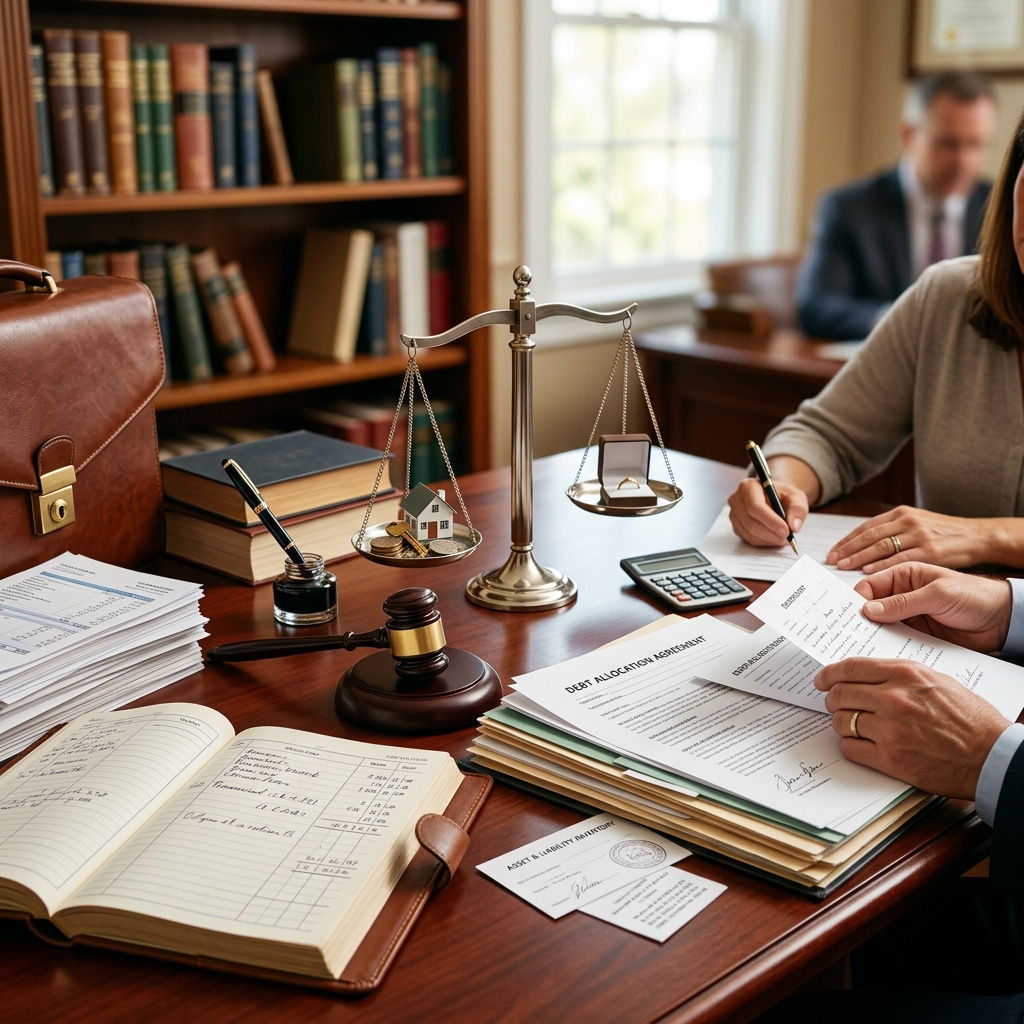
Ending a marriage reshapes your personal life, but it does not automatically reshape your legal relationship with creditors. Divorce decrees allocate debts between spouses, yet creditors are guided by contracts and state law—not by what the family court orders. Understanding how creditors’ rights work after divorce is critical to protecting your finances, credit history, and future stability.
Why Divorce Does Not Cancel Your Debts
A divorce decree is a court order between you and your former spouse. Creditors, such as banks, credit card issuers, and medical providers, are not parties to that case and are therefore not bound by its allocation of debt. If your name is on a loan or credit agreement, you usually remain legally responsible for that obligation until the creditor releases you or the debt is refinanced.
Key points about divorce and existing contracts:
- Contract obligations survive divorce – If you signed a credit card agreement or loan, you remain liable even if the divorce decree says your ex must pay it.
- Creditors can pursue any borrower listed – For joint accounts, a creditor typically may seek repayment from either or both spouses until the debt is fully satisfied.
- Titles and decrees do not change loan contracts – Removing your name from a home or car title, or sending a copy of your divorce decree, does not remove your name from the mortgage or auto loan contract.
Joint Debt vs. Individual Debt After Divorce
During marriage, couples often mix finances. When divorce occurs, distinguishing between joint and individual debt becomes central to understanding creditors’ rights and your responsibilities.
Joint Accounts and Shared Credit Obligations
Joint debts are obligations where both spouses signed the contract or are otherwise liable under state law (for example, community property rules). Typical joint obligations include mortgages, auto loans, and joint credit cards.
After divorce, creditors may:
- Continue to bill both spouses on joint loans until the debt is repaid or refinanced.
- Report late payments on joint accounts to the credit bureaus for both individuals, potentially harming both credit scores.
- Sue either or both spouses on the debt, resulting in judgments, wage garnishment, or liens on property if permitted by state law.
Authorized Users vs. Co-Borrowers
Credit card accounts often distinguish between the primary account holder and an authorized user. This distinction matters when the marriage ends.
| Role on Account | Legal Responsibility for Debt | Impact After Divorce |
|---|---|---|
| Joint account holder / co-borrower | Responsible for the full balance | Creditor can collect from either spouse unless contractually released. |
| Authorized user | Generally not responsible for the debt | Authorized user typically cannot be pursued for repayment, though charges may affect relationship or divorce negotiations. |
Because creditors treat joint borrowers differently from authorized users, reviewing your account documentation before and during divorce is essential.
Marital Property, State Law, and Creditor Claims
Whether a debt is treated as “marital” or “separate” often depends on state law. In community property or marital property jurisdictions, debts incurred during the marriage may be collectible from marital assets, even when only one spouse signed the contract.
Important considerations include:
- Debts incurred during marriage – In some states, obligations taken on during marriage are presumptively marital, allowing creditors to reach marital assets.
- Post-divorce earnings – Once marital property ends, wages earned after divorce may no longer be subject to collection for marital debts in certain jurisdictions.
- Allocation in the divorce decree – Family courts can assign responsibility for each debt between spouses, but this allocation does not bind creditors.
Because these rules vary significantly by jurisdiction, speaking with a local family law or consumer law attorney is important when substantial marital debt is involved.
How Creditors May Collect After Divorce
Even after divorce, creditors retain a range of collection tools based on state and federal law. Your exposure depends on whether you remain liable on the contract and what assets you hold.
Common collection actions include:
- Collection calls and letters – As long as the debt is valid and you are still legally responsible, collectors may contact you, subject to consumer protection rules such as the federal Fair Debt Collection Practices Act.
- Negative credit reporting – Late or missed payments on joint debts may be reported on your credit file, even if your ex-spouse was supposed to pay under the divorce decree.
- Lawsuits for unpaid debt – Creditors may file suit against any liable party. Once they obtain a judgment, they may pursue remedies such as wage garnishment and liens, depending on state law.
- Liens against property – Judgment creditors can sometimes attach liens to real estate or other property, limiting the owner’s ability to sell or refinance until the debt is satisfied.
From the creditor’s perspective, divorce does not create new rights; it preserves their existing rights under contract and statute. From the former spouses’ perspective, however, divorce may shift responsibility internally even while external liability remains.
Bankruptcy, Divorce, and Creditor Rights
Bankruptcy adds another layer of complexity to divorce-related debt. It can eliminate or restructure many obligations, but certain divorce-related debts receive special treatment.
Effect of Bankruptcy on Divorce-Related Debts
U.S. bankruptcy law distinguishes between support obligations and other divorce-related debts, such as property settlements or indemnity agreements. Child support and alimony are generally considered priority obligations that are not easily discharged.
Key principles include:
- Support obligations – Child support and spousal maintenance typically cannot be discharged in Chapter 7 and are treated as priority claims in bankruptcy.
- Property settlement debts – Obligations arising from division of property or debt allocation may be nondischargeable in Chapter 7 but may be treated differently in Chapter 13, where some non-support divorce debts can be discharged after completion of a repayment plan.
- Community property in bankruptcy – In community property states, all community property can become part of the bankruptcy estate, allowing creditors of either spouse to file claims against that property.
Bankruptcy does not automatically remove liens. While a discharge eliminates personal liability, valid liens on property often survive, meaning a creditor can still enforce its security interest even after bankruptcy.
When an Ex-Spouse Files for Bankruptcy
If your ex-spouse files for bankruptcy after divorce, you may be affected in several ways:
- Support claims – If your ex falls behind on court-ordered support, you may need to file a proof of claim in the bankruptcy case to ensure those arrears are recognized and paid as part of the estate.
- Joint debts in bankruptcy – A creditor may still pursue you for joint debts even if your ex receives a discharge, because the discharge only eliminates your ex-spouse’s personal liability, not yours.
- Adversary proceedings – Creditors or ex-spouses may sometimes file adversary complaints to determine whether certain divorce-related obligations are dischargeable.
Anyone facing the intersection of divorce and bankruptcy should seek specialized legal counsel, as timing and choice of chapter (such as Chapter 7 vs. Chapter 13) can significantly alter outcomes for both spouses and their creditors.
Protecting Yourself from Debt Problems in Divorce
Although you cannot control a creditor’s legal rights, you can take steps during separation and divorce to reduce future risk. Proactive planning helps limit the chances that you will be held responsible for debts you thought your ex would handle.
Practical Steps Before and During Divorce
- Inventory all debts – Prepare a complete list of credit cards, loans, medical bills, and other obligations. Identify who is legally liable by reviewing the underlying contracts.
- Close or freeze joint accounts –Where possible, ask creditors to close joint accounts or remove one spouse, especially if you anticipate disputes or nonpayment.
- Refinance major loans – If one spouse will keep the house or vehicle, refinancing the mortgage or auto loan into that person’s sole name helps separate liabilities.
- Get detailed terms in the divorce decree – Ensure the decree clearly states who must pay each debt and what happens if they fail to do so.
- Monitor your credit reports – Regularly check your credit files to identify missed payments or new accounts that may involve you.
Legal Remedies Against an Ex-Spouse
If a creditor collects from you on a debt your ex was ordered to pay, you may have recourse against your ex-spouse even though you cannot change the creditor’s rights.
Possible remedies include:
- Motion for contempt – Asking the family court to enforce the divorce decree and penalize your ex for noncompliance.
- Civil judgment for reimbursement – Obtaining a separate judgment that requires your ex-spouse to reimburse you for amounts you paid on their assigned debts.
- Wage garnishment or liens – In some cases, you may pursue wage garnishment or place liens on your ex’s property to secure repayment once you have a judgment.
These actions do not stop creditors from collecting from you if you remain on the contract, but they can help you recover money and enforce the financial terms of your divorce.
Frequently Asked Questions (FAQs)
Can a debt collector contact me about a joint debt after divorce?
Yes. If your name remains on the loan or credit agreement, a debt collector can generally contact you and seek payment, even if the divorce decree says your former spouse is responsible.
My divorce decree says my ex must pay the mortgage. Why is the bank still calling me?
The divorce decree changes obligations between you and your ex, not between you and the bank. Until the mortgage is refinanced or the lender formally releases you, you remain bound by the original loan contract.
If my ex files bankruptcy, will that remove my responsibility for our joint credit card?
No. Your ex’s bankruptcy discharge usually eliminates only their personal liability. If you are a co-borrower on the account, the creditor may still collect the full balance from you.
What happens if my ex does not pay a debt assigned to them in the divorce?
The creditor can still pursue you if you are on the contract. Your remedy is to return to court to enforce the divorce decree, seek contempt, or obtain reimbursement through a civil judgment or related enforcement tools.
Does removing my name from a car title end my loan responsibility?
No. Vehicle titles and loan contracts are separate documents. You must be removed from the loan by refinancing or a lender-approved assumption to end your legal responsibility. Changing the title alone does not alter the loan agreement.
References
- Can a debt collector contact me about a debt after a divorce? — Consumer Financial Protection Bureau. 2022-03-31. https://www.consumerfinance.gov/ask-cfpb/can-a-debt-collector-contact-me-about-a-debt-after-a-divorce-en-1413/
- Credit Issues & Your Legal Options in Divorce — Justia. 2021-08-10. https://www.justia.com/family/divorce/dividing-money-and-property/divorce-and-credit-issues/
- DFI Divorce and Credit — Wisconsin Department of Financial Institutions. 2020-06-15. https://dfi.wi.gov/Pages/ConsumerServices/WisconsinConsumerAct/DivorceCredit.aspx
- Creditor Rights — Law Offices of Patrick M. Hunter. 2019-04-02. https://www.pmhunterlaw.com/general-information/creditor-rights/
- Divorce and Bankruptcy — Washington Law Help. 2023-02-01. https://www.washingtonlawhelp.org/en/divorce-and-bankruptcy
- Five Ways Bankruptcy Law Can Disrupt a Divorce — Bankruptcy Mastery. 2017-05-18. https://www.bankruptcymastery.com/bankruptcy-divorce/
- Divorce Court Orders Don’t Affect Creditors — R.S.C. Law Group, Inc. 2014-04-10. https://www.montereydivorcelawgroup.com/blog/2014/04/divorce-court-orders-dont-affect-creditors/
Similar Articles








Read full bio of Sneha Tete


