
The Surveillance Catch-22: How Secrecy Defeats Legal Standing
Discover how secret government surveillance programs create a legal paradox that blocks citizens from defending their privacy rights in court.
The Paradox of Privacy in the Digital Age
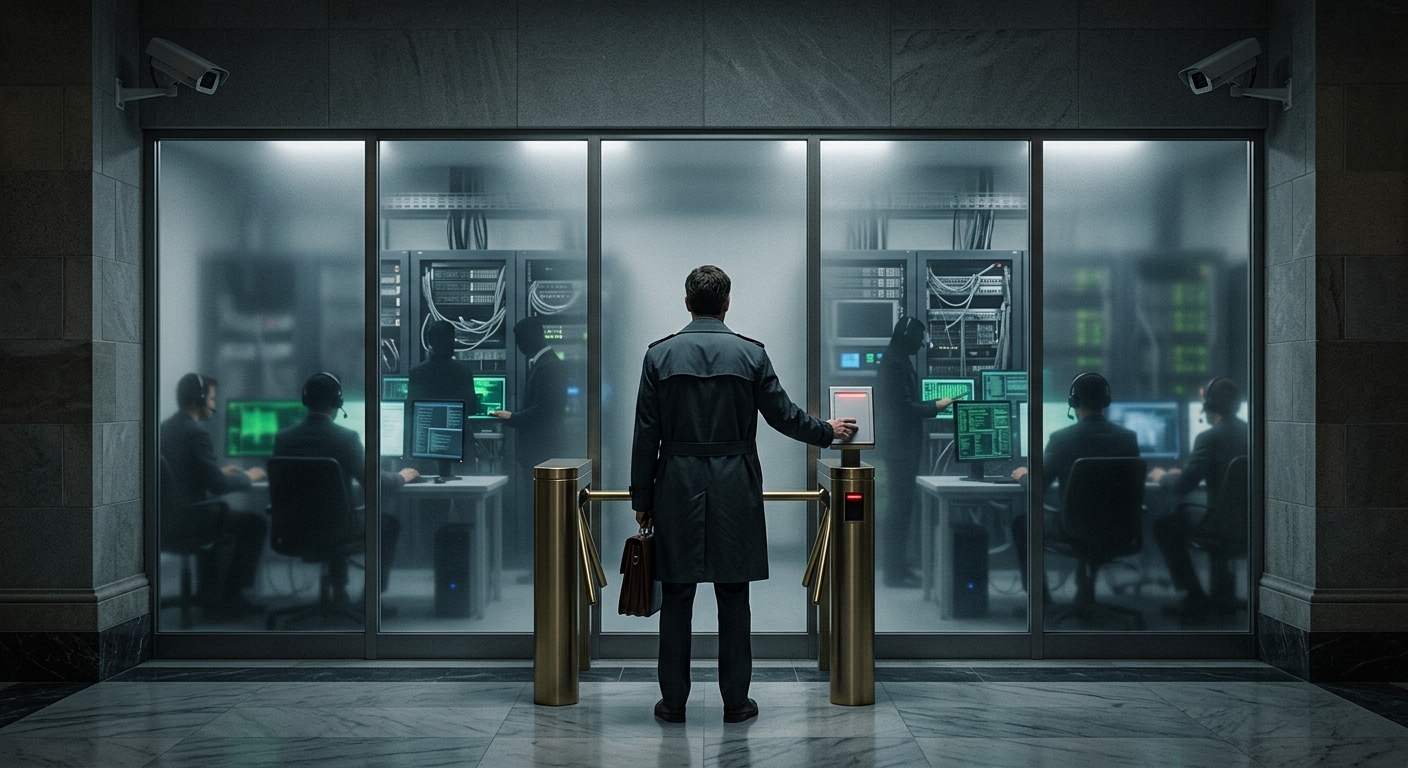
Joseph Heller’s classic novel introduced the world to the ultimate paradox: a situation where you need one thing to achieve another, but you cannot get the first without already having the second. Today, this exact logical loop exists within the American judicial system, specifically regarding digital privacy and government surveillance. If a citizen wishes to sue the government for violating their Fourth Amendment rights through secret data collection, they must first prove they were a specific victim of that surveillance. However, because the surveillance programs are highly classified, the government refuses to confirm who is being monitored. Thus, citizens are blocked from obtaining the necessary evidence to prove they are victims. This creates a seemingly impenetrable barrier protecting mass surveillance initiatives from civilian legal challenge. Understanding this constitutional conundrum requires a deep dive into judicial doctrines, the history of intelligence gathering, and the ongoing struggle to protect civil liberties in an increasingly interconnected world.
The Legal Hurdle: Understanding Article III Standing
The foundation of this legal blockade lies in Article III of the United States Constitution. This constitutional provision restricts federal courts to adjudicating actual ‘Cases’ or ‘Controversies.’ Over the decades, the Supreme Court has interpreted this clause to require what is known as ‘standing.’ To possess standing, a plaintiff must demonstrate that they have suffered an ‘injury in fact’—a harm that is concrete, particularized, and either actual or imminent. It cannot be conjectural or hypothetical. In the context of hidden intelligence operations, this presents a monumental hurdle. A privacy advocate or an average citizen might have overwhelming circumstantial evidence that an agency like the National Security Agency (NSA) is intercepting vast amounts of internet traffic. They might reasonably conclude that their emails are caught in this dragnet. However, reasonable suspicion is not enough. The courts demand definitive proof that a specific plaintiff’s communications were targeted and collected. Because such intelligence gathering is shrouded in classification, plaintiffs simply cannot produce the smoking gun. As a result, judges routinely dismiss these lawsuits before they even reach the discovery phase, slamming the courthouse doors on legitimate constitutional questions.
The Post-9/11 Era and Warrantless Wiretapping
The modern incarnation of this legal barrier traces its roots to the aftermath of the September 11, 2001 terrorist attacks. In response to the crisis, the executive branch fundamentally altered its approach to intelligence gathering by launching the Terrorist Surveillance Program (TSP). Under this sweeping initiative, the government bypassed the Foreign Intelligence Surveillance Court (FISC), a specialized, secretive judicial body established in 1978 to oversee and approve domestic intelligence warrants. The TSP permitted agencies to intercept international communications without securing individualized warrants, a move that critics argued was a direct violation of the Fourth Amendment. When investigative journalists finally exposed the existence of this clandestine program in late 2005, civil rights organizations immediately sought to challenge it in federal court. However, these lawsuits repeatedly collided with the impenetrable wall of standing. Appellate courts consistently ruled that without explicit proof that the specific plaintiffs were monitored by the NSA, the claims were too speculative. This established a chilling legal precedent: if the executive branch can keep a surveillance program secret enough, it effectively immunizes the program from civilian judicial review.
The Shield of the State Secrets Privilege
Even in the rare instances where a plaintiff might somehow clear the initial hurdle of standing—perhaps through a leaked document explicitly confirming their communications were monitored—the government possesses a formidable trump card. This defensive maneuver is known as the State Secrets Privilege. Rooted in common law and recognized by the Supreme Court, this evidentiary privilege allows the executive branch to withhold information in legal proceedings if disclosing it would reasonably threaten national security or foreign relations. When the government invokes this privilege in surveillance litigation, it rarely just asks to redact a few specific documents. Instead, government attorneys often argue that the entire subject matter of the lawsuit is fundamentally a state secret, demanding that the case be dismissed entirely. Although the Department of Justice issued updated guidelines in 2009 stating the privilege should only be used to prevent ‘significant harm’ to national defense, critics remain highly skeptical. Privacy advocates argue that the privilege is frequently wielded not as a legitimate shield for vital security assets, but as a sweeping mechanism to avoid public embarrassment, cover up illegal intelligence activities, and permanently derail civil liberties litigation.
Modern Surveillance: FISA Section 702 and Geofence Warrants
While the technological landscape has evolved dramatically since the early 2000s, the fundamental legal paradox remains completely intact. Today, one of the intelligence community’s most heavily utilized and controversial tools operates under Section 702 of the Foreign Intelligence Surveillance Act (FISA). Enacted in 2008, Section 702 grants the government the authority to compel electronic communication service providers to hand over the communications of targeted non-U.S. persons located abroad. However, the interconnected nature of modern internet architecture routes immense volumes of global data through servers located inside the United States. Consequently, the program ‘incidentally’ sweeps up massive amounts of communications belonging to innocent American citizens. Furthermore, domestic law enforcement agencies have increasingly adopted tools like ‘geofence warrants.’ These sweeping warrants compel technology companies to provide location data for every mobile device present within a specific geographic area during a particular timeframe, treating thousands of innocent bystanders as potential suspects. In both scenarios, the individuals swept up in these digital dragnets rarely know their data has been collected, ensuring the standing paradox continues to protect these broad, invasive searches from constitutional scrutiny.
The Vital Role of Congressional Oversight
With the judicial branch sidelined by its own strict interpretations of standing, and the executive branch actively wielding the State Secrets Privilege, the heavy burden of defending civil liberties falls directly on the legislative branch. Congress possesses the explicit constitutional authority to investigate, subpoena, and regulate the sprawling intelligence community. The Senate Judiciary Committee, alongside various specialized intelligence committees, serves as the primary watchdog over these secretive programs. Through the rigorous use of subpoenas and mandatory oversight hearings, Congress has the unique power to demand access to classified operational directives, compliance reports, and internal memos that the public and the courts are forbidden from seeing. Public hearings, even when heavily redacted, provide a vital window into the government’s surveillance apparatus. Establishing robust subpoena tracking mechanisms and maintaining relentless public pressure are essential to ensure lawmakers utilize these oversight powers effectively. Without aggressive, uncompromising congressional action, the executive branch operates in a dangerous vacuum, completely unchecked by the other two branches of the American democratic system.
Breaking the Loop: The Path Forward for Digital Privacy
Solving a legal paradox that appears hardwired into the American judicial framework requires a comprehensive, multi-faceted approach involving both aggressive legislative reform and judicial evolution. The steps toward breaking this cycle of secrecy include:
- Legislative Reform: Congress must amend existing surveillance laws to establish explicit statutory standing for individuals challenging dragnet data collection. If federal law dictates that the mere existence of an indiscriminate collection program constitutes a sufficient legal injury, the courts would be compelled to open their doors to civil rights lawsuits.
- Judicial Modernization: Federal courts need to update their interpretation of ‘injury in fact’ to encompass the invisible, non-physical harms of covert data interception. The traditional definitions were developed for physical torts, not the silent interception of data packets across global fiber-optic cables.
- Increased Transparency: The aggressive use of the Freedom of Information Act (FOIA) and robust protections for intelligence community whistleblowers are essential for exposing overreach and providing the public with the facts necessary to demand change.
Timeline of Surveillance and the Legal Catch-22
| Year | Event | Impact on Civil Liberties |
|---|---|---|
| 2001 | Implementation of the Terrorist Surveillance Program (TSP) | Bypassed the traditional Foreign Intelligence Surveillance Court (FISC) warrant process, marking the beginning of the modern era of mass warrantless wiretapping. |
| 2005 | Public Revelation of Warrantless Wiretapping | Investigative journalists exposed the TSP, prompting a wave of civil liberties lawsuits that were largely dismissed due to a lack of legal standing. |
| 2008 | Passage of the FISA Amendments Act | Created Section 702, providing legislative backing for sweeping surveillance of foreign targets, which incidentally captures massive amounts of domestic communications. |
| 2009 | Department of Justice Updates State Secrets Policy | The Attorney General issued new guidelines requiring a showing of ‘significant harm’ to national security before invoking the State Secrets Privilege in civil litigation. |
Frequently Asked Questions (FAQs)
What is Article III standing in the context of privacy lawsuits?
Article III standing is a constitutional requirement that mandates a plaintiff must have suffered a direct, concrete injury to bring a lawsuit in federal court. In privacy and surveillance cases, this means citizens cannot sue the government based on a general suspicion that they are being monitored; they must provide definitive proof, which is nearly impossible when the surveillance is highly classified.
What was the Terrorist Surveillance Program (TSP)?
The Terrorist Surveillance Program was a highly classified intelligence initiative implemented shortly after the September 11, 2001 attacks. It authorized the National Security Agency (NSA) to intercept international communications involving individuals within the United States without obtaining the traditionally required warrants from the Foreign Intelligence Surveillance Court (FISC).
How does the State Secrets Privilege work?
The State Secrets Privilege is an evidentiary rule that allows the executive branch to withhold information during legal proceedings if disclosing it would threaten national security. In many surveillance lawsuits, the government uses this privilege not just to hide specific documents, but to argue that the entire lawsuit must be dismissed because defending against it would require revealing classified operational details.
Can Congress stop unauthorized mass surveillance?
Yes, Congress has significant oversight authority. Through committees like the Senate Judiciary Committee, lawmakers can issue subpoenas, hold public and classified hearings, and demand compliance reports from intelligence agencies. Congress can also pass legislation, such as amendments to the Foreign Intelligence Surveillance Act (FISA), to restrict surveillance powers or create specific legal pathways for citizens to challenge these programs in court.
Conclusion
The ongoing battle against unwarranted government surveillance is fundamentally a struggle against the shadows. The legal Catch-22 created by the doctrine of standing and the State Secrets Privilege establishes a judicial framework where the most invasive and far-reaching intelligence programs are precisely the ones most protected from legal scrutiny. However, history demonstrates that persistent public advocacy, robust legislative oversight, and an informed electorate can slowly dismantle the walls of extreme secrecy. The United States Constitution was designed as a living document, meant to adapt to unprecedented technological eras. Ensuring that its core protections—specifically the Fourth Amendment—survive the modern surveillance state is arguably the defining civil liberties challenge of the twenty-first century.
References
- Overview of Standing (Article III, Section 2, Clause 1) — Constitution Annotated, Congress.gov. https://constitution.congress.gov/browse/essay/artIII-S2-C1-6-1/ALDE_00012992/
- The NSA Program to Detect and Prevent Terrorist Attacks — U.S. Department of Justice. 2006-01-27. https://www.justice.gov/archive/ll/fs/nsa-myth-v-reality.pdf
- FISA Section 702 Resources — Office of the Director of National Intelligence (ODNI). https://www.dni.gov/index.php/fisa-section-702-resources
- Policies and Procedures Governing Invocation of the State Secrets Privilege — U.S. Department of Justice. 2009-09-23. https://www.justice.gov/sites/default/files/opa/legacy/2009/09/23/state-secret-privileges.pdf
Similar Articles








Read full bio of Sneha Tete


