
How to Stop Phone Scams Posing as Your TV and Internet Provider
Learn how TV and internet bill-discount scams work, the red flags to spot, and the steps to protect your money and personal data.
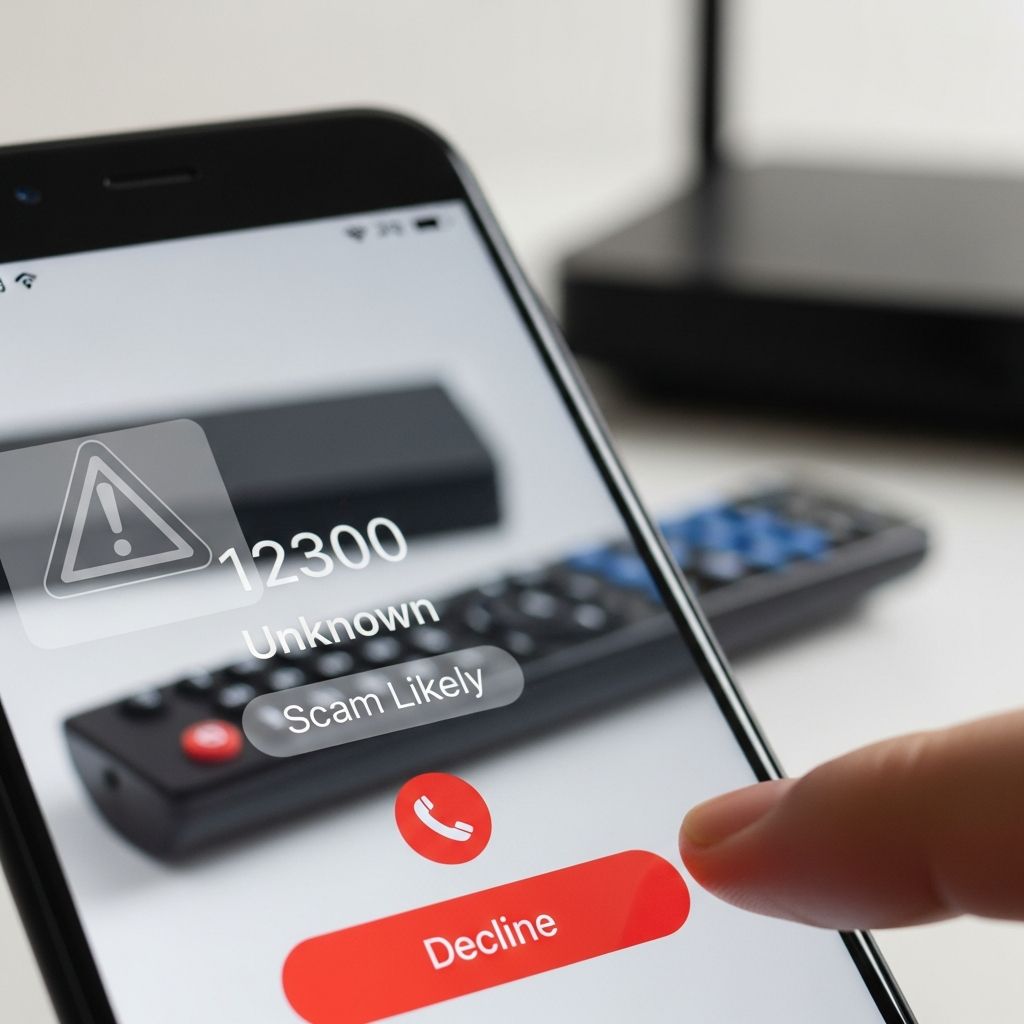
Across the United States, scammers are pretending to be major TV and internet companies, offering bogus discounts and promotions to trick people into sending money and revealing sensitive information. These schemes often target older adults, but anyone with a phone or an account with a cable, satellite, or internet provider can be at risk.
This guide explains how these impersonation scams work, the warning signs to watch for, practical steps to avoid them, and what to do if you get caught in a scam. It draws on guidance and data from the Federal Trade Commission (FTC) and other official consumer protection resources.
Why TV and Internet Imposter Scams Are Growing
Imposter scams—schemes where criminals pose as trusted businesses or government agencies—are among the costliest and most frequently reported fraud categories in the United States. TV and internet company look-alike scams are one part of this larger problem.
- According to FTC data, consumers reported losing nearly $8.8 billion to fraud in 2022 across all scam types.
- Imposter scams alone accounted for about $2.6–$2.7 billion in reported losses that year.
- Older adults are frequently targeted, especially in phone and robocall schemes.
TV and internet scams are appealing to fraudsters because many households are frustrated with high monthly bills and are eager for discounts, making them more likely to listen when someone claims they can cut their costs.
How the Fake TV and Internet Discount Scam Typically Works
While scammers constantly tweak their tactics, many TV and internet impersonation scams follow a similar pattern, from first contact to payment.
1. The Unexpected Offer Arrives
You may receive:
- A phone call from a live person
- A robocall with a recorded message
- A text message with a callback number
- An email that looks like it is from your provider
The message usually claims to be from a well-known provider (for example, a cable or fiber company) and advertises a limited-time offer to lower your monthly bill, extend your contract at a discount, or bundle services for much less than you currently pay.
2. Pressure to Act Quickly
To prevent you from thinking too hard or checking directly with your provider, the scammer often adds urgency:
- “This promotion expires today.”
- “We can only reserve this rate during this call.”
- “You’ll lose the discount if you hang up or call back later.”
Urgency and high-pressure tactics are classic signs of fraud in telemarketing and imposter scams.
3. The Prepayment Requirement
Here is where the scam becomes clear: to get the supposed discount, the caller tells you that you must prepay several months of service up front.
Common claims include:
- “Prepay six months and we’ll cut your bill by 50%.”
- “Make a one-time upfront payment to lock in this loyalty discount.”
- “Pay today and we’ll credit your future bills automatically.”
Legitimate providers may require prepayment for certain prepaid plans, but they will not demand unusual payment methods or insist that you act only through a random incoming call.
4. Demands for Gift Cards or Unusual Payment Methods
One of the clearest red flags is a demand that you pay the “promotion” with:
- Retail gift cards (for example, from big-box or electronics stores)
- Prepaid cards or reloadable cards
- Cryptocurrency (such as Bitcoin)
- Wire transfers or person-to-person transfers that are hard to reverse
Scammers often claim that your provider is “partnering” with a particular retailer, or that gift cards are required to process the promotion. Once you buy the cards and read them the numbers, your money is gone, and recovering it is extremely difficult.
5. Harvesting Personal and Account Information
During the call, the imposter may ask for more than just payment. They often try to collect:
- Your full name and address
- Your real account number with your TV or internet provider
- Credit or debit card details
- Social Security number or date of birth
- Online account usernames and passwords
This information can be used to:
- Make unauthorized changes to your real account
- Open new accounts in your name
- Commit identity theft or sell your data to other criminals
Key Warning Signs You Are Dealing With a Scam
Recognizing the red flags early can stop a scam before it starts. If you notice one or more of these signs, assume it is fraud until you independently confirm otherwise.
| Red Flag | Why It Matters |
|---|---|
| Unsolicited call, text, or email with a too-good-to-be-true discount | Legitimate providers rarely call out of the blue to offer huge bill cuts without prior notice. |
| Request to prepay several months of service for a discount | Most customers are billed monthly; unusual prepayment demands are a common scam tactic. |
| Payment demanded via gift cards, cryptocurrency, or wire | Gift cards and similar methods are favored by scammers because they are hard to trace and recover. |
| Pressure to act immediately or lose the offer | High-pressure sales tactics aim to stop you from verifying the offer with your real provider. |
| Caller asks for full Social Security number or passwords | TV and internet companies do not need your full SSN or password just to offer a discount. |
| Phone number or email looks odd or unofficial | Scammers often use numbers and addresses that do not match those on your actual billing statement. |
Why You Cannot Rely on Caller ID
Many scam calls appear to come from a local number or even from the official customer service line of your provider. That is because scammers use a technique called spoofing to falsify the caller ID information that appears on your phone.
This means:
- You might see the name of a major TV or internet company on your screen even when the call is fraudulent.
- Blocks based only on phone number are not always effective, because scammers constantly rotate and spoof numbers.
Due to widespread spoofing and robocalls, U.S. regulators have required many phone providers to implement caller ID authentication technologies, but illegal calls still get through. You should treat caller ID as one data point—not as proof a call is genuine.
Safe Ways to Verify Any Offer From Your Provider
Instead of trusting an incoming call or message, take control of the conversation. Use these steps to check whether a promotion is real.
- Hang up and call back using an official number. Find the customer service phone number on:
- Your latest printed bill
- Your provider’s official website (by typing the address yourself, not by following a link in an email or text)
- Your provider’s official mobile app
- Ask the provider to confirm the promotion. Give them minimal identifying information (for example, the data they already have, such as your account number) and ask if the offer is in your record.
- Review communications history. Many providers list official notices and offers inside your secure online account; if the promotion is real, it may appear there.
- Be skeptical of any request for unusual payments. If the representative suggests gift cards, cryptocurrency, or a person-to-person transfer, it is almost certainly a scam.
Best Practices to Protect Your Money and Personal Data
Adopting a few protective habits can reduce your risk of losing money to TV and internet imposters and other scams.
Guard Your Information
- Do not share your Social Security number, full date of birth, or banking details with anyone who contacts you unexpectedly.
- Never give out passwords or one-time security codes sent by text or email.
- Use strong, unique passwords and, where available, multi-factor authentication for your provider accounts.
Use Payment Methods With Strong Protections
- When paying legitimate bills, use methods that offer dispute rights, such as credit cards.
- Avoid sending money by wire transfer or cryptocurrency for everyday bills; these methods are extremely difficult to reverse if there is fraud.
- Remember: gift cards are for gifts, not payments. If anyone tells you otherwise, treat it as a scam.
Reduce Unwanted Calls Where Possible
- Register your phone number with the National Do Not Call Registry to reduce some telemarketing calls.
- Use call-blocking tools offered by your phone carrier or third-party apps to filter known scam and robocall numbers.
- Let unknown calls go to voicemail; genuine businesses often leave a message you can review later.
What to Do If You Responded to a Scam
If you realize you may have given money or information to a scammer posing as your TV or internet company, moving quickly can limit the damage.
If You Paid With a Gift Card
- Immediately contact the company that issued the gift card (for example, the retailer or branded card line).
- Explain that the card was used in a scam and ask if they can freeze any remaining funds or reverse the transaction.
- Keep the card, the receipt, and any numbers you shared; you may need them for a complaint.
While recovery is not guaranteed, reporting promptly can help in some cases and provides valuable information to enforcement agencies.
If You Gave Bank or Card Information
- Contact your bank or card issuer immediately using the number on the back of your card or on an official statement.
- Ask them to review your account for unauthorized charges and to cancel or reissue cards if needed.
- Monitor your statements and online banking regularly for suspicious activity.
If You Shared Personal Identifiers
- Consider placing a fraud alert or security freeze with the major credit bureaus if you shared sensitive data such as your Social Security number.
- Review your credit reports periodically for accounts you do not recognize.
- If identity theft occurs, you can create a personalized recovery plan using official government resources for identity theft assistance.
Report the Scam
- Report the incident to the Federal Trade Commission (FTC) through its official fraud reporting portal.
- Notify your real TV or internet provider so they know their brand is being misused.
- If you lost a significant amount of money, consider also reporting to local law enforcement.
Reports help enforcement agencies spot patterns, take action against scammers, and publish timely alerts to warn others.
Special Considerations for Older Adults and Caregivers
Older adults may be particularly exposed to these scams because they are more likely to answer landline calls, may be less familiar with digital fraud tactics, and, in some cases, may manage higher-value retirement accounts.
Caregivers, family members, and community organizations can help by:
- Talking regularly about common scam tactics and payment red flags.
- Encouraging loved ones to let unknown calls go to voicemail.
- Helping review monthly bills to spot unusual charges or unauthorized service changes.
- Assisting with filing reports when fraud occurs, particularly if the victim is uncomfortable using online forms.
Frequently Asked Questions (FAQs)
Q: My caller ID showed my real provider’s name. Doesn’t that mean the call was genuine?
No. Scammers can spoof caller ID so the name and number look like your provider, a government agency, or another trusted business. You should always verify offers by calling the company back using an official phone number from your bill or their website.
Q: Do legitimate TV or internet companies ever ask for payment with gift cards?
Legitimate providers do not ask you to pay regular service bills or promotions with retail gift cards, cryptocurrency, or wire transfers. If anyone claiming to be your provider demands payment this way, it is a strong sign of a scam.
Q: I got a text about a huge discount on my bill if I click a link. Is that safe?
Treat unsolicited text messages offering deep discounts with caution, especially if they include links or request personal or payment information. Do not click on links in unexpected texts or emails. Instead, log in to your account through your provider’s official website or app to see if the promotion is listed there.
Q: What is the best single step I can take if I’m unsure about a call?
The safest option is to hang up and independently contact your provider using the customer service number on your bill or their official website. Explain what you were told and ask if it is a legitimate promotion. Genuine representatives will understand your caution.
Q: Does reporting the scam really make a difference?
Yes. Scam reports feed into national databases that law enforcement and consumer protection agencies use to track patterns, identify repeat offenders, and bring cases against bad actors. Reporting also helps authorities issue alerts that can protect others in your community.
References
- Scammers are posing as your TV and internet company — Federal Trade Commission. 2022-10-19. https://consumer.ftc.gov/consumer-alerts/2022/10/scammers-are-posing-your-tv-and-internet-company
- Scammers are posing as your TV and internet company — DirectLink (citing FTC). 2022-10-19. https://www.directlink.coop/news?id=4384-1666218013
- Protecting Older Consumers, 2022–2023 — Federal Trade Commission. 2023-10-18. https://www.ftc.gov/system/files/ftc_gov/pdf/p144400olderadultsreportoct2023.pdf
- Consumers reported losing nearly $8.8 billion to scams in 2022: FTC — Fox Business, summarizing FTC data. 2023-02-27. https://www.foxbusiness.com/lifestyle/consumers-reported-losing-nearly-8-8-billion-scams-2022-ftc
- Scams — Consumer Advice — Federal Trade Commission. 2023-2024 (updated). https://consumer.ftc.gov/scams
- The top scams of 2022 — Federal Trade Commission. 2023-02-23. https://consumer.ftc.gov/consumer-alerts/2023/02/top-scams-2022
- Consumer Sentinel Network Data Book 2022 — Federal Trade Commission. 2023-02-23. https://www.ftc.gov/system/files/ftc_gov/pdf/CSN-Data-Book-2022.pdf
Similar Articles








Read full bio of medha deb


