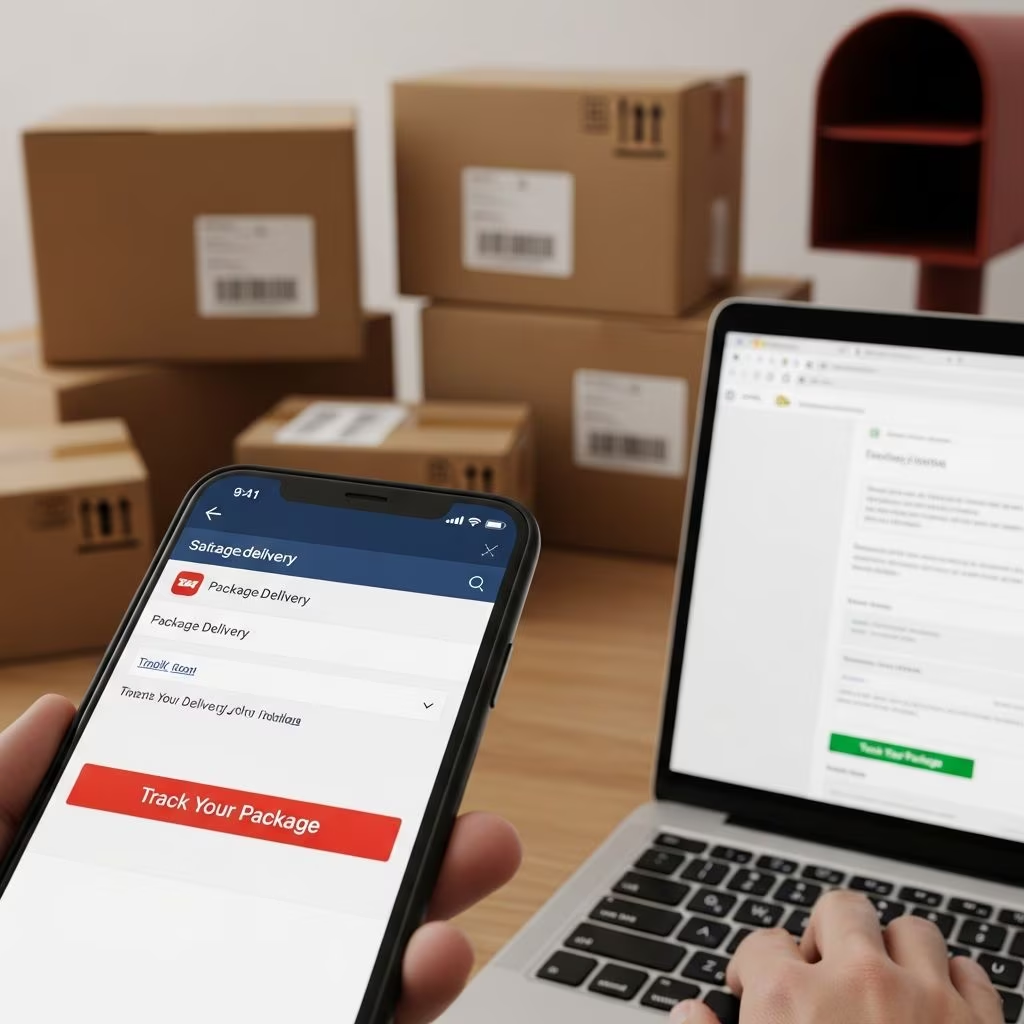
Online shopping has made package tracking emails and texts a routine part of daily life. Scammers exploit that routine by sending convincing but fake delivery messages that aim to steal your money, passwords, or identity. These frauds often surge around holidays or big sales periods when consumers expect frequent packages and are more likely to click without thinking.
This guide explains how package delivery email scams work, what warning signs to look for, and the exact steps you can take to stay protected.
Why Package Delivery Messages Are a Popular Scam Tool
Fraudsters favor delivery-related scams because they combine familiarity, urgency, and emotion. People are used to seeing messages from carriers like USPS, UPS, FedEx, and major retailers, so a fake notice blends easily into a crowded inbox.
- High volume of real messages: With more online orders, consumers expect multiple delivery alerts each week.
- Built-in urgency: Warnings about missed deliveries or fees encourage quick reactions.
- Brand trust: Criminals misuse well-known company names and logos to seem legitimate.
Scammers know that even cautious people can drop their guard when they believe a package might be delayed, lost, or returned.
Common Types of Package Delivery Scams in Your Inbox
Fraudulent delivery messages come in several forms. Understanding the main patterns makes it easier to spot them before they cause harm.
1. Phishing Emails Pretending to Be Carriers
In a typical phishing email, criminals send a message that claims to be from a delivery service and includes a link to “track” or “release” a package.
- The email may say your package cannot be delivered due to an incomplete address or unpaid fee.
- The link leads to a fake website designed to capture login credentials or payment data.
- Some sites automatically attempt to install malware if you click through.
Once scammers have your information, they can attempt unauthorized purchases, account takeovers, or identity theft.
2. Smishing: Fake Delivery Alerts by Text
Smishing is phishing via SMS or messaging apps. Text messages may appear to come from USPS, UPS, FedEx, or a retailer and claim there is a problem with a shipment.
- Messages commonly include a short link and language like “urgent action required” or “final notice.”
- Clicking can send you to a fraudulent website or trigger malicious downloads on some devices.
- Some texts ask you to reply with personal or financial details.
Official agencies and consumer protection offices warn that unexpected texts about deliveries with clickable links are almost always scams.
3. Fake Missed-Delivery Notices and Voicemails
Some fraud attempts use fake voicemail transcripts or emails claiming a courier tried to deliver a package but no one was home.
- The message pushes you to call a number, click a rescheduling link, or scan a QR code.
- Calling may connect you directly to a scammer posing as a courier representative.
- They might request payment for redelivery fees or ask for sensitive identity information.
Legitimate carriers may leave physical notices or provide tracking updates, but they do not require immediate payment through unconventional methods to complete a delivery.
4. Unordered Packages and “Brushing” Schemes
Another trend involves receiving goods you never ordered. This often ties into what is known as a brushing scam.
- Third-party sellers ship inexpensive items to random addresses so they can submit fake “verified” reviews in customers’ names.
- The fact that they have your name and address can indicate that some of your personal data has been exposed.
- In some cases, the scam is combined with phishing emails asking you to confirm delivery or payment information.
Authorities advise that unsolicited packages may signal data misuse and should prompt you to review your online shopping accounts and credit reports.
Key Red Flags in Delivery-Related Emails and Texts
Most fake messages share common warning signs. If you notice any of the following, slow down and verify using official channels instead of interacting with the message directly.
| Red Flag | What It Looks Like | Why It’s Risky |
|---|---|---|
| Unexpected notification | You receive a delivery email or text when you are not expecting a package. | Scammers rely on curiosity and confusion to lure you into clicking. |
| Generic greeting | “Dear Customer” instead of your real name. | Mass phishing campaigns rarely use accurate personalization. |
| Spelling and grammar errors | Awkward wording, random capitalization, or poor translation. | Common in scam messages, less likely from major carriers. |
| Urgent or threatening language | “Immediate action required” or threats of returning or destroying a package. | Pressure tactics are used to short-circuit critical thinking. |
| Strange sender address | Email domains that don’t match the real company (for example, free webmail instead of official corporate domains). | Scammers spoof brand names but often cannot mimic authentic domains reliably. |
| Unusual payment methods | Requests for gift cards, wire transfers, crypto, or prepaid cards to release a package. | Legitimate carriers do not demand such payments for routine deliveries. |
| Attachments or executable files | “Invoice” or “shipping label” attachments with file extensions like .zip, .exe, or macro-enabled documents. | These can contain malware that compromises your device or network. |
Safe Ways to Check the Status of a Package
When you receive a suspicious delivery message, the safest approach is to ignore any links or contact details provided and instead verify directly using trusted methods.
- Use official websites: Type the carrier’s web address into your browser manually and check the tracking number there.
- Sign up for legitimate alerts: Many carriers allow you to create accounts and receive authenticated email or text updates initiated by your own orders.
- Check retailer accounts: Log in to online store accounts to confirm order histories and tracking details.
- Call using a known number: If you must speak with customer service, use phone numbers from the carrier’s official website, not from the suspicious message.
If no orders or tracking records match the notice, assume it is fraudulent.
Step-by-Step Response if You Receive a Suspicious Message
How you respond to a questionable email or text can greatly affect your risk. Follow these steps to reduce potential damage.
1. Do Not Click Links or Open Attachments
Avoid interacting with any part of the message, including images, links, or documents. Clicking can lead to credential theft or malware infections.
2. Capture Evidence if Needed
If you plan to report the scam, save a screenshot or write down key details such as the sender address, date, and message content before deleting it.
3. Delete the Message
Once you have documented what you need, delete the email or text from your inbox and trash folder to prevent accidental clicks later.
4. Report the Scam to Authorities and Providers
- To the Federal Trade Commission (FTC): You can report fraud attempts to the FTC, which uses these reports to track patterns and pursue enforcement actions.
- To your mobile carrier: Many U.S. carriers support forwarding scam texts to 7726 (SPAM) to help block fraudulent senders.
- To the delivery company: Notify the real carrier through contact channels listed on its official website so it is aware of brand misuse.
- To online marketplaces: If the message references an order from a large marketplace, use its internal reporting tools.
5. Monitor Accounts and Devices
If you accidentally clicked or provided information, take additional precautions immediately.
- Run security scans: Use reputable antivirus or security software to check for malware or suspicious activity on your device.
- Change affected passwords: Update login details for any accounts you may have exposed and turn on multi-factor authentication where available.
- Review bank and card statements: Look for unauthorized charges and contact your financial institution promptly if anything appears unfamiliar.
- Check your credit reports: Federal law allows U.S. consumers to access credit reports at no cost through the official AnnualCreditReport.com site to watch for identity theft indicators.
Handling Packages You Never Ordered
If a parcel appears at your door and you do not recognize the sender or the order, treat it cautiously. Unsolicited deliveries can indicate data misuse even when they are not accompanied by phishing messages.
- Review your online accounts: Check whether someone placed an order using one of your shopping profiles or payment methods.
- Change passwords on retail accounts: Use unique, strong passwords and enable extra security features.
- Do not pay for unexpected items: Consumer authorities state you are not obligated to pay for unordered goods, and attempts to pressure you into payment are a scam.
- Avoid contacting unknown senders directly: Searching for and reaching out to suspicious sellers can expose you to further phishing attempts.
Reporting these incidents can help regulators identify brushing schemes and protect other consumers.
Practical Habits to Reduce Your Risk Long-Term
Beyond reacting to individual messages, a few ongoing habits can significantly lower the chance that a package delivery scam will succeed.
- Keep a delivery log: Maintain a simple list of current orders and estimated arrival dates so you can quickly spot notices that don’t match any purchase.
- Limit how widely you share your contact information: Provide your primary email and phone only to trusted businesses, reducing exposure to data leaks and spam lists.
- Stay current on scam trends: Government consumer protection agencies and postal inspectors routinely publish alerts about new tactics used in package-related frauds.
- Educate family members: Talk with relatives, especially older adults and teens, about delivery scams so they recognize them too.
Frequently Asked Questions (FAQs)
Q1: How can I tell if a delivery email is real or fake?
A genuine delivery email usually corresponds to an order you recently placed, comes from the carrier’s official domain, and includes tracking information that matches details in your retailer or carrier account. Fake messages often arrive out of the blue, contain spelling errors, use generic greetings, and push you to click a link or pay a fee quickly.
Q2: Is it ever safe to click tracking links in emails?
The safest practice is to avoid clicking links altogether and instead go directly to the delivery company or retailer’s website by typing the address into your browser. From there, sign in and view tracking information. This bypasses look-alike sites that scammers use to steal information.
Q3: A text says I must pay a small fee to release my package. Could that be legitimate?
It is very rare for carriers to request payment by text message, and legitimate organizations will not demand payment via gift cards, cryptocurrency, or prepaid debit cards. Messages requiring immediate payment through such methods should be treated as scams.
Q4: What should I do if I clicked on a suspicious link but did not enter any information?
If you clicked but did not type in passwords or payment data, your main concern is possible malware. Disconnect from the internet, run a full scan with reputable security software, and keep your device’s operating system and applications up to date. Monitor your accounts for unusual activity for several weeks.
Q5: I keep getting fake delivery texts. How can I make them stop?
First, avoid responding to the messages, as replies can confirm that your number is active. Forward the texts to 7726 (SPAM) if your carrier supports it, then block the sender on your device and delete the messages. Reporting suspicious messages to consumer protection agencies also helps them track and disrupt scam operations.
References
- Think Before You Click the Link: Attorney General Bonta Issues Consumer Alert on Package Delivery Text Scams — California Department of Justice, Office of the Attorney General. 2023-12-14. https://oag.ca.gov/news/press-releases/think-you-click-link-attorney-general-bonta-issues-consumer-alert-package
- A Guide to Package Delivery Scams — Signal Financial Federal Credit Union. 2024-03-21. https://www.signalfinancialfcu.org/2024/a-guide-to-package-delivery-scams
- Got a package you didn’t order? It’s probably a scam — Federal Trade Commission. 2025-01-10. https://consumer.ftc.gov/consumer-alerts/2025/01/got-package-you-didnt-order-its-probably-scam
- Office of Consumer Protection Warns of U.S. Postal Service Package Delivery Scams — Montgomery County (MD) Office of Consumer Protection. 2024-12-10. https://www2.montgomerycountymd.gov/mcgportalapps/Press_Detail.aspx?Item_ID=46302
- Brushing Scam — United States Postal Inspection Service. 2023-06-01. https://www.uspis.gov/news/scam-article/brushing-scam
- Warning Signs to Look Out for in Package Delivery Scams — Association of Certified Fraud Examiners (ACFE). 2022-11-15. https://www.acfe.com/acfe-insights-blog/blog-detail?s=warning-signs-package-delivery-scams