
Spotting and Avoiding Cramming on Phone Bills
Learn how to find mystery charges on your phone bill, stop unauthorized services, and protect your account from future cramming scams.
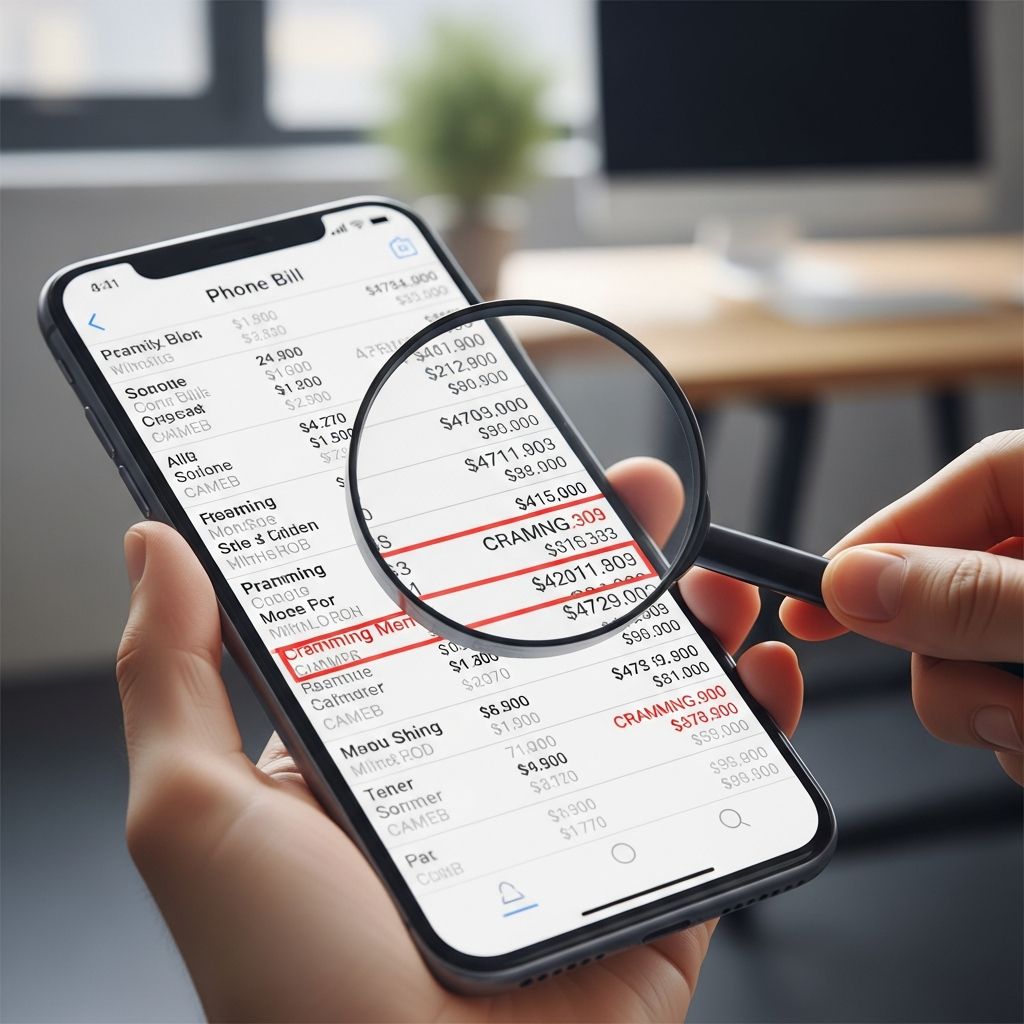
Many people pay their phone bills without closely reading every line item. That inattention gives scammers and dishonest companies an opening: they slip small, unauthorized charges onto accounts, hoping you will never notice. This practice, commonly called cramming, can cost consumers significant money over time and can be difficult to unravel if you do not understand how it works.
This guide explains what cramming is, why it happens, how to read your bill for red flags, how to challenge unauthorized charges, and practical steps to reduce your risk in the future. It is written for consumers who use mobile, landline, or bundled communications services and want to protect themselves.
Understanding Cramming: What It Is and Why It Matters
Cramming is the placement of unauthorized or deceptive charges on your phone bill, often by third-party companies that use your phone account as a payment method without your clear consent. These charges may be for services you never ordered, never used, or did not realize would be billed through your phone provider.
Common examples include:
- Monthly subscriptions for ringtones, games, or entertainment content
- “Premium” text services such as horoscopes or celebrity news alerts
- Technical support or security services that you never actually received
- Voicemail, fax-to-email, or web-hosting add-ons billed through your phone line
Telecommunications billing systems can process charges from multiple companies, not just your core phone provider. That structure makes it easier for unwanted fees to slip through unless carriers maintain robust screening and consumers stay vigilant.
How Cramming Schemes Typically Work
There is no single method behind cramming, but many schemes follow recognizable patterns. Understanding these patterns helps you recognize when your own account may be at risk.
Common Paths to Unauthorized Charges
- Misleading online offers: You may enter a contest, download an app, or claim a “free” trial that quietly enrolls you in a paid service billed via your phone account.
- Deceptive text message opt-ins: Responding to a text message or clicking a link can be treated as consent to recurring premium SMS charges.
- Sales calls with buried disclosures: Telemarketers may rush through disclosures or imply that a service is free, then arrange to bill it through your phone provider.
- Prechecked boxes or fine print: Online forms may include prechecked boxes authorizing billing to your phone number, disclosed only in dense terms and conditions.
- Pure fraud: In some cases, your number is used without any interaction from you at all, relying on the fact that many consumers will not scrutinize small, recurring charges.
Why Small Charges Are So Common
Cramming charges are often intentionally small—anywhere from a few dollars to around twenty dollars a month. The strategy is simple: a low amount looks trivial on a multi-page bill and is less likely to prompt an immediate complaint, especially if the label sounds vaguely legitimate or technical.
Over months or years, however, repeated small charges can add up to a substantial loss. Regulators have documented cases where cramming victims paid hundreds of dollars for services they never ordered or used.
Reading Your Phone Bill Like a Pro
One of the most effective defenses against cramming is cultivating the habit of methodically reviewing each bill. Whether you receive a paper statement or use an online account, set aside time each month to go through the details.
Key Sections of a Typical Phone Bill
| Bill Section | What It Usually Contains | Potential Cramming Red Flags |
|---|---|---|
| Account Summary | Total amount due, previous balance, payments received | Unexpected increase in total charges without a change in your plan |
| Service Plan & Taxes | Core voice, data, and text plan; government taxes and regulatory fees | New plan components or add-on services you did not request |
| Third-Party or “Other” Charges | Charges from companies other than your primary carrier | Unfamiliar company names, vague service descriptions, recurring monthly fees |
| Usage Details | Per-call or per-text breakdown, data usage | Premium SMS charges, short code numbers, or content fees |
Warning Signs to Watch For
- Company names you do not recognize listed separately from your carrier
- Descriptions that sound generic, such as “monthly service fee” or “member program”
- Recurring charges that appear month after month without a clear explanation
- Premium text message fees (often tied to short-code numbers, such as 5- or 6-digit senders)
- Services no one in your household recalls ordering, especially if multiple lines share the same account
If you see any of these signs, treat the charge as suspicious until you can confirm that it is legitimate and authorized.
Steps to Take When You Find a Suspicious Charge
If you spot a charge you do not recognize, act quickly. The longer cramming continues, the harder it can be to recover all the money.
1. Verify the Source and Nature of the Charge
- Check whether the charge is labeled as coming from a third-party provider rather than your phone company.
- Search online for the company name along with words like “complaint” or “scam” to see if others have reported similar issues.
- Ask other users on your account (family members, employees) whether they enrolled in any new services or responded to text offers.
2. Contact Your Phone Company First
Your phone provider controls billing and can be your most direct point of help. When you call customer service:
- State that you are disputing an unauthorized charge and believe you may be a victim of cramming.
- Ask the representative to explain the charge and identify the third-party provider involved.
- Request that the charge be removed or reversed and that any related recurring service be cancelled.
- Ask whether the company can block future third-party charges on your account, if that is an option.
Telecommunications regulators have encouraged carriers to improve their handling of unauthorized charges, including clearer bill formats and more responsive dispute procedures. If the first representative is unhelpful, escalate to a supervisor.
3. Follow Up with the Third-Party Company (If Necessary)
In some cases, your carrier may direct you to the company that initiated the charge. If you contact that business:
- State clearly that you never authorized the service or that any consent was obtained through misleading practices.
- Ask for a full refund of all charges applied to your phone bill.
- Request written confirmation that the subscription or service has been cancelled.
- Write down the date, time, and name of the person you spoke with and keep copies of any emails or letters.
4. Put Your Dispute in Writing
For significant amounts or ongoing problems, consider sending a brief written dispute (by email, secure message, or mail) to your carrier. A written record:
- Clarifies the timeline of events
- Documents exactly which charges you dispute and why
- Shows that you raised the issue promptly
Include your account number, billing period, the specific line items you challenge, and a statement that you did not authorize those services.
5. Escalate to Regulators or Consumer Advocates if Needed
If the company does not resolve the issue or continues to bill you for unauthorized services, you can file complaints with:
- The Federal Trade Commission (FTC), which enforces federal laws against unfair or deceptive practices.
- The Federal Communications Commission (FCC), which regulates many aspects of telecommunications billing and consumer protections.
- Your state consumer protection or attorney general’s office, which may enforce state laws against deceptive billing.
Regulatory complaints not only may help in your individual case but also support broader investigations and enforcement actions against repeat offenders.
Preventing Future Cramming on Your Account
While no method can guarantee you will never face an unauthorized charge, there are practical steps that make you a much harder target.
Ask Your Carrier About Blocking Options
Many phone companies allow customers to block certain types of third-party charges altogether or limit who can authorize new billable services. Ask your carrier whether it offers:
- A global block on third-party billing
- Restrictions on premium SMS or content subscriptions
- Account-level controls for lines used by children or employees
Rules and offerings can vary by provider, but regulators have encouraged carriers to give consumers more control and transparency around third-party billing.
Be Skeptical of “Free” Offers and Trials
- Read the full terms and conditions before entering your phone number into contests, downloads, or sign-up forms.
- Look specifically for language that mentions billing to your mobile or phone account or recurring subscription fees.
- Avoid offers that rely on prechecked boxes or do not clearly explain how you will be billed.
Secure Access to Your Phone Number
- Do not share verification codes or one-time passwords with anyone claiming to need them to ”confirm” a service.
- Teach children and other account users not to approve app permissions, popups, or texts that mention added charges or subscriptions.
- Use strong credentials and two-factor authentication on your carrier’s online account portal to prevent unauthorized changes.
Make Bill Review a Monthly Habit
Set a recurring reminder each month to:
- View the full, itemized version of your bill—not just the total.
- Scan for new or changed charges compared with previous months.
- Question anything that is not crystal clear; legitimate businesses should be able to explain every line item.
How Regulators and Laws Help Protect You
U.S. consumer protection agencies and telecommunications regulators have brought enforcement actions against carriers and third-party billing companies for allowing or facilitating cramming. These actions have led to settlements, refunds, and new requirements intended to reduce the risk to consumers.
Key Protections and Industry Expectations
- Clearer billing descriptions: Carriers are expected to present charges in a way that helps consumers recognize who is billing them and for what service.
- Improved consent standards: Companies offering services billed through phone accounts must obtain express and informed authorization, not rely on vague or prechecked consents.
- Dispute and refund procedures: Providers are under pressure to respond promptly and fairly when consumers challenge unauthorized charges.
- Enforcement actions and restitution: The FTC, FCC, and state authorities regularly publicize cases where consumers receive redress after widespread cramming abuses are uncovered.
These protections are not a substitute for vigilance, but they do mean that you have legal rights and potential remedies when cramming occurs.
Frequently Asked Questions (FAQs)
Q: How do I know if a small charge is cramming or a legitimate fee?
Start by checking whether you recognize the company name and service description. Compare this month’s bill with previous ones to see if the charge is new. If no one on your account can explain what the service is, treat it as suspicious and contact your carrier to verify its source.
Q: Can my phone company refuse to remove an unauthorized charge?
Phone companies sometimes argue that a third party obtained your consent, especially if there is a record of a text exchange or online sign-up. If they refuse to remove a charge you genuinely did not authorize, escalate the issue within the company and consider filing complaints with the FTC, FCC, and your state consumer protection agency.
Q: Will disputing a cramming charge affect my phone service?
You are generally responsible for paying the undisputed portion of your bill to avoid service interruption. Explain to your provider that you are paying all legitimate charges but are withholding or disputing specific line items you believe are unauthorized.
Q: Is cramming limited to mobile phones?
No. Cramming has appeared on traditional landline bills and on bundled service invoices that combine phone, internet, and television. Any communications account that can receive third-party billing is a potential target, so the same precautions apply.
Q: Should I change my phone number if I’ve been crammed?
Usually you do not need to change your number. It is more effective to cancel the unauthorized service, request a block on third-party billing or premium content charges, and monitor your bill closely for several months to confirm that no new suspicious charges appear.
References
- Rules — Federal Trade Commission. 2025-10-01. https://www.ftc.gov/legal-library/browse/rules
- Bureau of Consumer Protection — Federal Trade Commission. 2024-11-15. https://www.ftc.gov/about-ftc/bureaus-offices/bureau-consumer-protection
- Consumer Protection Laws and Regulations USA 2025 — ICLG. 2025-04-09. https://iclg.com/practice-areas/consumer-protection-laws-and-regulations/usa
- Rules & Regulations: Telephone Billing Practices — Federal Communications Commission. 2024-06-20. https://www.fcc.gov/consumers/guides/telephone-billing-practices
- Consumer Protection — Federal Trade Commission. 2025-05-30. https://www.ftc.gov/consumer-protection
Similar Articles








Read full bio of Sneha Tete


