
How to Spot Fake U.S. Customs and Border Protection Calls
Learn to recognize, avoid, and report CBP impostor phone scams before they steal your money or your identity.
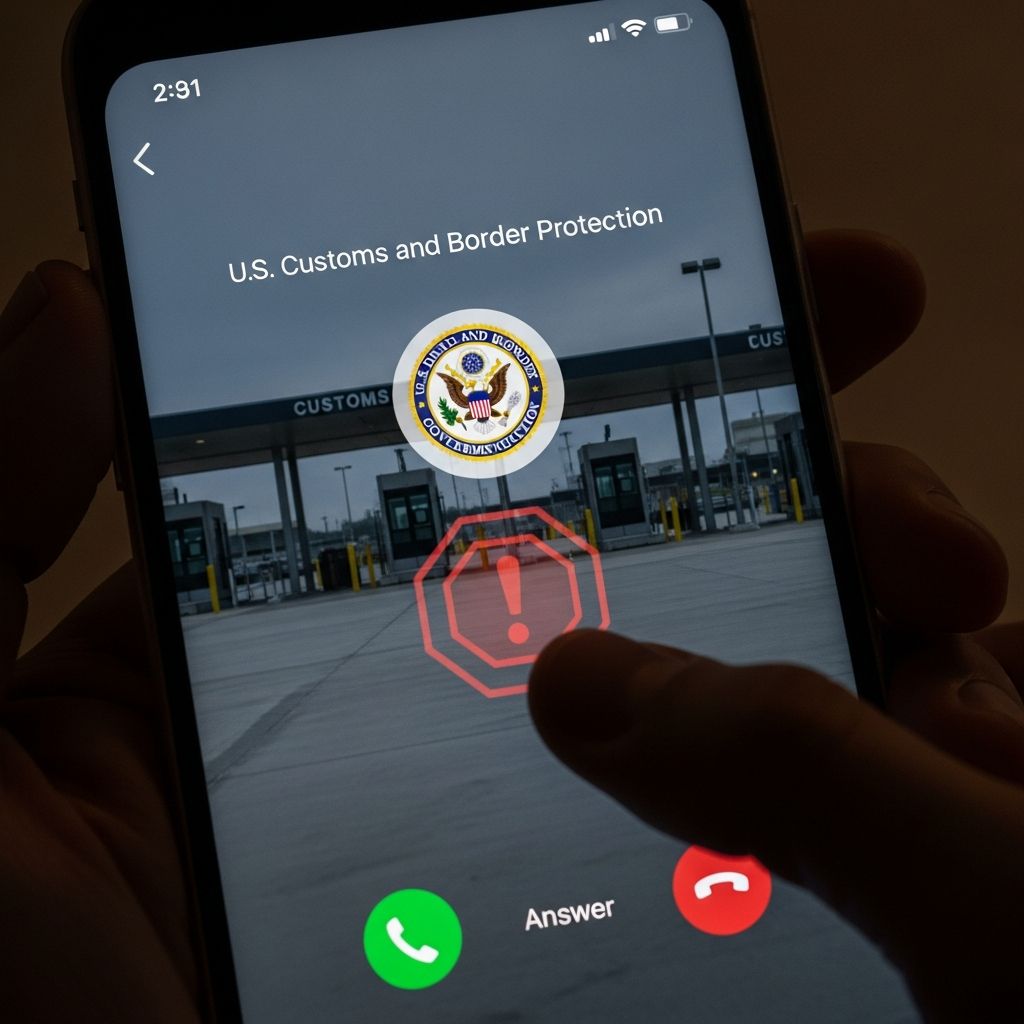
Scammers are increasingly pretending to be from U.S. Customs and Border Protection (CBP) to frighten people into sending money or handing over sensitive personal information. These schemes often use convincing stories about seized packages, legal trouble, or immigration issues to pressure you into acting fast. Understanding how these scams work is the first step to staying safe.
Why Criminals Impersonate Government Agencies
Impostor scams are among the most costly and common types of fraud reported to U.S. authorities. Scammers know that when people believe they are dealing with a government official, they are more likely to comply with demands and less likely to question unusual requests.
Fraudsters pretend to be from agencies such as:
- U.S. Customs and Border Protection (CBP)
- U.S. Marshals Service or FBI
- Social Security Administration or immigration agencies
- State Department visa offices and lottery programs
These calls, texts, and emails are not about real government business. Their only goal is to extract money or data from you.
How CBP Impostor Scams Typically Work
While scammers constantly change the details of their stories, CBP impostor schemes tend to follow a similar pattern.
Common Storylines Used by Scammers
In a typical CBP impostor fraud, you might encounter one or more of these narratives:
- Seized package in your name – A recorded or live caller claims that a package addressed to you contains illegal drugs, fake documents, or other contraband and has been intercepted by CBP.
- Suspicious cross-border activity – The caller insists that your identity is tied to bank accounts sending money overseas, or to property near the border that is involved in crime.
- Arrest warrant or immigration violation – The scammer warns that you or your family face arrest, deportation, or visa cancellation unless you immediately follow instructions.
- Diplomatic pouch or official courier – The fraudster references a “diplomatic pouch” or confidential shipment to make the story sound more official.
After creating a sense of danger, the impostor quickly moves to demands.
Red-Flag Payment Demands
Once you are frightened, the caller will push you to resolve the supposed problem by paying a “fine,” “bond,” or “fee.” According to federal agencies, real officers never ask for payment in the ways scammers do.
- Directions to buy gift cards or prepaid cards (for example, popular retail or reloadable cards) and read the numbers over the phone.
- Requests for cryptocurrency payments, often insisting you use a bitcoin or crypto ATM.
- Instructions to send wire transfers or deposit cash into accounts the caller controls.
- Pressure to share bank account, credit card, or Social Security numbers to “verify your identity” or “protect your assets.”
Any such demand linked to an unexpected government call is a strong sign of a scam.
Key Warning Signs of a Fake CBP Contact
Genuine CBP officers do not conduct investigations by threatening you over the phone or demanding immediate payment. Use the following checklist when you receive any unexpected call claiming to be from CBP or another law enforcement agency.
| Warning Sign | Why It Indicates a Scam |
|---|---|
| Unsolicited call or recorded message about a seized package or warrant | Legitimate agencies typically send official letters or use formal channels, not robocalls. |
| Threats of immediate arrest, deportation, or legal action | Scammers use fear to rush you into poor decisions; real investigations follow due process. |
| Demands for payment via gift cards, crypto, or wire transfer | Federal agencies state they never collect money through these methods. |
| Pressure to act right now and keep the call secret | Urgency and secrecy are classic fraud techniques to keep you from confirming the story. |
| Requests for full Social Security number, bank login, or card details by phone | Government officers do not need this information to start a case and will not ask for passwords. |
| Caller ID appears as a real government office but something feels off | Fraudsters can spoof caller ID to display official-looking numbers and names. |
How Real CBP and Other Agencies Communicate
Knowing what legitimate contact from a government agency looks like can help you dismiss impostors quickly.
- No surprise threats: CBP and similar agencies do not randomly call to threaten arrest or demand instant decisions over the phone.
- No payment by gift card, crypto, or prepaid debit: The U.S. Marshals Service, FBI, and other federal bodies explicitly warn that they will never request these forms of payment for any purpose.
- Official contact details: Real officers direct you to contact a publicly listed government phone number or address, not one only they provide.
- Formal documentation: Genuine cases typically involve written notices, case numbers, and verifiable paperwork, not just a phone conversation.
Immediate Steps to Take if You Receive a Suspicious Call
When a call feels off, you are allowed to hang up, slow down, and verify. Taking a few minutes to check can save you from losing thousands of dollars.
1. End the Conversation Safely
- Stay calm, refuse to give any information, and hang up.
- Do not press phone menu options or call back numbers given in the message.
- If you are unsure whether it is safe to hang up, remember: real officers will never punish you for independently verifying their identity.
2. Verify Using Official Channels
After you hang up, you can check whether any issue is real by independently finding contact information:
- Use a search engine to find the official CBP website and contact page.
- Call publicly listed numbers for CBP, the U.S. Marshals Service, or other named agencies—not the numbers from the caller ID or voicemail.
- If the message involves visas or the Diversity Visa Lottery, consult the official U.S. State Department resources.
3. Protect Your Accounts and Identity
If you shared money or personal information before realizing it was a scam:
- Contact your bank or card issuer immediately to report unauthorized transactions and ask about fraud protections.
- Consider placing a fraud alert or credit freeze with credit reporting agencies if your Social Security number or other key details were exposed.
- Monitor your financial statements and credit reports for signs of new accounts or unexplained charges.
How to Report CBP Impostor Scams
Reporting scams helps authorities track patterns, warn the public, and sometimes stop ongoing operations.
- File a report with the Federal Trade Commission (FTC) through its official fraud reporting portal.
- If the scammer claimed to be a law enforcement officer such as a U.S. Marshal or FBI agent, notify your local FBI office as well.
- Share information with your local police if you have lost money or feel at risk.
- Tell friends, family, and coworkers about the scam so they know what to watch for—many fraud attempts reuse the same scripts.
Special Risks for Immigrants, Students, and Travelers
Scammers often target people who may be unfamiliar with U.S. procedures or who fear jeopardizing their immigration status. Understanding your rights can reduce that fear.
- International students and visitors may receive fake calls claiming they violated immigration rules or failed to pay a mandatory fee.
- Diversity Visa applicants can be hit with fraudulent emails asking for advance payments to secure or speed up their selection.
- Newcomers might not realize that genuine immigration and border agencies do not demand immediate payment by phone in order to avoid deportation.
If you are not sure whether an immigration or border-related message is legitimate, contact the official agency directly using information from a .gov website or your school’s international office.
Practical Safety Checklist
Use this quick-reference checklist whenever you face a suspicious government-related call or email.
- Pause – Do not respond immediately, no matter how urgent the message sounds.
- Refuse unusual payments – Never pay with gift cards, crypto, wire transfers, or prepaid debit cards for any supposed government fee.
- Guard personal data – Do not share your full Social Security number, bank details, or passwords with unsolicited callers.
- Independently verify – Look up the agency’s official contact information and call or email them yourself.
- Document and report – Save voicemails, screenshots, or transaction receipts that could help investigators.
Frequently Asked Questions (FAQs)
Q1: Can CBP legally call me about a case?
CBP may contact individuals in certain circumstances, but they do not demand on-the-spot payment by phone, threaten instant arrest for nonpayment, or require you to buy gift cards or send cryptocurrency. If a caller does any of these things, treat it as a scam and verify using official contact information.
Q2: The caller knew my name and part of my Social Security number. Does that mean the call is real?
No. Scammers often buy or steal personal data from previous breaches and use it to sound convincing. Having some of your information does not make a caller legitimate. Always rely on how they ask you to pay and their behavior, not just the data they know.
Q3: What if the caller ID clearly shows a government number?
Caller ID can be spoofed, meaning scammers can display numbers belonging to real offices. Never trust caller ID alone. Hang up and call the agency back using a phone number you find on a verified .gov website.
Q4: I already sent money. Can I get it back?
Recovery is difficult, especially with gift cards and cryptocurrency, but quick action helps. Contact the company that issued the gift card or your bank, explain that you were scammed, and ask if the transaction can be reversed or blocked. Then report the fraud to the FTC and relevant law enforcement agencies so they can track the scam pattern.
Q5: How can I help others avoid CBP impostor scams?
Share what you have learned with family, neighbors, colleagues, and especially people who are new to the country or less familiar with technology. Encourage them to follow the same rules: never pay with unusual methods, never act under pressure, and always verify independently.
References
- Scammers pretend to be U.S. Customs and Border Protection — Federal Trade Commission. 2022-06-14. https://consumer.ftc.gov/consumer-alerts/2022/06/scammers-pretend-be-us-customs-border-protection
- U.S. Marshals, FBI Urge Public: Report Phone Scams — U.S. Marshals Service. 2020-02-06. https://www.usmarshals.gov/news/press-release/us-marshals-fbi-urge-public-report-phone-scams
- Fraud Warning — U.S. Department of State, Bureau of Consular Affairs. 2022-03-31. https://travel.state.gov/content/travel/en/us-visas/visa-information-resources/fraud.html
- International Scam Awareness — Augusta University Police Department. 2019-10-01. https://www.augusta.edu/police/resources/documents/fraudinternationalstudent.pdf
Similar Articles








Read full bio of medha deb


