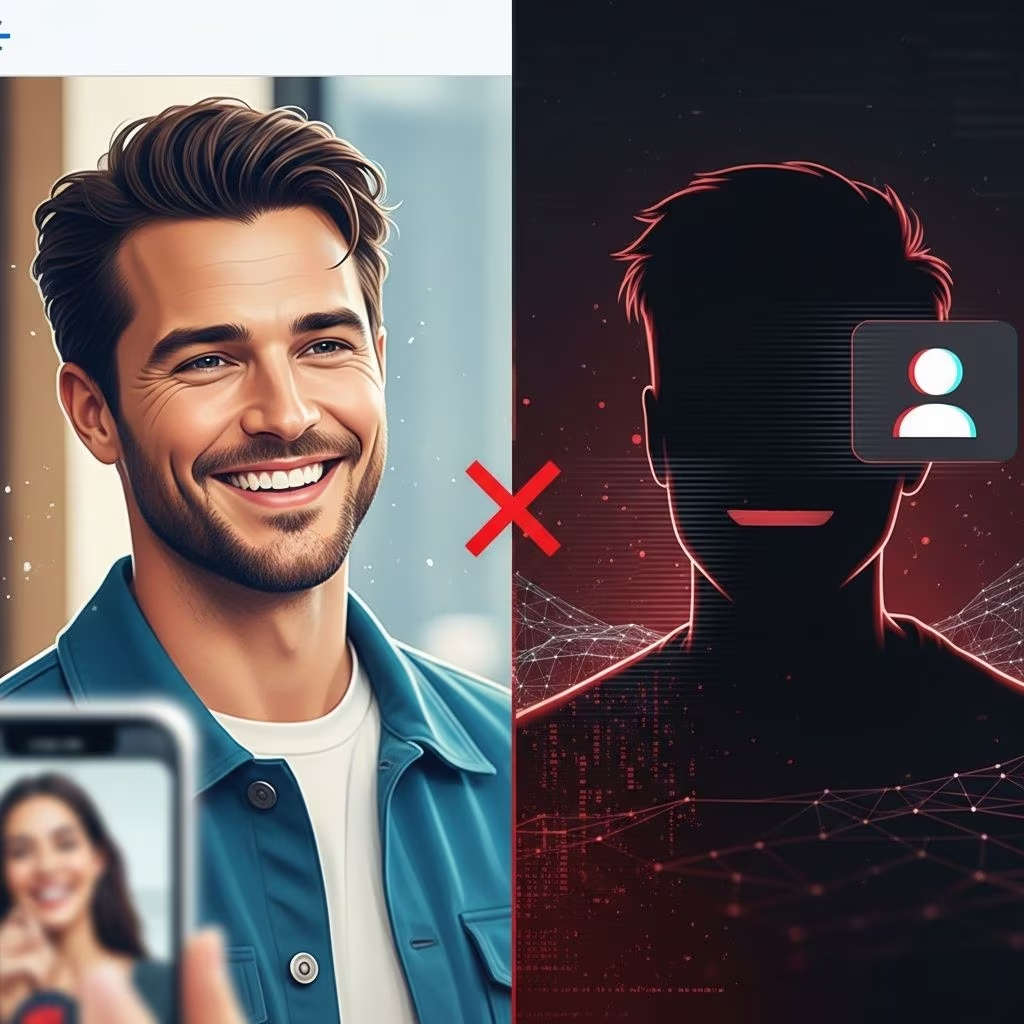
Social media makes it easy to feel close to actors, musicians, influencers, athletes, and other public figures. Unfortunately, scammers exploit that sense of connection by creating fake accounts and pretending to be celebrities. These impersonation scams can lead to financial loss, identity theft, and emotional harm if you are not prepared to recognize the warning signs.
This guide explains how celebrity impersonation scams work, why they are becoming more sophisticated, and the specific steps you can take to protect yourself and your family.
Why Scammers Pretend to Be Celebrities
Criminals impersonate famous people for a simple reason: trust. Fans often feel they know a celebrity personally, even if they have never met. That emotional connection makes it easier for scammers to:
- Convince victims to send money or cryptocurrency.
- Obtain personal information such as addresses, phone numbers, or ID photos.
- Steer people to fake investment platforms or fraudulent websites.
- Harvest login credentials for email, social media, or banking accounts.
Reports of impersonation scams have increased significantly in recent years. The U.S. Federal Trade Commission (FTC) has noted billions in losses from impersonation scams broadly, which now include criminals posing as public figures, business leaders, and government agencies. Older adults are particularly affected, with reports of losses over $10,000 and even $100,000 rising sharply in recent years.
Common Types of Celebrity Impersonation Scams
Although scammers constantly adjust their approaches, most celebrity impersonation schemes fall into several recognizable patterns.
1. Direct Messages from “Official” Celebrity Accounts
One of the most common tactics is a direct message that appears to come from a verified or well-known account. The scammer may claim:
- You won a private contest or giveaway that was not publicly announced.
- The celebrity wants to build a personal friendship or romantic relationship.
- The celebrity needs short-term financial assistance and promises a larger repayment later.
- They are offering exclusive investment opportunities or early access to a new business venture.
These messages often pressure you to move the conversation off the platform to encrypted apps or messaging services, where it is harder for platforms or law enforcement to track the communication.
2. Fake Giveaways, Prizes, and Charity Appeals
Scammers regularly run fake promotions or charity campaigns in a celebrity’s name. You might see:
- Posts saying you won a cash prize or high-value item, but must pay a “processing” or “shipping” fee first.
- Requests for donations to disaster victims, medical emergencies, or social causes supposedly supported by the celebrity.
- Links to external websites that mimic legitimate charities or foundations.
Regulators have warned that deepfake videos and well-designed websites are being used to promote fraudulent investment and donation schemes, often featuring local public figures to appear more believable.
3. Romance and Personal Relationship Scams
Some criminals create long-term scams by pretending to form an emotional bond with victims while posing as a celebrity or other public figure.
- They may spend weeks or months building trust through frequent messages.
- Eventually, they introduce financial emergencies, travel problems, or legal issues and ask you to send money, gift cards, or cryptocurrency.
- The scammer might claim secrecy is necessary due to the celebrity’s public image.
According to state and federal authorities, relationship-based scams tied to public figures can result in particularly large financial and emotional losses for victims.
4. Investment and Cryptocurrency Endorsements
Another fast-growing area involves fake endorsements of investment opportunities, especially in cryptocurrency.
- Ads, videos, or posts claim that a famous actor, entrepreneur, or politician has discovered a “guaranteed” way to make money.
- Deepfake videos can be used to show the celebrity supposedly promoting the opportunity.
- Victims are directed to sign up on unregulated trading platforms or send funds to unknown wallets.
Regulators in multiple countries have issued public warnings about deepfake-based ads that impersonate local public figures to lure investors into fraudulent schemes.
5. Merchandise and Paid Access Scams
Fraudsters also pretend to sell exclusive items or access directly from a celebrity.
- Fake “official” stores offering signed merchandise, meet-and-greet packages, or online events.
- Requests for upfront payment for virtual chats, private fan groups, or VIP experiences.
- Use of counterfeit branding that mimics a legitimate celebrity’s style.
Once payment is sent, the scammer disappears, and the promised merchandise or experience never arrives.
How Scammers Make Fake Accounts Look Real
Modern impersonation schemes blend social engineering and technology to appear convincing, even to experienced internet users.
| Technique | How It Works | What You Might Notice |
|---|---|---|
| Lookalike usernames | Scammers add extra letters, numbers, or symbols to mimic official profiles. | Subtle spelling differences, unusual characters, or extra underscores. |
| Stolen photos and posts | They copy images and text from real accounts to build a credible history. | Recent posts may be duplicated from other pages; no original behind-the-scenes content. |
| Fake engagement | Bots and purchased followers make accounts appear popular. | Large follower counts but repetitive, generic comments like “Nice” or “Great.” |
| Deepfake video and audio | AI tools create realistic videos or voice messages of public figures. | Slightly unnatural speech patterns, strange lighting, or vague references without specifics. |
| Fake support staff | Scammers create accounts claiming to be managers or assistants. | Multiple new accounts connected to the same offer or opportunity. |
Warning Signs That a Celebrity Account May Be Fake
No single sign proves an account is fraudulent, but the more of these red flags you see, the more cautious you should be.
- Unexpected private messages from a celebrity or public figure you have never interacted with before.
- Requests for money, cryptocurrency, gift cards, or prepaid cards for any reason.
- Urgent time pressure such as “limited time only,” “don’t tell anyone,” or “you must act now.”
- Offers that are too good to be true like guaranteed high returns on investments or huge prizes with small upfront fees.
- Moving conversations off the original platform to private messaging apps or email as soon as possible.
- Inconsistent language or grammar that does not match the celebrity’s usual style in public posts.
- No clear verification such as a missing verification badge where the platform normally uses one, or badges that do not behave like official indicators when clicked.
How to Verify if a Celebrity Account Is Genuine
Before responding, sending money, or sharing personal information, take these steps to check whether an account is legitimate.
1. Start from an Independent Search
Rather than trusting a link sent in a message, independently search for the celebrity’s official website or main social media profiles:
- Use search engines to find the person’s verified pages.
- Look for links from official websites or known organizations.
- Compare usernames and profile photos across platforms for consistency.
2. Check Platform Verification and Profile Details
Most major platforms use verification markers or labels, but those are not infallible. You should also:
- Open the profile and review older posts, not just recent activity.
- Check whether major announcements and promotions appear consistently across platforms.
- Look for links from the celebrity’s official website to their social media.
Consumer advocates and regulators warn that AI-generated content can make fake endorsements seem more trustworthy, so verification marks should be only one part of your evaluation.
3. Confirm Charity or Investment Claims Through Official Channels
If a message mentions:
- Donations to a charity
- New investment platforms or crypto opportunities
- Exclusive business partnerships
take time to confirm details:
- Visit the charity’s official site and verify the campaign is listed there.
- Check whether regulators, such as financial markets authorities or consumer protection agencies, have issued warnings about the promotion.
- Search for the investment firm in official registers or licensing databases.
4. Ask Yourself Key Safety Questions
Before taking any action, pause and consider:
- Have I ever heard of this contest, giveaway, or campaign before this message?
- Is the request for money or personal data reasonable for a public figure?
- Have I talked to trusted friends or family about this contact?
If something feels off, assume it is a scam until you can verify otherwise using trusted independent sources.
Steps to Take If You Are Targeted
If a suspicious account contacts you, or if you realize you have already engaged with a scammer, acting quickly can limit the damage.
1. Stop All Communication
- Do not reply to messages, even to confront or insult the scammer.
- Block the account directly on the platform.
- Avoid clicking any links or downloading files you were sent.
2. Protect Your Accounts and Financial Information
- Change passwords for email, social media, and any accounts you mentioned in messages.
- Turn on multi-factor authentication (MFA) wherever possible.
- Contact your bank or card issuer if you shared payment information and ask about stopping or reversing transactions.
If cryptocurrency was involved, report the transaction details to the platform used and to relevant authorities. While crypto payments are often hard to reverse, early reports help enforcement and may protect others.
3. Report the Scam
Reporting helps platforms and authorities spot new patterns and take down fraudulent accounts more quickly. You can:
- Use the in-app reporting tools on the social media platform where the scam occurred.
- Submit a report to national consumer protection agencies or fraud reporting centers.
- Notify local law enforcement if you have lost significant money or been threatened.
Agencies such as the FTC in the United States and financial regulators in other countries encourage consumers to report impersonation scams so they can issue warnings and improve enforcement.
4. Preserve Evidence
- Take screenshots of messages, profiles, and transaction confirmations.
- Save email headers or chat logs if possible.
- Document dates, times, and amounts sent.
Do not delete everything immediately; evidence is important for investigations and may be useful if you seek help from consumer organizations or law enforcement.
Protecting Yourself and Loved Ones Over the Long Term
Scams evolve, but a few ongoing habits can significantly reduce your risk.
- Talk openly about scams with family members, including older relatives and teenagers who follow influencers and celebrities closely.
- Be skeptical of unexpected offers and emotional appeals, especially those involving emergencies, secret relationships, or guaranteed profits.
- Review privacy settings on your accounts to limit what scammers can learn from your public posts.
- Stay informed by checking consumer alerts and scam warnings from government agencies and reputable organizations.
Frequently Asked Questions (FAQs)
Q: Can a real celebrity ever contact me directly?
A: In rare cases, public figures may respond to fans, but they typically do not ask individuals for money, financial details, or personal identification. Treat any such requests as suspicious, even if they appear to come from a verified account.
Q: Are deepfake videos always a sign of a scam?
A: Not necessarily, but deepfake technology is increasingly used to create fake endorsements and investment promotions. If a video encourages you to invest quickly, send money, or share sensitive data, verify the message through official channels before acting.
Q: What should I do if I already sent money to a scammer?
A: Contact your bank, card issuer, or payment service immediately to report the fraud and ask whether any transactions can be reversed. Then change your passwords, enable multi-factor authentication, and report the incident to the platform and relevant consumer protection agencies.
Q: How can older adults protect themselves from these scams?
A: Family members can help by explaining how impersonation scams work, reviewing privacy settings, and encouraging older adults to consult someone they trust before sending money or personal information to anyone online. Research shows that older adults have suffered rising losses from impersonation scams, making prevention conversations especially important.
Q: Is it safe to participate in celebrity giveaways?
A: Some giveaways are legitimate, but you should only join ones promoted on the celebrity’s official website or main verified profiles. Never pay fees to claim prizes, and avoid contests that require excessive personal data or direct messages with unknown accounts.
References
- Fake celebrity accounts have targeted one in three fans — ClarityCheck survey via Cooperative Agency. 2024-06-18. https://cooperative-agency.prowly.com/433536-fake-celebrity-accounts-have-targeted-one-in-three-fans
- How Scammers Use Celebrity Impersonation to Target Social Media Users — Carden IT Services. 2024-03-05. https://cardenitservices.com/how-scammers-use-celebrity-impersonation-to-target-social-media-users/
- How sophisticated impersonation scams target content creators and their communities — Heimdal Security. 2025-02-10. https://heimdalsecurity.com/blog/digital-doppelgangers-impersonation-scams/
- Surge of impersonator social media investment scams prompts FMA warning updates — Financial Markets Authority New Zealand. 2025-07-04. https://www.fma.govt.nz/news/all-releases/media-releases/surge-of-impersonator-social-media-investment-scams/
- AG Nessel Warns Consumers About Rise in Celebrity Impersonation Scams — Michigan Attorney General. 2025-05-12. https://www.michigan.gov/ag/news/press-releases/2025/05/12/ag-nessel-warns-consumers-about-rise-in-celebrity-impersonation-scams
- Fraud Alert: Celebrity Scams in the Age of AI — AARP. 2024-04-03. https://states.aarp.org/north-dakota/celebrity-scams-ai
- Scam Alert: Celebrity impersonations get more sophisticated with AI technology — Better Business Bureau. 2023-10-05. https://www.bbb.org/article/scams/18549-scam-alert-celebrity-impersonations-get-more-sophisticated-with-ai-technology
- AI Is Being Used to Impersonate People You Trust — IDX / ZeroFox. 2023-06-07. https://www.idx.us/knowledge-center/ai-is-being-used-to-impersonate-people-you-trust