
Social Media in Jury Selection: Legal and Ethical Guide
Unlock juror insights ethically using social media in trials without crossing legal boundaries or risking sanctions.
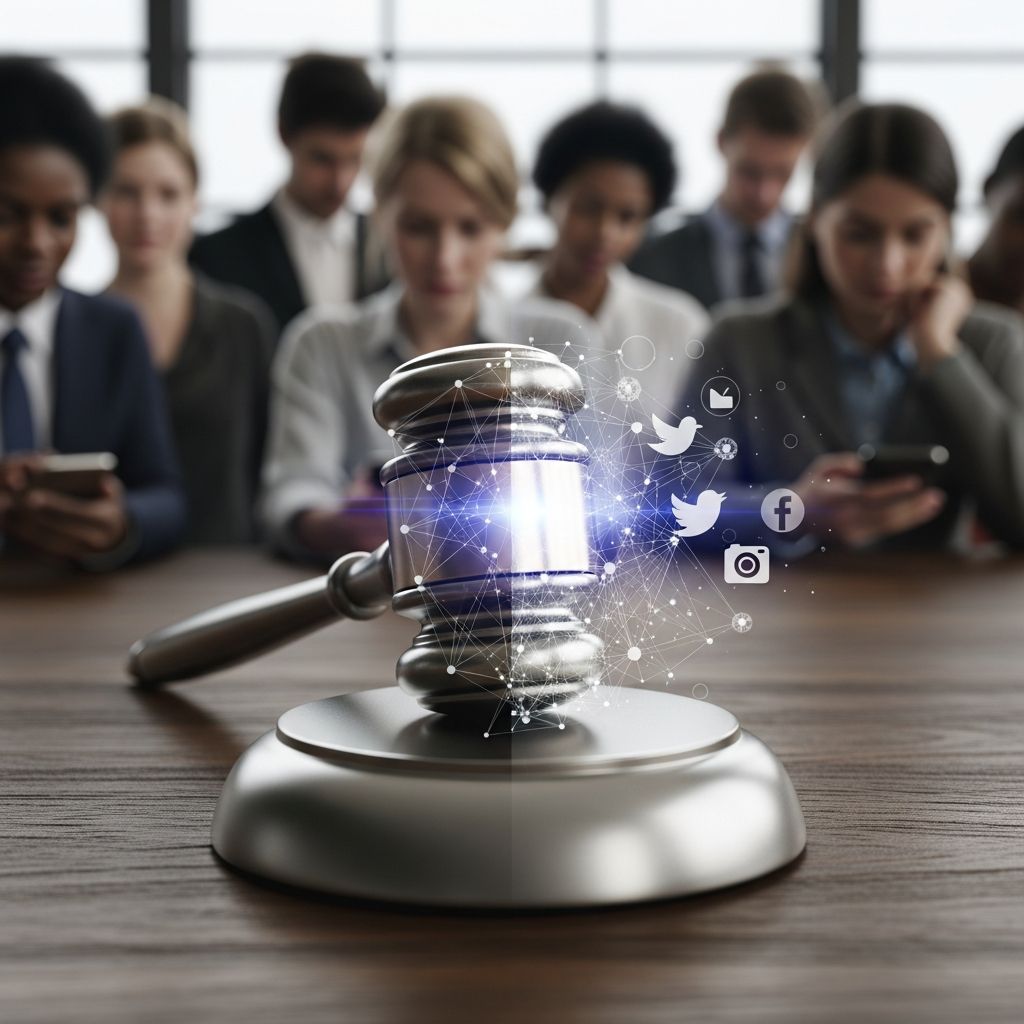
Social media platforms have transformed how attorneys approach jury selection, offering unprecedented access to potential jurors’ public opinions, backgrounds, and biases. When used correctly, this tool enhances voir dire by revealing information not surfaced in questionnaires or courtroom questioning. However, strict ethical boundaries must be observed to avoid violations that could jeopardize a case.
Why Social Media Matters in Modern Jury Selection
Jury selection, or voir dire, remains a cornerstone of trial strategy, where attorneys identify and challenge jurors who might harbor prejudices against their client’s position. Traditional methods rely on verbal responses and written forms, but these often fall short in capturing true sentiments. Social media fills this gap by providing a digital trail of real-time thoughts on politics, corporations, science, and personal experiences.
Public posts can signal attitudes toward key case elements, such as skepticism of expert witnesses in medical malpractice suits or disdain for law enforcement in criminal defenses. Attorneys gain a fuller picture, enabling smarter peremptory strikes or challenges for cause. This practice is not only permissible but increasingly standard in high-stakes litigation.
Ethical Foundations: What the Rules Permit
The American Bar Association’s Formal Opinion 466 establishes the benchmark: attorneys may passively review publicly available social media content without ethical breach. This is analogous to checking public records or observing a juror’s neighborhood—information freely accessible to anyone.
Key permissions include:
- Viewing profiles on platforms like Facebook, Instagram, Twitter, or LinkedIn if no login or privacy bypass is required.
- Analyzing posts, shares, likes, and comments visible to the public.
- Using this data to inform voir dire questions or strike decisions.
Prohibitions are equally clear:
- No friend requests, follows, likes, or messages—these constitute improper ex parte communication.
- Avoid accessing private content, even inadvertently, through third parties or tools that trigger notifications.
- Do not circumvent privacy settings or use fake accounts.
Local rules vary; for instance, some jurisdictions scrutinize real-time laptop use during voir dire to prevent unfair advantages. Always consult court-specific guidelines and opposing counsel disclosures if required.
Practical Steps for Effective Juror Research
To maximize value while minimizing risks, follow a systematic process:
- Pre-Trial Preparation: Compile juror names, ages, and locations from summons lists. Use search engines with exact name matches plus city/state filters.
- Verification Protocol: Confirm identities via profile photos, employment details, family mentions, or linked accounts. Misidentification is a common pitfall—cross-check multiple sources.
- Data Extraction: Note relevant posts on case themes (e.g., anti-corporate rants in product liability cases). Screenshot with timestamps for records.
- Team Coordination: Designate trained staff for research; attorneys supervise to ensure compliance.
- Documentation: Log findings without storing private data post-selection.
Tools like basic search functions suffice; avoid paid investigators unless they adhere to ethics rules. Time this outside court to sidestep judicial bans on devices during proceedings.
Real-World Applications and Case Studies
Social media insights have swayed outcomes in diverse trials. In a complex toxic tort defense relying on scientific experts, attorneys identified a juror sharing pro-science literacy content. This led to favoring their inclusion, bolstering the defense narrative.
Conversely, another panelist reposted anti-pharma material, revealing bias uncovered only online. A peremptory strike removed them efficiently. These decisions sharpened strategy beyond voir dire limits.
In a personal injury matter, a juror’s questionnaire denied prior lawsuits, but LinkedIn and Facebook posts contradicted this, confirming a past claim via public court records. Challenged for cause, they were excused, preventing potential prejudice.
| Case Type | Social Media Discovery | Outcome |
|———–|———————–|———|
| Toxic Tort | Pro-science posts | Juror retained |
| Toxic Tort | Anti-corporate shares | Peremptory strike |
| Personal Injury | Undisclosed lawsuit history | Removed for cause |
| Criminal | Jury duty mockery on Twitter | Reported as misconduct |
These examples illustrate social media’s power as a supplementary intelligence layer, not a standalone oracle.
Navigating Risks and Common Pitfalls
Despite benefits, pitfalls abound. Platforms may notify users of profile views, potentially alerting jurors and mimicking communication—a gray area in some opinions. The New York City Bar Association once cautioned that such notifications could violate ex parte rules if foreseen.
Overinterpretation risks exist: a like on a political meme might not equate to unwavering bias. Contextualize with full profiles and voir dire probing. Ethical lapses invite sanctions, mistrials, or bar complaints.
Juror misconduct discovery triggers duties: report public posts seeking outside input or mocking proceedings to the judge immediately. Failure risks waiving objections or complicity claims.
Privacy evolution complicates matters; what’s public today may lock tomorrow. Regularly update strategies amid platform changes.
Integrating Social Media with Broader Voir Dire Tactics
Treat online research as one tool in a toolkit including mock trials, analytics software, and psychological profiling. Combine with:
- Targeted Questioning: Phrase voir dire to elicit confirmations of online sentiments indirectly.
- Jury Consultants: Experts synthesize digital and behavioral data for holistic profiles.
- Analytics: Software flags bias patterns across pools.
This multifaceted approach yields superior results, reducing reliance on any single method.
Future Trends in Digital Jury Intelligence
As social media saturates daily life, its role in trials will expand. Emerging platforms like TikTok and Discord offer fresh veins of data, demanding updated ethics. AI-driven analysis may soon scan vast profiles for sentiment, but human oversight remains essential to avoid errors.
Courts increasingly address digital issues: model instructions ban juror posting, with violations prompting mistrials as in Arkansas’ Dimas-Martinez case, where Facebook musings voided a conviction. Expect stricter local rules and tech-neutral policies.
Frequently Asked Questions
Is passive viewing of juror social media ethical?
Yes, limited to public content without interaction, per ABA Formal Opinion 466.
Can online findings support challenges for cause?
Absolutely, especially for undisclosed facts like prior lawsuits or overt bias.
What if a platform notifies the juror of my view?
Choose platforms without view notifications or proceed cautiously; some ethics opinions flag this as risky.
Must I disclose social media research to the court?
Generally no, unless local rules require or misconduct is found—then report promptly.
How do I avoid misidentifying jurors?
Verify with multiple identifiers: photos, locations, jobs, connections.
What about juror social media use during trial?
Monitor public posts for misconduct (e.g., deliberations leaks) and notify the judge.
This comprehensive guide equips attorneys to harness social media ethically, sharpening jury selection for better trial outcomes. Stay vigilant on evolving rules to maintain an edge.
References
- The Ethics & Practice of Jury Selection Social Media Research — JD Supra. 2023-10-12. https://www.jdsupra.com/legalnews/the-ethics-practice-of-jury-selection-8642323/
- Is It Ethical to Research Jurors Online during Jury Selection? — IMS Legal Strategies. 2022-05-15. https://imslegal.com/articles/ethical-research-jurors-online
- The Social Courtroom: Using Social Media in Jury Selection — Cowles Thompson. 2024-01-08. https://www.cowlesthompson.com/resources/practice/commercial-litigation/the-social-courtroom-how-social-media-is-used-to-gain-insight-into-jurors/
- Juries and Social Networking Sites — Cozen O’Connor. 2012-06-20. https://www.cozen.com/templates/media/files/hunt_kint_the%20champion.pdf
- Social Media Use Before and During Trial — Goldberg Segalla. 2023-11-03. https://www.goldbergsegalla.com/blog/professional-liability-matters/technology-2/social-media-use-before-and-during-trial/
Similar Articles








Read full bio of Sneha Tete


