
Social Media Proof in Court: Key Strategies
Master the use of Facebook and social media as powerful courtroom evidence while navigating legal pitfalls effectively.
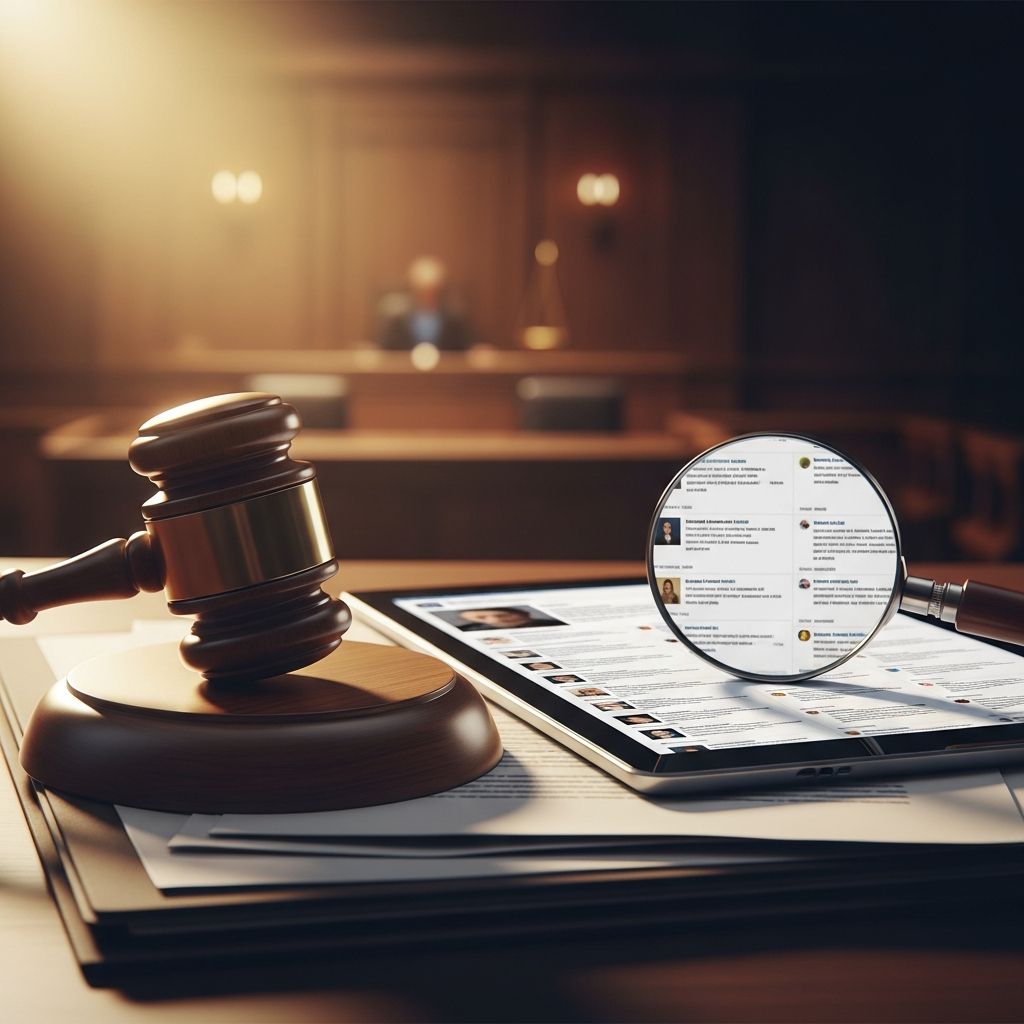
Social media platforms like Facebook have transformed into treasure troves of evidentiary material in modern litigation. Posts, photos, and messages can contradict witness statements, reveal motives, or demonstrate physical capabilities, influencing outcomes in civil and criminal matters alike. Courts increasingly accept this digital content when properly handled, but success hinges on rigorous procedures to ensure reliability.
Why Digital Posts Matter in Legal Disputes
The proliferation of online sharing has made personal lives public records ripe for scrutiny. In personal injury claims, a photo of vacation adventures can undermine assertions of debilitating pain. Criminal defenses benefit from timestamps showing alibis, while family law sees posts exposing inconsistent parenting behaviors. This shift demands attorneys adapt to technology-driven discovery.
- Relevance in Civil Cases: Images contradicting injury severity appear frequently.
- Criminal Applications: Messages establishing intent or connections to crimes.
- Family Proceedings: Evidence of lifestyle impacting custody decisions.
Judges weigh digital evidence alongside traditional proofs, emphasizing its potential to sway juries familiar with these platforms.
Authenticating Online Content for Trial
Authentication proves the evidence originates from the claimed source, a critical hurdle for social media. Courts reject unauthenticated items, as seen in cases where mere screenshots failed without corroboration. Federal Rule of Evidence 901 guides this, requiring sufficient circumstantial evidence.
| Method | Description | Strengths | Example Cases |
|---|---|---|---|
| User Testimony | Witness confirms account ownership and post creation | Direct and simple | Parker v. State |
| Metadata Analysis | Examine timestamps, IP addresses, device info | Technical precision | Tienda v. State |
| Platform Records | Subpoena data from Facebook confirming user | Official verification | Commonwealth v. Mangel (contrast) |
| Circumstantial Links | Profile details matching known facts, photos | Supports other methods | United States v. Vayner |
Combining methods bolsters admissibility, avoiding exclusions like in People v. Kent where a profile nickname alone proved insufficient.
Landmark Rulings Shaping Digital Evidence Use
Courts have issued pivotal decisions clarifying boundaries. In personal injury litigation, Romano v. Steelcase Inc. permitted access to private profiles when claims of confinement clashed with active social depictions. Similarly, Forman v. Henkin affirmed discoverability of non-public posts relevant to injury assessments.
Criminal contexts highlight authentication’s role. The Second Circuit in United States v. Vayner excluded a profile lacking robust ties despite matching photos and employment details. Positive examples include Tienda v. State, admitting messages via contextual and stylistic matches.
- Zimmerman v. Weis Markets: Private posts disproved permanent disability claims.
- McMillen v. Hummingbird Speedway: Fishing trip posts questioned injury extent.
- Sluss v. Commonwealth: Juror Facebook ties led to conviction reversal.
Discovery Tactics for Social Platforms
Obtaining social media demands strategic motions. Plaintiffs face broad requests if defendants show relevance, as in James where drinking photos justified account credentials. Preserve data early via screenshots, downloads, or forensic tools to prevent deletions.
Privacy objections arise, but courts prioritize relevance. Narrow requests to specific timeframes or keywords mitigate overreach. In Smith v. Jarnell, denial stemmed from unsubstantiated relevance claims.
Overcoming Hearsay and Best Evidence Hurdles
Social media often involves out-of-court statements, invoking hearsay rules. Exceptions apply: party-opponent admissions, present sense impressions, or non-hearsay uses like proving state of mind. Profiles themselves may not assert truths, per United States v. Ballesteros. Photos rarely qualify as statements, qualifying under visual exceptions.
Best evidence rule requires originals or duplicates. Screenshots suffice if unaltered, supported by affidavits. Courts favor platform-verified exports.
Criminal Trials and Digital Footprints
Prosecutors leverage posts for gang affiliations, threats, or alibis. Defenses highlight manipulations or hacks. Authentication intensifies here, with IP logs or custodian testimony pivotal. Juror social media use risks mistrials, as in Dimas-Martinez v. State where live-tweeting prompted reversal. Instructions now ban online case discussions.
Civil Litigation Applications
Personal injury dominates, with posts revealing activities belying limitations. Employment disputes use rants evidencing misconduct. Contract cases trace communications. Family courts scrutinize for fitness, though ethical limits apply to friending parties.
Practical Steps for Legal Teams
- Client Advisories: Instruct minimal posting during litigation.
- Preservation Orders: Seek to block deletions.
- Forensic Experts: Engage for extraction and chain-of-custody.
- Motion Practice: Challenge opponent evidence preemptively.
- Trial Presentation: Use enlarged visuals, timelines syncing posts to events.
Frequently Asked Questions (FAQs)
Can private Facebook posts be subpoenaed?
Yes, courts compel production if relevant, overriding privacy settings as in Romano v. Steelcase.
What if someone fakes a profile?
Authentication counters this; lack thereof leads to exclusion, per People v. Kent.
Do screenshots alone work as evidence?
Rarely; pair with testimony or metadata for credibility.
How has social media affected jury trials?
Increased mistrial risks from juror posts, prompting strict rules.
Is social media evidence more common now?
Absolutely, with evolving case law standardizing practices.
Ethical Considerations for Attorneys
Lawyers must avoid unauthorized access or friending under false pretenses, per ABA rules. Real-party monitoring is permissible but disclose if testifying. Advise clients on risks without directing deletions, preserving spoliation defenses.
In summary, social media evidence packs power when wielded correctly, but missteps invite reversals. Mastery requires blending tech savvy with evidentiary rigor.
References
- Social Media as Evidence: A Guide for Personal Injury Victims — Grandelli & Manahan. 2024. https://www.grandellilaw.com/social-media-as-evidence-in-personal-injury-cases/
- How Social Media Evidence Has Changed the Courtroom — Just Magazine. 2025. https://justmag.ca/en-ca/articles/the-art-of-practice/innovation/2025/how-social-media-evidence-has-changed-the-courtroom
- Issues Regarding Social Media Evidence — Curcio Law. 2024-11. https://www.curciolaw.com/wp-content/uploads/2024/11/Admissibility-of-Social-Media-Evidence-at-Trial.pdf
- An Updated Look at Preserving Social Media Evidence for Lawyers — 2Civility. N/A. https://www.2civility.org/an-updated-look-at-preserving-social-media-evidence-for-lawyers/
- Guilty Before Trial: Social Media & Court Cases — The Hill Law Firm. N/A. https://www.hillcriminaldefense.com/guilty-before-trial-social-media-court-cases/
Similar Articles








Read full bio of medha deb


