
Social Media and Court Orders: Legal Risks Exposed
Discover how everyday social media actions like likes, tags, and pokes can lead to serious violations of no-contact and restraining orders.
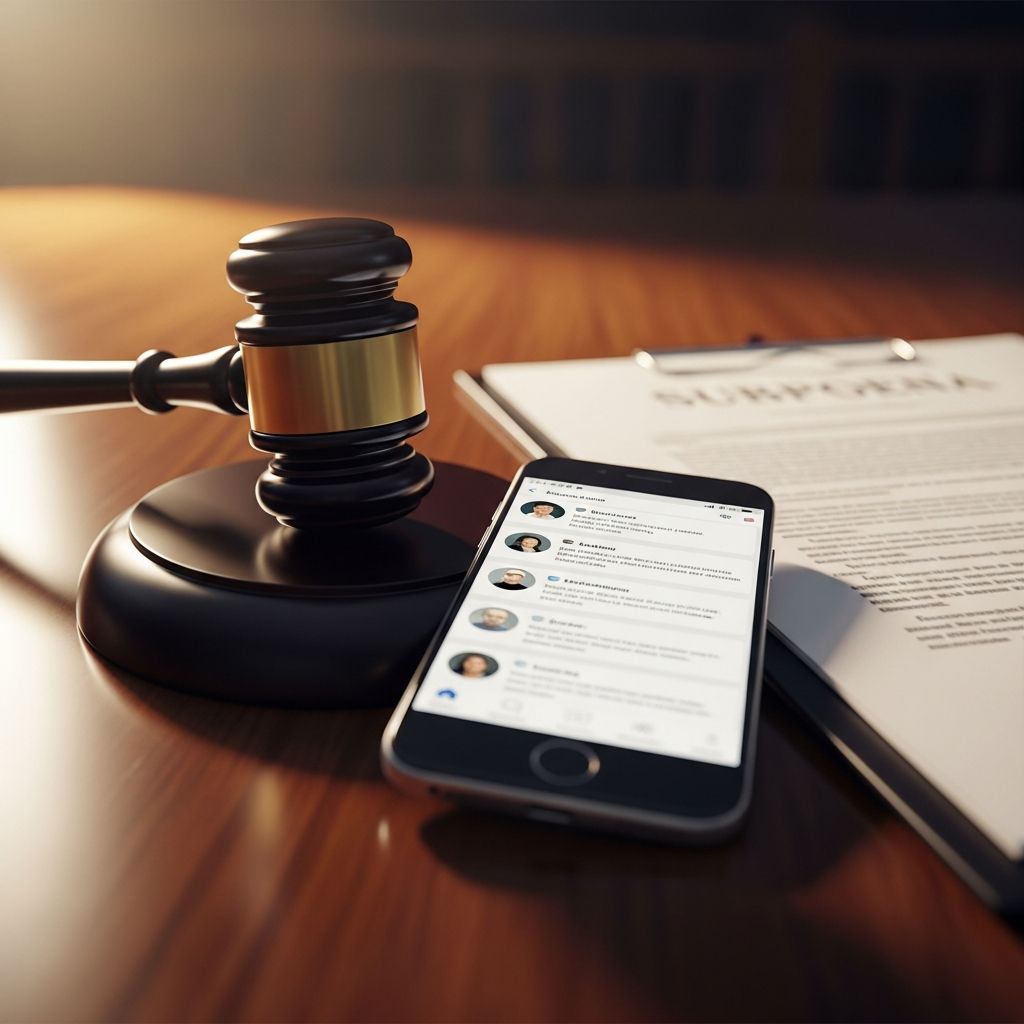
In an era where digital communication dominates daily life, court-issued protective measures like no-contact orders and restraining orders have evolved to encompass online platforms. What might seem like harmless activity—such as liking a photo or tagging a friend—can unexpectedly trigger severe legal consequences. Courts across the United States have consistently ruled that social media interactions constitute forms of communication, broadening the scope of these orders beyond traditional phone calls or in-person meetings.
Defining Key Legal Protections
No-contact orders and restraining orders serve as critical tools to safeguard individuals from harassment, abuse, or threats. A no-contact order typically arises in criminal proceedings, mandating that the subject refrain from any direct or indirect interaction with the protected party. Restraining orders, often civil in nature, impose similar restrictions and may include provisions against approaching within a specified distance or communicating through any medium.
These orders explicitly or implicitly cover “electronic or any other means” of communication, a phrase that courts interpret to include social media. For instance, platforms like Facebook, Instagram, and Twitter (now X) generate notifications that alert the recipient, effectively establishing contact. This interpretation stems from judicial precedents recognizing digital notifications as intentional outreach.
How Social Media Crosses Legal Lines
Social media’s design facilitates easy, instantaneous engagement, but under a court order, these features become potential pitfalls. Common actions that courts have deemed violations include:
- Tagging or mentioning: Directly referencing someone in a post sends a notification, alerting them to your activity.
- Liking posts: Even passive engagement like a ‘like’ can notify the protected person, implying monitoring or attention.
- Friend requests or pokes: These require selecting the individual, constituting deliberate communication attempts.
- Group invites or shares: If targeted or noticeable, they may violate orders, though mass invites to large lists sometimes escape scrutiny if not personalized.
- Indirect posts: Content alluding to the protected party without naming them can still be interpreted as harassment if contextually clear.
Courts emphasize intent and receipt: if the action causes the protected party to receive notice or feel targeted, it risks violation classification.
Real-World Court Cases Highlighting Violations
Judicial rulings provide stark examples of social media’s role in order breaches. In a New York case, a woman tagged her former sister-in-law in derogatory Facebook comments, such as “Stupid” and disparaging family remarks. Despite arguments that tagging wasn’t explicit contact, the judge upheld the violation, citing the order’s ban on “electronic or other means” and referencing notifications as proof of communication. The defendant faced up to one year in jail.
Similarly, in California, courts have addressed ‘pokes’—once a Facebook feature—as targeted interactions. A judge ruled that selecting and ‘poking’ someone intentionally breached an order, distinguishing it from broad group actions. Tagging in photos with insults was also condemned as contact.
Other incidents include a Pennsylvania man arrested for liking 22 photos of his ex-girlfriend, a Massachusetts mother cited for Pinterest notifications, and a Florida individual jailed for two friend requests. These cases underscore a pattern: even seemingly innocuous digital gestures carry weight under scrutiny.
| Case Location | Action Taken | Outcome |
|---|---|---|
| New York | Facebook tagging with insults | Violation upheld; potential 1-year jail |
| California | Facebook poke | Ruled as communication breach |
| Pennsylvania | Liking 22 photos | Arrest for no-contact violation |
| Florida | Two friend requests | Jail for domestic violence order breach |
Third-Party and Indirect Contact Dangers
Violations extend beyond direct actions to third-party involvement. Using mutual friends, family, or colleagues to relay messages, gifts, or threats circumvents orders but remains prosecutable. Social media amplifies this through shares, comments via proxies, or posts visible to shared networks.
For example, asking a friend to “check on” the protected person or posting content that prompts third-party responses can lead to charges. Courts view these as manipulative evasions, with penalties escalating if linked to violence or threats. Consequences include fines, extended orders, jail time, or mandated intervention programs.
Consequences of Breaching Orders
Violating a no-contact or restraining order transforms a protective measure into a criminal matter. Penalties vary by jurisdiction and severity:
- Misdemeanor violations: Fines up to $1,000-$5,000, jail up to 1 year.
- Felony upgrades: If involving stalking or violence, prison terms of 1-5 years or more.
- Bail amounts: Often start at $15,000, requiring bondsman assistance.
- Additional sanctions: Probation, counseling, firearm surrender, or permanent record impacts.
Repeat offenses heighten risks, potentially leading to felony classifications. Protected parties may pursue civil damages alongside criminal charges.
Best Practices for Compliance
To avoid unintentional violations, adopt strict digital hygiene:
- Deactivate or privatize accounts during the order’s duration.
- Block and unfollow the protected party across all platforms.
- Set profiles to private, limiting visibility to trusted contacts only.
- Avoid any reference, photo, or allusion to the individual.
- Do not engage with mutual friends’ content that features them.
- Document compliance efforts, like screenshots of blocks, for court.
Consult an attorney immediately upon receiving an order to clarify ambiguities, especially social media clauses. Educational resources and counseling can aid understanding and prevention.
Legal Defenses and First Amendment Considerations
Some defendants argue social media actions constitute protected speech under the First Amendment. However, courts prioritize safety, ruling that targeted contact isn’t expressive freedom. Defenses succeed rarely, often requiring proof of non-receipt or accidental nature, but intent is broadly construed against the violator.
Frequently Asked Questions (FAQs)
Can simply viewing someone’s profile violate an order?
No, passive viewing without interaction typically does not notify or constitute contact, but avoid it to prevent misinterpretation.
Is a mass event invite to my entire friends list safe?
It depends; courts may overlook if not targeted, but personalized invites risk violation—err on caution.
What if the protected person contacts me first?
Do not respond; report to authorities and preserve evidence without reciprocating.
How long do these orders last?
Varies: temporary (days to weeks), permanent (years), or until court modification.
Can I post about my side of the story?
Avoid specifics that identify or harass; general posts may be okay, but legal advice is essential.
Seeking Professional Guidance
Navigating these orders demands precision. Contact a qualified attorney for case-specific strategies, potential modifications, or violation defenses. Early intervention prevents escalation, protecting your freedom and future.
References
- Facebook Tagging is Enough to Violate Restraining Order, Says NY Judge — The National Trial Lawyers. 2023. https://thenationaltriallawyers.org/article/facebook-tagging-in-enough-to-violate-restraining-order-says-ny-judge/
- Can Social Media Contact Violate a California Restraining Order? — Law Office of Michael L. Fell. 2023. https://www.mfellattorneyatlaw.com/can-social-media-contact-violate-a-california-restraining-order/
- Can You Follow Someone on Social Media with a Restraining Order? — Kelman Sky Law. 2023. https://kelmanskylaw.com/restraining-order-following-social-media/
- Protect Yourself: Understanding Restraining Order Third Party Contact — Meltzer & Bell, P.A. 2023. https://www.meltzerandbell.com/domestic-violence/protect-yourself-understanding-restraining-order-third-party-contact/
- Navigating No-Contact Orders: Social Media and Legal Boundaries — McAleer Law. 2023. https://mcaleerlaw.net/no-contact-orders-social-media-law/
Similar Articles








Read full bio of medha deb


