
Shielding Black Dissent: The Fight Against Government Surveillance
Exposing the history and reality of government surveillance on Black activists.
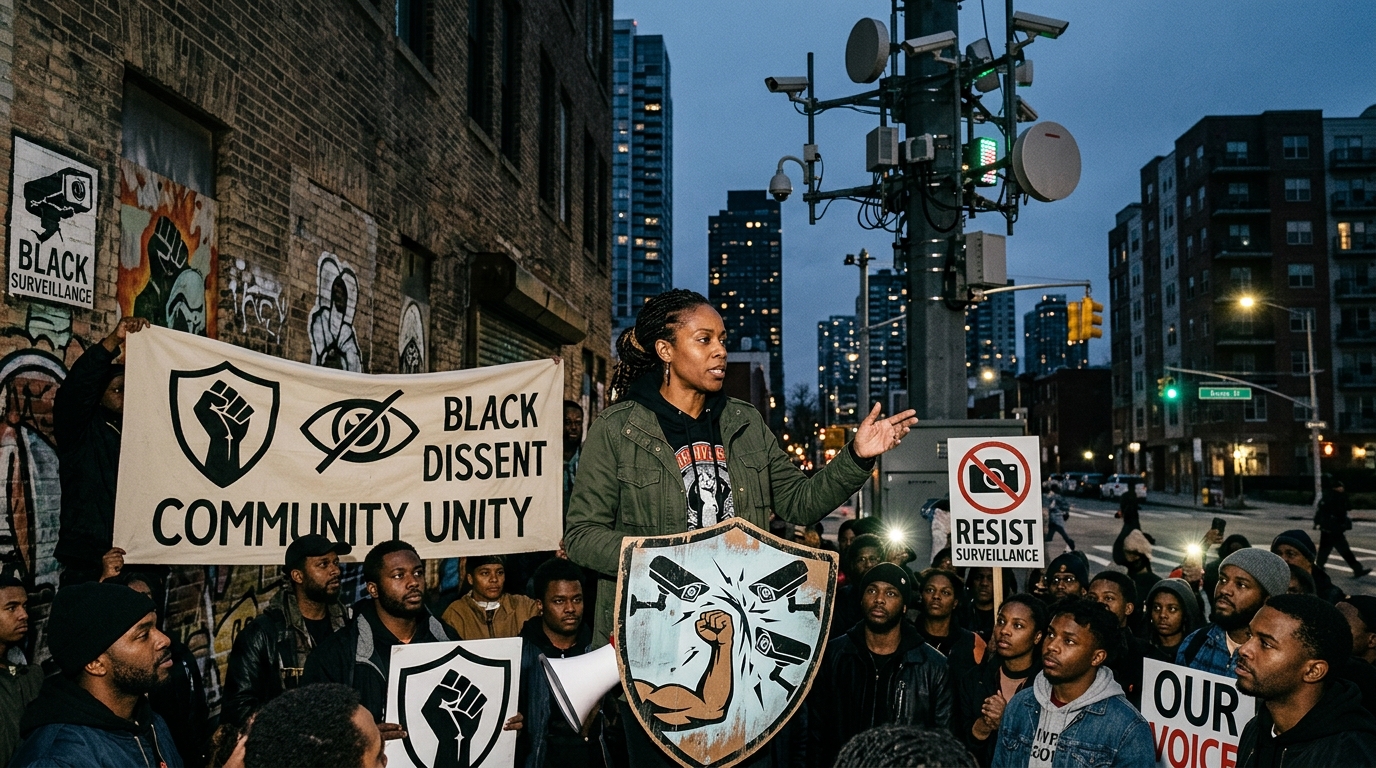
Defending the Right to Dissent: A Democratic Imperative
The right to dissent is an indispensable pillar of a healthy democracy. In the United States, the First Amendment guarantees citizens the freedom to peacefully assemble and speak their minds. However, the reality of how these freedoms are protected is often vastly different for marginalized communities. Over the decades, activism aimed at dismantling racial injustice has frequently been met with profound suspicion, criminalization, and highly invasive government surveillance. As advocacy groups push for systemic reform regarding police brutality and institutional racism, law enforcement agencies at federal and local levels have repeatedly expanded their intelligence-gathering apparatus. This pattern of monitoring not only undermines core constitutional liberties but creates a pronounced chilling effect on those who might otherwise participate in vital social movements. Understanding this systemic issue requires examining the historical precedents of activist surveillance and the modern frameworks utilized by government entities today.
The Historical Roots of Activist Surveillance
To grasp the gravity of modern surveillance targeting Black activists, one must examine the historical context. For decades, federal intelligence agencies, operating with local police, have closely monitored and sought to destabilize civil rights leaders. The most notorious example is the FBI’s Counterintelligence Program, known as COINTELPRO, which operated covertly from the mid-1950s until exposed in the early 1970s. COINTELPRO was designed to surveil, infiltrate, discredit, and disrupt domestic political organizations. The program heavily targeted the civil rights movement, focusing scrutiny on figures like Dr. Martin Luther King Jr., Malcolm X, and the Black Panther Party. Agents utilized illegal wiretaps, informants, and psychological warfare to weaken movements fighting for equality.
The extent of these abuses was brought to light by the 1975 Church Committee, a Senate investigation into intelligence activities. The committee revealed that the government had used “national security” as a pretext to crush protected political activism. While COINTELPRO’s exposure led to reforms, critics argue the underlying philosophy of viewing Black dissent as a security threat never fully dissipated from the institutional culture of federal law enforcement.
The Emergence of the “Black Identity Extremist” Designation
The shadows of COINTELPRO re-emerged in August 2017 when a controversial intelligence assessment from the FBI’s Counterterrorism Division leaked to the press. This document introduced a new domestic terrorism classification: the “Black Identity Extremist” (BIE). The assessment theorized that individuals protesting police brutality could pose a pre-meditated, violent threat to law enforcement. It attempted to link isolated incidents of violence to a broader ideological movement that did not exist in reality.
Civil rights advocates immediately condemned the BIE designation, arguing it criminalized a shared ideology of racial justice and conflated constitutionally protected protests with terrorism. Unlike traditional domestic terrorism categories based on organized groups with documented violence, the BIE label grouped unconnected individuals based solely on their race and opposition to police violence. Following intense backlash, FBI leadership claimed to have abandoned the BIE terminology. However, subsequent congressional testimonies revealed the agency simply restructured its categories, subsuming BIE into a broader label known as “Racially or Ethnically Motivated Violent Extremism” (RMVE). Civil liberties advocates argue the disproportionate surveillance of Black activists continues unabated under this new, opaque umbrella.
The “Iron Triangle” of Modern Surveillance
While historical surveillance relied on analog methods, modern monitoring is vastly more expansive and difficult to detect. Today’s surveillance ecosystem is described by privacy advocates as an “Iron Triangle,” consisting of three interconnected pillars sharing intelligence and resources.
- Federal Intelligence Agencies: Organizations like the FBI and the Department of Homeland Security (DHS) provide overarching intelligence frameworks, threat assessments, and funding to local jurisdictions.
- Local Law Enforcement and Fusion Centers: Municipal police departments execute on-the-ground monitoring. Fusion centers are state-owned entities designed to gather and share threat information between agencies. They frequently monitor public social media posts and track local organizers.
- Private Technology Contractors: The tech industry profits by selling automated license plate readers, facial recognition software, cell-site simulators (Stingrays), and social media scraping algorithms. Private data brokers also aggregate and sell consumer location data to law enforcement, allowing government agencies to circumvent traditional judicial warrants.
This tripartite network creates a pervasive surveillance net tracking an activist’s digital footprint and physical location with terrifying precision.
The Evolution of Surveillance Tactics
| Surveillance Era | Primary Methodologies Used | Information Sharing Structure | Primary Targets |
|---|---|---|---|
| 1960s – 1970s (COINTELPRO Era) | Physical wiretaps, human informants, physical infiltration, forged correspondence, and mail opening. | Highly centralized within federal agencies; limited coordination with local police departments. | High-profile civil rights leaders, established advocacy organizations, and anti-war dissidents. |
| Present Day (Digital Surveillance Era) | Social media scraping, facial recognition, mobile tracking via Stingrays, and purchasing data from private brokers. | Highly decentralized sharing via state Fusion Centers and the inter-agency “Iron Triangle.” | Grassroots organizers, decentralized protest movements, online activists, and community leaders. |
The Constitutional Fallout: Chilling First Amendment Rights
When the government categorizes protests against racial injustice as potential domestic terrorism, the immediate casualty is the First Amendment. The knowledge that attending a peaceful rally or posting about systemic racism could land an individual on a federal watchlist creates a profound chilling effect. Citizens become less likely to participate in the democratic process if they fear state retribution, police harassment, or loss of employment. This suppression strikes at the heart of democratic engagement.
Furthermore, modern surveillance practices raise severe Fourth Amendment concerns regarding unreasonable searches and seizures. By utilizing private data brokers, deploying facial recognition in public spaces, and scraping open-source data, law enforcement can assemble highly intrusive profiles of activists without establishing probable cause or obtaining a warrant. This circumvention of traditional legal safeguards represents an alarming erosion of digital privacy rights, disproportionately impacting marginalized communities advocating for necessary social change.
Advocacy, FOIA Lawsuits, and the Push for Transparency
In response to the BIE designation and the expansion of the digital surveillance state, a coalition of civil rights organizations and privacy advocates has launched campaigns demanding transparency. These groups have increasingly utilized litigation to force secretive government agencies to reveal the extent of their surveillance operations. Through Freedom of Information Act (FOIA) requests, advocacy organizations seek access to internal FBI and DHS communications, intelligence assessments, and training materials related to the surveillance of Black activists.
When federal agencies stonewall these requests or provide heavily redacted documents, civil liberties groups aggressively file federal lawsuits to compel legal disclosure. These ongoing legal battles are crucial for exposing how internal threat designations are formulated and applied. By forcing this information into the public domain, advocates allow the public and lawmakers to challenge discriminatory policing practices based on empirical evidence rather than relying on unverified government assurances.
A Blueprint for Protecting Dissent
To safeguard the constitutional rights of advocates and dismantle discriminatory surveillance frameworks, substantial policy reforms are required. Privacy advocates emphasize several critical demands:
- End Fabricated Threat Designations: Federal intelligence agencies must cease using broad, ideological labels that conflate anti-racism activism with domestic terrorism, ensuring assessments are based strictly on credible evidence of criminal violence.
- Defund Invasive Surveillance Technologies: Municipalities and federal bodies should proactively restrict the use of highly invasive, racially biased technologies—like facial recognition software—in public spaces and during protests.
- Close the Data Broker Loophole: Congress must pass legislation preventing law enforcement from purchasing personal location data from private brokers to bypass Fourth Amendment warrant requirements.
- Enact Rigorous Congressional Oversight: Legislative bodies must conduct regular, transparent audits of fusion centers and federal intelligence operations to ensure compliance with civil rights protections.
Frequently Asked Questions (FAQs)
What was the FBI’s “Black Identity Extremist” assessment?
Leaked in 2017, it was an FBI intelligence assessment creating a new domestic terrorism category, baselessly claiming some individuals protesting police brutality posed a violent threat to law enforcement based on a shared ideology.
How did COINTELPRO impact the civil rights movement?
COINTELPRO was a covert FBI program that surveiled, infiltrated, and disrupted civil rights organizations from the 1950s through the 1970s, heavily targeting leaders like Dr. Martin Luther King Jr. to discredit racial equality movements.
What role do Fusion Centers play in modern surveillance?
Fusion centers are state and local facilities serving as centralized hubs for analyzing and sharing threat-related intelligence between federal and local police. Critics argue they operate with minimal oversight and disproportionately monitor activist activities.
Why is activist surveillance a First Amendment issue?
When the government monitors individuals engaging in peaceful protests, it creates a “chilling effect.” Citizens may avoid exercising their right to free speech and assembly out of fear of unwarranted government scrutiny or placement on watchlists.
Conclusion
The ongoing fight to protect dissent is a fight to preserve the structural integrity of democratic institutions. History repeatedly demonstrates that when law enforcement is granted unchecked authority to monitor political speech, marginalized communities bear the brunt of the abuse. From the destructive overreaches of COINTELPRO to modern digital tracking networks, the criminalization of racial justice movements remains a persistent threat to civil liberties. Pushing back against these invasive surveillance frameworks—through aggressive litigation, comprehensive legislative reform, and public advocacy—is essential to ensuring the First Amendment remains an accessible reality for all citizens, rather than a privilege reserved for a select few.
References
- Senate Select Committee to Study Governmental Operations with Respect to Intelligence Activities (The Church Committee) — United States Senate. 1976-04-26. https://www.senate.gov/about/powers-procedures/investigations/church-committee.htm
- MediaJustice, et al. v. Federal Bureau of Investigation, et al. — American Civil Liberties Union. 2019-03-21. https://www.aclu.org/cases/mediajustice-et-al-v-federal-bureau-investigation-et-al
- The FBI Targets a New Generation of Black Activists — Brennan Center for Justice. 2020-06-26. https://www.brennancenter.org/our-work/analysis-opinion/fbi-targets-new-generation-black-activists
- (U//FOUO) Black Identity Extremists Likely Motivated to Target Law Enforcement Officers — Federal Bureau of Investigation. 2017-08-03. https://vault.fbi.gov/
Similar Articles








Read full bio of Sneha Tete


