
The Unseen Watchers: Reclaiming Privacy from Face Surveillance
Grassroots resistance and municipal bans are actively dismantling the unchecked expansion of biased biometric tracking.
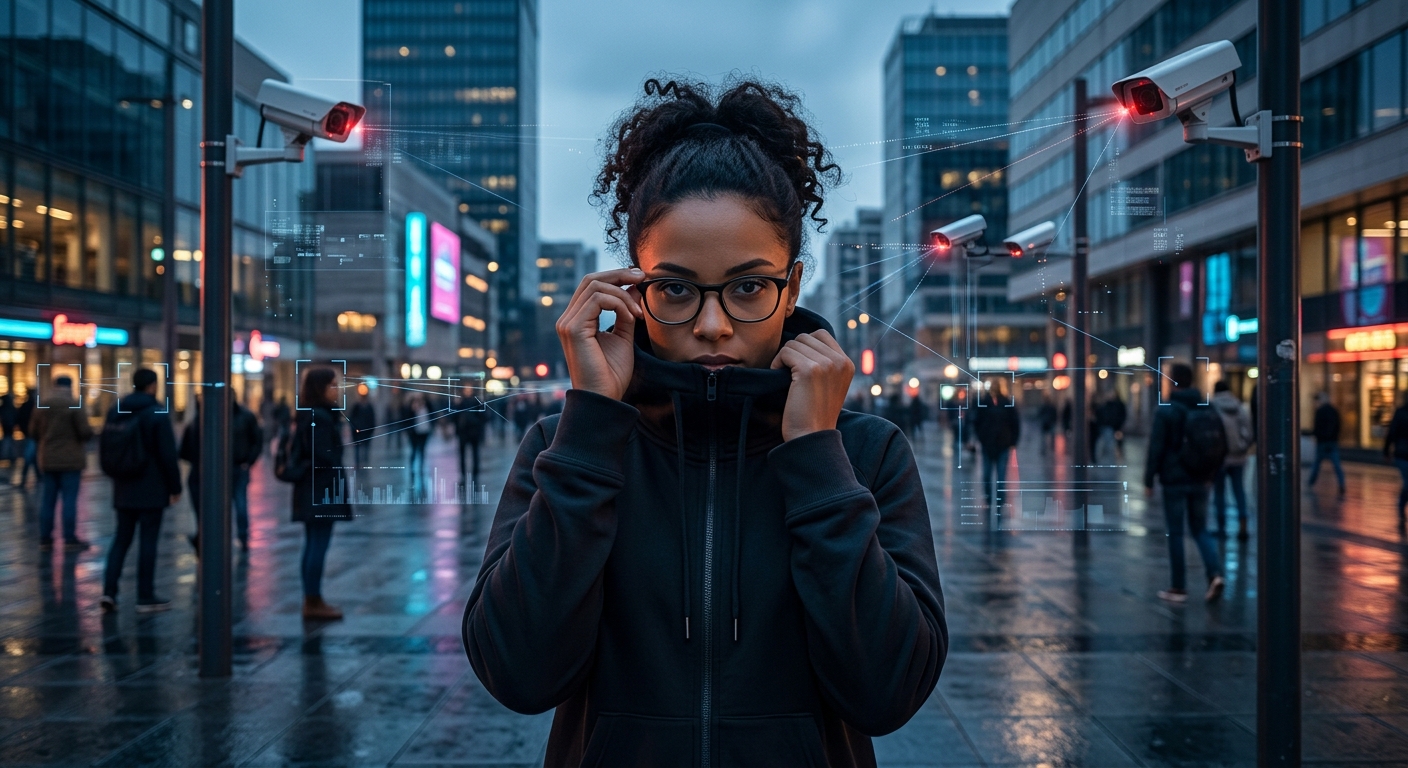
The Dawn of Algorithmic Identification and Grassroots Pushback
In an era increasingly defined by the rapid digitalization of the physical world, the deployment of biometric surveillance has fundamentally altered the landscape of personal privacy. Automated facial recognition systems, once the exclusive domain of science fiction and highly classified intelligence operations, have quietly permeated local government infrastructure, law enforcement toolkits, and public spaces. This seamless integration of tracking technology has prompted a fierce and growing wave of grassroots resistance. Privacy advocates, civil rights organizations, and concerned citizens are mounting rigorous campaigns to halt the unchecked expansion of algorithmic identification, arguing that its implementation vastly outpaces the legal frameworks designed to protect civil liberties.
At the heart of this resistance is a fundamental question about the relationship between the state and the individual. Historically, anonymity in public spaces has served as a crucial buffer against overreach, allowing individuals to assemble, associate, and express themselves without fear of permanent cataloging. The introduction of cameras equipped with facial-mapping software dismantles this buffer, creating a dragnet that subjects every passerby to an invisible, persistent digital lineup. In response to this profound shift, community-led movements have successfully transformed widespread unease into concrete legislative victories, ushering in a new era of municipal and state-level restrictions on biometric tracking.
Unpacking the Mechanics: How Biometric Monitoring Falls Short
To fully grasp the magnitude of these legislative pushbacks, one must first examine the inherent mechanics of automated facial recognition. At its core, the technology relies on the algorithmic extraction of geometric features from a person’s face—such as the distance between the eyes, the depth of the eye sockets, and the contour of the jawline. These mathematical representations, known as faceprints, are then cross-referenced against vast databases of stored images in an attempt to find a statistical match. While proponents often laud the technology for its rapid processing speeds and potential investigative utility, the underlying algorithms are remarkably brittle. They are highly susceptible to variations in lighting, camera angles, and image resolution, leading to a cascade of technological vulnerabilities that disproportionately impact marginalized communities.
Demographic Differentials: The Bias Built Into the Code
The most glaring flaw in contemporary biometric identification systems is algorithmic bias, a phenomenon that has drawn intense scrutiny from data scientists and civil rights groups alike. Algorithms learn to identify patterns based on the datasets they are trained on. When these training datasets are overwhelmingly composed of lighter-skinned, male faces, the resulting software struggles to accurately analyze features that fall outside of that narrow demographic spectrum. A landmark comprehensive evaluation conducted by the National Institute of Standards and Technology (NIST) confirmed that facial recognition algorithms exhibit significant demographic differentials, producing starkly higher false positive and false negative rates across various racial and gender groups.
The implications of these demographic disparities extend far beyond mere technical inconveniences. In the context of government and law enforcement use, a false positive match can rapidly escalate into a life-altering violation of human rights. When a flawed algorithm mistakenly identifies an innocent individual as a criminal suspect, the consequences often include wrongful detainment, profound emotional distress, and enduring legal and financial burdens. Furthermore, the intersectional nature of this bias means that the heaviest burden falls on women of color, who experience the highest rates of misidentification according to rigorous federal testing protocols. The fundamental unreliability of the technology across diverse populations has catalyzed the argument that such systems are currently unfit for public deployment.
The Threat to Anonymity and Civil Liberties
Beyond the pressing issues of algorithmic inaccuracy and demographic bias, the widespread adoption of face surveillance poses a severe threat to foundational constitutional principles. The Fourth Amendment protects individuals against unreasonable searches and seizures, establishing an expectation of privacy that is deeply compromised when citizens cannot traverse public spaces without their unique biometric markers being scanned and stored. Constant monitoring inherently changes human behavior, fostering a psychological climate of self-censorship and profound unease. When people know their identities and movements are being continuously logged by state apparatuses, they are significantly less likely to participate in constitutionally protected activities.
This chilling effect is particularly devastating for the freedom of assembly and association. Protests, demonstrations, and public gatherings are the lifeblood of a functioning democracy, relying on the ability of individuals to voice dissent without fear of retribution. If participation in a peaceful rally means being automatically cross-referenced against government watchlists via ubiquitous public cameras, the democratic process itself is suffocated. Recognizing this existential threat to civic participation, local legislatures and advocacy coalitions have aggressively prioritized the prohibition of biometric surveillance at protests, effectively drawing a line in the sand against the architecture of mass monitoring.
Trailblazing Jurisdictions: The Rise of Municipal Bans
The legislative response to these technological and constitutional concerns has been localized but highly impactful, driven largely by municipal ordinances rather than comprehensive federal regulation. Activists have successfully argued that local communities must have the autonomy to determine the acceptable boundaries of surveillance within their own neighborhoods. Primary motivations for these grassroots bans typically include:
- Demonstrated algorithmic inaccuracy and racial bias leading to wrongful accusations.
- The preservation of anonymity and freedom of expression in public squares.
- The prevention of unconstitutional government overreach and unchecked administrative tracking.
- The lack of operational transparency and clear accountability from technology vendors.
This localized approach has yielded a domino effect of policy changes, proving that informed civic engagement can successfully halt the deployment of invasive technological systems.
Early Adopters and the Silicon Valley Paradox
One of the most symbolic victories in the movement against algorithmic surveillance occurred in the very epicenter of the global technology industry. In 2019, San Francisco became the first major American city to outright ban the purchase and use of facial recognition technology by city personnel, including its police department. This legislative milestone highlighted a profound paradox: the municipality that houses the architects of modern digital innovation chose to erect strict boundaries against the government adoption of those same tools. The San Francisco ban set a powerful national precedent, signaling that technological progress does not necessitate the abandonment of civil liberties, and proving that municipal governments possess the authority to regulate digital infrastructure.
The Spread of State and Local Moratoriums
The momentum generated by early adopters quickly cascaded across the country, inspiring a patchwork of similar bans and moratoriums in diverse jurisdictions. Cities from Oakland, California, to Somerville, Massachusetts, successfully enacted ordinances prohibiting government use of the technology. The scope of these bans has also expanded to address both public and private actors. For instance, Baltimore enacted a sweeping ordinance that prohibited not only city government entities but also private businesses and individuals from utilizing certain facial surveillance systems within city limits, representing one of the most comprehensive local moratoriums to date. These legislative actions underscore a unified, coast-to-coast consensus that the risks of biometric tracking far outweigh its purported administrative benefits.
Law Enforcement and the Accountability Vacuum
While local municipalities are successfully establishing protective barriers against biometric monitoring, the use of facial recognition at the federal level paints a significantly more opaque picture. Federal law enforcement agencies have increasingly integrated these systems into their investigative frameworks, often relying on massive databases compiled by commercial vendors or shared through inter-agency partnerships. However, this expansion has frequently occurred in an accountability vacuum. A detailed review conducted by the U.S. Government Accountability Office (GAO) discovered that multiple law enforcement agencies within the Departments of Justice and Homeland Security were actively utilizing facial recognition services without having specific policies or guidance in place to safeguard civil rights and civil liberties.
The lack of stringent federal oversight is further compounded by significant deficits in specialized operational training. The same GAO investigation highlighted that several federal law enforcement agencies initially permitted staff to access and utilize complex facial recognition platforms without requiring prerequisite training on how the technology works, its inherent limitations, or the proper protocols for interpreting algorithmic results. When field agents and analysts employ highly flawed biometric tools without a fundamental understanding of demographic bias or the parameters of reasonable suspicion, the potential for investigative overreach and wrongful targeting increases exponentially. This glaring gap in federal governance serves to validate the necessity of the localized, total-ban strategies being championed by grassroots privacy advocates.
The Intersection of Global Human Rights and Local Action
The movement to rein in biometric surveillance is not confined to domestic municipal debates; it is deeply intertwined with a broader international consensus regarding the preservation of fundamental human rights in the digital age. Mass surveillance inherently destabilizes the balance of power between the governed and the governing. The United Nations Human Rights Office has explicitly warned that modern digital technologies, including the widespread monitoring of public spaces via biometric identification, place the right to privacy under extreme and unprecedented pressure. Global human rights frameworks assert that surveillance must be strictly targeted, legally authorized, and proportionate—criteria that indiscriminate facial recognition systems fundamentally fail to meet.
By categorizing unchecked digital tracking as a formidable tool for oppression, international bodies reinforce the arguments made by local community organizers. The indiscriminate mapping of civic spaces is increasingly recognized globally as an active impingement on the essence of individual self-determination. This international perspective provides crucial validation to municipal legislators seeking to draft robust moratoriums. It frames the rejection of automated identification not merely as a local administrative preference, but as a mandatory defense of universal human rights against the creeping normalization of continuous state observation.
Looking Forward: Calibrating Innovation with Constitutional Safeguards
As the capabilities of artificial intelligence and biometric analysis continue to evolve, the necessity for robust legal frameworks will only intensify. The string of legislative victories across various municipalities demonstrates that society is not powerless in the face of rapid technological advancement. By prioritizing transparency, demanding accountability, and strictly enforcing constitutional guardrails, communities can ensure that innovation serves the public interest rather than eroding it. The ongoing fight against unchecked face surveillance represents a defining civil rights battle of the modern era, requiring continuous vigilance to strike a sustainable balance between technological utility and the unyielding protection of human dignity.
Frequently Asked Questions (FAQ)
What exactly is biometric surveillance?
Biometric surveillance refers to the use of technology to monitor, identify, or track individuals based on their unique physical or behavioral characteristics. This most commonly includes automated facial recognition systems, but can also encompass iris scanning, voice recognition, and fingerprint analysis utilized across public and private spaces.
Why are cities enacting bans on facial recognition technology?
Municipalities are prohibiting the technology due to overwhelming evidence of algorithmic bias, which frequently misidentifies people of color and women. Furthermore, cities are enacting bans to protect civil liberties, arguing that continuous tracking in public spaces violates privacy rights and chills constitutionally protected activities like peaceful protesting.
How does algorithmic bias occur in facial recognition?
Bias in automated identification systems primarily stems from the datasets used to train the software’s underlying algorithms. If the training data heavily overrepresents certain demographic groups—such as white men—the system becomes significantly less accurate when attempting to map the geometric features of populations outside of that specific demographic, leading to elevated error rates.
Is there a unified federal law regulating biometric tracking in the United States?
Currently, there is no comprehensive federal legislation that explicitly regulates the government or private use of facial recognition technology across the entire United States. Because of this federal legislative gap, oversight has largely fallen to state and local governments to enact their own targeted bans, moratoriums, and procedural safeguards.
References
- Face Recognition Vendor Test (FRVT), Part 3: Demographic Effects — National Institute of Standards and Technology (NIST). 2019-12-19. https://doi.org/10.6028/NIST.IR.8280
- Facial Recognition Technology: Federal Law Enforcement Agency Efforts Related to Civil Rights and Training — U.S. Government Accountability Office (GAO). 2024-03-08. https://www.gao.gov/products/gao-24-107359
- Baltimore Enacts Facial Recognition Moratorium — Practical Law (Thomson Reuters). 2021-09-07. https://content.next.westlaw.com/practical-law/document/Ie033f7c310c111ec9f38000000000000/Baltimore-Enacts-Facial-Recognition-Moratorium
- San Francisco votes to ban city use of facial recognition technology — Reuters / The Straits Times. 2019-05-15. https://www.straitstimes.com/world/united-states/san-francisco-votes-to-ban-city-use-of-facial-recognition-technology
- Spyware and surveillance: Threats to privacy and human rights growing, UN report warns — United Nations Human Rights Office. 2022-09-16. https://www.ohchr.org/en/press-releases/2022/09/spyware-and-surveillance-threats-privacy-and-human-rights-growing-un-report
Similar Articles








Read full bio of Sneha Tete


