
REAL ID Act: Navigating the Hidden Privacy Perils
Explore the hidden privacy risks behind the federal REAL ID mandate.
The Hidden Costs of Convenience: Unpacking the REAL ID Mandate
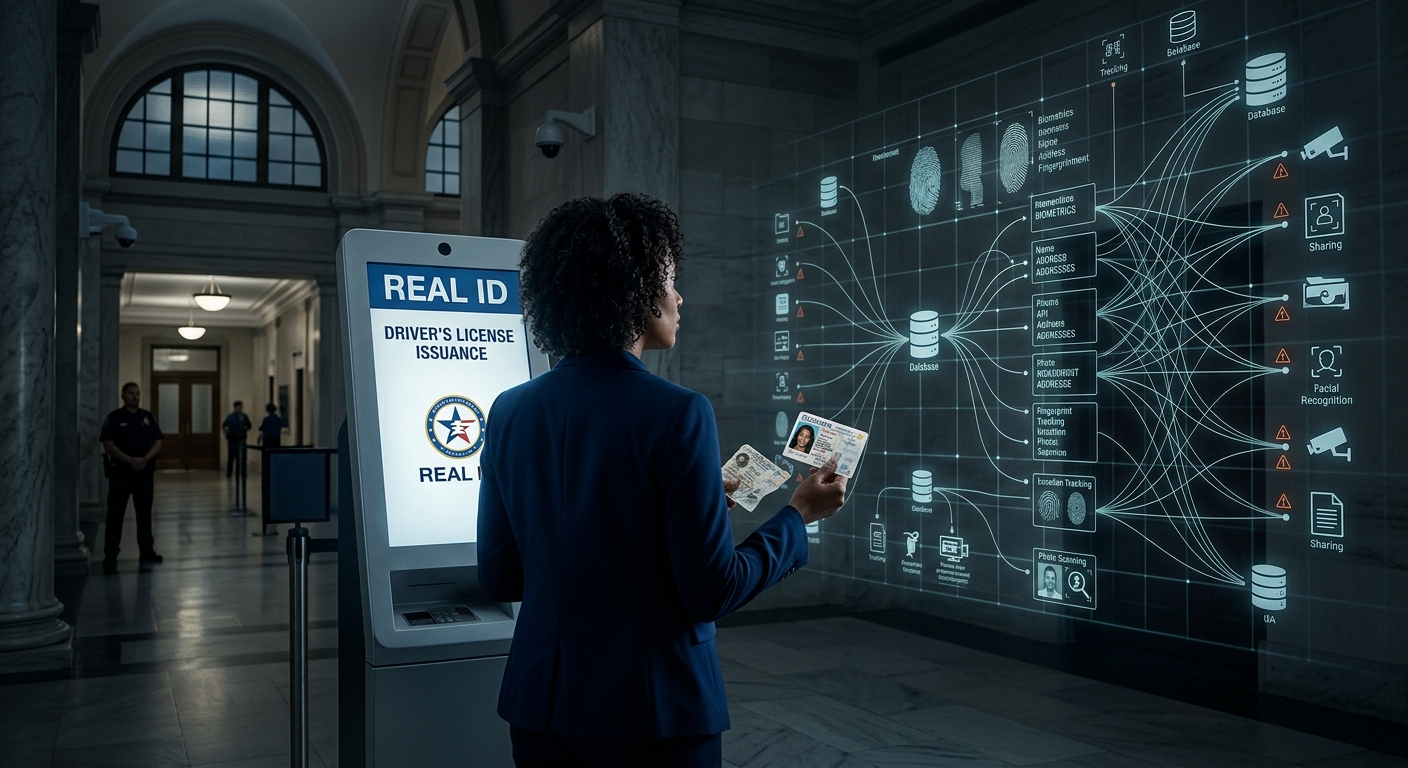
As the federal enforcement deadline for the REAL ID Act approaches, millions of citizens are rushing to their local Department of Motor Vehicles (DMV) to upgrade their standard driver’s licenses. Promoted as a vital national security enhancement, the REAL ID card—identifiable by the small star situated in the upper corner—will soon be a strict requirement for boarding federally regulated commercial domestic flights and entering high-security federal facilities. While the convenience of a unified identification standard is heavily marketed to the public, a deeper examination reveals a labyrinth of complex privacy perils.
Beneath the surface of this seemingly administrative upgrade lies a fundamental transformation of how personal identity is verified, stored, and shared across the United States. For years, privacy advocates, civil liberties defenders, and cybersecurity experts have sounded the alarm regarding the unintended consequences of the REAL ID Act. This legislation fundamentally shifts the control of identity from isolated state silos into an interconnected, digitized ecosystem. Before citizens hand over their birth certificates, Social Security cards, and biometric data to comply with this federal mandate, it is essential to explore the profound privacy risks, the threat of centralized data breaches, and the looming specter of a de facto national identification system.
The Origins: From 9/11 Recommendations to Mandated Standards
The narrative surrounding the modern American identification system changed permanently in the aftermath of the tragic events of September 11, 2001. In its comprehensive investigative report, the 9/11 Commission explicitly recommended that the federal government establish baseline security standards for the issuance of identification documents, including state driver’s licenses. This specific recommendation ultimately culminated in the passage of the REAL ID Act of 2005 . At first glance, the legislation appeared to be a straightforward security protocol aimed at preventing fraudulent credentialing and enhancing the safety of commercial aviation and federal infrastructures.
However, the mechanisms utilized to achieve this security fundamentally altered the traditional relationship between state motor vehicle departments and the federal government. Historically, the issuance of a driver’s license was strictly an independent, state-level administrative function. The REAL ID Act upended this historical precedent by imposing rigid federal mandates regarding what physical anti-counterfeiting security features must be embedded within the cards. More significantly, it dictated exactly what underlying source documents—such as unexpired passports, birth certificates, and proof of residency—citizens must physically present and have verified. By dictating these uniform verification standards, the federal government initiated an irreversible shift toward a homogenized, standardized identification infrastructure spanning all fifty states.
The De Facto National ID Controversy
For decades, civil liberties organizations and privacy advocates have vehemently opposed the creation of any form of a national identification card. The primary argument against a national ID is that it coerces citizens into carrying “internal passports,” thereby fundamentally altering the delicate balance of power between the individual and the surveillance capabilities of the state. While the Department of Homeland Security (DHS) explicitly states that the REAL ID is not a national identification card and insists that there is no singular federal database storing all citizen information , critics passionately argue that the practical application of the law creates a de facto national ID system.
The core of this intense controversy lies in the mandated technological interconnectedness. To legally comply with the REAL ID Act, states are required to rigorously verify applicant information through various digital data networks and share their own state databases via centralized communication platforms, such as the State-to-State (S2S) Verification Service. This complex architecture means that while the data may physically reside on separate state-level servers, the interconnected web functions virtually the same as a centralized national registry. When fifty distinct databases are linked together using a standardized set of rules and communication protocols, the distinction between a “network of state databases” and a “national database” becomes a matter of technical semantics rather than a meaningful difference in privacy protection .
Analyzing the Structural Differences: Standard vs. REAL ID
To fully grasp the privacy implications, one must understand exactly how a standard state identification card differs from a REAL ID compliant card. The requirements extend far beyond the physical plastic card itself, encompassing deep structural changes in document retention and data sharing protocols.
| Feature / Requirement | Standard State Driver’s License | REAL ID Compliant License |
|---|---|---|
| Federal Recognition | Not accepted for federal official purposes (e.g., commercial flights). | Fully accepted for all designated federal official purposes. |
| Source Document Verification | Varies heavily by state; often relies on visual inspection. | Mandatory electronic verification of birth certificates, SSNs, and legal status. |
| Document Retention | States may destroy or return physical copies after verification. | States must retain digital scans of source documents for up to 10 years. |
| Interstate Data Sharing | Limited, primarily utilized for severe traffic violations. | Mandatory participation in nationwide verification systems (e.g., S2S). |
| Machine-Readable Tech | Basic barcodes with limited data capacity. | Standardized machine-readable zones containing heavily structured personal data. |
As the table highlights, the transition to REAL ID mandates prolonged data retention and unprecedented interstate data sharing, fundamentally transforming the risk profile of every citizen’s personal identity portfolio.
The Vulnerabilities of Interconnected Data Hubs
To obtain a REAL ID, American citizens are required to hand over highly sensitive, foundational documents. The state DMV is then federally mandated to retain high-resolution digital copies of these source documents—such as birth certificates and Social Security cards—for up to a decade. The State-to-State (S2S) Verification Service facilitates the continuous checking and sharing of this data to ensure that an individual does not possess multiple licenses across different jurisdictions.
This massive accumulation of highly sensitive, digitized personal information introduces terrifying cybersecurity risks. By mandating the creation of these interconnected data hubs, the federal government has inadvertently established incredibly lucrative targets for sophisticated cybercriminals, identity thieves, and hostile nation-state hackers. The risks are not merely theoretical. Recent massive cybersecurity incidents, such as the devastating 2024 National Public Data breach which allegedly exposed the Social Security Numbers and sensitive records of hundreds of millions of people, highlight the severe vulnerability of massive data repositories . When the law legally compels the mass aggregation of the most sensitive identity documents a citizen possesses, the inevitable data breaches do not just result in compromised passwords; they lead to total identity theft that can ruin financial livelihoods for decades.
Digital IDs (mDLs) and the Threat of the “Internet Lockdown”
As technology rapidly advances, the conversation surrounding the REAL ID Act is evolving beyond physical plastic cards toward Mobile Driver’s Licenses (mDLs) stored seamlessly in digital wallets on smartphones. Federal agencies, including the Transportation Security Administration (TSA), are actively preparing their infrastructure to accept these digital identities at airport checkpoints. While proponents hail mDLs as the pinnacle of modern convenience, digital rights advocates warn that they introduce entirely new and highly intrusive privacy dimensions.
One of the most significant concerns is the so-called “phone home” problem. When a physical card is visually inspected, no digital record of that interaction is automatically generated. However, when an mDL is scanned, there is a profound risk that the digital ID application could ping a central server, effectively creating a permanent digital log of exactly when, where, and why an individual is verifying their identity. Furthermore, if mDLs become the standard mechanism for online age verification or accessing restricted digital platforms, it could swiftly end the era of online anonymity. Websites and applications could gatekeep access based on precise demographic data extracted cryptographically from the digital REAL ID, binding a user’s unalterable real-world identity to their every online keystroke and creating an inescapable digital footprint.
Disproportionate Impacts on Marginalized Communities
The stringent bureaucratic documentation requirements of the REAL ID Act are not merely administrative hurdles; they serve as active barriers to systemic participation for millions of Americans. Low-income individuals, elderly citizens, unhoused populations, and rural residents often face immense, sometimes insurmountable, struggles to obtain the necessary certified birth certificates or required proofs of physical residency. For individuals whose names have changed due to marriage or gender transition, the burden of providing a continuous, unbroken paper trail of identity can be an exhausting and costly endeavor.
Furthermore, there are severe implications for immigrant communities and non-citizens. Several states have historically issued standard driver’s licenses to undocumented immigrants to ensure road safety and community integration. However, the friction between state policies and federal REAL ID data-sharing mandates creates a deeply hostile environment. Providing vast amounts of DMV data to national verification systems may inadvertently expose vulnerable individuals to federal immigration enforcement mechanisms, violently chilling civic participation, eroding trust in local government, and increasing the risk of targeted deportations.
Surveillance, Tracking, and the Machine-Readable Threat
Beyond the systemic database risks, there are profound philosophical and legal objections grounded in the Fourth Amendment of the U.S. Constitution, which protects citizens against unreasonable searches and seizures. When a standardized, federally approved ID becomes a mandatory prerequisite for an ever-expanding list of daily activities—potentially extending beyond commercial flights to accessing healthcare, entering public federal buildings, or engaging in financial transactions—the state’s ability to monitor the movement and behavior of its citizens grows exponentially.
The standardized machine-readable technology embedded on the back of REAL IDs allows for the rapid, frictionless scanning and logging of personal information by third parties. This means that private commercial businesses, data brokers, and local law enforcement can easily harvest, aggregate, and monetize your data simply by scanning your ID at a pharmacy counter, a nightclub entrance, or a commercial building lobby. Over time, the normalization of routine digital identity checks slowly acclimatizes the public to a surveillance-heavy “checkpoint society,” where anonymous movement and private transactions become virtually impossible.
Mitigating the Risks: Forging a Path Forward
Is there a viable way to balance the undeniable need for secure, reliable identification with the fundamental constitutional right to personal privacy? Cybersecurity experts and privacy advocates suggest that the path forward requires immediate legislative intervention and the adoption of robust data minimization policies. States must be legally empowered to collect only what is absolutely necessary and should be mandated to securely permanently delete digital copies of source documents immediately after the verification process is complete, rather than warehousing them for a decade.
Additionally, ironclad legislative safeguards are desperately needed to strictly limit the secondary uses of REAL ID data by both federal law enforcement agencies and profit-driven private corporations. For the emerging field of mobile driver’s licenses, developers must mandate the adoption of cryptographic “zero-knowledge proofs.” This advanced privacy-preserving technology allows an individual to digitally prove a specific fact—such as being over the age of 18—without ever revealing their exact date of birth, home address, or legal name to the verifying party.
Frequently Asked Questions (FAQs)
- Will I be legally forced to get a REAL ID?
No, obtaining a REAL ID is technically voluntary. If you choose not to upgrade your standard state driver’s license, you can still use acceptable alternative forms of identification, such as a valid U.S. passport or passport card, to board domestic commercial flights and enter secure federal facilities. However, without any of these alternatives, you may be denied entry or boarding. - Does the REAL ID Act create a single federal database of all citizens?
Officially, the Department of Homeland Security maintains that there is no singular, centralized federal database. However, the Act mandates that all states securely share their DMV databases via centralized verification networks to prevent duplicate license issuance. Privacy advocates argue that this heavily interconnected network of state databases functions, in practice, identically to a national registry. - Are digital or mobile driver’s licenses (mDLs) automatically REAL ID compliant?
Not automatically. While the TSA is currently running pilot programs accepting certain state-issued mDLs at specific airport security checkpoints, the overarching federal rulemaking process regarding exactly how mDLs fully comply with all REAL ID security and privacy standards is still evolving. You should always carry your physical ID when traveling. - What happens if my state’s DMV suffers a cyberattack?
Because the REAL ID Act mandates that states digitally retain copies of sensitive source documents (like birth certificates and Social Security cards), a successful cyberattack on a state DMV could lead to the exposure of these foundational identity documents. This heightened risk is why cybersecurity experts advocate for strict data retention limits and enhanced encryption protocols at the state level. - Can private businesses scan my REAL ID to collect my data?
Yes. The standardized machine-readable zone (barcode) on a REAL ID makes it incredibly easy for private businesses, bars, and medical facilities to quickly scan and extract your personal information. Unless restricted by specific state privacy laws, these private entities can often store, aggregate, and legally sell this demographic data to third-party data brokers.
Ultimately, the REAL ID Act represents a monumental shift in the infrastructure of American identity. As the enforcement deadline becomes a reality, citizens must remain hyper-vigilant about how their most sensitive personal data is collected, stored, and utilized. The convenience of a streamlined airport security experience must never come at the hidden cost of our fundamental civil liberties and personal privacy.
References
- REAL ID: Minimum Security Standards — Transportation Security Administration (TSA). 2025-05-07. https://www.tsa.gov/real-id
- REAL-ID Privacy Impact Assessment — Department of Homeland Security (DHS). 2022-05-19. https://www.dhs.gov/real-id-privacy-impact-assessment
- REAL ID and Its Threats to Privacy: Individual Privacy Concerns — Maine Legislature. 2025-04-15. https://legislature.maine.gov/
- Real ID campaign raises questions about privacy concerns — PubMed Central (PMC). 2023-01-23. https://www.ncbi.nlm.nih.gov/pmc/articles/PMC9869600/
- National Public Data breach: What you need to know — Microsoft Support. 2024-08-15. https://support.microsoft.com/en-us/office/national-public-data-breach-what-you-need-to-know
Similar Articles








Read full bio of medha deb


