
The Digital Public Square: Protecting Online Comment Rights
Explore the First Amendment, content moderation, and your right to comment.
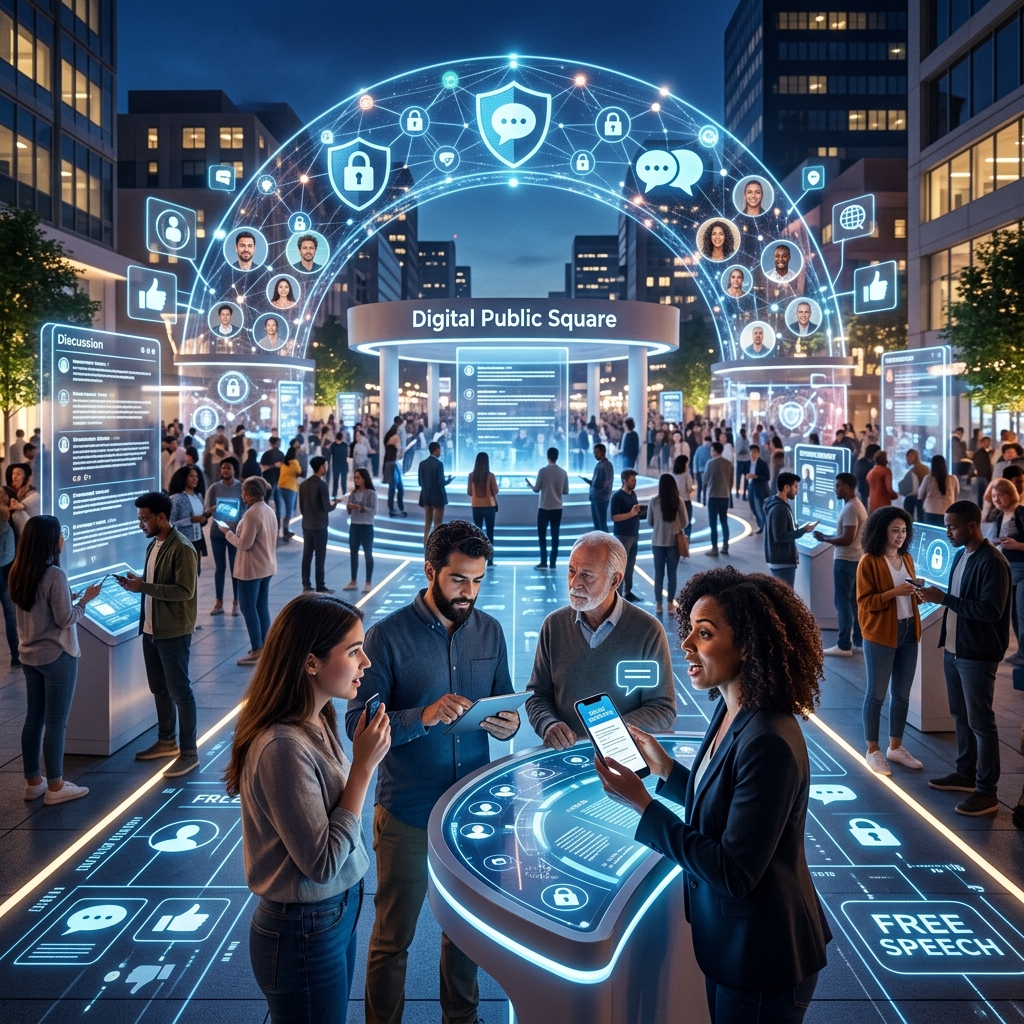
The Evolution of the Public Square
The ability to leave a comment on a blog post, a news article, or a social media update might seem like a trivial feature of the modern internet. However, these comment sections represent a monumental shift in how humanity engages in public discourse. In the early days of the internet, websites were essentially static digital billboards. Today, they are interactive hubs where public opinion is shaped, challenged, and debated in real time. The push to keep dialogue open and encourage comments is not merely an appeal for user engagement; it is a fundamental rallying cry for protecting digital free speech and civil liberties in our increasingly interconnected world.
For centuries, the public square was a physical, tangible location. It was the town hall, the local park, or the street corner where citizens would stand on soapboxes to distribute pamphlets and passionately voice their grievances. These physical spaces were essential for the functioning of a healthy democracy, allowing grassroots movements to gain traction and holding local leaders accountable to the public they served.
Today, the architectural boundaries of the public square have completely dissolved. In their place, we have endless digital threads, timelines, and blog comment sections. This migration to the digital realm has democratized speech to an unprecedented degree. Anyone with an internet connection can now broadcast their opinions to a global audience instantly. However, this shift has also introduced entirely new legal and ethical challenges. The platforms facilitating this speech are overwhelmingly owned by private corporations, fundamentally altering the traditional dynamics between the speaker, the platform, and the government. When civil liberties advocates encourage the public to engage and comment, they are deliberately attempting to preserve the spirit of the original public square within these new, privatized digital arenas.
The First Amendment in the Digital Age
When discussing the right to comment online, it is imperative to clearly understand how the First Amendment actually applies. A common and pervasive misconception among internet users is that the First Amendment prevents any entity—including social media companies, forum moderators, or private blog owners—from deleting their comments or banning them from a platform. The reality of constitutional law is far more nuanced and relies heavily on the distinction between the government and private actors.
The First Amendment serves as a vital shield against government censorship. It explicitly prohibits state actors—ranging from the federal government and state legislatures to local police departments and public school boards—from silencing citizens based on their viewpoints. If the government were to mandate what could or could not be said in an online comment section, or force a private website to host speech it disagrees with, it would constitute a severe constitutional violation.
However, the First Amendment does not apply to private entities in the same manner. Private blog owners, news organizations, and social media conglomerates possess their own First Amendment rights, which include the right of editorial discretion to determine what type of speech they will host on their platforms. A private website is legally analogous to a private living room; the owner has the ultimate authority to ask an unruly guest to leave or to remove remarks they find offensive. Therefore, when a private platform deletes a comment that violates its terms of service, it is exercising its legal right to curate its community, not violating the commenter’s constitutional rights.
The Supreme Court and Social Media
The intersection of government officials and digital comment sections has sparked significant legal battles, forcing courts to clarify when an online space transitions from a private platform to a designated public forum. The complexities arise when public officials use private social media platforms to conduct official government business. If a private platform is not bound by the First Amendment, what happens when a mayor, a governor, or a president uses that exact platform to announce policies and interact with constituents?
In 2024, the Supreme Court of the United States addressed this specific conundrum directly in the landmark case Lindke v. Freed . The case centered on a city manager, James Freed, who used his Facebook page to post about both his personal life and his official duties, including the city’s response to the COVID-19 pandemic. When a citizen, Kevin Lindke, left critical comments regarding the city’s pandemic policies, Freed deleted the comments and eventually blocked Lindke entirely. Lindke sued, arguing that Freed had violated his First Amendment rights by silencing him in a public forum. The Supreme Court established a specific two-pronged test, ruling that a public official violates the First Amendment only if they possess actual authority to speak on the state’s behalf and purport to exercise that authority when posting on social media .
This nuanced ruling builds upon previous foundational cases regarding digital public forums. For instance, in the highly publicized Knight Institute v. Trump litigation, the Second Circuit Court of Appeals ruled that the former President’s Twitter account functioned as a public forum, making it unconstitutional for him to block critics based solely on their viewpoints . These legal precedents underscore a critical reality: while private citizens and companies can moderate comments freely, government officials who transform their digital spaces into extensions of their public office must uphold the constitutional rights of the public to comment, critique, and petition their government.
Understanding Digital Spaces: A Quick Guide
To navigate the complexities of online commenting rights, it helps to break down the differences between the types of digital spaces you might encounter. The table below outlines how First Amendment protections apply based on who controls the platform or account.
| Type of Online Space | First Amendment Applies? | Moderation Rights | User Recourse |
|---|---|---|---|
| Private Blog or Website | No | The owner has full editorial discretion to delete comments or ban users. | None under the First Amendment; subject only to the site’s Terms of Service. |
| Private Social Media Platform | No | The corporation can moderate content to enforce community guidelines. | Appeals processes provided internally by the platform. |
| Official Government Account | Yes | Officials cannot block users or delete comments based on viewpoint discrimination. | Users can sue for First Amendment violations if unlawfully blocked. |
Content Moderation: Shielding or Silencing?
The debate surrounding the right to comment online inevitably collides with the intricate, and often controversial, mechanisms of content moderation. Private companies face the monumental task of balancing the desire for open discourse with the urgent need to prevent harassment, illegal content, misinformation, and targeted abuse. A completely unmoderated comment section often devolves into chaos and toxicity, which paradoxically silences marginalized voices and stifles meaningful, constructive conversation.
The legal bedrock that allows for this delicate balancing act in the United States is Section 230 of the Communications Decency Act of 1996. This foundational statute provides immunity to online platforms from civil liability based on third-party content, as well as protection for the good-faith removal of objectionable material . Essentially, Section 230 dictates that a website cannot be sued for defamatory or harmful comments posted by its users, nor can it be penalized for actively removing content it deems inappropriate. According to a comprehensive review by the U.S. Department of Justice, this law was originally enacted to nurture a nascent tech industry while incentivizing online platforms to act as “Good Samaritans” by removing harmful material .
However, the expansive interpretation of Section 230 over the past two decades has led to intense political and public scrutiny. Critics argue that massive platforms now act with little transparency or accountability, wielding immense, unchecked power over the digital public square . Reform proposals frequently center on realigning this immunity to ensure tech giants remain responsible actors without stifling the open internet. Despite the controversy, civil liberties organizations repeatedly emphasize that holding platforms legally liable for every single user comment would likely result in mass censorship. Risk-averse companies would simply eliminate the ability to comment altogether to avoid facing devastating, business-ending lawsuits.
The Intersection of Privacy and Free Speech
Beyond content moderation and state action doctrine, the vitality of the online comment section is intrinsically linked to the concept of digital privacy. As we engage in robust online discourse, we inadvertently generate massive amounts of personal data. Civil liberties advocates, including the American Civil Liberties Union, have long argued that strong privacy protections actually serve to reinforce free speech rights .
When users have the confidence that their comments, browsing habits, and digital identities are not being subjected to excessive, unwarranted surveillance by either government agencies or corporate data brokers, they are far more likely to engage in candid communication. Privacy affords citizens the safety to seek out controversial information, organize digital movements, and express dissenting opinions without the paralyzing fear of retaliation, doxing, or employment termination . Therefore, protecting the right to comment online requires a comprehensive approach that defends both the legal right to speak and the privacy infrastructure that makes speaking safe.
Why You Should Keep the Comments Coming
Despite the immense legal hurdles, the abundance of spam, and the occasional vitriol that plagues digital platforms, keeping comment sections open remains a vital component of a healthy, functioning digital ecosystem. They provide immediate, unmediated feedback loops between authors, policymakers, and the general public. A robust comment section acts as a real-time barometer for public sentiment, allowing for counter-speech, the rapid correction of misinformation, and the elevation of diverse perspectives that traditional media might overlook.
When civil liberties advocates urge society to “keep the comments coming,” they are championing the messy, brilliant, and absolutely essential nature of democratic dialogue. While the digital public square requires careful, conscious navigation of platform rules, constitutional protections, and digital privacy norms, it remains one of the most powerful tools for civic engagement ever created in human history. We must actively participate in these digital spaces, respect the boundaries of constructive debate, and remain perpetually vigilant in protecting the underlying legal frameworks that make online discourse possible. The future of our public square depends on our willingness to keep speaking up, and just as importantly, to keep listening.
Frequently Asked Questions
Can a social media platform legally delete my comment?
Yes. Private social media platforms are not bound by the First Amendment. They have their own First Amendment rights to curate content and can delete comments or ban users that violate their terms of service or community guidelines.
Can a politician block me on social media?
It depends on how the account is used. If a politician uses a social media account to conduct official government business and interact with constituents, it may be considered a designated public forum. Under Supreme Court precedent, they cannot block users from these official accounts simply because they disagree with the user’s viewpoint.
What exactly is Section 230?
Section 230 is a provision of the Communications Decency Act of 1996 that generally shields internet platforms from being held legally liable for the content created and posted by their users. It also protects platforms from liability when they make good-faith efforts to remove harmful or objectionable content.
How do digital privacy laws impact free speech online?
Strong digital privacy protections bolster free speech by allowing individuals to explore ideas, express dissenting opinions, and communicate anonymously without fear of mass surveillance or corporate tracking. When privacy is compromised, users often self-censor, which degrades the overall quality of public discourse.
References
- Lindke v. Freed, 601 U.S. 187 — Supreme Court of the United States. 2024-03-15. https://www.supremecourt.gov/opinions/23pdf/22-611_ap6c.pdf
- Section 230 — Nurturing Innovation or Fostering Unaccountability? — U.S. Department of Justice. 2020-06-17. https://www.justice.gov/ag/department-justice-review-section-230-communications-decency-act-1996
- Knight Institute v. Trump — Knight First Amendment Institute at Columbia University. 2021-04-05. https://knightcolumbia.org/cases/knight-institute-v-trump
- How to Protect Consumer Privacy and Free Speech — American Civil Liberties Union. 2024-03-11. https://www.aclu.org/news/privacy-technology/how-to-protect-consumer-privacy-and-free-speech
Similar Articles








Read full bio of medha deb


