
Protecting Dance Creations: Copyright Essentials
Unlock the legal secrets to safeguarding your original choreography from unauthorized use and replication worldwide.
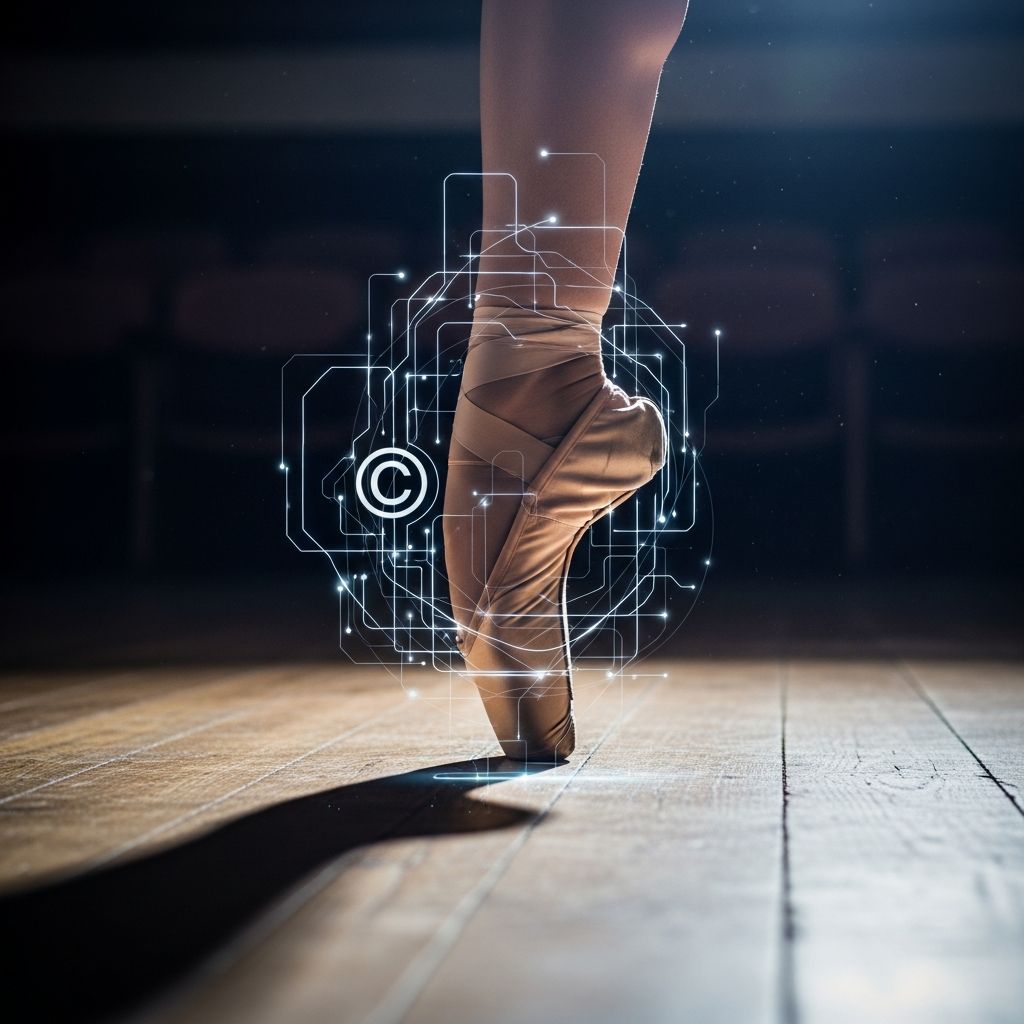
Choreography represents a unique fusion of physical movement, artistic expression, and creative innovation, deserving robust legal safeguards against imitation or exploitation. Copyright law provides choreographers with powerful tools to control how their works are used, performed, and distributed. This article delves into the foundational principles, practical processes, and strategic considerations for securing copyright in dance creations, drawing on established legal frameworks to empower artists in preserving their intellectual property.
Understanding What Qualifies as Copyrightable Choreography
For a dance sequence to merit copyright protection, it must satisfy core criteria outlined in U.S. law: originality, fixation in a tangible medium, and distinction from unprotectable elements. Originality demands a minimal degree of creativity, meaning the work cannot merely replicate existing routines but must exhibit the choreographer’s unique vision.
Fixation requires capturing the choreography in a reproducible format, such as video recordings, Labanotation scores, detailed photographs capturing key poses, or even textual descriptions of movements. Without this, courts may deem the work unprotected, as ephemeral live performances alone do not suffice.
Not all dance elements qualify. Common exclusions include:
- Basic social dances like the waltz, tango, or line dances.
- Common gestures or athletic routines, such as yoga poses or standard workout sequences.
- Functional movements lacking expressive artistry, like simple marches or repetitive steps.
These boundaries prevent monopolization of fundamental dance vocabulary, ensuring public access to building blocks while protecting innovative compositions. For instance, a novel fusion of contemporary and ballet techniques arranged in a specific sequence could qualify, provided it demonstrates sufficient authorship.
Steps to Register Your Choreography with the U.S. Copyright Office
While copyright arises automatically upon creation and fixation, formal registration with the U.S. Copyright Office unlocks critical enforcement benefits, including presumptive validity in court, eligibility for statutory damages up to $150,000 per infringement, and recovery of attorney fees.
Registration is straightforward and accessible without legal assistance:
- Prepare your deposit copy: Submit a video of performers executing the choreography from multiple angles, notation sheets, or photos. For group unpublished works, register up to 10 pieces via the ‘Group of Unpublished Works’ application.
- Complete the online form: Use eco.copyright.gov, selecting ‘Performing Arts’ category. Provide details on authorship, title, and creation date.
- Pay the fee: Standard fee starts at $45-$65, depending on method.
- Submit: Upload materials electronically for fastest processing, typically 3-10 months for a certificate.
Timing matters: Register before public performance or within three months of publication for maximum remedies. Early action also aids DMCA takedown notices on platforms like YouTube or TikTok. Internationally, protections vary; Canada requires no deposit copy, while Australia lacks centralized registration, relying on direct owner contact.
Ownership Rules: Who Holds Rights to Your Dance?
Default ownership vests in the choreographer as the author, unless a ‘work for hire’ agreement transfers it to an employer or commissioner. Dance contracts frequently specify retention of rights by the creator, supported by unions like the Stage Directors and Choreographers Society.
| Scenario | Ownership | Key Factors |
|---|---|---|
| Independent Creation | Choreographer | No contract; personal studio use |
| Commissioned Work | Commissioner (if work-for-hire) | Explicit agreement; supervision provided |
| Joint Authorship | All Contributors Equally | Intent to merge inseparable parts; equal exploitation rights |
Joint works arise when multiple creators contribute interdependent elements, granting each co-owner rights to license without unanimous consent, though profits split equally absent agreement. Moral rights—attribution and integrity—attach to the creator, often waived in commercial deals. Transfers via license (limited permissions) or assignment (full ownership shift) can be terminated by authors 35-40 years later.
Licensing and Monetizing Your Protected Choreography
Beyond protection, copyright enables revenue through licensing. Exclusive rights encompass reproduction, distribution, public performance, display, and derivative adaptations. Choreographers can grant:
- Performance licenses: For studios, competitions, or theaters, often time- or territory-limited.
- Synchronization licenses: Pairing dance with music for videos, requiring separate music rights clearance.
- Merchandising deals: Apparel or instructional videos featuring the work.
Clear music permissions early via publishers or services like ASCAP/BMI, as grand rights are mandatory for adjudicated performances. Platforms respect © notices; include “© [Name] [Year] All Rights Reserved” on postings to deter misuse.
Enforcing Your Rights: Handling Infringement
Unauthorized copying, adaptation, or public performance constitutes infringement. Unregistered works limit remedies to actual damages; registered ones enable enhanced penalties.
Response strategies:
- DMCA Takedown: Notify platforms promptly for removal.
- Cease-and-Desist Letter: Demand compliance via attorney.
- Lawsuit: Prove access and substantial similarity via extrinsic (objective) and intrinsic (audience perception) tests.
Courts filter unprotectable elements (e.g., basic steps) before assessing copying. Timestamped videos bolster proof.
International Considerations and Best Practices
The Berne Convention harmonizes protections across 180+ nations, granting automatic recognition without registration. However, remedies vary; U.S. registration bolsters global claims.
Best practices include:
- Document creation with dated videos/notations.
- Contractually retain rights in commissions.
- Register promptly and watermark shares.
- Consult attorneys for complex licensing.
Frequently Asked Questions
Can I copyright a short dance clip for social media?
Yes, if original and fixed (e.g., video), but register for enforcement. Add © notice to deter copies.
Does including popular music affect choreography copyright?
No—choreography and music copyrights are separate; secure sync licenses for synced uses.
Who owns choreography created during a company residency?
Typically the choreographer unless work-for-hire clause applies; review contracts.
Is Labanotation required for fixation?
No—video suffices; notation strengthens claims for complex works.
How long does copyright last for choreography?
Life of author + 70 years; 95-120 years for works-for-hire.
References
- Copyright 101 — Choreographers Guild. 2024. https://choreographersguild.org/copyright/
- Copyright for Choreography: What you need to know — Dance Informa. 2021-05-04. https://www.danceinforma.com/2021/05/04/what-you-need-to-know-about-copyright-for-choreography/
- Copyrighting and Licensing Choreography — Romano Law. 2023. https://www.romanolaw.com/copyrighting-and-licensing-choreography/
- Can You Copyright a Dance? The Rules of Dance Copyright — Ambadar. 2023. https://ambadar.com/insights/copyright/copyright-a-dance/
- Copyright Basics for Dance Works — Dance/USA. 2011-10-14. https://www.danceusa.org/ejournal/2011/10/14/copyright-basics-for-dance-works
- ACDA Copyright Resources — American College Dance Association. 2023. https://www.acda.dance/?page_id=10622
- Circular 52: Copyright Registration of Choreography and Pantomime — U.S. Copyright Office. 2023. https://www.copyright.gov/circs/circ52.pdf
Similar Articles








Read full bio of Sneha Tete


