
Protecting Yourself From Fake JOANN Clearance Sales Online
Scammers are exploiting JOANN store closures with fake online “bankruptcy sales.” Learn to spot, avoid, and report these scams.
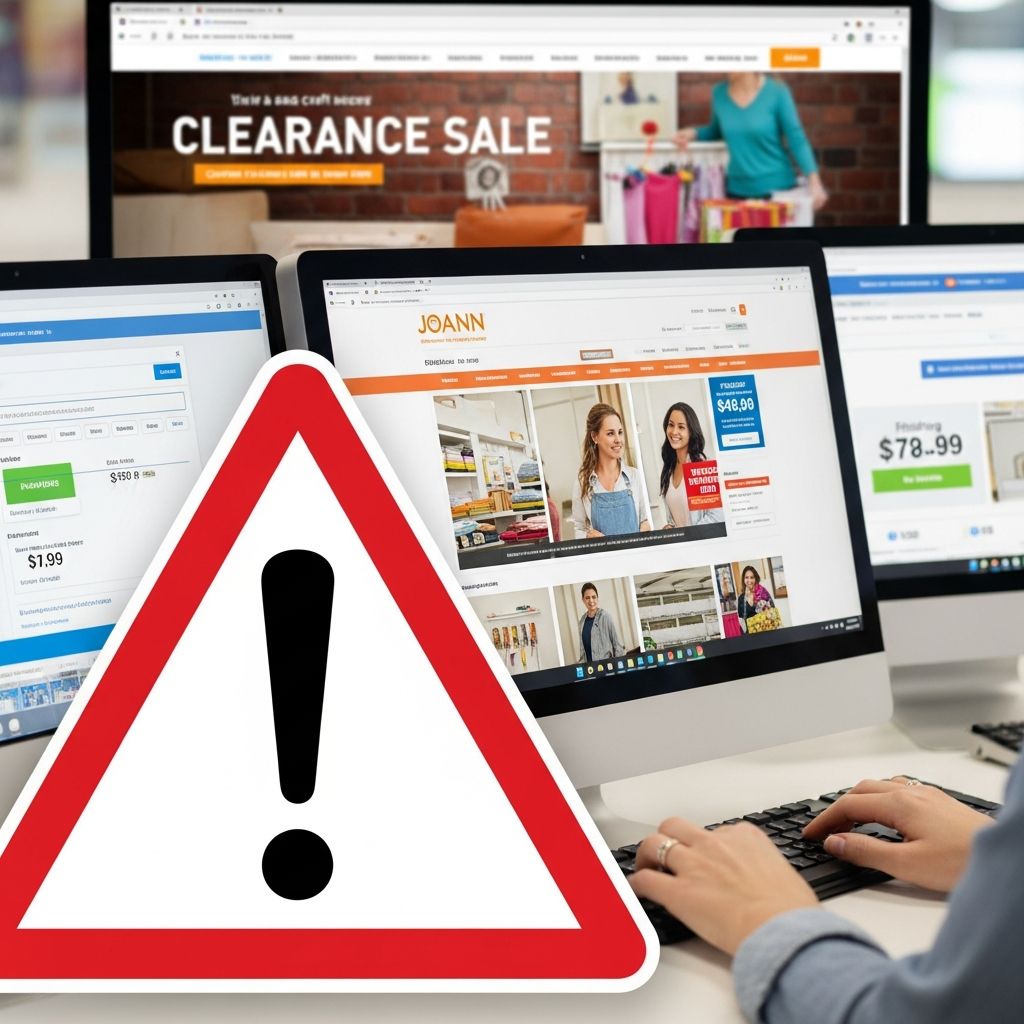
As JOANN Fabric & Craft stores close and run genuine in-store clearance events, scammers are seizing the moment by creating fake websites and online ads that pretend to be official JOANN sales. These schemes target bargain hunters with unbelievable discounts, then disappear with their money and personal information.
This guide explains how these scams work, the warning signs to look for, safer ways to pay online, and what to do if you were caught in a fake JOANN sale or a similar imposter discount offer.
1. Why JOANN Shoppers Are Being Targeted
When a well-known retailer announces store closures or bankruptcy, it creates the perfect conditions for online scams:
- High public attention: News about JOANN’s bankruptcy and closures has been widely reported.
- Real in-store discounts: Shoppers know there are genuine clearance sales at physical locations.
- Confusion about online shopping: JOANN stopped selling merchandise online and shifted to in-store-only sales, but many people still expect to find deals on the web.
Scammers exploit this confusion by building fake JOANN websites and running ads that promise massive discounts, especially on popular items like fabric, yarn, and sewing machines.
2. How the Fake JOANN Online Sale Scam Works
While details vary, many JOANN impersonation scams follow a similar pattern documented by the Federal Trade Commission (FTC), the Better Business Bureau (BBB), and consumer advocates.
2.1 Step-by-step look at the scheme
- You see an attention-grabbing ad
Ads show up on platforms like Facebook, Pinterest, or other sites and claim there is an online JOANN bankruptcy sale or liquidation event with discounts of 80–90% off. - You click through to a convincing website
The fake site uses JOANN’s name, logo, colors, and product photos to look legitimate and may include countdown timers or phrases like “final days” to create urgency. - You place an order and receive a confirmation
The scam site processes your payment, then emails what looks like a receipt or shipping confirmation, sometimes with fake tracking details. - Your payment goes to a different entity
Later, your bank or card statement shows the charge went to a company or individual that is not JOANN, a clear sign you never bought from the real retailer. - The order never arrives — and your data may be at risk
Many victims report never receiving merchandise and sometimes experience additional unauthorized charges after using their card on the fake site.
2.2 Why the receipts look so real
Scammers often:
- Copy JOANN’s branding, corporate address, and email styling to appear authentic.
- Use professional product images and familiar categories (fabric, yarn, machines).
- Include fake tracking numbers that either never update or link to unrelated shipments.
This sophistication is one reason many shoppers do not realize what happened until weeks later when no package shows up.
3. Key Red Flags of Fake Clearance Websites
Whether a site pretends to be JOANN or any other closing retailer, certain warning signs appear again and again.
3.1 Website clues to watch for
- Suspicious web address (URL)
Slight misspellings, extra words, or unfamiliar domain endings are common tricks. For example, using terms like “clearance,” “liquidation,” “outlet,” or random strings next to the brand name. - No shopping on the official site
JOANN’s own website clearly states that it no longer sells products online and that sales are in-store only. Any website claiming to be an online JOANN sale is a red flag. - Unrealistic discounts
Offers of 80–90% off across almost everything — especially on expensive items like sewing machines — are typical bait. - Poor grammar, odd phrasing, or broken English
Many scam sites contain typos, inconsistent capitalization, or awkward sentences that a major U.S. retailer would usually avoid. - Missing or vague contact information
Look for a physical address, working customer service phone number, and a business email. Generic contact forms with no other details are a concern. - No clear return, refund, or privacy policies
Legitimate retailers provide detailed policies. Scam sites often have very short, generic, or obviously copied text.
3.2 Payment and checkout warning signs
- Only allowing risky payment methods
Demands for payment via Zelle, CashApp, wire transfer, gift cards, or cryptocurrency are serious red flags. These methods offer little recourse if something goes wrong. - Inconsistent or foreign merchant names at checkout
If the name shown in your payment app or on the confirmation page does not match the store you think you are buying from, stop and investigate. - No option to pay by major credit card
Legitimate merchants normally accept widely recognized credit cards. Scam sites may claim cards are “temporarily unavailable” while steering you to less safe options.
4. Verifying Whether a Clearance Sale Is Real
Before you click “buy,” take a few minutes to confirm that a sale or website is legitimate. Consumer protection agencies strongly recommend verifying information directly with the company and using trusted sources.
4.1 Confirm with the official company site
- Type the company’s web address yourself into the browser instead of following links from ads or search results.
- Check whether the company states it is selling online at all. JOANN, for example, has clearly told customers that sales are currently in stores only.
- Look for official announcements or banners about store closures and how their sales are being run.
4.2 Cross-check using trusted sources
- Search for alerts from agencies like the Federal Trade Commission (FTC), which regularly posts consumer warnings about active scams.
- Check the Better Business Bureau (BBB) Scam Tracker to see if others have reported similar websites or ads.
- Use independent news outlets or established consumer organizations (like AARP) that cover ongoing fraud trends.
| Check | What to Do | Why It Helps |
|---|---|---|
| Website address | Type the URL manually rather than clicking ads or search results. | Prevents you from being redirected to spoofed or sponsored scam sites. |
| Official messages | Read notices on the real company website about store closures and sales. | Clarifies whether legitimate online shopping is even available. |
| External alerts | Look up the retailer name plus terms like “scam” on FTC or BBB sites. | Reveals known fraud patterns and active warnings. |
| Contact details | Check for a verifiable address, phone number, and support email. | Helps distinguish real businesses from throwaway scam sites. |
5. Safer Ways to Pay When Shopping Online
Even when a website looks legitimate, how you pay can significantly affect your ability to recover money if something goes wrong. The FTC and other consumer protection groups highlight the advantages of credit cards over other payment methods.
5.1 Why credit cards are usually safer
- Stronger dispute rights: Under U.S. law and card network rules, you can typically dispute charges for goods that never arrive or arrive not as described, as long as you act within required time frames.
- Fraud monitoring: Card issuers often detect suspicious activity and may block or reverse fraudulent charges.
- No direct access to your bank balance: Unlike debit cards, fraudulent credit card charges do not pull funds directly from your checking account.
5.2 Extra steps to protect yourself
- Save order confirmations, receipts, and screenshots of the offer.
- Monitor your statements regularly for unexpected or duplicate charges.
- Consider using virtual card numbers or tokenized payment options when available.
5.3 Payment methods to treat with caution
Be especially wary of merchants that only accept:
- Peer-to-peer payment apps (Zelle, Venmo, CashApp) for retail purchases.
- Wire transfers or bank-to-bank payments.
- Gift cards or prepaid cards as the only form of payment.
- Cryptocurrency for regular consumer goods.
These methods are hard to reverse and are commonly used in scams, according to law enforcement and consumer protection agencies.
6. What To Do If You Bought From a Fake JOANN Site
If you suspect you placed an order through a JOANN impersonator or any fraudulent clearance website, acting quickly improves your chances of limiting the damage.
6.1 Take immediate financial steps
- Contact your card issuer or bank right away
Explain that you believe you paid a scam website. Ask whether they can reverse the charge or start a dispute. - Monitor for additional charges
Scammers may attempt extra unauthorized transactions after the first purchase, so check your account frequently. - Consider replacing your card
Your bank may recommend issuing a new card number to prevent future fraudulent use of your information.
6.2 Strengthen your online security
- Change passwords for any accounts that share login details with the scam website.
- Enable multi-factor authentication (MFA) where possible.
- Be alert for phishing emails or texts that reference your recent “order.”
6.3 Report the scam
Reporting helps enforcement agencies track patterns and warn others. You can:
- File a complaint with the Federal Trade Commission (FTC) through its official reporting system.
- Submit details to the BBB Scam Tracker, which collects data on scams like JOANN impersonator websites.
- Share information with state or local consumer protection offices if applicable.
Providing the website address, screenshots, receipts, and communication records is especially helpful for investigators.
7. Protecting Yourself From Future Imposter Retail Scams
Even after JOANN’s closure issues fade from the news, similar scams are likely to target other retailers undergoing restructuring, mergers, or shutdowns. Adopting a few permanent habits can make you more resilient to future schemes.
- Slow down when you see “too good to be true” deals
Scammers rely on urgency. Take time to verify details before paying. - Rely on direct navigation
Whenever possible, access stores by typing their known URL into your browser or using a trusted app. - Stay informed
Periodically review consumer alerts from agencies like the FTC and BBB so you recognize current scam patterns. - Talk with friends and family
Many victims learn about scams only after being harmed. Sharing information, particularly with older adults and new online shoppers, can prevent losses.
Frequently Asked Questions (FAQs)
Q1: Is JOANN running any official online going-out-of-business sales?
No. According to consumer alerts and company statements, JOANN has stopped selling merchandise online and is only offering clearance sales in its physical stores. Any website claiming to be an online JOANN bankruptcy or liquidation sale is not legitimate.
Q2: I saw a social media ad with the JOANN logo and huge discounts. Is that automatically a scam?
Not every ad is fake, but many JOANN impersonation scams start with social media or display ads. Treat any ad for an online JOANN sale with caution, and verify by visiting the official JOANN website using a known URL rather than clicking the ad.
Q3: What is the safest way to check if a retail sale is real?
Go directly to the retailer’s official website or call a verified store number. Confirm whether they are offering online sales at all and whether any particular promotion you saw is official. You can also search for the company name plus “scam” on the FTC or BBB websites for recent alerts.
Q4: Can I get my money back if I paid a fake JOANN site?
There is no guarantee, but you may have the best chance of recovery if you paid with a credit card and contact your card issuer quickly to dispute the charge. Payments sent via wire transfer, gift card, or certain peer-to-peer apps are much harder to reverse.
Q5: Why are scammers focusing on store closures and bankruptcies?
Major closures generate publicity, real discounts, and consumer urgency — conditions scammers can copy and manipulate. Authorities and consumer groups have repeatedly seen impostor websites appear after high-profile bankruptcies or liquidation announcements.
References
- Avoid online JOANN impersonators and their fake sales — Federal Trade Commission. 2025-05-07. https://consumer.ftc.gov/consumer-alerts/2025/05/avoid-online-joann-impersonators-their-fake-sales
- Beware of Fake Joann Fabric Going-Out-of-Business Deals — AARP. 2025-05-16. https://www.aarp.org/money/scams-fraud/joann-fabric-fake-deals/
- Joann warns of fake websites, urges customers to shop in-store only — ABC News. 2025-05-09. https://abcnews.go.com/GMA/Living/joann-warns-fake-websites-urges-customers-shop-store/story?id=119928240
- Better Business Bureau Akron warns of Joann impostor scams — Akron Beacon Journal / USA Today Network. 2025-04-26. https://www.beaconjournal.com/story/news/crime/2025/04/26/better-business-bureau-akron-warns-of-joann-impostor-scams/83293179007/
- Search for Scams: Joann — BBB Scam Tracker, Better Business Bureau. Accessed 2025. https://www.bbb.org/scamtracker/lookupscam?q=scam_name%3DJoann%26from%3D0
Similar Articles








Read full bio of medha deb


