
The Paradox of Disappearing Messages: Why Flawed Features Are Essential for Privacy
Auto-deleting chats cannot thwart screenshots or bad actors, but they remain a vital defense for our everyday digital lives.
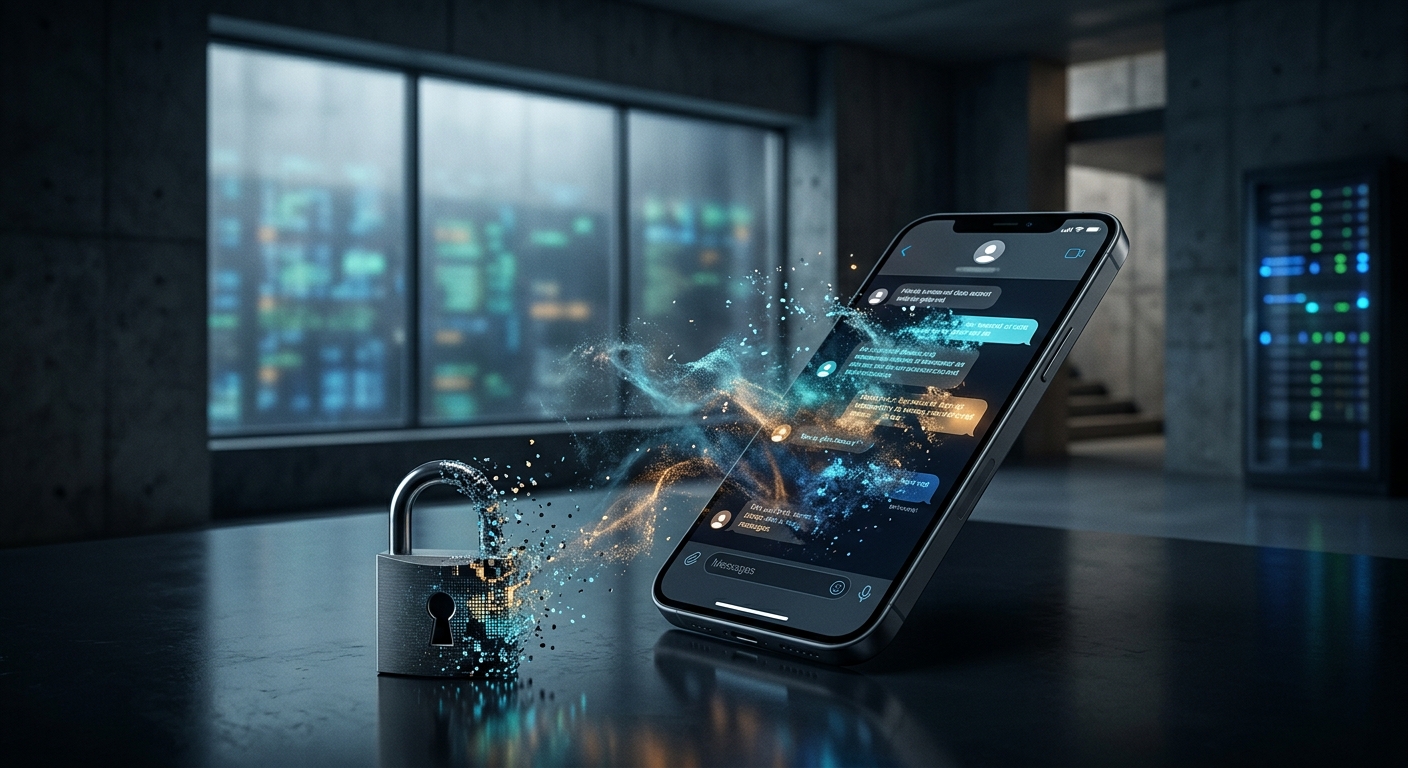
The Unnatural Permanence of the Digital Age
For the vast majority of human history, communication was inherently ephemeral. A conversation spoken in a crowded room or whispered in a quiet hallway existed exclusively in the fragile memories of the participants. The advent of the internet and modern telecommunications abruptly inverted this natural order. Suddenly, every idle thought, hasty text message, and late-night confession was transformed into an immutable digital artifact. The default expectation shifted radically from impermanence to infinite preservation, forcing humanity to adapt to a reality where nothing is ever truly forgotten.
However, in recent years, a vital counter-movement has taken root within our communication infrastructure: the mainstream integration of ephemeral messaging. Today, secure platforms such as Signal, WhatsApp, and other encrypted services offer features designed to automatically purge conversations after a designated time frame. Users can set timers ranging from a few seconds to several months, after which the digital record simply vanishes.
At first glance, the premise of a self-destructing message seems like a technological silver bullet—a foolproof mechanism capable of protecting us from prying eyes, data breaches, and betrayals of trust. But as cybersecurity experts and privacy advocates repeatedly point out, disappearing messages do not technically work the way many users assume. They are riddled with inherent limitations and cannot provide absolute cryptographic certainty of destruction once data reaches a recipient. Yet, despite these technical realities, ephemeral messaging remains one of the most critical developments in modern consumer technology. To understand this paradox, we must dismantle the myth of perfect digital erasure and explore the profound benefits of intentional data minimization.
The Fallacy of Perfect Deletion
To understand why disappearing messages are technically imperfect, one must first understand the anatomy of a digital transmission. The fundamental nature of computer networks relies on duplication. When you send a message, it is not physically “moved” from your smartphone to your friend’s device. Instead, your device creates a copy of the text, encrypts it, and pushes it to a server, which then delivers another copy to the destination device, where it is finally decrypted and displayed.
Because the digital ecosystem is built on the endless replication of data, guaranteeing the total destruction of information across devices you do not control is virtually impossible. A self-destructing timer is merely a polite software instruction asking the recipient’s operating system to delete the file. If the recipient does not wish to comply, the system falls apart. The vulnerabilities of ephemeral messaging include:
- Screenshots and Screen Recordings: While some applications attempt to notify senders when a screenshot is taken, these alerts are easily bypassed on modified operating systems or desktop clients.
- Secondary Devices: The simplest and most unpatchable bypass is the “analog hole.” A recipient can simply use a second smartphone or a digital camera to photograph the screen before the timer expires.
- Modified Clients and Spyware: Advanced adversaries can use modified, third-party versions of messaging applications (often called “forked” apps) that inherently ignore the software’s command to delete incoming messages.
- Notification Caching: Occasionally, the content of a message might be temporarily saved in the operating system’s notification log, leaving traces even after the main application has scrubbed the chat window.
Tech companies offering these features are not attempting to deceive the public; rather, users often misinterpret the threat model. An auto-deleting message cannot prevent an adversarial recipient from betraying your trust. If the person you are communicating with intends to archive your words against your will, ephemeral features will not stop them.
Reclaiming the Impermanence of Human Speech
If disappearing messages cannot stop a determined adversary, why are they championed by privacy experts worldwide? The answer lies not in cryptographic enforcement, but in social engineering and psychological relief. Disappearing messages reintroduce the concept of a mutual social contract into the digital realm.
When you enable a disappearing message timer with a trusted friend, colleague, or partner, you are establishing a shared boundary. You are collectively agreeing that the conversation is casual, temporary, and not meant for long-term archiving. It allows individuals to speak freely, make jokes, vent frustrations, and explore ideas without the paralyzing fear that their words will be taken out of context years later.
This psychological freedom cannot be overstated. In an era where decade-old social media posts or private texts are routinely excavated to damage reputations or fuel public outrage, the burden of a permanent digital footprint is heavy. Ephemeral messaging mimics the natural fading of a spoken conversation. It provides a technical mechanism to enforce healthy digital hygiene, ensuring that everyday chatter doesn’t unnecessarily sit in a database for eternity.
Strategic Data Minimization: The Ultimate Security Buffer
Beyond the psychological benefits, disappearing messages serve as a powerful tool for a concept known as “data minimization.” In cybersecurity circles, there is a common maxim: You cannot leak what you do not have.
Most people’s smartphones contain a staggering archive of highly sensitive information. Bank details, medical updates, intimate photos, passwords, and deep personal secrets are scattered across multi-year chat histories. If a device is lost, stolen, seized by authorities at a border crossing, or compromised by malware, that entire historical archive is exposed.
By default, if you use standard SMS or non-ephemeral messaging, a single point of failure compromises years of your life. Disappearing messages drastically reduce this attack surface. If you set your messages to delete after seven days, a hacker who successfully compromises your device only gains access to a single week of context. The vast majority of your digital life has already been safely incinerated.
| Messaging Platform | Default Retention | Ephemeral Options | Primary Threat Model Addressed |
|---|---|---|---|
| Standard SMS / iMessage | Indefinite (Device & Cloud backups) | None (Requires manual deletion) | None (Highly vulnerable to device seizure and cloud breaches) |
| Signal Private Messenger | Indefinite (until user changes it) | Customizable (from seconds to 4 weeks) | Targeted device seizures, physical loss, data hoarding |
| Indefinite (with potential cloud sync) | 24 hours, 7 days, 90 days | Casual snooping, mitigating long-term cloud exposure |
The Legal Divide: Personal Freedom vs. Corporate Accountability
While data minimization is an essential protective measure for private citizens, it introduces profound complexities in the corporate and legal sectors. The ability to permanently destroy digital records at will is a double-edged sword, and regulators have recently taken aggressive stances against the misuse of ephemeral messaging by corporations.
For ordinary citizens, deleting texts is a fundamental privacy right. However, for businesses, brokers, and government officials, the destruction of communications can equate to the destruction of evidence. In 2024, the U.S. Department of Justice and the Federal Trade Commission issued stern updates to their guidance regarding collaborative tools and ephemeral apps. They explicitly warned that companies cannot use auto-deleting message features to circumvent legal preservation obligations during investigations. If an organization faces litigation or a regulatory inquiry, failing to turn off self-destructing message features can result in severe obstruction of justice charges.
This legal dichotomy underscores the true nature of the technology. Disappearing messages are a powerful tool for individual liberty, protecting journalists, activists, and everyday people from pervasive surveillance. Yet, when utilized by entities bound by transparency and record-keeping laws, they become a mechanism for evading accountability. Understanding this context helps users recognize that privacy tools are neutral; their ethical value is determined entirely by the context of their application.
Best Practices for Threat Modeling Your Communications
To safely navigate the modern digital landscape, users must adopt a realistic threat model. A threat model is simply a practical assessment of who might want your data and how they might attempt to get it. When applying ephemeral messaging to your personal threat model, consider the following best practices:
- Assess the Recipient’s Trustworthiness: Never rely on disappearing messages to send sensitive information to someone you do not fully trust. The software cannot prevent a malicious recipient from capturing your data via a secondary camera.
- Calibrate Your Timers Appropriately: Match the disappearing timer to the sensitivity of the conversation. Everyday banter might warrant a 7-day timer to keep your device’s storage clean, whereas coordinating highly sensitive financial data or personal secrets may require a 5-minute expiration.
- Secure Your Physical Device: Ephemeral messages protect you from historical data extraction, but they do not protect you if your phone is snatched from your hand while unlocked. Always use strong device passwords and biometric locks.
- Understand Cloud Backup Loopholes: Ensure that your messaging application is not inadvertently backing up your “secure” chats to an insecure cloud server (such as iCloud or Google Drive) in unencrypted plain text.
Conclusion
The quest for an absolute, unbreakable digital eraser is a futile endeavor in a technological ecosystem built upon data replication. Disappearing messages are inherently flawed, capable of being circumvented by a simple screenshot or a secondary lens. However, dismissing them because they fail to stop determined bad actors is a fundamental misunderstanding of their purpose.
By automating the deletion of our daily digital detritus, ephemeral messaging features serve as a vital defense against the unnatural permanence of the modern internet. They protect us against passive dragnets, mitigate the damage of device theft, and most importantly, allow us to reclaim the spontaneous, fleeting nature of human conversation. They may not be perfect, but in the fight for digital privacy, they remain absolutely indispensable.
Frequently Asked Questions (FAQs)
Do disappearing messages prevent someone from taking a screenshot?
No. While some applications (like Snapchat or Signal) attempt to block screenshots or notify the sender if one is taken, these mechanisms are easily defeated. A recipient can use modified software, third-party apps, or simply point another camera at their screen to record the message.
Are disappearing messages encrypted?
In highly reputable apps like Signal and WhatsApp, yes. Disappearing messages still utilize end-to-end encryption while in transit. The “disappearing” aspect only dictates how the message is handled by the local storage of the devices once it has been received and decrypted.
Can law enforcement recover deleted ephemeral messages?
If a message has successfully expired and been wiped from the local storage of both the sender’s and recipient’s devices, it is generally unrecoverable, even by law enforcement using advanced forensics. However, if a message was intercepted before deletion, captured via screenshot, or backed up to an external cloud service, it could still be retrieved.
Are there legal restrictions on using ephemeral apps?
For private individuals communicating personally, there are generally no restrictions. However, for businesses subject to regulatory compliance, or public officials subject to public records laws, the use of ephemeral messaging to conduct official business can violate federal preservation obligations and result in legal penalties.
References
- Justice Department and the FTC Update Guidance that Reinforces Parties’ Preservation Obligations for Collaboration Tools and Ephemeral Messaging — U.S. Department of Justice. 2024-01-26. https://www.justice.gov/opa/pr/justice-department-and-ftc-update-guidance-reinforces-parties-preservation-obligations-collaboration-tools
- Slack, Google Chats, and other Collaborative Messaging Platforms Have Always Been and Will Continue to be Subject to Document Requests — Federal Trade Commission. 2024-01-26. https://www.ftc.gov/business-guidance/blog/2024/01/slack-google-chats-other-collaborative-messaging-platforms-have-always-be-will-continue-be
- Set and manage disappearing messages — Signal Support. 2024-05-15. https://support.signal.org/hc/en-us/articles/360007320772-Set-and-manage-disappearing-messages
- No 10 confirms Starmer’s WhatsApp messages automatically delete — The Guardian. 2026-06-03. https://www.theguardian.com/politics/article/2026/jun/03/no-10-confirms-starmers-whatsapp-messages-automatically-delete
Similar Articles








Read full bio of medha deb


