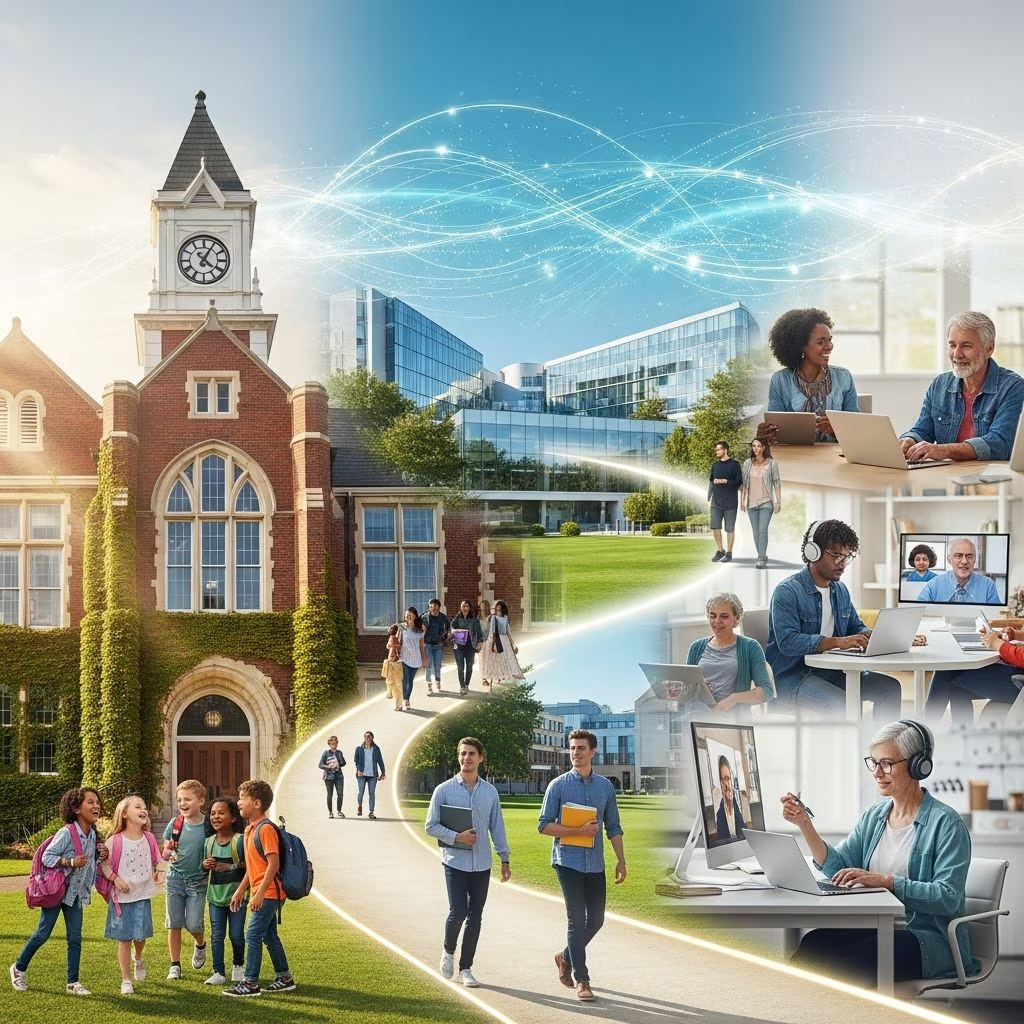
Families and adult learners today face more education options than ever before. From neighborhood public schools to global online universities, each pathway offers different costs, supports, and outcomes. Understanding these choices can help you match an education plan to your needs, values, and long-term goals.
This guide explains the major education paths available in the United States, how they differ, and key questions to consider before making a decision.
1. Key Factors to Weigh Before Selecting an Education Option
Before comparing specific school types, it helps to clarify what matters most for you or your child. Education systems around the world are being reshaped by technology, demographics, and labor market needs, making early planning increasingly important.
- Academic goals: College preparation, immediate job skills, or general foundational learning?
- Cost and financial aid: Tuition, fees, materials, transportation, and lost work time.
- Learning style: Hands-on, project-based, discussion-oriented, or self-paced online learning?
- Support needs: Special education services, English language learning, counseling, or flexible scheduling.
- Environment and culture: Class size, discipline approach, diversity, school values, and safety.
- Technology access: Reliable internet and devices for hybrid or online learning, which are becoming central in modern education.
Clarifying these priorities will make it easier to evaluate each option below.
2. Public K–12 Schools: The Default Path for Many Families
Public schools are funded primarily by state and local governments and must follow state academic standards and civil rights laws. They are usually assigned by geographic attendance zones, but many districts now offer school choice within the public system.
Advantages of Public Schools
- No tuition: Funded by taxpayers, which reduces direct costs to families.
- Comprehensive services: Special education, transportation, school meals, and counseling are often available.
- Diverse peer groups: Exposure to students from a range of backgrounds and abilities.
- Accountability: Schools must report performance data and follow state curriculum requirements.
Potential Drawbacks
- Larger class sizes and limited individual attention in some districts.
- Variation in quality depending on local funding and staffing levels.
- Less flexibility in curriculum and schedule compared with homeschooling or some private options.
Public schools increasingly incorporate career and technical education (CTE) tracks, early college high schools, and dual-enrollment programs, reflecting a broader trend toward multiple pathways to graduation and employment.
3. Private and Independent Schools: Choice with Tuition
Private schools are funded through tuition, donations, and endowments rather than public tax dollars. They may be religious or secular and often have more freedom in curriculum design, instructional methods, and admission policies.
Benefits of Private Education
- Smaller class sizes and the potential for more individualized instruction.
- Specialized missions, such as faith-based education, arts focus, or advanced academic programs.
- Ability to adopt innovative teaching approaches quickly, such as project-based or inquiry-based models.
Considerations and Limits
- Tuition costs can be substantial, although scholarships or need-based aid may be available.
- Services for students with disabilities or complex learning needs may be more limited than in public schools.
- Admission criteria may restrict access based on academics, behavior, or other factors.
When considering a private school, ask about accreditation, teacher qualifications, financial aid, and how graduates perform in college or the workforce.
4. Charter, Magnet, and Other Public Choice Models
In many regions, families can choose among specialized public options beyond the neighborhood school. These models are publicly funded but operate with varying degrees of flexibility.
Charter Schools
Charter schools are tuition-free public schools that operate under a performance contract (or “charter”) with a state or local authorizer. In exchange for meeting defined outcomes, they often receive more autonomy in curriculum, staffing, and scheduling.
- Pros:
- Innovative instructional models, such as STEM academies, college-prep programs, or language immersion.
- Open enrollment across wider geographic areas in many states.
- Cons:
- Quality varies; families need to review performance data and charter renewal history.
- May lack transportation or specialized services compared with district schools.
Magnet and Specialized Programs
Magnet schools and themed programs (such as arts, health sciences, or international studies) are operated by public districts to attract a diverse student body from across attendance zones.
- They may require applications, auditions, or placement tests.
- They often offer advanced coursework and strong connections to local industries or colleges.
5. Homeschooling: Personalized Learning at Home
Homeschooling allows parents or guardians to direct their child’s education at home rather than enrolling in a school. Regulations vary by state, but families typically must meet basic requirements related to curriculum, assessment, or notice to education authorities.
Why Families Choose Homeschooling
- Customization: Instruction can be tailored to a child’s pace, interests, and learning style.
- Flexible scheduling for travel, health needs, or extracurricular pursuits.
- Ability to integrate religious or cultural values directly into daily instruction.
Challenges to Plan For
- Significant time and planning responsibilities for parents.
- Need to ensure access to socialization opportunities, such as co-ops, clubs, and sports leagues.
- Ensuring compliance with state law on required subjects and record-keeping.
Many homeschoolers now blend online curricula, local classes, and community college courses, reflecting wider growth in hybrid learning models across education.
6. Career and Technical Education: Learning Job Skills in High School and Beyond
Career and technical education (CTE) focuses on occupational skills alongside core academics. CTE is offered in many high schools, regional technical centers, and community colleges and is increasingly seen as a proven pathway to both graduation and postsecondary success.
Features of CTE Programs
- Hands-on training in fields like health care, information technology, construction, and advanced manufacturing.
- Opportunities for industry-recognized certifications and apprenticeships.
- Integration of problem-solving, teamwork, and communication skills needed in modern workplaces.
Benefits of CTE
- Research cited by education organizations shows that students in high-quality CTE programs are more likely to graduate and continue into further education than similar peers, highlighting its value as a mainstream option, not a last resort.
- Shorter training cycles to enter well-paying careers, particularly in high-demand technical fields.
7. Higher Education: From Community Colleges to Universities
After high school, learners can pursue many different postsecondary options. Global analyses highlight that governments and institutions are reshaping higher education to respond to changing labor markets, demographic shifts, and technology.
| Option | Typical Length | Main Outcomes |
|---|---|---|
| Community College | 1–2 years | Certificates or associate degrees; transfer to 4-year schools |
| Four-Year College/University | 4+ years | Bachelor’s degree and pathway to graduate or professional study |
| Apprenticeships | 2–4 years | Paid training with industry-recognized credentials |
| Short-Term Certificates | Weeks to months | Targeted skills for specific jobs or promotions |
Community Colleges
Community colleges typically offer open admission, affordable tuition, and flexible scheduling, including evening and online classes. They play a central role in workforce retraining, adult basic education, and transfer to four-year institutions.
Four-Year Institutions
Colleges and universities provide more extensive majors, campus life, research opportunities, and access to graduate or professional programs. However, rising tuition has led many learners to seek shorter, more flexible pathways.
To respond, institutions are breaking degrees into stackable segments, offering certificates and microcredentials that can build toward a full degree while providing immediate labor-market value.
8. Online, Hybrid, and Alternative Learning for All Ages
Online and blended learning have shifted from niche offerings to core parts of modern education systems. Analysts project rapid global growth in online education, driven by convenience, scale, and lower average costs compared with in-person-only programs.
Online and Hybrid K–12 Learning
- Virtual schools provide full-time online programs, often run by states, districts, or charter organizations.
- Hybrid models combine in-person classes with online coursework, allowing more flexible pacing and scheduling.
- Schools use online platforms for enrichment, credit recovery, world languages, and advanced courses not available on every campus.
Online and Hybrid Higher Education
- Many universities now run complete online degree programs in fields such as business, IT, and health services.
- Working adults often favor online and hybrid formats because they can study around job and family responsibilities.
- Institutions use data analytics and AI tools to support student success, personalizing learning and identifying those at risk of dropping out.
Microcredentials and Short Courses
Short, focused programs such as microcredentials, digital badges, and professional certificates have proliferated. They allow learners to:
- Acquire specific skills for promotion or career change without committing to a full degree.
- Stack credentials over time toward more advanced qualifications.
- Show evidence of up-to-date skills in fast-changing fields like cybersecurity, data analytics, and digital marketing.
9. Comparing Major Education Options at a Glance
The table below summarizes key differences among several common education paths, focusing on K–12 and early postsecondary choices.
| Path | Cost to Family | Flexibility | Primary Audience |
|---|---|---|---|
| Public School | Low (tax-funded) | Moderate; fixed calendar and curriculum | K–12 students in local districts |
| Private School | Medium to high tuition | Moderate; more freedom in curriculum | Families seeking specialized or faith-based programs |
| Homeschooling | Variable; materials and lost income | High; custom schedule and content | Families wanting full control of learning |
| CTE/Technical Programs | Often low in high school; modest at colleges | Moderate; structured hands-on training | Teens and adults seeking job-ready skills |
| Online / Hybrid Degrees | Varies; often lower total cost of attendance | High; study from any location and time | Working adults, caregivers, remote learners |
10. Practical Steps for Making an Education Decision
Once you understand the main options, use a step-by-step process to decide what fits best.
Step 1: Define Goals and Constraints
- Clarify long-term objectives: college admission, skilled trade, career change, or personal enrichment.
- Identify constraints: budget, health needs, transportation, work schedules, and technology access.
Step 2: Research Local and Online Choices
- Review school and program performance reports, graduation rates, and student satisfaction where available.
- Visit campuses or attend virtual open houses to observe culture, teaching style, and support services.
Step 3: Compare Support and Outcomes
- Ask about tutoring, counseling, disability services, language support, and career guidance.
- Check how many graduates move on to college, training, or stable employment, and in what time frame.
Step 4: Revisit and Adjust
- Education is increasingly designed to allow people to start, pause, and re-enter learning at different life stages.
- Do not hesitate to revise your plan if needs, interests, or circumstances change.
Frequently Asked Questions (FAQs)
Q1: Is a four-year college degree still necessary for a good career?
Many careers still require a bachelor’s degree, especially in fields like engineering, education, and certain business roles. However, industry-recognized certificates, apprenticeships, and associate degrees can now lead to solid wages in technical and skilled trades, particularly when combined with work experience and ongoing short courses.
Q2: How can I tell whether an online program is legitimate?
Check that the institution is accredited by a recognized accrediting agency, review graduation and loan default rates, and look for transparent information on tuition and job placement. Many reputable universities now run fully online programs, but it is still important to avoid unaccredited “diploma mills.”
Q3: Can my child switch from public school to homeschooling or back again?
In most states, families can move between public schooling and homeschooling, but there are procedures for enrollment, notification, and sometimes assessment. It is wise to maintain detailed records of coursework and evaluations to smooth transitions between settings.
Q4: What if my teen is not interested in traditional academics?
Career and technical education, apprenticeships, and project-based programs can channel a student’s interests into concrete skills while still covering core academic subjects. Many learners thrive when they see direct links between schoolwork and real-world jobs.
Q5: How important is technology in choosing a school or program?
Technology access and effective use are now central to learning. Schools that integrate digital tools thoughtfully—through hybrid models, virtual labs, or AI-supported tutoring—can offer more flexible and personalized experiences, but they also must ensure equitable access so no learner is left behind.
References
- 2025 Higher Education Trends — Deloitte Insights. 2024-10-01. https://www.deloitte.com/us/en/insights/industry/public-sector/2025-us-higher-education-trends.html
- 10 of the Hottest Topics in Education for 2025 — Marzano Research. 2024-06-01. https://marzanoresearch.com/hot-topics-in-education-2025/
- Education Technology Trends to Watch in 2025 — Digital Learning Institute. 2024-08-15. https://www.digitallearninginstitute.com/blog/education-technology-trends-to-watch-in-2025
- 12 Emerging Education Trends (2025 & 2026) — Exploding Topics. 2024-09-10. https://explodingtopics.com/blog/education-trends
- Trends Shaping Education 2025 — OECD. 2025-01-15. https://www.oecd.org/en/publications/2025/01/trends-shaping-education-2025_3069cbd2.html