
Mastering Copyright Notices: Your Essential Guide
Unlock the power of copyright notices to safeguard your creative works effectively and deter potential infringers worldwide.
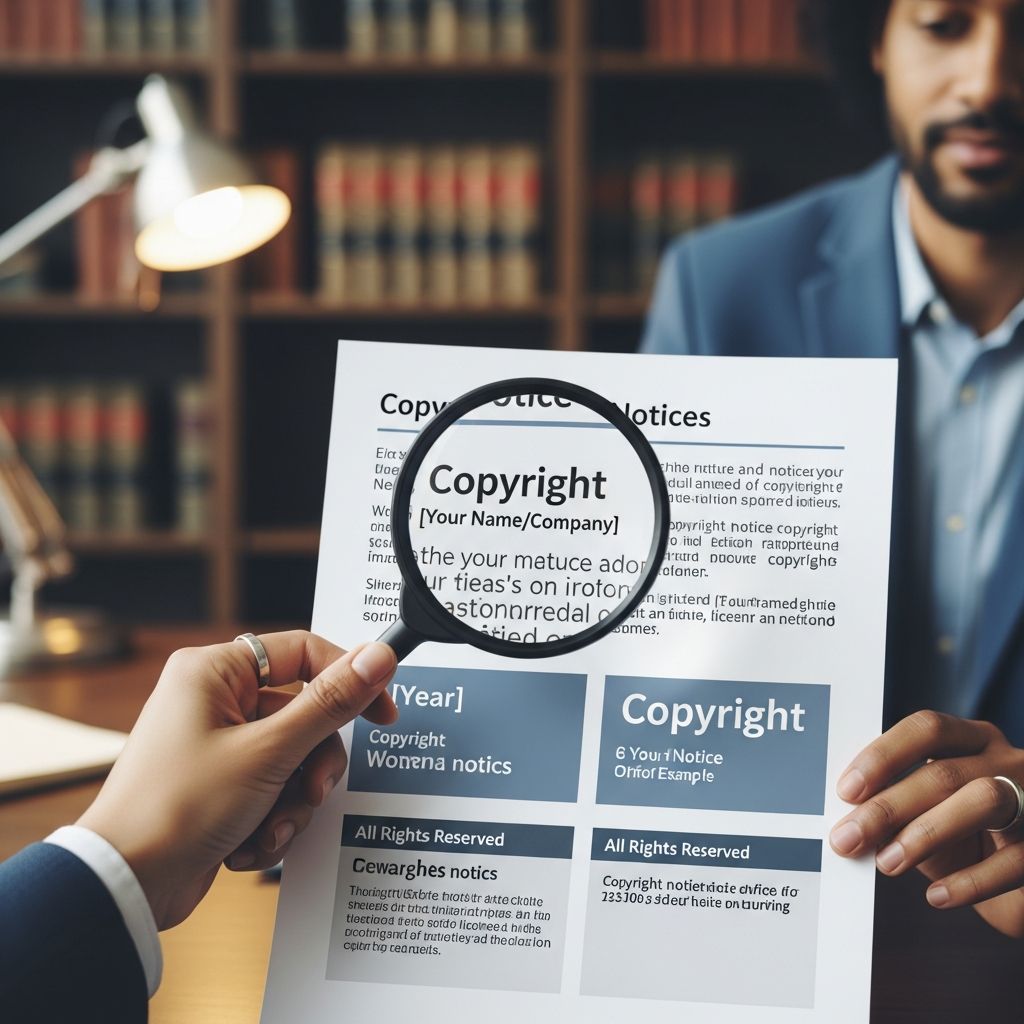
Copyright notices serve as a critical tool for creators, signaling ownership and discouraging unauthorized use of original works. Though optional since 1989, they provide substantial legal and practical advantages in protecting intellectual property.
Understanding the Fundamentals of Copyright Protection
Copyright law automatically safeguards original works of authorship the moment they are fixed in a tangible medium, such as writing, recording, or digital files. This protection encompasses literary, dramatic, musical, artistic, and certain other intellectual creations. In the United States, this principle stems from the Copyright Act and international agreements like the Berne Convention, which the U.S. joined in 1989, eliminating the prior requirement for notices on published works.
Despite this automatic protection, a visible copyright notice acts as a public declaration. It informs viewers that the work is protected, identifies the owner, and can influence legal outcomes in infringement cases by negating defenses like innocent infringement.
Key Benefits of Including a Copyright Notice
Even in an era of optional notices, incorporating one yields multiple advantages:
- Deterrence Effect: It warns potential copiers of legal risks, reducing casual theft of content.
- Legal Leverage: In court, it prevents infringers from claiming unawareness, potentially increasing awarded damages.
- Ownership Clarity: It specifies the owner and publication year, simplifying licensing inquiries and disputes.
- Evidentiary Value: For pre-1989 works or specific scenarios, it preserves full statutory remedies.
These benefits make notices indispensable for websites, books, software, images, and videos, especially amid rampant online copying.
Core Components of an Effective Copyright Notice
A standard notice comprises three essential elements, often combined into one line for maximum impact.
| Component | Description | Example |
|---|---|---|
| Symbol | The © symbol (or ‘Copyright’ or ‘Copr.’), universally recognized. | © |
| Year | Year of first publication; use a range (e.g., 2020-2026) for updated works. | 2026 |
| Owner | Name of the individual, business, or entity holding rights; abbreviations allowed if recognizable. | Jane Doe |
Optional fourth element: A rights statement like ‘All Rights Reserved’ to assert full control, or specifics like ‘Some Rights Reserved’ under Creative Commons.
Example Notices
- Basic: © 2026 Jane Doe. All rights reserved.
- Business: © 2020-2026 Acme Corp. All rights reserved.
- Creative Commons: © 2026 John Smith. Licensed under CC BY-NC 4.0.
Strategic Placement: Where to Position Your Notice
Placement must ensure ‘reasonable notice,’ meaning it’s visible without undue effort. The U.S. Copyright Office provides guidelines via regulations on affixation.
For Digital Content
- Websites: Footer, sidebar, or each page bottom.
- Images/Graphics: Bottom corner or metadata (EXIF).
- Videos: Opening credits, end screen, or description.
- Blogs/Articles: End of post or image captions.
For Physical and Traditional Media
- Books: Title page or verso (back of title page).
- Art/Prints: Border edge or print run info.
- Software: Splash screen, ‘About’ box, or documentation.
- Sound Recordings: Use ℗ symbol near tracks; pair with © for compositions.
Incorrect placement can weaken enforceability, so prioritize conspicuous spots.
Special Rules for Diverse Work Types
Unpublished Works
Notices are entirely optional but recommended for drafts shared online or with collaborators to preempt claims of abandonment.
Pre-1989 Publications
These required notices for protection; omissions could lead to forfeiture unless cured via registration and efforts to add notices.
Derivative and Collective Works
Notice covers new material; pre-existing elements retain their own. Example: © 2026 NewCo for updates to a public domain text.
International Considerations
Berne Convention members recognize U.S. notices, but local laws vary. The © symbol ensures global intelligibility.
Common Pitfalls and How to Avoid Them
Steer clear of these errors to maximize protection:
- Inaccurate Year: Use publication, not creation date; update ranges annually.
- Wrong Owner: List current rights holder, not just creator if transferred.
- Obscure Placement: Avoid burying in fine print or non-visible areas.
- Missing Symbol: © is safest; words alone may not suffice abroad.
- No Updates: Refresh for revisions to extend perceived protection.
Regular audits of digital assets ensure compliance and visibility.
Copyright Notice vs. Registration: Complementary Tools
A notice announces ownership publicly, while registration with the U.S. Copyright Office provides prima facie evidence in court, enabling statutory damages and attorney fees for U.S. works. Use both: Notice for deterrence, registration for litigation muscle. Certificates issued within five years of publication hold strong evidentiary weight.
Navigating Infringement: Role of the Notice in Disputes
If infringement occurs, a proper notice bolsters your case. Courts view it as proof the defendant had ‘constructive notice,’ barring innocent infringer defenses that cap damages. Document everything: Save originals with timestamps, register promptly, and send cease-and-desist letters referencing the notice.
Best Practices for Modern Creators
- Embed notices in all new works from inception.
- Use tools like watermarks for visuals, HTML footers for sites.
- Monitor usage with reverse image searches or plagiarism detectors.
- Combine with licenses (e.g., GPL for software) for nuanced permissions.
- Educate teams on consistent application across projects.
For businesses, standardize via templates in CMS platforms like WordPress.
Frequently Asked Questions (FAQs)
Is a copyright notice mandatory for protection?
No, since March 1, 1989, U.S. law protects works without one, but it’s highly recommended for added benefits.
Can I use a copyright notice on unpublished work?
Yes, optionally, to signal ownership during sharing or previews.
What if I forget the notice on some copies?
For post-1989 works, minor omissions are forgivable if registered timely and efforts made to correct.
Does the notice extend copyright duration?
No, duration is fixed by law (e.g., life + 70 years for individuals); it aids term determination for anonymous works.
Is ‘All Rights Reserved’ legally binding?
It’s declarative; core protection comes from copyright law, but it clarifies no implied licenses.
Conclusion
Copyright notices remain a simple yet powerful ally for creators. By thoughtfully implementing them, you not only assert your rights but also foster a culture of respect for intellectual property. Stay vigilant, update regularly, and pair with registration for ironclad defense.
References
- Copyright Notice — U.S. Copyright Office. 2023. https://www.copyright.gov/circs/circ03.pdf
- Chapter 4: Copyright Notice, Deposit, and Registration — U.S. Copyright Office (Title 17). Accessed 2026. https://www.copyright.gov/title17/92chap4.html
- Copyright Notice — Legal Information Institute, Cornell Law School. Accessed 2026. https://www.law.cornell.edu/wex/copyright_notice
- What Is a Copyright Notice — Copyright Alliance. 2024-02-15. https://copyrightalliance.org/faqs/what-is-copyright-notice/
- Copyright Examples & How to Write a Copyright Notice — Termly. 2025. https://termly.io/resources/articles/copyright-examples/
- Circular 3: Copyright Notice — U.S. Copyright Office. 2022-06-01. https://www.copyright.gov/circs/circ03.pdf
Similar Articles








Read full bio of Sneha Tete


