
License Plate Readers: Public Data vs. Privacy Rights
Exploring the tension between law enforcement's use of ALPR technology and individual privacy protections in the digital age.
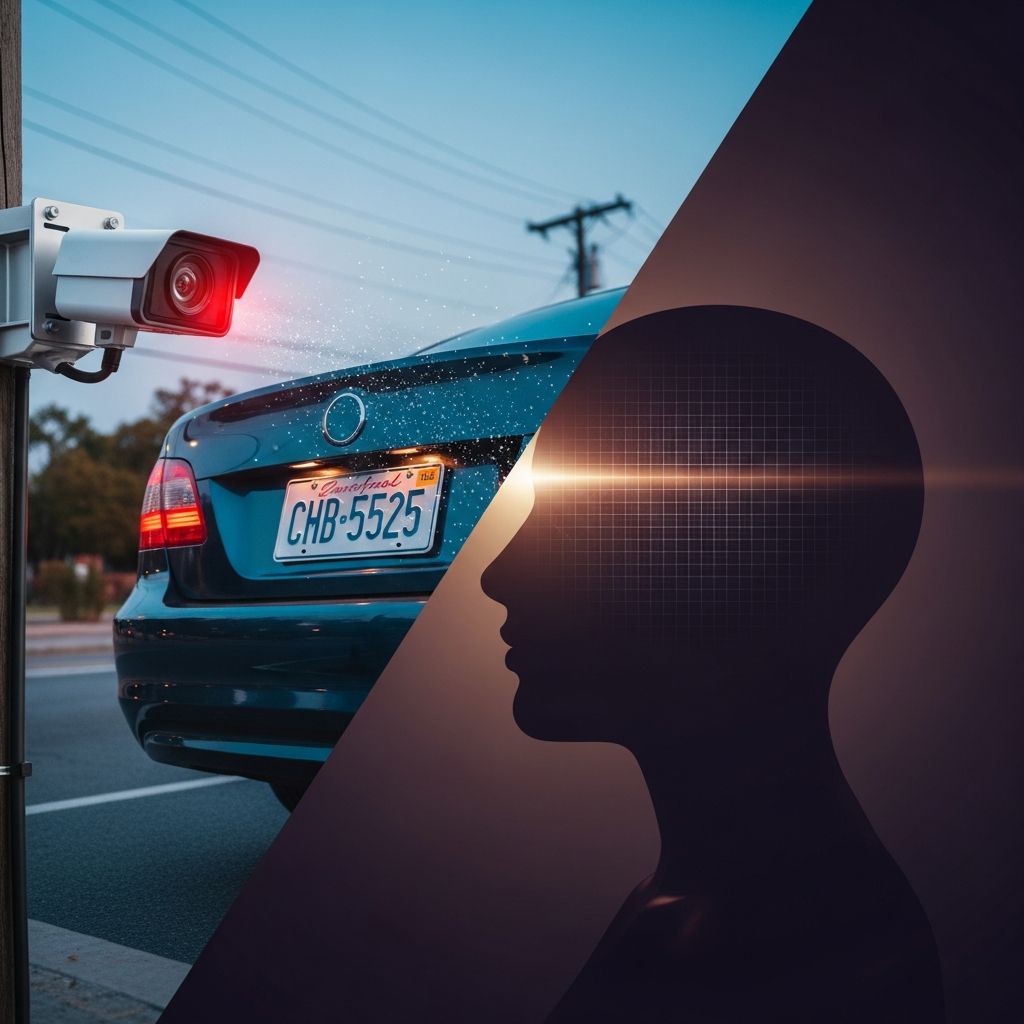
Automated License Plate Readers (ALPRs), also known as Automatic License Plate Recognition systems, represent a cornerstone of modern law enforcement technology. These devices use high-speed cameras and optical character recognition software to capture vehicle license plates, along with timestamps, locations, and sometimes additional details like vehicle make or color. Mounted on police vehicles, traffic poles, or bridges, ALPRs scan plates in real-time, enabling rapid identification of stolen cars, wanted suspects, or vehicles linked to crimes. While license plates are publicly visible, the mass collection and indefinite storage of this data raise profound questions about surveillance and personal privacy.
How ALPR Technology Functions in Practice
ALPR systems operate by photographing license plates as vehicles pass by at speeds up to highway levels. The software instantly processes the image, converting it into searchable text data. This information is then cross-referenced against ‘hotlists’—databases of plates associated with crimes, Amber Alerts, or missing persons. A ‘hit’ triggers an alert to officers, facilitating immediate action.
Beyond fixed installations, mobile ALPR units on patrol cars expand coverage dynamically. Data from these scans feeds into centralized databases, often shared across agencies or even with private vendors. For instance, in California, public agencies must publish detailed usage policies outlining data handling, as mandated by Civil Code section 1798.90.51. These policies specify permissible uses like investigations, prohibit deployment in private areas with privacy expectations, and require security measures such as encryption and access logs.
- Key Components: Camera for imaging, OCR software for text extraction, GPS for geolocation, and integration with law enforcement databases.
- Scan Volume: A single unit can capture thousands of plates per day, generating massive datasets over time.
- Accuracy Factors: Weather, lighting, and plate conditions affect read rates, typically ranging from 85-95%.
This technology has been in use for over two decades, proving invaluable in scenarios like recovering abducted children or locating felony suspects. However, its scalability amplifies concerns when billions of scans accumulate without targeted purpose.
Public Safety Advantages of Widespread ALPR Deployment
Proponents highlight ALPRs’ role in enhancing community safety. By automating plate checks, officers focus on high-risk hits rather than manual inspections. Real-world applications include:
- Traffic enforcement: Identifying unregistered or expired plates to reduce road hazards.
- Crime resolution: Linking vehicles to hit-and-runs, burglaries, or homicides via historical travel patterns.
- Emergency response: Quick location of vehicles in pursuits or alerts.
In Woodside, California, the local policy emphasizes ALPRs for ‘bona fide law enforcement investigations,’ with training on legal limits and data security. Nationally, agencies report high hit rates for legitimate purposes, though these represent a fraction of total scans—often less than 1%.
| Use Case | Benefit | Example Impact |
|---|---|---|
| Stolen Vehicle Recovery | Real-time alerts | Thousands recovered annually |
| Amber Alerts | Rapid child location | Successful rescues documented |
| Crime Scene Linkage | Pattern analysis | Cold cases solved via historical data |
These gains underscore why resistance to regulation sometimes arises, as seen in California’s Governor Newsom vetoing a bill for potentially hindering investigations.
Privacy Risks and Surveillance Concerns
Despite benefits, ALPRs enable unprecedented tracking of innocent drivers. Each scan reveals not just location but, in aggregate, movement patterns—visits to doctors, places of worship, or political rallies. Indefinite retention creates ‘location histories’ retrievable years later, chilling free association.
Critics, including the ACLU and EFF, warn of mass surveillance. Reports document storage of millions of innocent motorists’ data, with lax oversight allowing misuse like targeting immigrants or abortion seekers. Private companies exacerbate this by selling data to police without privacy safeguards. Data breaches further expose vulnerabilities, as noted by the Brennan Center.
In California, SB 34 prohibits sharing ALPR data with ICE for immigration enforcement, yet violations persist, highlighting enforcement gaps. Aggregate data can infer sensitive activities, eroding the ‘reasonable expectation of privacy’ under the Fourth Amendment.
Legal Landscape and State-Level Regulations
U.S. ALPR laws vary widely, with only three states—unspecified in recent reports—passing new measures this year focused on access controls. California leads with comprehensive rules:
- Usage Policies: Mandatory online publication detailing purposes, retention (often 1-2 years max for non-hits), sharing restrictions, and security.
- Training: Officers must complete courses on legal use, privacy, and system operation.
- Reporting: Annual disclosures of scans, hits, queries, and audits.
SB 274 proposes further limits, requiring data purging post-investigation and sanctuary compliance. New Jersey and others eye bans on interstate sharing for reproductive care probes. Federally, CRS reports note ongoing debates over constitutional bounds, with no uniform standards.
Policies often exempt data from public records acts, balancing transparency with security. Sharing is limited to verified law enforcement with reciprocal policies.
Best Practices for Balancing Security and Rights
Effective ALPR governance requires:
- Open Data Policies: Publicly accessible guidelines on collection, use, and deletion.
- Short Retention: Automatic purge of non-hit data after 30-90 days.
- Audit Trails: Logged access with justifications and supervisor approvals.
- No Private Zones: Avoidance of areas like homes or clinics.
- Interagency Vetting: Ensure partners match privacy standards before sharing.
Woodside’s policy exemplifies this, mandating encryption, role-based access, and annual reports on queries and hits. EFF compiles over 160 such policies, aiding public oversight.
Future Directions and Policy Recommendations
Emerging trends include AI-enhanced ALPRs capturing occupant images or behaviors, intensifying debates. Policymakers should prioritize:
- Legislative caps on data retention and real-time sharing.
- Federal guidelines for interstate consistency.
- Judicial oversight for mass data queries.
- Public dashboards for usage stats.
Recent vetoes and bills signal momentum toward equilibrium. Stakeholders must collaborate to harness ALPRs’ power without eroding civil liberties.
Frequently Asked Questions (FAQs)
What is an ALPR system?
An Automated License Plate Reader (ALPR) is a camera-based tool that scans and records vehicle plates, locations, and times for law enforcement.
Are ALPR scans legal everywhere?
Laws vary by state; California requires privacy policies, but no national standard exists.
How long is ALPR data stored?
Policies differ—some purge non-hits quickly, others retain for years; best practices recommend short terms.
Can ALPR data track private movements?
Aggregate scans can reveal patterns, prompting privacy safeguards against indefinite storage.
Who regulates private ALPR use?
Oversight is minimal; calls grow for rules on commercial data sales to police.
References
- Automated License Plate Reader (ALPR) Usage and Privacy Policy — Town of Woodside, CA. 2023. https://www.woodsideca.gov/DocumentCenter/View/140/Automated-License-Plate-Reader-ALPR-Usage-and-Privacy-Policy-PDF
- Just 3 States Pass License Plate Reader Laws This Year — GovTech. 2025-06-01. https://www.govtech.com/policy/just-3-states-pass-license-plate-reader-laws-this-year
- SB 274 (Cervantes) – Senate Judiciary Committee Analysis — California State Senate. 2025-04. https://sjud.senate.ca.gov/system/files/2025-04/sb-274-cervantes-sjud-analysis.pdf
- ACLU Releases Comprehensive Report on Law Enforcement’s Use of License Plate Readers — ACLU SoCal. 2012-07-10. http://www.aclusocal.org/report-aclu-releases-comprehensive-report-law-enforcements-use-license-plate-readers/
- California Automated License Plate Reader Policies — Electronic Frontier Foundation. Accessed 2026. https://www.eff.org/pages/california-automated-license-plate-reader-policies
- You Are Being Tracked — American Civil Liberties Union. Accessed 2026. https://www.aclu.org/you-are-being-tracked
Similar Articles








Read full bio of Sneha Tete


