
The Legal War on Facial Recognition and Biometric Privacy
How landmark litigation reshaped the future of digital biometric surveillance.
The Dawn of Algorithmic Omniscience
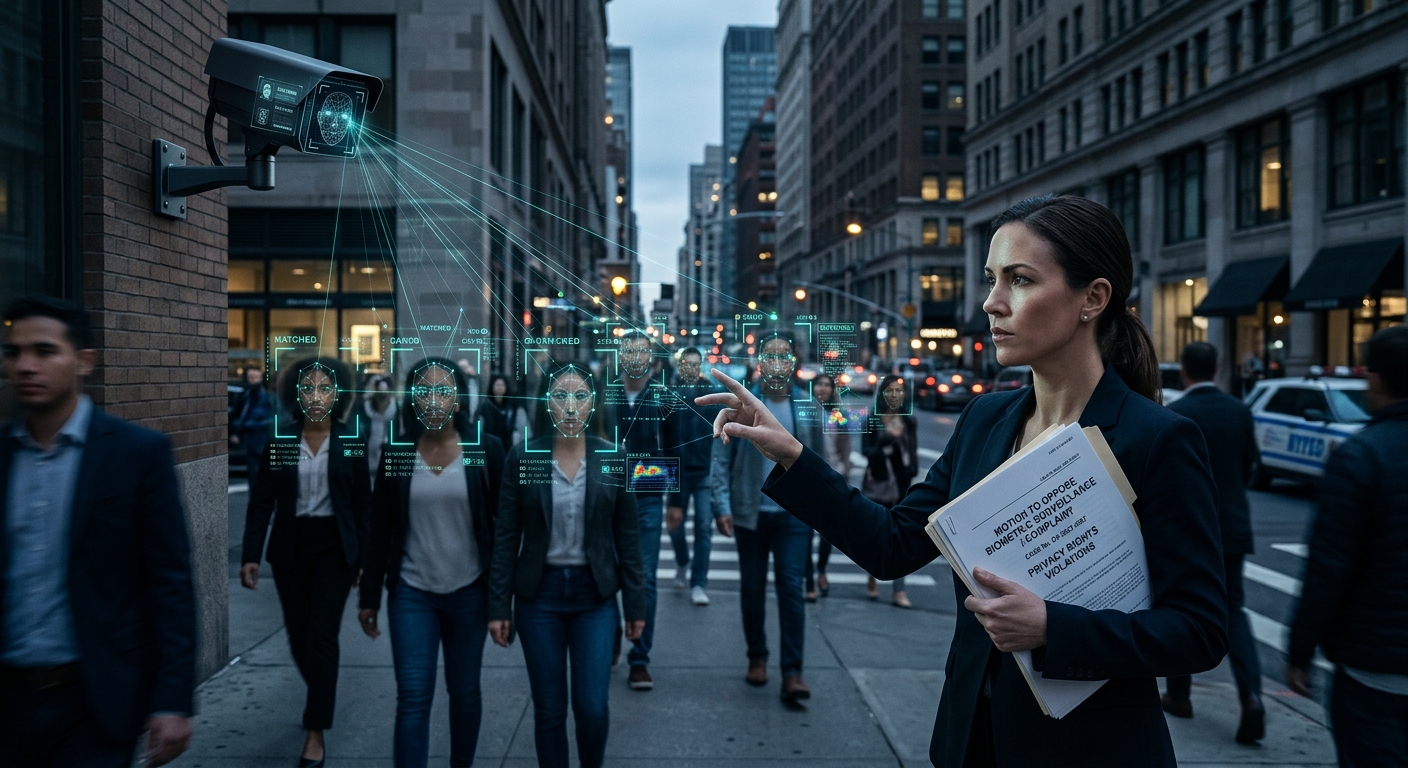
The rapid proliferation of facial recognition technology has ignited fierce debates over personal privacy, civil rights, and the ethical boundaries of artificial intelligence. At the center of this controversy stands Clearview AI, a startup that amassed a database of billions of images scraped from the public internet without individual consent. Recognizing the unprecedented threat this posed, privacy advocates and civil rights groups launched historic legal battles against the company, culminating in watershed settlements that reshaped the landscape of biometric data regulation. This article explores the mechanics of this surveillance technology, the legal framework that enabled the litigation, and the long-term implications for corporate accountability and personal privacy in the digital age.
For decades, the concept of a universally accessible facial recognition database was confined to the realm of dystopian science fiction. However, as computing power multiplied and digital photography became ubiquitous through social media platforms, the technical hurdles to mass biometric surveillance vanished. Clearview AI capitalized on this digital explosion, developing an algorithm capable of matching a single photograph of an unknown person to their online footprint in seconds. Unlike previous iterations of facial recognition software, which relied on tightly controlled government databases like mugshots or driver’s license registries, this new approach democratized surveillance for thousands of law enforcement agencies and private entities alike.
The implications of this algorithmic omniscience are staggering. By transforming a physical face into a searchable digital signature, the technology stripped away the anonymity traditionally afforded by public spaces. Critics argue that such capabilities chill free speech, discourage participation in public protests, and fundamentally alter the power dynamic between the state and the individual. As the technology’s reach expanded, civil liberties advocates realized that unchecked, it could effectively end privacy as modern society knows it.
Unpacking the Mechanics of Clearview AI’s Data Scraping
To understand the legal backlash, one must first examine the methodology behind the surveillance tool. Clearview AI built its unparalleled database not through user opt-ins or negotiated partnerships, but through an automated process known as web scraping. Bots traversed public-facing websites, social media platforms, professional networking sites, and digital payment applications, downloading billions of publicly available images alongside any attached metadata.
Once collected, the company’s proprietary artificial intelligence processed these images to map the unique geometry of each face, generating what is known as a “faceprint.” This biometric identifier is akin to a digital fingerprint, but far more easily captured from a distance without the subject’s knowledge. When a user uploaded a probe image—such as a still frame from a security camera—the system compared the faceprint against its multibillion-image repository, returning matches and hyperlinks to the original online sources.
The central controversy lies in the complete bypass of consumer consent. While the images themselves were technically accessible to the public, the compilation, biometric analysis, and subsequent commercialization of that data were entirely opaque. Users who uploaded a photo to a social network to share with family never anticipated that their likeness would be permanently cataloged in a privatized surveillance database accessible to police departments and private businesses nationwide.
The Legal Linchpin: Illinois’ Biometric Information Privacy Act (BIPA)
While many states and the federal government scrambled to understand the ramifications of facial recognition, Illinois already possessed the nation’s most formidable weapon against biometric exploitation: the Biometric Information Privacy Act (BIPA). Enacted in 2008, BIPA was remarkably prescient, establishing strict protocols for the collection, retention, and sharing of biometric identifiers, including face geometry, fingerprints, and iris scans.
The statute’s most critical provision is its requirement for informed, written consent before any private entity can collect an individual’s biometric data. Furthermore, BIPA prohibits companies from profiting off biometric data through sales or leases. Crucially, BIPA includes a private right of action, allowing individual citizens to sue for damages ranging from $1,000 for negligent violations to $5,000 for intentional or reckless breaches.
It was under this robust legal framework that civil rights advocates saw an opportunity to hold Clearview AI accountable. Because the company scraped images globally, it inevitably captured the faceprints of millions of Illinois residents without their requisite written consent. BIPA transformed from a theoretical deterrent into a lethal legal instrument, providing the exact mechanism needed to challenge a business model built entirely on non-consensual biometric extraction.
Why Civil Liberties Organizations Took a Stand
The lawsuits initiated against Clearview AI were not merely abstract debates about data privacy; they were targeted interventions to protect vulnerable populations from immediate harm. Organizations representing domestic violence survivors, undocumented immigrants, and sex workers argued that the unregulated deployment of mass facial recognition created asymmetrical and dangerous power dynamics.
Protecting Vulnerable Populations from Misuse
For survivors of intimate partner violence, maintaining anonymity can be a matter of life and death. The ability of an abuser to snap a photograph in a public place and instantly trace a victim’s identity, location, and social network via a privately sold database presented an unacceptable risk. Similarly, undocumented immigrants face the constant threat of surveillance and deportation, which is exacerbated when law enforcement utilizes tools plagued by algorithmic bias and false positive identifications. By bringing lawsuits on behalf of these specific advocacy groups, plaintiffs grounded the legal arguments in tangible, devastating human consequences rather than just technical statutory violations.
The Constitutional and Ethical Dilemmas
Beyond physical safety, the litigation addressed fundamental constitutional concerns. The pervasive deployment of facial recognition threatens First Amendment rights by creating a chilling effect on the freedom of assembly and association. If citizens know that their presence at a political rally, union strike, or religious gathering can be instantly cataloged and stored indefinitely, they are far less likely to participate in democratic processes. The civil liberties coalition recognized that halting the unregulated expansion of such surveillance was critical to preserving the bedrock principles of a free society.
Anatomy of a Landmark Lawsuit: Civil Rights vs. Surveillance Capitalism
Filing lawsuits in state and federal courts, privacy advocates directly challenged the legality of Clearview AI’s foundational operations. The plaintiffs argued that the company’s actions represented an unprecedented violation of privacy rights, effectively weaponizing BIPA to halt the unauthorized commercialization of human faces.
Clearview AI mounted a rigorous defense, primarily leaning on the First Amendment. The company argued that because the images were scraped from public domains, they were engaging in the protected right to gather and analyze publicly available information. Their legal team likened the scraping and indexing process to a sophisticated search engine, merely organizing data that users had voluntarily uploaded to the internet.
However, privacy advocates countered that this argument conflated a public photograph with a proprietary biometric faceprint. The creation of a unique geometric map of a face transcends mere observation; it constitutes the non-consensual extraction of deeply personal, unchangeable biological data. The court battles underscored the tension between modern surveillance capitalism—where personal data is endlessly monetized—and the fundamental right to control one’s own bodily identity.
A Watershed Settlement and Its Industry Ramifications
In May 2022, the protracted legal battle spearheaded by the American Civil Liberties Union culminated in a groundbreaking settlement that significantly curtailed Clearview AI’s operations. Rather than risking a trial that could have resulted in catastrophic statutory damages under BIPA, the company agreed to permanent, nationwide injunctions.
The most crucial victory for privacy advocates was a binding agreement that Clearview AI would permanently stop selling access to its facial recognition database to private businesses and individuals across the United States. Furthermore, the company was barred from selling its database to any entity within the state of Illinois—including state and local police departments—for a period of five years.
This settlement represented the most significant legal restraint ever placed on a facial recognition company. It established a critical precedent: tech companies cannot circumvent privacy laws simply by hiding behind the veil of “publicly available data.” The agreement fundamentally altered the commercial trajectory of the surveillance industry, signaling to investors and developers alike that the era of unregulated biometric extraction carries immense legal liability.
Evolving Corporate Liability: The 2025 Class Action Equity Agreement
The legal repercussions of Clearview AI’s business model did not end with the 2022 injunctions. As multidistrict litigation continued, the company faced mounting class action lawsuits representing millions of consumers nationwide. In an unprecedented move finalized in early 2025, a federal judge approved a $51.75 million settlement that granted class members a 23 percent equity stake in the company. Because the startup lacked the liquid assets to pay the massive statutory damages associated with continuous BIPA violations, plaintiffs creatively secured partial ownership. This novel settlement structure further illustrates the profound financial risks associated with non-consensual data scraping and sets a fascinating precedent for future biometric privacy litigation.
Moving Forward: The Impending Battle for Federal Biometric Regulation
While the legal victories in Illinois represent monumental strides in protecting civil liberties, they also highlight a glaring vulnerability: the lack of comprehensive federal data privacy legislation. Because BIPA is a state-level law, its protections are inherently geographically limited, leaving millions of Americans in other jurisdictions exposed to biometric tracking without clear legal recourse.
The fight against privacy-destroying surveillance activities is far from over. Advocacy groups continue to push for a national biometric privacy framework that mirrors the stringent consent requirements of BIPA. Furthermore, debates persist over the appropriate use of facial recognition by federal law enforcement agencies, which largely remain exempt from the private sector bans established in the settlements.
As artificial intelligence systems become exponentially more sophisticated, the urgency to establish clear ethical and legal boundaries grows. The case against Clearview AI serves as a stark reminder that technological innovation must not outpace fundamental human rights. The blueprint established by civil liberties advocates will undoubtedly serve as the foundation for the next generation of digital privacy battles.
Frequently Asked Questions (FAQ)
- What is facial recognition technology (FRT)?
Facial recognition technology is a biometric software application capable of uniquely identifying or verifying a person by comparing and analyzing patterns based on the person’s facial contours and features. - Why is the Illinois Biometric Information Privacy Act (BIPA) important?
BIPA is one of the strictest data privacy laws in the U.S. It requires companies to obtain informed, written consent before collecting an individual’s biometric data (like faceprints or fingerprints) and allows citizens to sue companies directly for violations. - How did Clearview AI build its database?
The company used automated web scraping to download billions of publicly available images from social media platforms and websites, subsequently processing them with AI to extract unique biometric faceprints without user consent. - What were the terms of the 2022 settlement?
In 2022, Clearview AI agreed to permanently stop selling access to its facial recognition database to private businesses and individuals in the United States, and halted sales to all Illinois entities, including police, for five years. - What was the result of the 2025 consumer class action against Clearview AI?
In an innovative settlement, a federal judge approved an agreement granting class members a collective 23% equity stake in Clearview AI, valued at approximately $51.75 million, resolving numerous consolidated lawsuits regarding BIPA violations.
References
- Face-scanner Clearview agrees to limits in court settlement — AP News. 2022-05-09. https://apnews.com/
- ACLU v. Clearview AI — American Civil Liberties Union. 2022-05-11. https://www.aclu.org/cases/aclu-v-clearview-ai
- Clearview AI to stop selling facial recognition tool to private firms — The Washington Post. 2022-05-09. https://www.washingtonpost.com/technology/2022/05/09/clearview-ai-aclu-settlement/
- Clearview AI USD 51.75 million class action settlement approved — ICLG. 2025-03-24. https://iclg.com/
- Moving ahead: Details of the court-approved Clearview settlement — Constangy, Brooks, Smith & Prophete, LLP. 2025-10-28. https://www.constangy.com/
Similar Articles








Read full bio of Sneha Tete


