
Jury Duty Scams: How Fake Threats Try to Steal Your Money
Learn how fake jury duty calls and emails work, how to spot red flags, and the safe steps to take before you lose money or personal data.
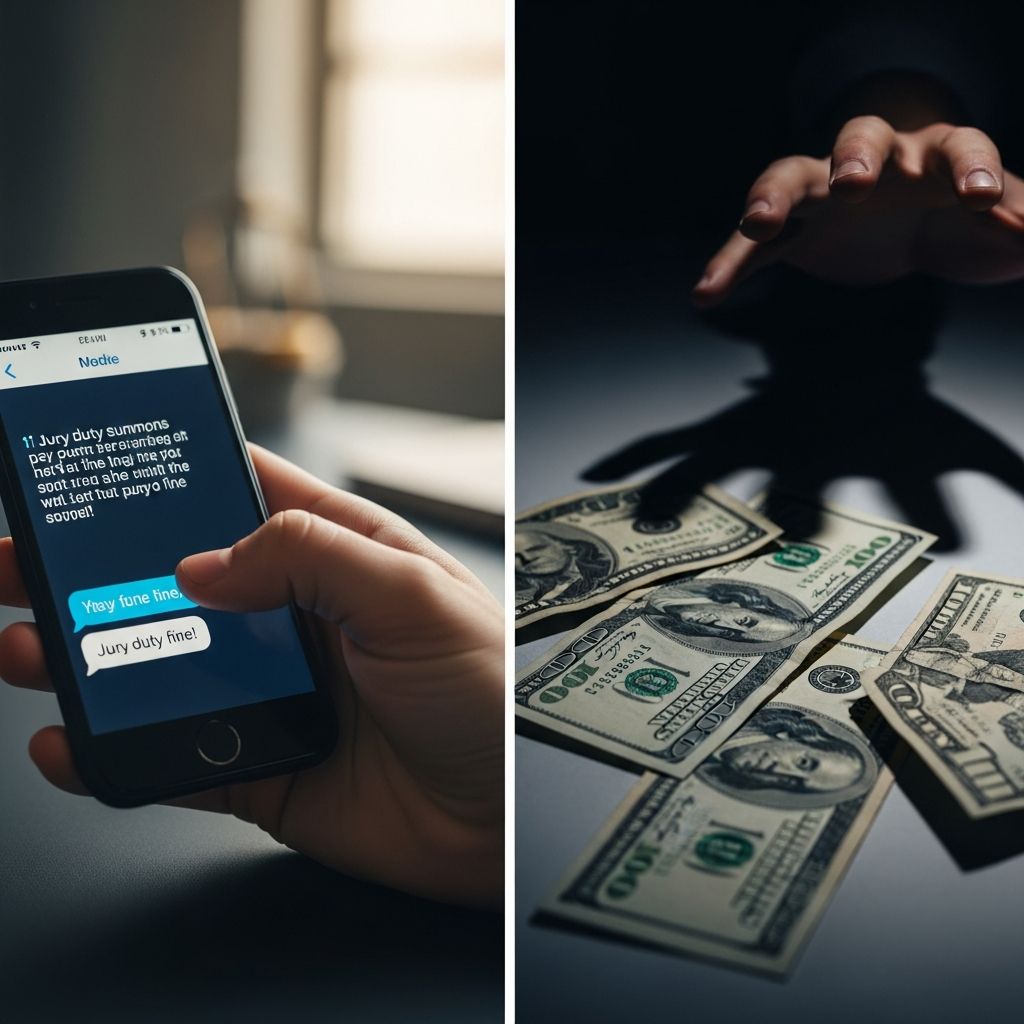
Missing real jury duty can lead to fines or other legal consequences, and scammers know that fear makes people act fast. They exploit that worry by pretending you skipped jury service and claiming you must pay immediately or be arrested. This guide explains how these frauds work, what legitimate courts do not do, and how to respond safely if you get a suspicious call, text, or email.
What Is a Jury Duty Scam?
A jury duty scam is a scheme where criminals pose as court staff, police officers, U.S. Marshals, or other officials and insist that you:
- Missed a required jury service date
- Now face arrest, fines, or a warrant
- Must pay immediately or share sensitive personal information to “fix” the problem
These scams can arrive as phone calls, emails, text messages, or even social media messages. They are designed to:
- Scare you into paying a fake “fine” or “bond”
- Trick you into handing over data like your Social Security number or date of birth for identity theft
How the Scam Typically Unfolds
While each scammer has their own script, many jury duty scams follow a similar pattern.
1. Sudden urgent contact
You get a call or message out of the blue from someone claiming to be:
- A local police officer or sheriff’s deputy
- A U.S. Marshal or federal agent
- A clerk of court or jury administrator
The caller ID might even show the name or number of a real court or law enforcement office, thanks to spoofing technology that lets scammers fake caller information.
2. A serious-sounding accusation
The caller or writer claims you:
- Failed to appear for jury duty
- Ignored a summons that was supposedly mailed or emailed to you
- Now have a bench warrant or contempt of court notice issued in your name
To heighten the pressure, they may rattle off:
- Fake badge or ID numbers
- Bogus case or warrant numbers
- Names of real judges, sheriff’s offices, or courthouses pulled from public websites
3. Threats and high-pressure tactics
The impersonator often claims you will:
- Be arrested within hours
- Be held in jail if you do not pay immediately
- Face additional fees or charges if you argue or hang up
Their goal is to keep you afraid and on the line so you do not stop to verify their story.
4. Demands for payment or personal data
Eventually, the call or message shifts to what they really want:
- Money — for a supposed fine, bond, or “fee” to cancel the warrant
- Personal information — like your birthdate, Social Security number, or bank details
Scammers often insist you must pay using methods that are hard to trace or reverse, such as:
- Gift cards
- Prepaid debit cards
- Wire transfers (e.g., Western Union, MoneyGram)
- Cryptocurrency or payment apps
Some newer variations tell you to visit a website that looks like a government page, complete with seals and court logos, and then enter personal data or make a large payment online.
What Real Courts and Law Enforcement Do (and Don’t Do)
Knowing standard court practices makes it much easier to spot a fake demand. U.S. federal and state courts consistently warn the public about these scams and explain how real jury processes work.
| Topic | Legitimate Practice | Scam Behavior |
|---|---|---|
| How you are notified about jury duty | Official summons or notices are sent by mail or through approved court communication channels. | Unsolicited calls, emails, or texts claiming you missed jury duty without prior written notice. |
| Handling missed jury service | Courts may mail a failure-to-appear notice and instruct you to contact them or reschedule; fines are imposed by a judge in court, not by phone. | Demands to pay a “fine” or “bond” immediately over the phone to avoid arrest. |
| Payment methods | Courts accept standard methods like checks or official online payment portals associated with the court site. | Insisting on gift cards, prepaid cards, wire transfers, cryptocurrency, or payment apps only. |
| Personal information | Courts do not collect sensitive information such as full Social Security numbers or bank details over the phone for jury matters. | Requests for Social Security numbers, bank account data, or login credentials by phone, email, or text. |
| Threats of arrest | Law enforcement does not call to demand payment to avoid arrest; criminal processes happen through formal legal channels. | Threats of immediate arrest or jail unless you pay or provide information right away. |
Key Red Flags That Point to a Jury Duty Scam
Look out for these warning signs; one or more usually means you are dealing with a scammer.
- Unexpected contact about a warrant for missing jury duty, especially if you never received a summons.
- Pressure to act immediately and not hang up, call back, or verify with anyone.
- Demands for payment over the phone or by gift cards, wire transfer, cryptocurrency, or payment apps.
- Requests for sensitive data such as your full Social Security number, bank account details, or full date of birth.
- Caller ID that appears official but is used to back up threats and demands for immediate payment (a sign of spoofing).
- Unfamiliar or unofficial websites linked in emails or texts that ask for payment or personal information.
How to Respond Safely if You Get One of These Calls or Emails
If you suspect a jury duty scam, your best defense is to slow down, refuse to share information, and verify through trusted channels.
Step-by-step response checklist
- Do not pay. Refuse any request to send money or gift card numbers, no matter how convincing the story sounds.
- Do not share personal information. Never provide your Social Security number, bank details, or full date of birth to someone who contacts you unexpectedly about jury duty.
- Hang up or stop responding. If it is a call, end it; if it is a message or email, do not click links or reply.
- Verify directly with the court. Look up the official phone number or website of your local, state, or federal court yourself — not from the call, text, or email — and ask whether there is any issue with your jury service.
- Contact local law enforcement if needed. If the scammer claimed to be from your local police or sheriff’s office, call that agency using a verified non-emergency number to confirm it was a fraud.
- Report the scam. In the U.S., you can report government impersonation and jury scams to the Federal Trade Commission.
If You Already Paid or Shared Personal Information
Realizing you have been scammed is upsetting, but acting quickly can help limit the damage.
1. If you sent money
- Contact your bank or card issuer immediately. Explain that you were the victim of a scam and ask whether the transaction can be stopped or reversed.
- If you used a wire service or payment app, contact that company right away and report the fraud.
- If you bought gift cards, call the card issuer as soon as possible, give them the card numbers, and ask whether the funds can be frozen.
- Keep records of all communications and receipts; they may help in investigations or when filing reports.
2. If you gave out personal details
- Monitor your bank and credit card accounts for unfamiliar charges.
- Check your credit reports regularly for new accounts you do not recognize.
- Consider placing a fraud alert or security freeze with the major credit reporting agencies to make it harder for someone to open new credit in your name.
- Change passwords and enable multi-factor authentication on important accounts if any login data may have been exposed.
Practical Tips to Avoid Jury Duty and Government Impersonation Scams
Scammers constantly switch up their methods, but many prevention strategies remain effective.
- Know how your local courts communicate. Visit your court system’s official website to learn how jury summons and reminders are normally sent.
- Be skeptical of caller ID. Treat any urgent demand for money as suspicious, even if the number looks like it comes from a court or police department.
- Slow down. Scammers want you to panic. Take time to think, hang up, and independently verify their claims.
- Talk to someone you trust. Before sending money or personal data, consult a friend, family member, or legal advisor.
- Keep software and devices updated. If you receive a suspicious link, updated security software can help block malicious sites that mimic government pages.
Frequently Asked Questions (FAQs)
How can I check if I really missed jury duty?
Go directly to your local, state, or federal court’s official website or call the jury office using a phone number listed there. Ask them to look up your status. Do not rely on phone numbers or links given in an unsolicited call, text, or email.
Can a court ever fine me for missing jury service?
Yes, courts can impose penalties for failing to respond to a jury summons, but those fines are handled through official court procedures — not sudden phone calls demanding immediate payment via gift cards or wire transfer.
Do real officers call to collect fines for missed jury duty?
No. Federal and state court systems emphasize that law enforcement officers and court staff do not call people to demand payment for missing jury duty or to avoid arrest. Any call like this should be treated as suspicious and verified independently.
What if the caller knows my address or other personal details?
Scammers often use public records or stolen data to sound convincing. Knowing your address, workplace, or partial Social Security number does not make the call legitimate. Focus on their behavior: threats, pressure, and demands for untraceable payments are strong signs of fraud.
Where can I report a jury duty scam in the United States?
You can report jury duty scams and other government impersonation fraud to the Federal Trade Commission through its official fraud reporting system. You may also want to notify your local court and law enforcement so they are aware of the scam pattern in your area.
References
- That call or email saying you missed jury duty and need to pay? It’s a scam. — Federal Trade Commission (FTC). 2025-03-xx. https://consumer.ftc.gov/consumer-alerts/2025/03/call-or-email-saying-you-missed-jury-duty-need-pay-its-scam
- Did you get a call or email saying you missed jury duty and need to pay? It’s a scam. — Federal Trade Commission (FTC). 2024-09-xx. https://consumer.ftc.gov/consumer-alerts/2024/09/did-you-get-call-or-email-saying-you-missed-jury-duty-need-pay-its-scam
- Juror Scams — United States Courts. 2024-02-08. https://www.uscourts.gov/court-programs/jury-service/juror-scams
- Jury Scam Alert — Judicial Branch of California. 2023-11-xx. https://courts.ca.gov/jury-scam-alert
- Sophisticated Scammers Targeting Potential Jurors — Judicial Branch of Arizona in Maricopa County. 2025-04-09. https://superiorcourt.maricopa.gov/posts/press-releases/2025/sophisticated-scammers-targeting-potential-jurors/
- Scam Alerts: How Do I? — Oregon Judicial Department. 2023-xx-xx. https://www.courts.oregon.gov/how/pages/id-theft.aspx
- Scammers are using fake websites in a twist on jury duty scams — Federal Trade Commission (FTC). 2025-08-xx. https://consumer.ftc.gov/consumer-alerts/2025/08/scammers-are-using-fake-websites-twist-jury-duty-scams
Similar Articles








Read full bio of Sneha Tete


