
The Indispensable Shield: Why Digital Privacy Relies on Uncompromised Encryption
Unpacking the critical role of end-to-end encryption in defending digital privacy and combating mass surveillance.
The Dawn of Pervasive Digital Vulnerability
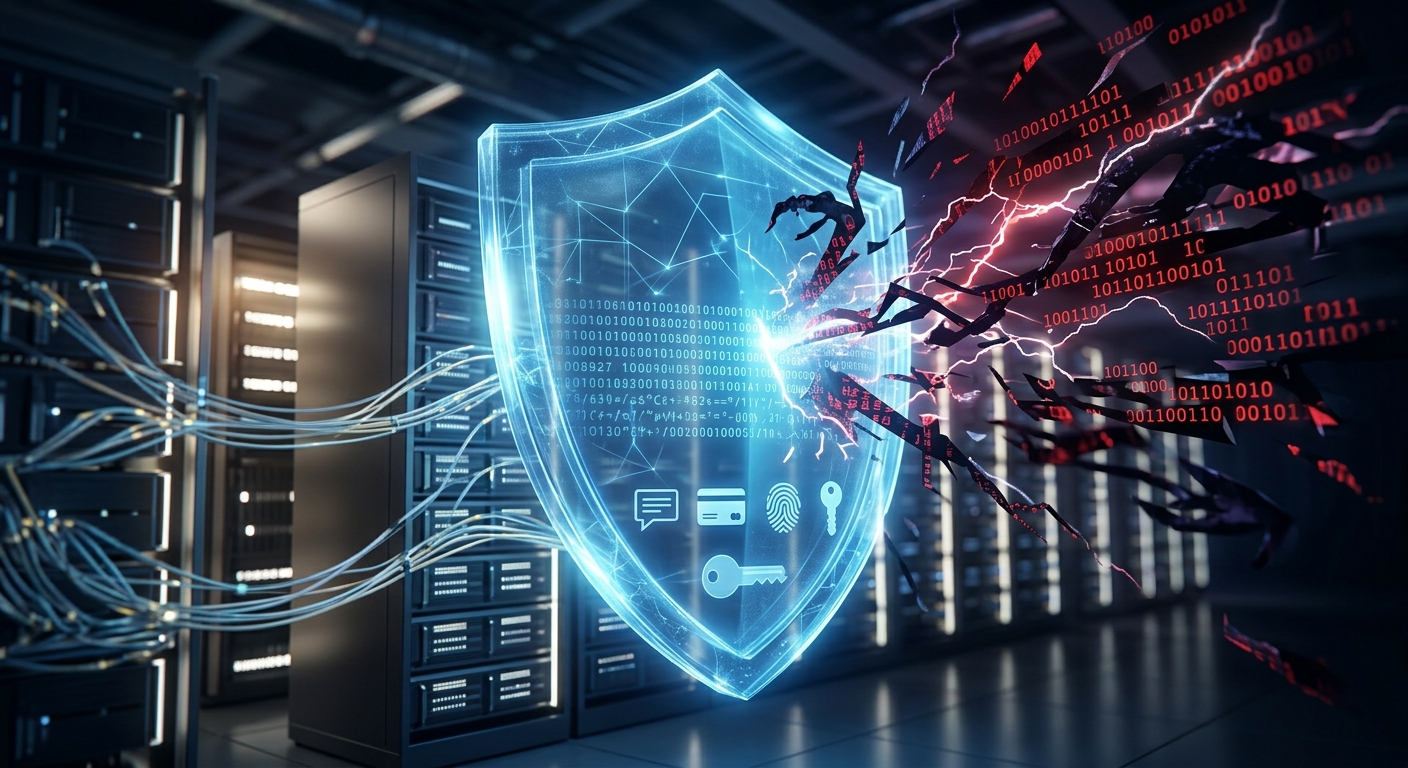
In an era where our entire lives are intrinsically tied to digital networks, the necessity for robust, uncompromising digital security has never been more acute. Every single day, billions of individuals transmit highly sensitive data across the global internet. From intimate personal conversations and detailed medical records to corporate trade secrets and privileged financial credentials, the digital footprints we leave behind are comprehensive and continuously expanding. In this hyper-connected landscape, End-to-End Encryption (E2EE) emerges not merely as a technical luxury or an optional feature for tech enthusiasts, but as the foundational shield safeguarding our fundamental right to privacy. Without impenetrable encryption protocols, our digital communications would be left entirely exposed to a vast and growing array of threat actors, ranging from opportunistic cybercriminals to sophisticated, well-funded nation-state surveillance apparatuses.
As legislative and policy debates surrounding digital privacy intensify globally, understanding the indispensable nature of E2EE is paramount. The technology stands as a steadfast bulwark against the ongoing erosion of civil liberties, ensuring that our personal devices serve as secure vaults for our private thoughts and actions, rather than open books continuously monitored by unauthorized third parties. Preserving the integrity of encryption is equivalent to preserving the integrity of democratic discourse itself.
Decoding End-to-End Encryption: The Mechanics of Security
To truly appreciate the irreplaceable value of E2EE, one must understand the underlying mechanics of how it secures data against interception. Traditional encryption models, often referred to as transport-layer encryption, protect data as it travels from a user’s device to a company’s centralized server. However, once the data reaches the server, it is decrypted and potentially accessible to the service provider. E2EE fundamentally alters this paradigm, shifting the power back to the communicating individuals.
Utilizing public key cryptography, E2EE ensures that a message is scrambled into an unreadable ciphertext on the sender’s device and remains entirely indecipherable until it reaches the exact intended recipient’s device. The primary benefit of this system is that the cryptographic keys required to unlock the communication exist solely on the endpoints—the actual smartphones or laptops of the communicating parties. The Cybersecurity and Infrastructure Security Agency (CISA) strongly advocates for utilizing properly vetted secure messaging applications with end-to-end encryption to prevent threat actors from intercepting sensitive mobile communications. By completely removing the middleman’s ability to access plaintext data, E2EE effectively neutralizes a massive vulnerability in the modern digital communication chain.
How Cryptographic Keys Secure Data in Transit
Public key cryptography, also known in technical circles as asymmetric cryptography, is the beating heart of E2EE. Every user on a secure, encrypted platform is automatically assigned a pair of mathematically linked cryptographic keys: a public key and a private key. The public key is widely distributed and acts much like a digital padlock. Anyone who wishes to send you a secure message uses your public key to lock the data. However, crucially, the public key cannot be used to unlock it.
The only digital mechanism capable of decrypting the incoming message is the corresponding private key, which never leaves your local device. This elegant and highly complex mathematical relationship ensures that even if the server transmitting the locked message is completely compromised by malicious actors, the intercepted data remains utterly useless without the private key held safely in the recipient’s pocket.
| Feature | Standard Transport Encryption | End-to-End Encryption (E2EE) |
|---|---|---|
| Where is data initially encrypted? | On the sender’s device | On the sender’s device |
| Where is data decrypted? | At the service provider’s centralized server | Only on the recipient’s device |
| Can the service provider read the data? | Yes | No |
| Vulnerability to Server Breaches | High (Plaintext data can be accessed and stolen) | Low (Only scrambled ciphertext is available) |
The Global Threat Landscape: Why Weak Security is Not an Option
The modern digital ecosystem is undeniably rife with critical vulnerabilities. Cybersecurity incidents, ranging from massive consumer data breaches to highly targeted corporate ransomware campaigns, have become alarmingly commonplace. When communication platforms rely on centralized decryption keys or transport-layer encryption alone, they inadvertently create highly lucrative targets for cybercriminals. A single successful breach of a server holding plaintext user data or central encryption keys can result in the immediate exposure of millions of individuals’ private information.
This compromised data is frequently weaponized for identity theft, widespread corporate espionage, extortion, and financial fraud. End-to-end encryption radically diminishes this massive attack surface. If a malicious actor successfully breaches a server hosting E2EE communications, they are met only with cryptographic gibberish. The effort, time, and computational power required to break modern, industry-standard encryption algorithms without the corresponding private keys are currently insurmountable. In a world where cyber warfare and digital exploitation are steadily on the rise, mandating or encouraging the widespread adoption of E2EE is a critical step in fortifying both national and global cybersecurity postures. It is a proactive defense mechanism that protects data at rest and in transit, serving as a reliable failsafe regardless of the security vulnerabilities that may unexpectedly arise within the broader network infrastructure.
The Fallacy of Exceptional Access and Government Backdoors
Despite the incredibly clear security benefits, encryption frequently faces intense scrutiny and outright opposition from government agencies and law enforcement bodies worldwide. A recurring argument posits that E2EE hinders vital criminal investigations, leading to legislative demands for “exceptional access”—a concept commonly known in the tech community as government backdoors. The flawed premise is that technology companies should engineer specific, deliberate vulnerabilities into their encryption protocols that only authorized legal authorities can exploit to catch bad actors.
However, global cybersecurity experts, cryptographers, and privacy advocates consistently warn that the concept of a “secure backdoor” is a dangerous mathematical fallacy. Encryption algorithms are essentially binary in their efficacy; they either protect data fully from third-party access, or they do not. Introducing any mechanism for exceptional access inherently compromises the cryptographic integrity of the entire communications system. Deliberations recorded by the National Institute of Standards and Technology (NIST) Information Security and Privacy Advisory Board have previously highlighted the profound difficulties and extreme security tradeoffs associated with exceptional access mechanisms, noting that such engineered vulnerabilities simply cannot be exclusively reserved for the “good guys.”
Once a backdoor is built and integrated into a system, it becomes a permanent, highly sought-after structural weakness. It is invariably only a matter of time before hostile nation-states, organized crime syndicates, or rogue insiders discover, leak, and exploit the very same vulnerabilities originally engineered for law enforcement purposes. Consequently, demanding exceptional access does not merely solve a localized investigative challenge; it intentionally weakens the cybersecurity infrastructure of the entire population, putting everyone at unacceptable risk.
The Slippery Slope of Client-Side Scanning
As the technical consensus against traditional server-side backdoors has solidly crystalized, efforts to circumvent encryption have recently evolved into deeply concerning proposals for client-side scanning. This controversial technique involves legally mandating the installation of surveillance software directly onto a user’s local device—be it a smartphone, tablet, or laptop—to actively scan messages, photos, and files before they are encrypted and transmitted across the network.
Proponents of this method argue that because the data is theoretically scanned prior to encryption, the mathematical integrity of the E2EE protocol remains technically intact during transmission. However, this semantic distinction masks a profound and terrifying invasion of personal privacy. Client-side scanning effectively turns the endpoint device—the supposed sanctuary of the user’s data—into an active, unconsenting participant in mass surveillance. It completely bypasses the encryption by compromising the integrity of the device itself. This invasive approach shifts the point of severe vulnerability from the network cloud to the individual’s pocket, destroying the fundamental trust model that modern users rely upon. If devices are legislatively mandated to preemptively scan and report on user behavior, the chilling effect on free speech and the potential for immediate scope creep are immense. Today, the scanning might be implemented to target highly specific illicit material; tomorrow, authoritarian regimes could effortlessly repurpose the exact same technical infrastructure to detect political dissent, track journalists, or monitor marginalized affiliations.
Protecting the Vulnerable: Encryption as a Human Rights Imperative
Beyond the highly technical and cybersecurity-focused arguments, end-to-end encryption is undeniably a profound and universal human rights imperative. The United Nations Office of the High Commissioner for Human Rights (OHCHR) has explicitly and repeatedly documented the key role of robust encryption methods in ensuring the full enjoyment of the right to privacy and other fundamental democratic freedoms. In many volatile parts of the world, communicating securely is not just a matter of personal preference or digital hygiene; it is a literal matter of life and death.
Journalists bravely reporting on government corruption, human rights defenders operating within hostile, autocratic regimes, and whistleblowers exposing massive corporate malfeasance all critically depend on uncompromised encryption to protect their anonymous sources and themselves from violent retribution. When governments attempt to weaken encryption frameworks or ban the use of secure messaging applications outright, they directly undermine the ability of civil society to function safely and effectively.
Furthermore, marginalized and persecuted minority groups often rely heavily on digital anonymity and securely encrypted virtual spaces to organize, share life-saving resources, and find community without the looming fear of state persecution or targeted, systemic harassment. The right to hold private opinions without state interference and the right to freedom of expression are inextricably linked to the ability to communicate confidentially. Stripping away E2EE effectively forces the world’s most vulnerable populations into a transparent digital panopticon, silencing critical dissent and stifling democratic participation.
The Economic and Infrastructural Ramifications
The aggressive legislative assault on strong cryptography also carries severe, potentially catastrophic economic consequences that are often overlooked in policy debates. In the modern globalized digital economy, verifiable trust is the primary currency of digital commerce. Financial institutions, healthcare providers handling sensitive patient data, and multinational corporations transmit staggering volumes of proprietary, highly regulated information every single second of the day.
If the underlying security protocols of the internet are structurally weakened by government-mandated backdoors or scanning regimes, consumer and business trust in digital services will plummet overnight. Businesses would be forced to navigate an impossible dilemma: comply with local, poorly conceived mandates to weaken security—thereby risking catastrophic corporate espionage and massive data breaches—or exit entire global markets to maintain the integrity of their digital products. Moreover, the critical physical infrastructure of the internet itself—ranging from the automated management of national power grids to the logistical coordination of global transportation networks—relies heavily on secure, authenticated cryptographic communications. Introducing systemic vulnerabilities into these foundational protocols to satisfy localized surveillance demands creates a terrifying domino effect, deeply endangering critical national infrastructure on a massive, unprecedented scale. Robust encryption is therefore not an impediment to economic growth; rather, it is the vital, load-bearing bedrock that sustains and secures the entire modern digital economy.
Frequently Asked Questions (FAQs)
1. What is the fundamental difference between E2EE and regular encryption?
Regular encryption (transport-layer) only secures data while it is actively moving between your device and a company’s server. Once it reaches the server, the company can decrypt and read it. End-to-end encryption (E2EE) scrambles the data on your device, and it remains locked until it reaches the specific device of the person you are communicating with. The service provider cannot read the message at any point.
2. How can law enforcement effectively conduct investigations if encryption cannot be broken?
Encryption does not end police investigations. Law enforcement agencies can still rely on traditional investigative techniques, physical forensics of seized unlocked devices, witness testimonies, and the analysis of “metadata” (information about who you contacted, when, and for how long, which is often not fully encrypted). They can also legally compel suspects or platforms to provide data backups if those backups are not end-to-end encrypted.
3. Does utilizing end-to-end encryption make my device slower or drain the battery faster?
No. Modern smartphone processors and laptop CPUs are highly optimized to perform cryptographic mathematical operations incredibly efficiently. Users will notice absolutely no difference in app speed, message delivery time, or battery consumption when using standard E2EE messaging applications compared to unencrypted ones.
4. If a messaging platform is end-to-end encrypted, am I completely immune to being hacked?
No system provides absolute immunity. While E2EE protects your data in transit across the network, your information is only as secure as the physical device in your hand. If a hacker successfully installs malware or spyware on your phone through a phishing link, they can potentially read your messages on your screen before they are even encrypted, or after they have been decrypted for you to read. Endpoint device security remains critically important.
5. Why do major tech companies continuously resist government calls for “exceptional access”?
Tech companies and independent cybersecurity experts resist these calls because it is fundamentally mathematically impossible to create a backdoor that exclusively lets the “good guys” in. Once a vulnerability is intentionally engineered into a cryptographic system, it becomes a permanent target. It is inevitable that malicious hackers, foreign adversaries, or cybercriminals will eventually find and exploit that exact same backdoor, putting millions of innocent users at severe risk.
References
- How to Communicate Securely on Your Mobile Device — Cybersecurity and Infrastructure Security Agency (CISA). 2024. https://www.cisa.gov/sites/default/files/publications/how-to-communicate-securely-on-your-mobile-device_508c.pdf
- The right to privacy in the digital age (A/HRC/51/17) — Office of the United Nations High Commissioner for Human Rights (OHCHR). 2022-08-04. https://www.ohchr.org/en/documents/thematic-reports/ahrc5117-right-privacy-digital-age
- Information Security and Privacy Advisory Board Minutes — National Institute of Standards and Technology (NIST). 2018-11-02. https://csrc.nist.gov/csrc/media/Projects/ispab/documents/minutes/2018-11/ispab_nov2018_minutes.pdf
- A Deep Dive on End-to-End Encryption: How Do Public Key Encryption Systems Work? — Electronic Frontier Foundation (EFF). 2025-01-01. https://ssd.eff.org/module/deep-dive-end-end-encryption-how-do-public-key-encryption-systems-work
Similar Articles








Read full bio of medha deb


