
The Illusion of Precision: Why Accuracy Thresholds Cannot Save Facial Recognition in Policing
Unpacking why algorithmic accuracy metrics fail to protect civil liberties in law enforcement.
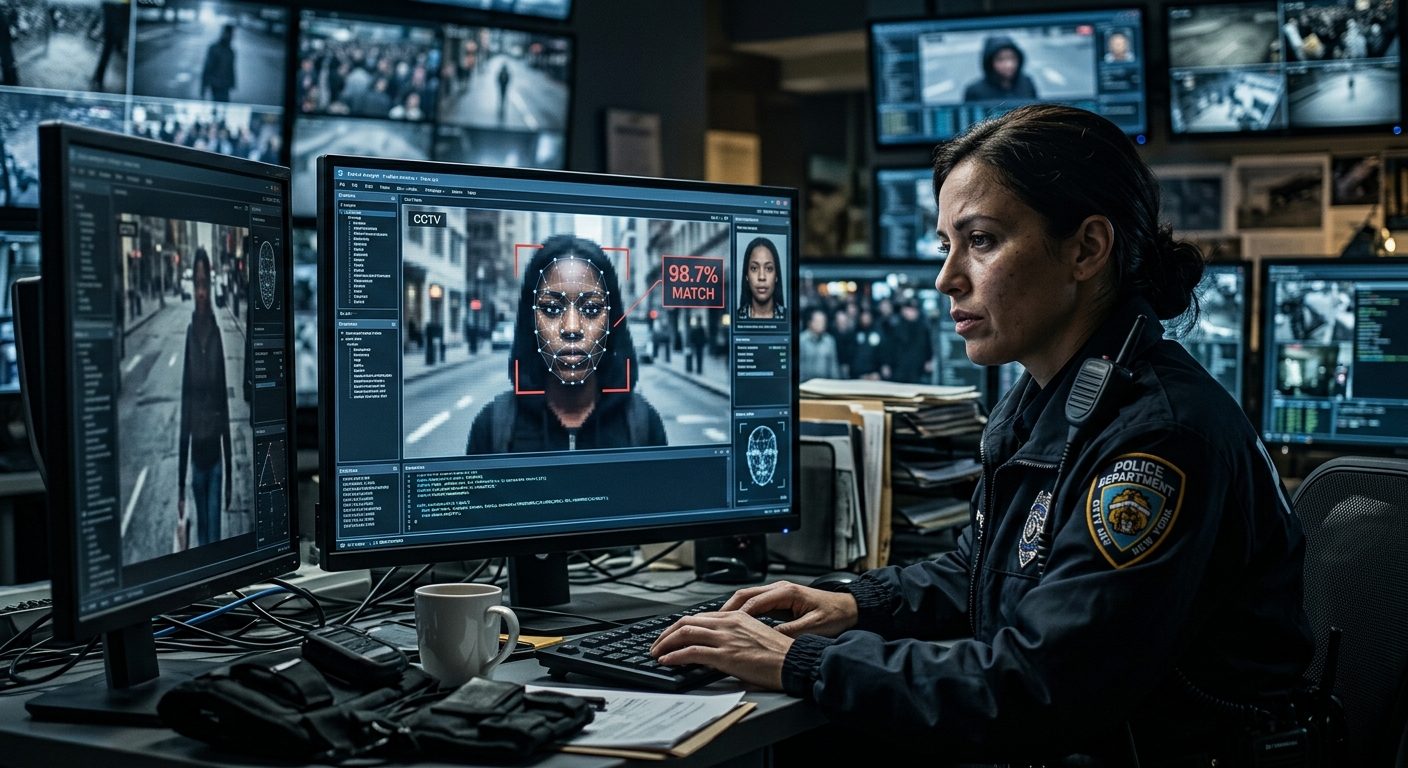
In recent years, the deployment of facial recognition technology (FRT) by law enforcement agencies has sparked a profound debate regarding civil liberties, algorithmic bias, and the future of policing. As reports of devastating wrongful arrests surface—often involving innocent people of color—tech developers, vendors, and some policymakers have scrambled to find a regulatory fix. A prominent proposed solution is the establishment of an accuracy threshold. The argument posits that if the government only permits the use of algorithms tested to meet a specific “magic number,” such as 95, 98, or 99 percent accuracy, the technology will suddenly become safe, objective, and fair.
However, treating facial recognition as a purely mathematical problem that can be solved with a minimum viable accuracy score is a fundamental fallacy. The concept of an accuracy threshold provides a dangerously false sense of security. It sanitizes a highly controversial surveillance mechanism, offering a veneer of scientific infallibility that obscures the chaotic, human-driven realities of the criminal justice system. A high percentage scored in a pristine laboratory environment does not translate to equitable outcomes on the street. To understand why there is no magic number that can save facial recognition technology from its own systemic failures, one must examine the vast chasm between controlled algorithm testing and real-world police deployment, the psychological pitfalls of human-machine interaction, and the disparate impact these systems have on marginalized communities.
The Disconnect Between Laboratory Tests and Real-World Deployment
Setting a baseline accuracy score assumes that the conditions under which an algorithm is tested are identical to the conditions under which it is used. This assumption is deeply flawed. When institutions evaluate biometric software, they typically utilize massive databases of high-quality, front-facing, well-lit portraits. These test environments feature standardized passport photos or carefully captured mugshots where the subject is staring directly into the lens. Under these optimal conditions, modern facial recognition algorithms can indeed achieve remarkably high accuracy rates.
Perfect Conditions vs. Street-Level Realities
Law enforcement agencies, however, do not operate in a pristine laboratory. The visual evidence fed into facial recognition systems by police departments is rarely a high-definition, unobstructed portrait. Instead, detectives run searches using grainy, pixelated images pulled from low-resolution convenience store security cameras, shaky cellphone videos captured by bystanders, or distant ATM dashcams. The subjects in these “probe images” are often caught in motion, heavily shadowed, wearing hats, or looking away from the camera.
When a highly advanced algorithm is forced to analyze a low-quality, heavily compressed image, its performance degrades exponentially. An algorithm touted as 99 percent accurate by its developer might easily fail when analyzing a dimly lit profile shot, yet the software will still confidently return a list of potential suspects. The inherent mismatch between the pristine data used to validate the software and the messy, chaotic data utilized in actual criminal investigations renders any standardized accuracy threshold virtually meaningless.
Furthermore, widespread use of the technology has outpaced operational safeguards. According to a 2023 report by the U.S. Government Accountability Office (GAO), several federal law enforcement agencies utilized facial recognition services to conduct thousands of searches before implementing baseline training requirements for their staff. When personnel lack an understanding of the technology’s environmental limitations, an impressive mathematical accuracy score does nothing to prevent investigatory disasters.
The Flawed Foundation of Confidence Scores
The public and the police often misunderstand what an algorithm’s “confidence score” actually represents. If a facial recognition program indicates a 98 percent match, it is not declaring that there is a 98 percent probability that the individual in the database is the exact same person who committed the crime. Rather, the score indicates the algorithm’s confidence that the mathematical map of the pixelated probe image resembles the mathematical map of the database photo.
This is a critical distinction. The algorithm is comparing geometric facial landscapes, not confirming human identity. Because human faces share a limited number of structural arrangements, a low-quality image of a stranger can easily generate a high confidence score when compared against an innocent person whose biometric measurements happen to fall within a similar mathematical cluster. Relying on an arbitrary threshold—like requiring a minimum 95 percent confidence score before an officer can act—fails to account for the fact that the score itself is a measure of geometric similarity, not a guarantee of factual guilt.
The Human Element: Automation Bias and Cognitive Failures
A central defense mounted by proponents of facial recognition in law enforcement is that the software is never the sole basis for an arrest. The technology, they argue, simply generates “investigative leads,” which are then rigorously vetted by trained human officers. In theory, human oversight serves as the ultimate safety net, catching any false positives generated by the machine. In practice, psychological phenomena make human oversight one of the weakest links in the biometric chain.
Trusting the Machine Blindly
Automation bias is the well-documented psychological tendency for humans to favor suggestions from automated decision-making systems, routinely ignoring contradictory data made without automation. In a high-stakes, fast-paced law enforcement environment, detectives are often overworked and pressured to close cases swiftly. When a multimillion-dollar computer system presents a suspect’s photograph accompanied by a bold, red “99% MATCH” label, the human brain is conditioned to accept the machine’s authority.
Instead of critically analyzing the generated lead, investigators may unconsciously shift their focus to building a case against the algorithm’s chosen suspect, experiencing confirmation bias. They might ignore glaring discrepancies between the suspect and the actual perpetrator, such as differences in height, weight, or the presence of distinct facial markers like moles or tattoos. The presence of a high algorithmic accuracy score actively discourages the human operator from exercising critical skepticism.
Amplifying Existing Prejudices
The human review process is further compromised by inherent cognitive limits, particularly the cross-race effect. Psychological research has consistently demonstrated that humans are significantly less accurate at recognizing and distinguishing between faces of individuals from racial groups different from their own. When an algorithm incorrectly matches a grainy photo of a Black suspect with a database photo of an innocent Black citizen, a white police officer reviewing the match is statistically more likely to validate the computer’s error than if the subjects were of their own race.
No laboratory accuracy threshold can regulate human psychology. The technology creates a feedback loop of error: the algorithm makes a flawed correlation based on low-quality data, and the human reviewer, influenced by automation bias and cognitive limitations, rubber-stamps the mistake. The resulting arrest is treated as a product of human investigation, shielding the algorithm from accountability.
Systemic Ramifications of Automated Misidentification
The failure of facial recognition technology is not an abstract statistical anomaly; it is a profound threat to civil liberties that inflicts tangible trauma on innocent individuals. When accuracy metrics fail in the real world, the consequences are disproportionately borne by marginalized communities.
The Disproportionate Impact on Marginalized Communities
Facial recognition systems are not universally inaccurate; they are selectively inaccurate. A landmark 2019 report by the National Institute of Standards and Technology (NIST) analyzed the demographic effects of contemporary face recognition algorithms. The study conclusively found that false positive rates—the dangerous error where an algorithm incorrectly matches an innocent person to a suspect’s photo—are highest among West and East African, and East Asian demographics, and lowest in Eastern European individuals.
This selective failure rate interacts disastrously with existing systemic biases in the criminal justice system. Because police databases (like mugshot repositories) disproportionately contain the images of Black and brown individuals due to historical over-policing, these populations are continuously subjected to a higher frequency of algorithmic line-ups. As reported by the Associated Press, real-world deployments have led to severe consequences; numerous Black plaintiffs have filed lawsuits against law enforcement agencies following wrongful arrests driven by flawed facial recognition matches. The combination of racially biased algorithms and disproportionate database representation ensures that the burden of a “false positive” almost exclusively targets people of color.
The Cascade of Consequences Following a False Match
For the individuals caught in the crosshairs of a false algorithmic match, the fallout is devastating. A wrongful arrest is not merely an inconvenience; it is a violently disruptive event. Victims of automated misidentification have been arrested in front of their families, held in county jails for days, and forced to spend thousands of dollars on legal defense.
The collateral damage extends to lost employment, damaged reputations, and severe psychological trauma. The criminal justice system’s machinery moves ruthlessly once an arrest is made, and reversing the momentum requires immense resources that many victims do not possess. Setting a 98 percent accuracy threshold does nothing to mitigate the absolute destruction caused by the 2 percent of cases that result in an innocent person being caged based on a computer’s flawed geometric guess.
Why Regulatory Thresholds Are a Dead End
Understanding the complex interplay between bad data, human bias, and systemic inequality makes it clear why proposing a “magic number” threshold is a regulatory dead end. Establishing a legal minimum accuracy requirement for police facial recognition is essentially an exercise in public relations.
The “Magic Number” Fallacy
A legally mandated accuracy threshold operates under the assumption that the technology is fundamentally sound and only requires minor calibration to be safe. It suggests that at a certain mathematical point, the software ceases to be a threat to civil liberties. This framing is inherently deceptive. It shifts the public discourse away from whether the police should possess this sweeping surveillance power at all, and toward a highly technical debate over algorithmic benchmarking.
When legislators pass laws requiring algorithms to meet a certain laboratory standard, they inadvertently provide a stamp of approval to the broader surveillance apparatus. The focus on a magic number distracts from the reality that even a hypothetically perfect algorithm—one that achieves 100 percent accuracy across all demographics in all conditions—would still be wielded within a deeply flawed criminal justice framework. A perfectly accurate surveillance network tracking every movement of the public without individualized suspicion is a dystopian nightmare, not a civil rights victory.
The Need for Fundamental Reassessment, Not Tweaks
The protection of constitutional rights cannot be outsourced to a vendor’s performance chart. Civil liberties are not contingent on the margin of error of a biometric scanner. The debate must transcend mathematical tweaks and focus on structural boundaries. Policymakers must confront the reality that algorithmic policing tools often exacerbate the very inequalities they promise to eliminate. Attempting to fix facial recognition by adjusting its confidence settings is akin to applying a bandage to a systemic wound.
Looking Ahead: Policy Alternatives and Civil Liberties
If accuracy thresholds are an illusion, how should society address the ongoing deployment of facial recognition technology? The answer lies in robust legal boundaries and the prioritization of human rights over investigatory convenience.
Instead of pursuing a magic number, many civil rights advocates and legal scholars argue for strict moratoriums or outright bans on the use of facial recognition by law enforcement. Several municipalities have already taken this step, prioritizing the privacy and safety of their residents over the acquisition of advanced biometric tools.
Where bans are not achieved, rigorous safeguards must be implemented that go far beyond lab-tested accuracy rates. These include requiring police to obtain a judicial warrant before conducting a biometric search, mandating complete transparency about when and how the technology is used, and ensuring defense attorneys have full access to the algorithmic evidence used against their clients. Furthermore, the development of comprehensive federal data privacy legislation is essential to restrict how biometric information is harvested, stored, and utilized by both government entities and private corporations. The future of civil liberties depends on recognizing that no mathematical formula can substitute for constitutional protections.
Frequently Asked Questions (FAQ)
- What is facial recognition technology (FRT) in policing?
FRT is a biometric software application capable of identifying or verifying a person by comparing and analyzing patterns based on their facial contours. Law enforcement uses it to compare images from crime scenes (like CCTV footage) against databases of known faces, such as mugshots or driver’s license photos. - Why is an accuracy threshold or “magic number” ineffective?
Accuracy thresholds are based on ideal, controlled laboratory conditions using high-quality images. In real-world policing, images are often blurry, poorly lit, or angled. Furthermore, a high accuracy score does not eliminate human automation bias, nor does it address the systemic societal inequalities in how policing is applied. - Who is most negatively impacted by facial recognition errors?
Studies have repeatedly shown that facial recognition algorithms perform poorly on marginalized demographics, particularly Black and Asian individuals, and women. Because of historical over-policing, people of color are overrepresented in facial databases, compounding the likelihood of wrongful arrests due to false positive matches. - Can human reviewers catch the algorithm’s mistakes?
While human review is intended to be a safeguard, it is often undermined by “automation bias”—the human tendency to blindly trust machine outputs. Overworked investigators may unconsciously accept a computer’s high-confidence match, ignoring physical discrepancies between the photo and the suspect.
References
- Face Recognition Vendor Test (FRVT) Part 3: Demographic Effects — National Institute of Standards and Technology (NIST). 2019-12-19. https://nvlpubs.nist.gov/nistpubs/ir/2019/NIST.IR.8280.pdf
- Facial Recognition Services: Federal Law Enforcement Agencies Should Take Actions to Implement Training, and Policies for Civil Liberties — U.S. Government Accountability Office (GAO). 2023-09-05. https://www.gao.gov/products/gao-23-105607
- Facial recognition technology jailed a man for days. His lawsuit joins others from Black plaintiffs — Associated Press (AP News). 2023-09-24. https://apnews.com/article/mistaken-arrests-facial-recognition-technology-lawsuits-b613161c56472459df683f54320d08a7
Similar Articles








Read full bio of medha deb


