
How To Trademark Your Business Name: Complete 2025 Guide
Secure your brand identity by learning the complete process to trademark a business name with the USPTO for nationwide protection.
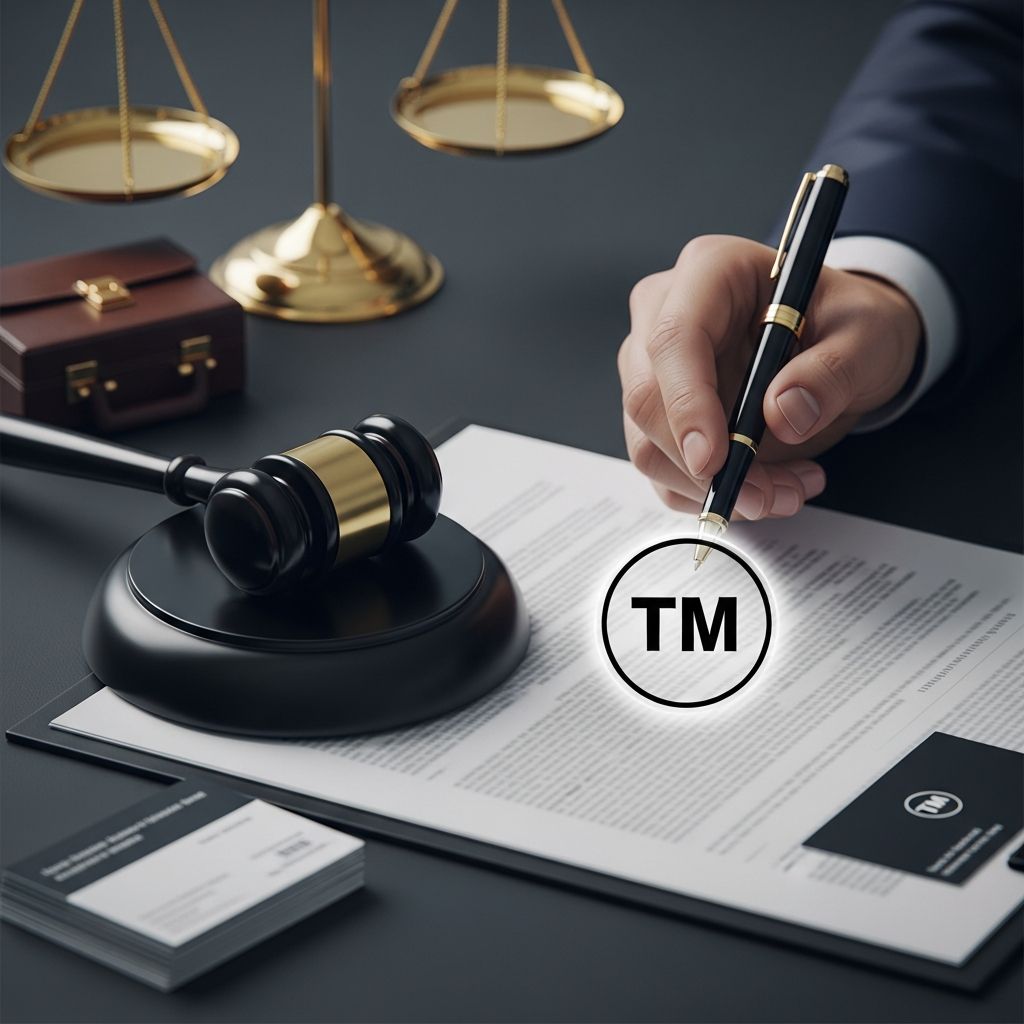
Trademarking a business name grants exclusive rights to use that identifier in commerce, shielding it from competitors and establishing brand recognition across the United States. Federal registration with the United States Patent and Trademark Office (USPTO) provides legal presumption of ownership and nationwide enforceability, making it a cornerstone for business growth.
Understanding Trademarks and Their Value for Business Names
A trademark is a word, phrase, symbol, design, or combination thereof that identifies the source of goods or services and distinguishes them from others. For business names, this often means protecting the core identifier used in marketing, packaging, or service delivery. Unlike common law rights gained through use, federal registration offers stronger protections, including the ability to sue for infringement in federal court and use the registered trademark symbol (®).[10]
Business owners trademark names to prevent consumer confusion, deter copycats, and build asset value. For instance, a unique name like “TechNova Solutions” can become a valuable intellectual property worth millions if properly protected. Without registration, rights are limited to the geographic area of actual use, which hampers expansion.
Key Eligibility Criteria for Trademarking a Name
Not every business name qualifies for trademark protection. The USPTO evaluates applications based on strict standards to ensure marks serve their distinguishing purpose.
- Distinctiveness: Marks must be capable of identifying the source of goods or services. Strong marks are fanciful (invented words like “Kodak”), arbitrary (existing words used unexpectedly like “Apple” for computers), or suggestive (hinting at qualities like “Netflix”). Descriptive names (e.g., “Fast Delivery Service”) or generic terms (e.g., “Computer Store”) are typically rejected unless they acquire secondary meaning through extensive use.
- Non-Confusing: The name must not likely confuse consumers with existing marks in the same or related goods/services classes.
- Legal Ownership: Applications must be filed by the true owner—the entity controlling the nature and quality of goods/services associated with the mark.
Table of Trademark Strength Levels:
| Strength Level | Description | Examples | Registrability |
|---|---|---|---|
| Fanciful | Invented words | Kodak, Exxon | Highly registrable |
| Arbitrary | Common words unrelated to goods | Apple (computers), Camel (cigarettes) | Highly registrable |
| Suggestive | Hints at quality without describing | Microsoft, Netflix | Registrable |
| Descriptive | Directly describes goods/services | Speedy Printing | Requires secondary meaning |
| Generic | Common name for the product | Computer for computers | Not registrable |
This classification helps predict approval chances during the application process.
Conducting a Comprehensive Trademark Search
Before investing in an application, perform a thorough clearance search to assess availability. Skipping this step risks rejection or costly litigation.
- USPTO Database Search: Use the Trademark Electronic Search System (TESS) or Trademark Status & Document Retrieval (TSDR) to check federal registrations and pending applications.
- State and Common Law Search: Review state registries and business name databases, plus internet searches for unregistered uses.
- Professional Search: Hire an attorney for a full knock-out search covering domain names, social media, and international marks.
A strong search minimizes “likelihood of confusion” refusals, the top reason for rejections. For example, if “BrewMaster” is registered for coffee, a similar name for tea might conflict due to related goods.
Preparing Your Trademark Application: Essential Requirements
Filing demands precision to secure a filing date and avoid delays. Core elements include:
- Applicant Details: Name, address, entity type (individual, LLC, corporation), citizenship or state of incorporation.
- Mark Format: Submit a clear drawing—standard characters for word marks or special form for stylized logos.
- Goods/Services: List specific items using USPTO’s ID Manual, classified into 45 international classes (e.g., Class 25 for clothing).
- Filing Basis: Section 1(a) for use in commerce (with specimen) or Section 1(b) for bona fide intent to use (later submit proof).
- Fees: $250–$350 per class via Trademark Electronic Application System (TEAS).
- Verified Statement: Signed declaration by an authorized person attesting to facts.
For intent-to-use applications, file a Statement of Use within six months of Notice of Allowance, extendable up to three years.
Navigating the USPTO Examination Process
After submission, a USPTO examining attorney reviews for compliance, typically within 3–6 months. Expect possible Office Actions requiring responses within six months.
Common issues: incomplete identifications, descriptiveness, or conflicts. Respond with arguments, amendments, or evidence of distinctiveness. Approval leads to publication in the Official Gazette for 30-day opposition.
If unopposed, registration issues (for in-use basis) or Notice of Allowance (for intent-to-use). Total timeline: 12–18 months.
Post-Registration Maintenance and Enforcement
Registration lasts 10 years, renewable indefinitely if maintained.
- Declarations: File between 5th–6th year and 9th–10th year, with specimens.
- Monitoring: Watch for infringements using services or watches.
- Enforcement: Send cease-and-desist letters or litigate with ® benefits like statutory damages.[10]
Costs Associated with Trademarking a Business Name
Budget for:
| Item | Estimated Cost |
|---|---|
| Search | $300–$1,000 |
| Filing Fees (per class) | $250–$350 |
| Attorney Fees | $1,000–$2,500 |
| Maintenance (5.5-year) | $425 per class |
DIY saves money but risks errors; professionals boost success rates.
Common Pitfalls and How to Avoid Them
- Insufficient searches leading to refusals.
- Vague goods/services descriptions.
- Missing deadlines for responses or Statements of Use.
- Ignoring international expansion needs (consider Madrid Protocol).
Frequently Asked Questions
Can I trademark a name I’m not yet using?
Yes, via intent-to-use basis, but provide proof of use later.
How long does the process take?
Typically 12–18 months, longer with issues.
What if my application is refused?
Respond to Office Action or appeal to Trademark Trial and Appeal Board.
Do I need a lawyer?
Not required, but recommended for complex cases.
Can I use ™ before registration?
Yes, ™ claims common law rights; ® only post-registration.[10]
References
- The Four Requirements for a Trademark: AN EASY GUIDE — Mekip Law. 2023-05-15. https://www.mekiplaw.com/the-four-requirements-for-a-trademark/
- The Trademark Registration Process: Step-by-Step Guide — Jaburg Wilk. 2024-02-10. https://www.jaburgwilk.com/news-publications/the-trademark-registration-process-guide
- Filing a Trademark Application in the United States — International Trademark Association (INTA). 2025-01-20. https://www.inta.org/fact-sheets/filing-a-trademark-application-in-the-united-states/
- Legal Requirements for Registering Your Trademark — LegalZoom. 2024-11-05. https://www.legalzoom.com/articles/legal-requirements-for-registering-your-trademark
- Base application requirements — USPTO. 2025-12-01. https://www.uspto.gov/trademarks/apply/base-application-requirements
- How to Register a Trademark — Rocket Lawyer. 2024-08-22. https://www.rocketlawyer.com/trademark/how-to-register-a-trademark
- Requirements for Trademark Registration with the USPTO — Hartmans Law. 2024-03-18. https://hartmanslaw.com/requirements-for-trademark-registration-with-the-uspto/
- Trademark process — USPTO. 2025-10-15. https://www.uspto.gov/trademarks/basics/trademark-process
Similar Articles








Read full bio of Sneha Tete


