
The Hidden Cost of Security: How Delayed-Notice Warrants Undermine Privacy
Expanding far beyond counterterrorism, secret government searches threaten fundamental Fourth Amendment rights and personal privacy.
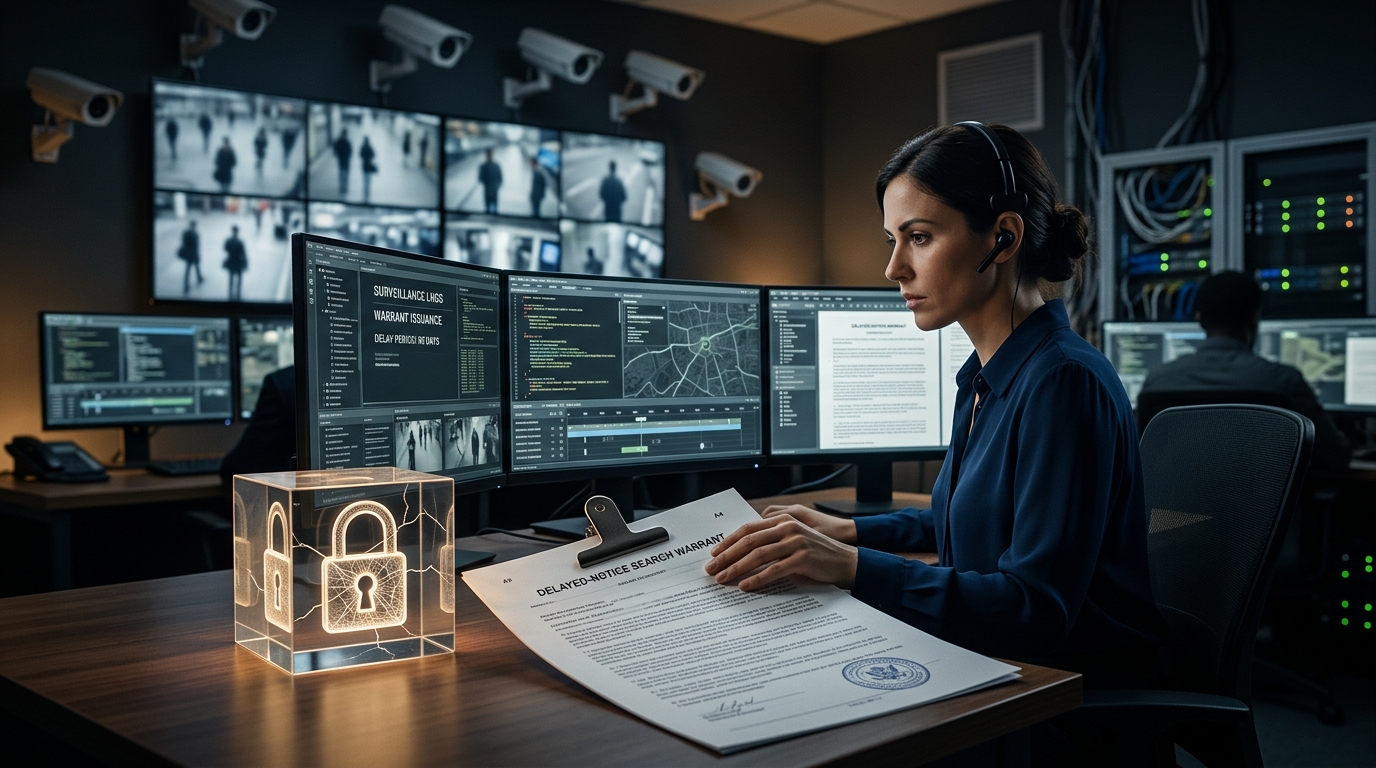
Introduction: The Intersection of National Security and Personal Privacy
In the delicate balancing act between maintaining national security and preserving civil liberties, few legal mechanisms have generated as much controversy as the delayed-notice search warrant. Historically, the bedrock of a free society has been the right of individuals to be secure in their own homes, shielded from arbitrary government intrusion. When law enforcement agencies needed to search a private residence or business, they were generally required to announce their presence, present a judicially authorized warrant, and allow the property owner to observe the execution of the search. This principle of transparency is deeply rooted in the foundational legal doctrines of the United States.
However, the landscape of government surveillance and criminal investigations has shifted dramatically over the past two decades. The introduction and subsequent expansion of surreptitious entry tactics—colloquially referred to as “sneak and peek” searches—have fundamentally altered how law enforcement interacts with the concept of privacy. By allowing agents to enter a property covertly, search through personal belongings, copy digital files, and leave without immediately notifying the occupant, the government has essentially rewritten the rules of engagement. What was once deemed an extraordinary measure reserved for the most dire threats has slowly permeated standard domestic law enforcement, raising profound questions about the erosion of constitutional protections.
Understanding Delayed-Notice Search Warrants
To grasp the magnitude of this shift, one must first understand the mechanics of a delayed-notice search warrant. Governed primarily by 18 U.S.C. § 3103a, this legal tool permits federal agents to execute a search without providing the contemporaneous notification traditionally demanded by the Fourth Amendment. Instead of knocking on the door and handing the resident a copy of the warrant, investigators can infiltrate the premises secretly—often when they know the occupant is away. They can photograph documents, download hard drives, and thoroughly inspect the environment.
The core legal justification for this delay hinges on the assertion that immediate notification would produce an “adverse result.” Law enforcement agencies argue that in highly sensitive investigations, tipping off a suspect could lead to the destruction of critical evidence, witness intimidation, flight from prosecution, or severe jeopardy to the ongoing investigation. Consequently, judges can authorize the government to delay notifying the target for 30 days, a period that can be continually extended through subsequent judicial approvals. In some instances, targets remain completely unaware that the government has breached their sanctum for months or even years.
The Traditional Standard vs. Covert Entry
The contrast between conventional policing and delayed-notice operations is stark. Under traditional circumstances, the physical presence of a warrant provides an immediate check on government power. The property owner can verify that the address is correct, ensure that the agents do not exceed the scope of the warrant, and immediately contact legal counsel to defend their rights. In a covert search, all of these immediate procedural safeguards are dismantled. The individual is left in the dark, entirely stripped of their ability to hold the executing officers accountable in real-time.
The Legislative Catalyst: The USA PATRIOT Act
The normalization of delayed-notice warrants cannot be discussed without examining their most significant legislative catalyst: the USA PATRIOT Act. Passed in the direct aftermath of the September 11 attacks, the legislation was presented to the public as a necessary modernization of surveillance tools strictly intended to thwart international terrorism. Section 213 of the Act specifically addressed search warrants, drastically lowering the threshold required for law enforcement to obtain a delay in notification and extending this authority nationwide.
Prior to this legislation, delayed-notice warrants were largely restricted to very specific circuits and were subject to stringent judicial hurdles. They were an anomaly rather than a standard tool. The Patriot Act effectively codified and standardized the practice, arguing that modern terrorists utilize sophisticated networks and covert communication methods that require equally clandestine investigative techniques to dismantle. While the public accepted these compromises under the guise of an unprecedented national emergency, the statutory language was not strictly confined to terrorism cases. This broad wording set the stage for an inevitable expansion into routine domestic policing.
Mission Creep: From Terrorism to Everyday Crime
The phenomenon wherein a tool authorized for exceptional circumstances gradually becomes routinely utilized for unrelated, everyday tasks is known as “mission creep.” In the context of delayed-notice warrants, the mission creep has been extraordinary. While the American public was assured that surreptitious searches were vital weapons in the war against terror, statistical realities paint a vastly different picture.
Data consistently reveals that the overwhelming majority of these secret searches have absolutely nothing to do with national security or terrorism. Instead, federal and local law enforcement agencies have aggressively deployed this tool in standard criminal investigations, predominantly in domestic drug enforcement cases. Fraud, immigration violations, and everyday narcotics offenses represent the vast bulk of delayed-notice warrant applications. The rationale of preventing the destruction of evidence in a drug ring has seamlessly replaced the rationale of preventing a catastrophic terrorist attack.
This pivot signifies a profound transformation in how the government wields its power. By applying counterterrorism surveillance frameworks to conventional crimes, the government bypasses the standard constitutional protections that were explicitly designed to regulate everyday policing. When a supposedly exceptional national security measure becomes a standard operating procedure for a local drug bust, the fundamental nature of the justice system is altered.
The Constitutional Controversy: Eroding the Fourth Amendment
The Fourth Amendment of the U.S. Constitution guarantees the right of the people to be secure in their persons, houses, papers, and effects against unreasonable searches and seizures. Legal scholars and civil rights advocates argue that delayed-notice warrants fundamentally violate the spirit, if not the letter, of this constitutional protection. The requirement to provide notice is not merely a procedural courtesy; it is the linchpin of accountability.
Without notice, an individual cannot challenge the validity of the search. They cannot point out to officers that they have raided the wrong apartment—a perilous mistake that happens with alarming frequency in law enforcement. Furthermore, secret searches open the door to unchecked governmental abuses. If investigators rummage through a home and find nothing, they can quietly exit, leaving the innocent homeowner entirely oblivious to the fact that their privacy was invaded. The psychological toll of knowing that the government can enter your home unseen and unannounced strikes at the very heart of civil liberty.
Moreover, the standard used to grant these delays is often criticized as a “catch-all.” The statutory language allowing delays when notice might “seriously jeopardize an investigation” is highly subjective. Critics argue that this vague standard allows law enforcement to obtain judicial rubber stamps for delays in almost any criminal investigation, effectively rendering the Fourth Amendment’s notice requirement a mere suggestion rather than a legal mandate.
Comparing Search Warrants: A Transparency Deficit
To fully appreciate the departure from constitutional norms, one must compare the mechanics of traditional and delayed-notice warrants side by side. The transparency deficit inherent in the latter is alarming.
| Operational Feature | Traditional Search Warrant | Delayed-Notice (Sneak & Peek) Warrant |
|---|---|---|
| Notification Timeline | Immediate, prior to or during the execution of the search. | Delayed for an initial period (often 30 days), subject to indefinite extensions. |
| Primary Justification | Standard probable cause of a crime; evidence collection. | Claim that immediate notice would cause an “adverse result” to the investigation. |
| Subject’s Immediate Rights | Ability to review the warrant, inventory seized items, and contact an attorney. | None. The subject remains entirely unaware of the search for weeks or months. |
| Typical Enforcement Area | All areas of routine and specialized policing. | Marketed for terrorism; primarily utilized for standard domestic drug offenses. |
The Importance of Notice and the Path to Reform
Notice is not an ancillary right; it is the mechanism that activates all other legal defenses. When the government seizes property or intercepts communications, notice allows the aggrieved party to file a motion to suppress evidence or seek damages for an unlawful search. By delaying notice, the government effectively delays justice, preventing individuals from organizing a timely legal defense while the state simultaneously builds its case in the shadows.
Advocacy groups and civil rights organizations have continually pushed back against this creeping surveillance state. The path to reform requires a multi-pronged approach. First, legislative action is necessary to significantly tighten the criteria required to obtain a delayed-notice warrant. The burden of proof must be elevated to ensure that these warrants are truly reserved for exceptional circumstances, explicitly tying their usage to imminent threats to human life or severe national security crises.
Second, Congress must enforce strict reporting requirements. The public deserves transparent, highly detailed annual audits regarding how often these warrants are requested, how many are granted, and the specific nature of the crimes being investigated. If the data continues to show that anti-terrorism tools are being used almost exclusively for street-level drug crimes, lawmakers must rein in the statutory authority they previously granted.
Finally, the judiciary must exercise far greater scrutiny. Judges act as the vital check on executive overreach, and they must demand concrete, individualized evidence that a delay is absolutely necessary, rejecting boilerplate assertions that notice would “jeopardize an investigation.”
Frequently Asked Questions (FAQs)
- What exactly is a “sneak and peek” warrant?
It is a legally authorized search warrant that permits law enforcement to enter a property, conduct a search, and leave without immediately notifying the owner or occupant. Notification is delayed to a later date determined by a judge. - Does the Fourth Amendment allow for delayed notification?
While the Fourth Amendment protects against “unreasonable searches and seizures,” the courts have interpreted that under highly specific circumstances (such as preventing the destruction of evidence or protecting a life), a temporary delay in notice can be legally reasonable. However, critics argue the current broad usage violates the spirit of the amendment. - Are these warrants only used to catch terrorists?
No. Although they were heavily promoted as counterterrorism tools following the Patriot Act, government statistics show that the vast majority of these warrants are used in routine domestic criminal cases, predominantly drug trafficking and fraud investigations. - How long can the government keep the search a secret?
Under 18 U.S.C. § 3103a, a judge can initially delay notification for up to 30 days. However, the government can continually request extensions, meaning the target might not find out about the search for several months.
Conclusion
The ongoing debate surrounding delayed-notice search warrants represents a critical frontier in the battle for civil liberties. A democratic society relies on transparency and accountability to keep government power in check. While law enforcement undeniably requires specialized tools to combat sophisticated criminal networks and actual national security threats, these powers cannot be allowed to quietly dismantle the Fourth Amendment. The gradual transformation of a counterterrorism measure into a routine domestic policing tactic is a stark reminder that unchecked surveillance authority rarely retracts voluntarily. Protecting privacy requires constant vigilance, ensuring that the government’s pursuit of security does not inadvertently destroy the very freedoms it is sworn to protect.
References
- 18 U.S.C. § 3103a – Additional grounds for issuing warrant — Office of the Law Revision Counsel, U.S. House of Representatives. 2024-05-10. https://uscode.house.gov/view.xhtml?req=granuleid:USC-prelim-title18-section3103a&num=0&edition=prelim
- Fourth Amendment — Legal Information Institute, Cornell Law School. 2023. https://www.law.cornell.edu/constitution/fourth_amendment
- Implementation of the USA PATRIOT Act: Delayed Notice Search Warrants — U.S. Government Publishing Office (Hearing before the Subcommittee on Crime, Terrorism, and Homeland Security). 2005. https://www.govinfo.gov/content/pkg/CHRG-109hhrg22543/html/CHRG-109hhrg22543.htm
- The USA PATRIOT Act: Preserving Life and Liberty — U.S. Department of Justice (Archived Maintained File). 2023. https://www.justice.gov/archive/ll/highlights.htm
Similar Articles








Read full bio of Sneha Tete


