The Allure of Free Money Online
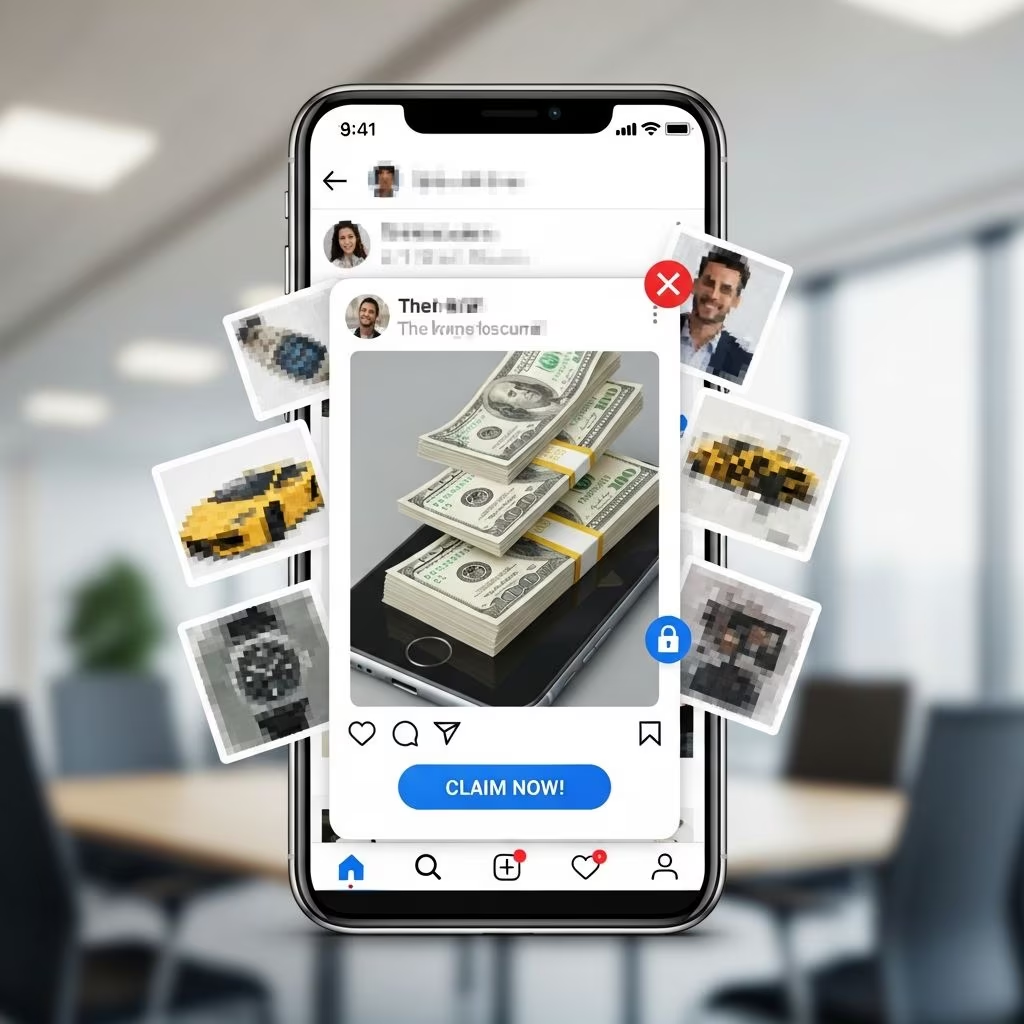
Scrolling through social media, it’s easy to come across posts that seem too good to be true: someone claiming to be a lottery winner offering thousands of dollars to random strangers, or a viral post promising instant cash for just a few clicks. These messages tap into a powerful desire: the dream of getting something for nothing. But in nearly every case, these offers are not generosity—they’re carefully crafted scams designed to steal money, personal information, or both.
The Federal Trade Commission and other consumer protection agencies have repeatedly warned that posts offering free money on platforms like Facebook, Instagram, and X (formerly Twitter) are almost always fraudulent. Understanding how these scams operate, why they’re so convincing, and what red flags to watch for can help you avoid becoming a victim.
How the Scam Typically Unfolds
These scams often follow a predictable pattern, even if the details vary slightly from one post to the next. Here’s how they usually play out:
- A post appears in your feed from someone claiming to have won a large lottery or prize (often Powerball, Mega Millions, or a similar high-profile game).
- The person says they are giving away a portion of their winnings—sometimes tens of thousands of dollars—to a large number of people, often the “first 1,000” who respond.
- They encourage you to message them, comment, or click a link to claim your share.
- Once you engage, the scammer shifts to direct messaging, often moving the conversation to text or another platform.
- They then tell you that you’ve “won” a large sum and just need to pay a small fee to cover taxes, processing, shipping, or other made-up charges.
- They insist on payment via gift cards, wire transfers, cryptocurrency, or peer-to-peer payment apps.
- After you send money, they may ask for more fees, disappear, or send fake checks that later bounce.
The core of the scam is simple: real prizes and legitimate giveaways never require you to pay to receive them. If someone is asking for money to release your “winnings,” it’s a scam.
Why These Posts Look So Convincing
Scammers know that people are skeptical, so they design their posts to appear as legitimate as possible. Some of the tactics they use include:
- Using real names and stories: Scammers often impersonate actual lottery winners, using their names, photos, and public information to make the post seem authentic.
- Creating fake websites: They may link to a site that looks like an official lottery or government page, complete with logos and legal-sounding language.
- Adding urgency: Phrases like “act now,” “limited time,” or “only 10 spots left” pressure people into acting quickly without thinking.
- Exploiting trust in social proof: Comments from other users (often fake or from other scammers) make the offer seem popular and real.
- Mimicking official language: They use terms like “processing fee,” “tax clearance,” or “delivery charge” to make the request for money sound routine.
These elements combine to create a sense of legitimacy, but they’re all part of the deception. Real lotteries and government programs do not operate this way.
Common Variations of the Scam
While the basic “lottery winner giving away money” is widespread, scammers have developed several variations to keep people off guard:
- Government grant or relief scams: Posts claiming to be from federal programs offering cash grants, stimulus payments, or “community development funds” in exchange for a small processing fee or personal information.
- Giveaway and survey scams: Ads or posts promising large cash rewards (e.g., $500–$1,000) for completing a short survey or sharing the post. These often collect personal data or lead to phishing sites.
- “You’ve already won” texts and DMs: Unsolicited messages saying you’ve been selected for a large cash prize and just need to pay a fee to claim it. These often come after someone has engaged with a social media post.
- Check overpayment scams: The scammer sends a fake check for more than the requested fee and asks you to wire the difference. When the check bounces, you’re out the money you sent.
- “Foundation” or charity scams: Claims that a winner has set up a foundation to help people, but you still need to pay a small fee to receive assistance.
All of these follow the same underlying principle: they create a false sense of opportunity and then demand money or information to “unlock” it.
Red Flags That Signal a Scam
Learning to spot the warning signs can help you avoid these scams before they cause harm. Key red flags include:
- Any request to pay to receive money: Legitimate prizes, grants, and giveaways do not require you to pay fees, taxes, or processing charges upfront.
- Demand for gift cards: Only scammers ask for payment via gift cards (like Visa, Amazon, or Apple). Real organizations do not use gift cards as a payment method.
- Pressure to act quickly: Urgency is a classic scam tactic. If someone says you must pay within hours or lose the opportunity, it’s a major warning sign.
- Unsolicited contact: If you didn’t enter a contest or apply for a grant, you haven’t won anything. Real organizations do not randomly select winners and contact them out of the blue.
- Requests for sensitive information: Asking for your Social Security number, bank details, ID, or login credentials is a clear sign of fraud.
- Payment via wire transfer, cryptocurrency, or payment apps: While these methods are legitimate in many contexts, scammers heavily favor them because they’re hard to reverse.
- Too-good-to-be-true offers: Large sums of money for doing nothing, or small efforts, are almost always scams.
If you see even one or two of these red flags, it’s safest to walk away and not engage further.
Why Commenting or Engaging Is Risky
Some people think that commenting on a “free money” post is harmless—maybe even funny. But even a simple comment can have consequences:
- It signals that your account is active: Scammers and automated systems use engagement to identify real, active users who might be more likely to fall for scams.
- It can trigger more scam content: Social media algorithms may start showing you more similar posts, increasing your exposure to fraud.
- It can lead to direct contact: Scammers may message you directly, pretending to be the “winner” or a “helper,” and begin the scam process.
- It can expose friends and family: If your comment is public, your contacts may see the post and be tempted to engage, putting them at risk.
Even if you’re confident you won’t fall for the scam, engaging with it can still contribute to the spread of fraud. The safest approach is to ignore, report, and move on.
What to Do If You’ve Already Engaged
If you’ve already responded to one of these posts or messages, here’s what you should do:
- Stop all communication: Do not reply to any more messages or calls from the scammer.
- Do not send any money: If they ask for gift cards, wire transfers, or any other payment, refuse and cut off contact.
- Do not share personal information: If you’ve already shared details like your name, address, or ID, be extra vigilant for phishing attempts and identity theft.
- Report the scam: File a report with the Federal Trade Commission at ReportFraud.ftc.gov. You can also report the post or account to the social media platform.
- Monitor your accounts: Watch your bank, credit card, and online accounts for any unauthorized activity.
- Consider a fraud alert: If you shared sensitive information, contact one of the major credit bureaus to place a fraud alert on your credit file.
Acting quickly can limit the damage and help authorities track and stop these scams.
How to Protect Yourself and Others
Staying safe from these scams requires both awareness and proactive habits. Here are practical steps you can take:
- Assume “free money” offers are scams: Treat any post, message, or email offering large sums of money as suspicious unless proven otherwise through official channels.
- Verify through official sources: If you think you might have won a real lottery or prize, check the official website or contact the organization directly using contact information from their official site, not from the message.
- Use strong privacy settings: Limit who can message you or comment on your posts to reduce exposure to scammers.
- Be skeptical of urgency: Pause and think before acting on any offer that demands immediate payment or action.
- Never pay with gift cards: Remember that gift cards are for gifts, not for paying bills, taxes, or fees to receive money.
- Share knowledge with others: Talk to family and friends, especially older adults or those less familiar with online scams, about how these frauds work.
Education is one of the most effective defenses against these scams. The more people understand how they work, the harder it becomes for scammers to succeed.
What to Do With Suspicious Posts
When you see a “free money” post on social media, here’s how to handle it:
- Do not comment, like, or share: Even negative comments can increase engagement and visibility for the scam.
- Report the post: Use the platform’s reporting tools to flag the content as spam, scam, or impersonation.
- Report the account: If the profile is impersonating a real person or organization, report it for impersonation.
- Block the account: Prevent further contact by blocking the user.
- Warn others privately: If friends or family are engaging with the post, message them privately to warn them instead of commenting publicly.
By reporting and blocking, you help protect not only yourself but also the broader community on the platform.
Real Prizes vs. Fake Offers: How to Tell the Difference
It’s important to know that real prizes and legitimate programs exist, but they operate very differently from scam offers. Here’s a quick comparison:
| Real Prizes / Legitimate Programs | Scam Offers |
|---|---|
| No upfront fees to claim | Require payment for “taxes,” “processing,” or “shipping” |
| Contact through official channels (email, mail, phone) | Contact via social media posts, DMs, or unsolicited texts |
| Require identity verification through secure, official processes | Ask for ID, SSN, or bank details via social media or messaging apps |
| Payments made by check, direct deposit, or official methods | Demand payment via gift cards, wire transfer, or cryptocurrency |
| No pressure to act immediately | Urgent deadlines and threats of losing the prize |
If an offer matches the “Scam Offers” column, it’s almost certainly fraudulent.
Frequently Asked Questions
Is it ever safe to pay a small fee to receive a large prize?
No. Legitimate prizes and government benefits do not require you to pay any fees to receive them. Any request for money to “unlock” a prize is a scam.
What if the person says they’ll send me a check for the fee?
This is a classic overpayment scam. They send a fake check for more than the fee and ask you to wire the difference. When the check bounces, you’re responsible for the money you sent.
Can I trust a post that uses a real lottery winner’s name and photo?
No. Scammers often steal real people’s identities to make their posts seem credible. Just because a name or photo is real doesn’t mean the post is legitimate.
What should I do if I already sent money?
Stop all contact, report the scam to the FTC and the platform, and contact your bank or payment provider immediately. While it may be difficult to recover the money, reporting helps authorities track and stop these criminals.
Are all social media giveaways scams?
Not all, but many are. Legitimate giveaways from real companies usually have clear rules, are hosted on official pages, and do not ask for payment or sensitive personal information. Be very cautious and verify through official channels.
Final Thoughts: When in Doubt, Walk Away
The promise of free money on social media is almost always a trap. These scams prey on hope, urgency, and trust, but they follow a consistent pattern of deception. By recognizing the red flags—requests for payment, demands for gift cards, pressure to act quickly, and unsolicited contact—you can protect yourself from losing money and personal information.
Remember: real prizes are free to claim. If you have to pay to get it, it’s not a prize—it’s a scam. Stay skeptical, stay informed, and when in doubt, the safest choice is always to ignore the post, report it, and move on.
References
- Free money on social media? Nah. It’s a scam — Federal Trade Commission. 2024-05. https://consumer.ftc.gov/consumer-alerts/2024/05/free-money-social-media-nah-its-scam
- Don’t comment on ‘free money’ social media posts — the FTC says they’re scams — KJZZ. 2024. https://kjzz.org/content/1881080/dont-comment-free-money-social-media-posts-ftc-says-theyre-scams
- Top scams of 2024 — Federal Trade Commission. 2025-03. https://consumer.ftc.gov/consumer-alerts/2025/03/top-scams-2024